
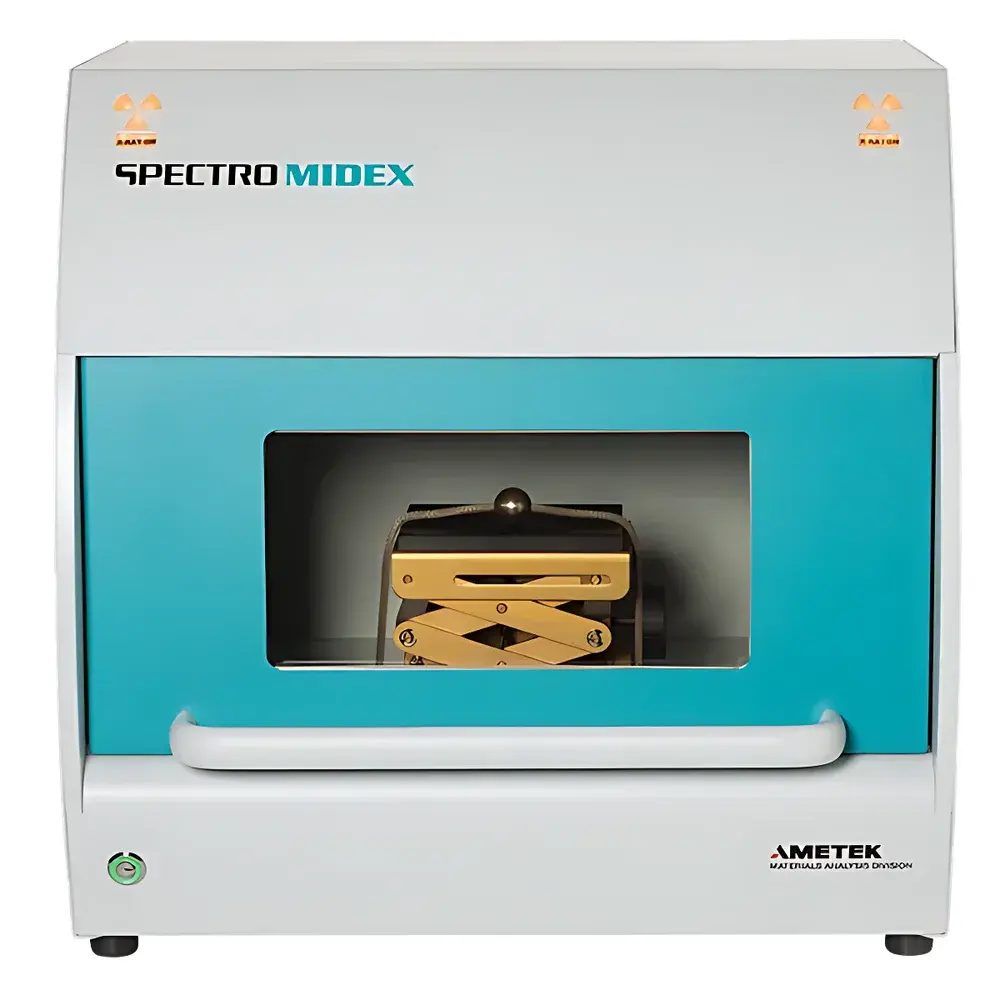
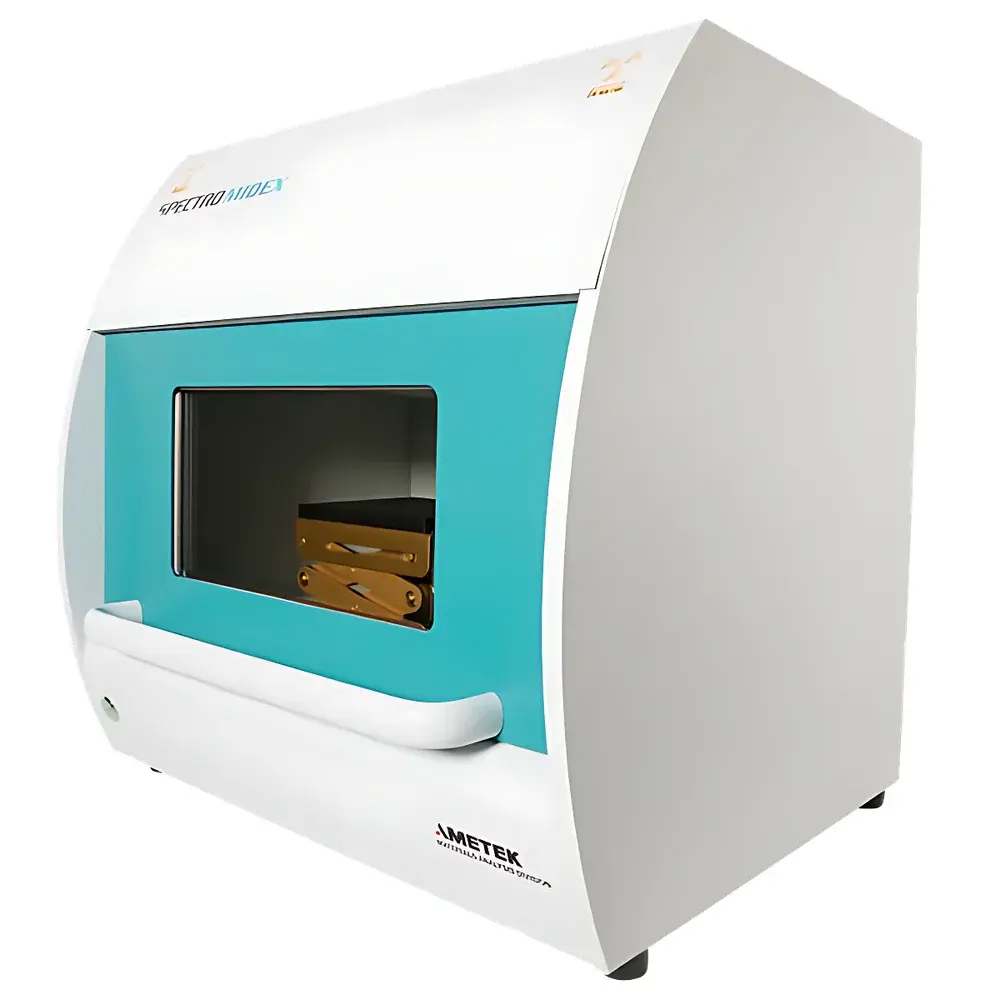
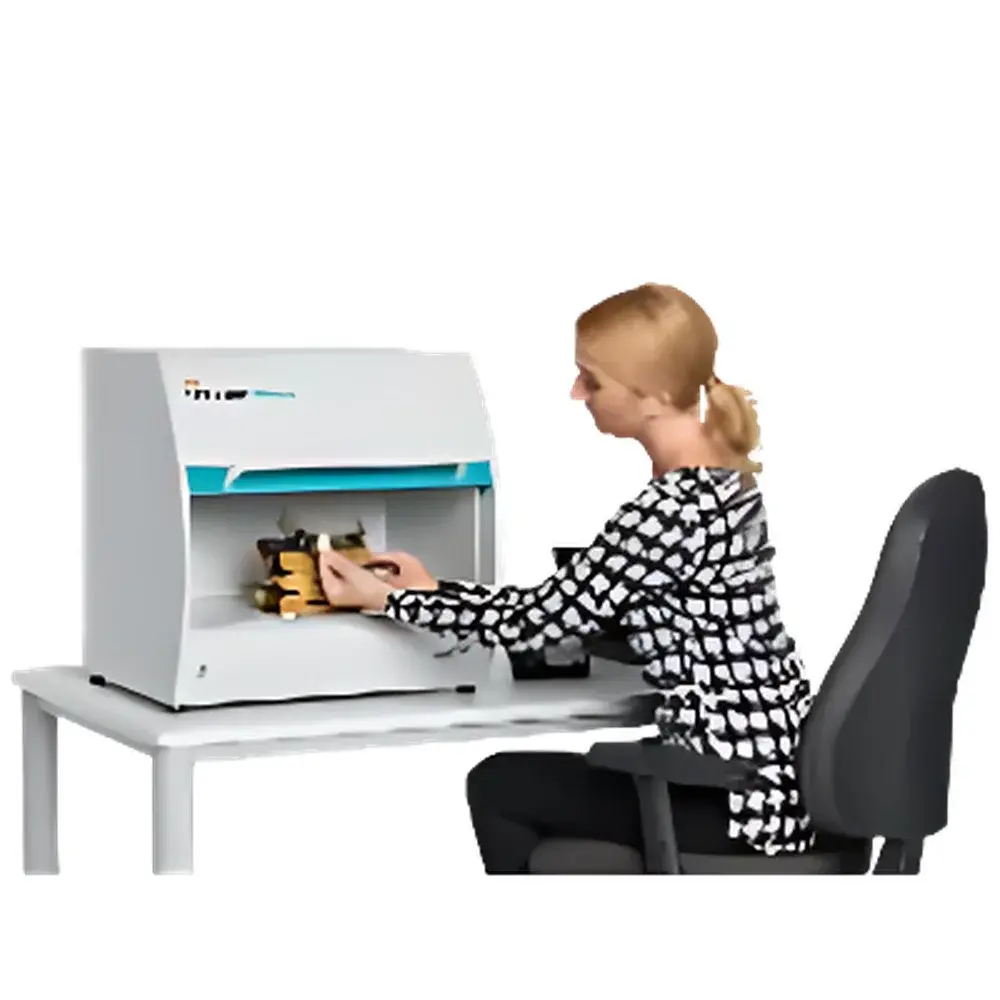
SPECTRO MIDEX Desktop Micro-Focus Energy Dispersive X-Ray Fluorescence Spectrometer
| Brand | SPECTRO |
|---|---|
| Origin | Germany |
| Model | SPECTROMIDEX |
| Instrument Type | Benchtop ED-XRF Spectrometer |
| Application Scope | General-purpose elemental analysis, optimized for precious metals |
| Compliance | Designed for ISO/IEC 17025-compliant labs, supports GLP/GMP data integrity requirements |
| Detector | High-resolution silicon drift detector (SDD) with micro-focus X-ray source |
| Measurement Principle | Energy-dispersive X-ray fluorescence (ED-XRF) with polycapillary optic collimation |
| Sample Form | Solid, powdered, or plated samples (non-destructive) |
| Software | SPECTRO XRF Analyzer Suite with audit trail, user-level permissions, and 21 CFR Part 11–ready reporting modules |
| Data Export | CSV, XML, PDF |
Overview
The SPECTRO MIDEX is a fifth-generation benchtop micro-focus energy dispersive X-ray fluorescence (ED-XRF) spectrometer engineered for high-precision, non-destructive elemental analysis—particularly in precious metal assay, jewelry verification, catalyst characterization, and electronic scrap sorting. Unlike conventional ED-XRF systems employing broad-beam excitation, the SPECTRO MIDEX integrates a micro-focus X-ray tube coupled with polycapillary optic collimation to deliver a focused beam spot down to 30 µm diameter. This enables spatially resolved analysis of small features, inclusions, or layered structures while maintaining high photon flux and spectral resolution. The instrument operates on fundamental parameter (FP) quantification principles, supported by factory-calibrated matrices for >30 elements—from Na (Z=11) to U (Z=92)—with detection limits in the low parts-per-trillion (ppt) range for heavy metals such as Au, Pt, and Pd when measured under optimized vacuum or helium purge conditions. Its performance bridges the gap between routine screening and reference-grade accuracy, achieving quantitative precision approaching fire assay—without sample dissolution or consumables.
Key Features
- Micro-focus X-ray source with polycapillary optics for sub-30 µm spot size and enhanced signal-to-background ratio
- Silicon drift detector (SDD) with <125 eV Mn Kα resolution and ≥100,000 cps maximum count rate
- Fifth-generation FP-based quantification engine with matrix-matched calibrations for precious metals, alloys, ceramics, and geological matrices
- Integrated vacuum and He-flush options for light-element analysis (Na–F)
- Motorized XYZ sample stage with auto-focusing and programmable multi-point mapping
- Ruggedized industrial chassis with ESD-safe enclosure and CE/UL safety certification
- Pre-aligned optical path and self-diagnostic routines minimizing downtime and recalibration frequency
Sample Compatibility & Compliance
The SPECTRO MIDEX accepts flat, irregular, or mounted samples up to 100 mm × 100 mm × 50 mm (W×L×H), including coins, ingots, watch components, PCB fragments, and pressed pellets. No digestion, coating, or conductive sputtering is required—ensuring full sample integrity. It complies with ISO 22088-3 (XRF safety), ASTM E1621 (standard test method for elemental analysis by ED-XRF), and IEC 62321-5 (RoHS screening). For regulated environments, firmware supports 21 CFR Part 11–compliant electronic signatures, audit trails, and role-based access control. All calibration and measurement records are time-stamped, immutable, and exportable for external QA review or accreditation audits per ISO/IEC 17025.
Software & Data Management
The SPECTRO XRF Analyzer Suite provides intuitive workflow-driven operation—from automated setup to report generation. Quantitative results include uncertainty estimation per ISO/IEC Guide 98-3 (GUM). Batch analysis mode supports up to 999 samples per run with customizable pass/fail thresholds and statistical process control (SPC) charts. Data storage adheres to ALCOA+ principles (Attributable, Legible, Contemporaneous, Original, Accurate, Complete, Consistent, Enduring, Available). Raw spectra and processed reports are archived in vendor-neutral formats (CSV, XML, PDF/A-2), and integration with laboratory information management systems (LIMS) is achieved via standardized ODBC drivers or HL7 message protocols. Remote monitoring and diagnostic logs are accessible through secure HTTPS interface.
Applications
- Precious metal assay in refineries and bullion banks (Au, Ag, Pt, Pd, Rh, Ir at ppm–wt% levels)
- Jewelry hallmark verification and alloy grade identification (e.g., 14K vs. 18K gold, stainless steel grades)
- Catalyst recycling: quantification of Pt-group metals in spent automotive or chemical catalysts
- Electronics waste sorting: rapid screening of Pb, Cd, Hg, Cr(VI), Br (as flame retardants) per RoHS/ELV directives
- Geological exploration: field-deployable lab-grade analysis of soil, rock, and drill core samples
- Quality control in plating lines: thickness and composition of Ni, Cu, Sn, Zn coatings on substrates
FAQ
Does the SPECTRO MIDEX require daily calibration?
No. Factory-installed calibrations are stable for ≥6 months under normal operating conditions. A quick verification check using certified reference materials (CRMs) is recommended before each analytical session.
Can it analyze light elements such as sodium or oxygen?
Yes—when operated under vacuum or helium atmosphere, the system achieves reliable detection of Na (Z=11) through F (Z=9), with quantification accuracy validated per ASTM E1621 Annex A2.
Is spectral deconvolution performed in real time?
Yes. The embedded FP algorithm performs full-spectrum fitting during acquisition, resolving overlapping peaks (e.g., Pb Mα/Pb Lβ, S Kα/Cl Kα) without user intervention.
What sample preparation is needed for heterogeneous materials?
Homogenization via grinding and pelletizing is advised for bulk compositional analysis; however, the micro-focus capability allows direct analysis of representative micro-regions without preparation.
How does it support regulatory compliance in pharmaceutical or medical device manufacturing?
Through configurable audit trails, electronic signatures, and data export formats compliant with FDA 21 CFR Part 11, EU Annex 11, and ISO 13485 documentation requirements.





