
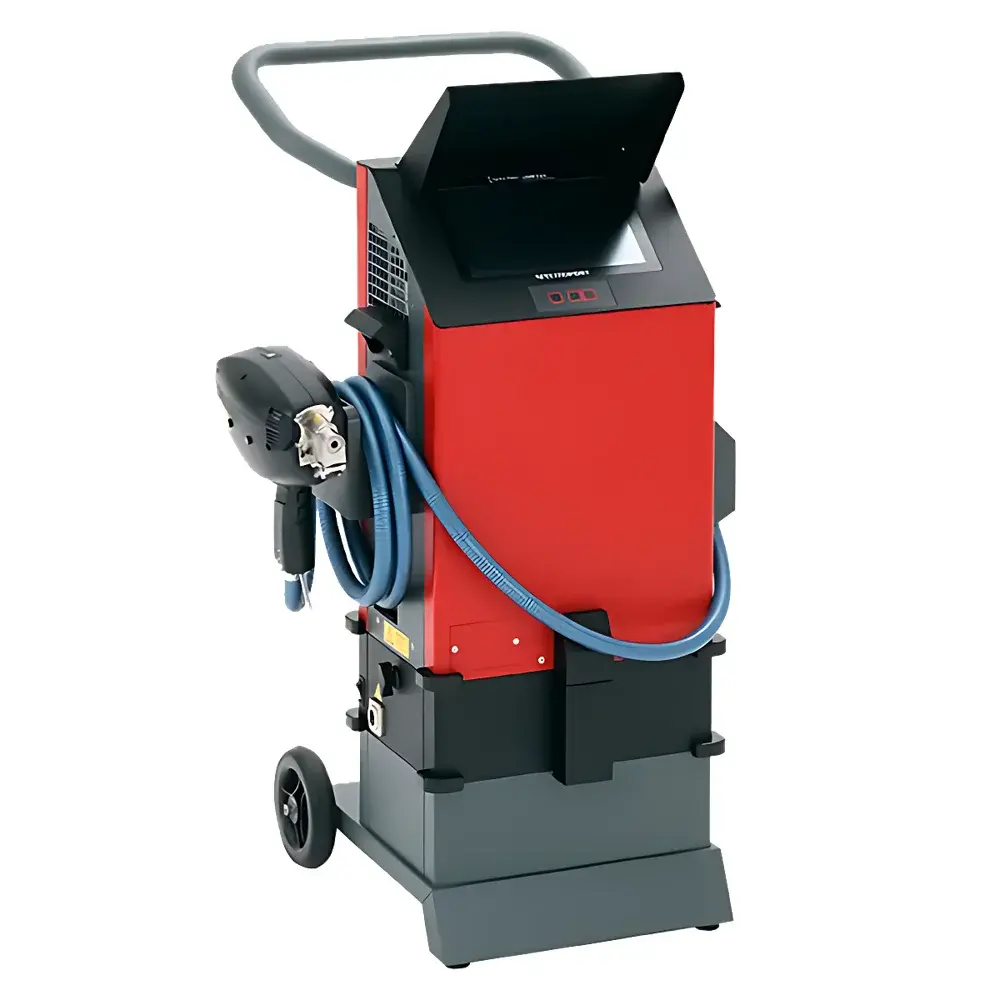
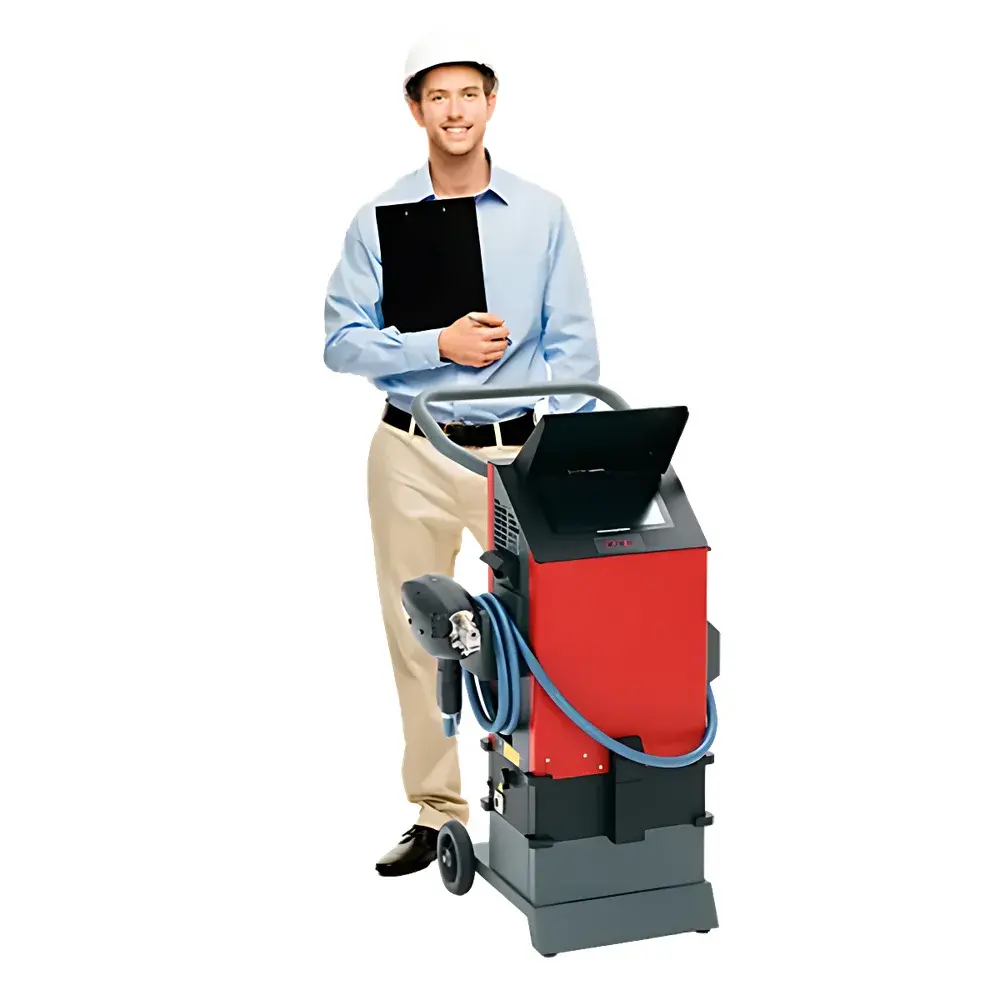
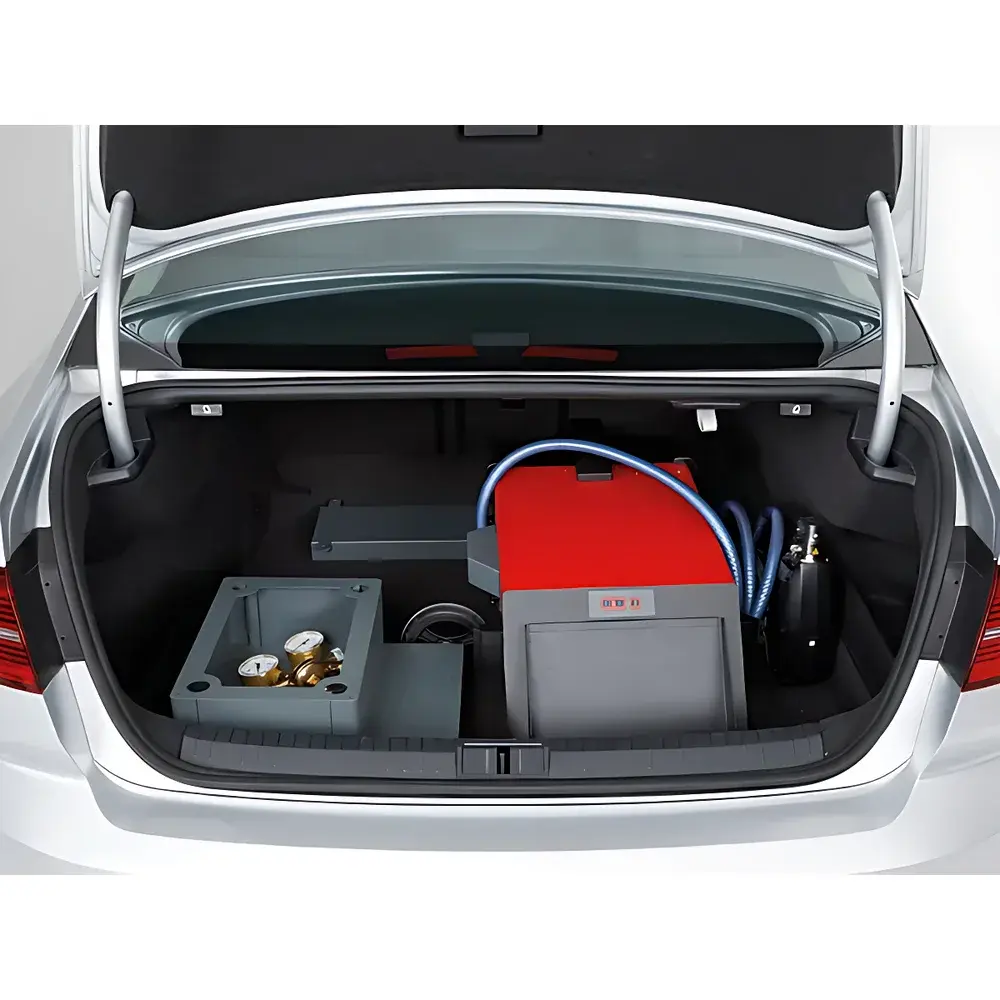

SPECTRO SPECTROPORT Portable Spark Optical Emission Spectrometer
| Brand | SPECTRO |
|---|---|
| Origin | Germany |
| Manufacturer Type | Authorized Distributor |
| Product Category | Imported Instrument |
| Model | SPECTROPORT |
| Instrument Type | Portable / Field-Deployable |
| Excitation Method | Spark Discharge |
| Detector Type | CCD (Charge-Coupled Device) |
| Focal Length | 300 mm |
| Grating Groove Density | 3600 lines/mm |
| Wavelength Range | 178–530 nm |
Overview
The SPECTRO SPECTROPORT is a field-deployable spark optical emission spectrometer (OES) engineered for high-accuracy quantitative elemental analysis of metallic alloys directly at the point of use—on production floors, in scrap yards, at construction sites, or during incoming material inspection. Unlike X-ray fluorescence (XRF) analyzers, which lack sensitivity for light elements due to fundamental physical limitations, the SPECTROPORT leverages controlled spark excitation and high-resolution CCD-based polychromator optics to deliver trace-level detection and quantification of critical alloying and impurity elements—including carbon (C), sulfur (S), phosphorus (P), boron (B), silicon (Si), aluminum (Al), magnesium (Mg), calcium (Ca), lithium (Li), beryllium (Be), and others—down to sub-0.001% (10 ppm) levels where applicable. Its core measurement principle follows ASTM E415 and ISO 11577 standards for spark OES analysis of ferrous and non-ferrous metals, ensuring metrological traceability and compliance with international quality assurance frameworks.
Key Features
- True portable OES architecture: Compact, ruggedized chassis weighing under 15 kg (33 lbs), fully operational without external gas supply or vacuum pump—enabling rapid deployment in uncontrolled environments.
- High-fidelity optical system: 300 mm focal length Czerny-Turner monochromator with 3600 lines/mm holographic grating delivers spectral resolution < 10 pm across the full 178–530 nm range, essential for resolving overlapping emission lines of C I (193.09 nm), P I (178.28 nm), and S I (180.73 nm).
- iCAL 2.0 intelligent calibration logic: Single-sample standardization procedure (< 5 min per day) replaces traditional multi-point recalibration; self-compensating algorithms dynamically adjust for thermal drift, maintaining calibration stability across ambient temperatures from 5 °C to 40 °C.
- CCD detector with full-spectrum acquisition: Simultaneous readout of all spectral channels eliminates sequential scanning delays; supports unlimited virtual channel definition for future method expansion without hardware modification.
- Battery-powered operation: Integrated Li-ion pack enables up to 800 analyses per charge (typical 10–15 s per measurement), with hot-swappable design for continuous field operation.
Sample Compatibility & Compliance
The SPECTROPORT analyzes solid metallic samples—including castings, forgings, welds, bars, tubes, and machined parts—with minimal surface preparation (grinding or milling to expose clean, flat metal). It supports standardized reference materials compliant with ISO 5725 (accuracy and precision), ISO/IEC 17025 (testing laboratory competence), and ASTM E2882 (OES performance verification). The instrument meets CE marking requirements (EMC Directive 2014/30/EU, Low Voltage Directive 2014/35/EU) and conforms to IEC 61000-4 electromagnetic immunity specifications. All analytical methods are documented per GLP/GMP principles and support audit-ready data export for FDA 21 CFR Part 11-compliant environments when paired with optional SPECTRO Analytical Software Suite.
Software & Data Management
Preloaded SPECTRO Analytical Software provides intuitive touchscreen interface with guided workflow navigation, real-time spectral visualization, and automated grade identification against user-defined libraries (e.g., UNS, EN, ASTM, JIS). Data integrity is enforced via embedded electronic signatures, time-stamped audit trails, and encrypted local storage. Raw spectra, calibration logs, and measurement reports are exportable in CSV, XML, and PDF formats. Optional cloud synchronization enables centralized fleet management, remote diagnostics, and method version control across multi-site operations.
Applications
- Scrap sorting and recycling: Rapid discrimination of stainless steel grades (e.g., 304 vs. 316), tool steels, and high-alloy superalloys based on precise C, Cr, Ni, Mo, and N content.
- Quality control in foundries and metal fabrication: Verification of melt chemistry prior to casting; post-weld analysis for segregation or dilution effects.
- PMI (Positive Material Identification): Regulatory compliance for ASME B31.3, API RP 1173, and NACE MR0175/ISO 15156 in oil & gas infrastructure.
- Supplier verification and incoming inspection: On-site validation of mill test reports (MTRs) for critical components in aerospace, power generation, and rail transport.
- R&D and failure analysis: Correlation of microstructure-sensitive elemental distribution with mechanical property deviations.
FAQ
How does SPECTROPORT differ from handheld XRF analyzers?
XRF cannot reliably quantify light elements below sodium (Z=11); SPECTROPORT uses spark OES to excite and detect C, S, P, B, and other low-Z elements with certified accuracy and precision.
Is argon purge required for operation?
No—SPECTROPORT employs sealed optical path and nitrogen-purged spectrometer housing, eliminating need for external gas cylinders or flow regulators.
Can it analyze coated or painted samples?
Surface coatings must be removed mechanically (e.g., grinding) to expose bare metal; spark analysis requires direct electrode contact with conductive substrate.
What maintenance is required?
Routine cleaning of spark stand electrodes and optical window; annual factory performance verification recommended per ISO/IEC 17025 guidelines.
Is method transfer possible from lab-based SPECTRO instruments?
Yes—calibration models developed on SPECTROLAB or SPECTROTEST systems can be ported directly to SPECTROPORT using standardized .cal file format and iCAL 2.0 compatibility layer.





