
Spectrum SM100 Portable Soil Moisture Meter
| Origin | USA |
|---|---|
| Manufacturer Type | Authorized Distributor |
| Origin Category | Imported |
| Model | SM100 |
| Instrument Type | Volumetric Water Content (VWC) Meter |
| Operating Frequency | 80 MHz |
| Measurement Range | 0% to Saturation (VWC) |
| Supply Voltage | 3–5 V DC @ 6–10 mA |
| Output Signal | Analog voltage (0.5–1.5 V at 3 V excitation |
| Resolution | 0.1% VWC |
| Accuracy | ±3% VWC (for soil EC < 8 mS/cm) |
| Sensing Volume | 6 cm × 2 cm × 0.3 cm |
| Standard Cable Length | 1.8 m (optional: 6 m |
| Handheld Reader Channels | 1 (4-channel version available) |
| Data Logging Capacity | >6 months continuous storage |
| Measurement Time | ≤1 s per reading |
| Operating Temperature | –40 °C to +50 °C |
| Data Interface | USB cable + 2.5 mm stereo jack (3-conductor) |
| Enclosure Rating | Splash-resistant housing |
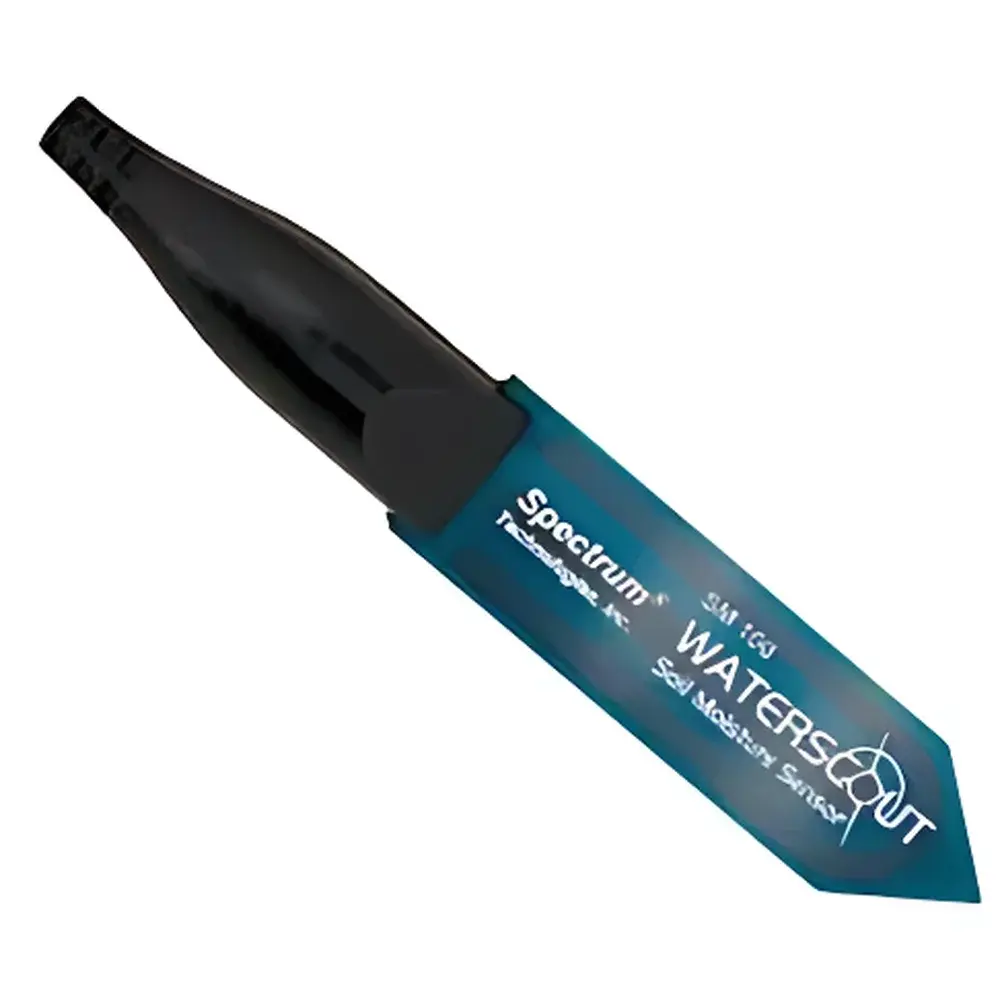
| Sensor Dimensions | 6 cm × 2 cm × 0.76 cm (2.4 in × 0.8 in × 0.3 in) |
Overview
The Spectrum SM100 Portable Soil Moisture Meter is a field-deployable, time-domain reflectometry (TDR)-compatible sensor system engineered for rapid, repeatable measurement of volumetric water content (VWC) in soils and growing media. Unlike capacitance-based sensors susceptible to salinity-induced drift, the SM100 employs a stable 80 MHz oscillating circuit embedded within its planar electrode geometry to generate a high-frequency electromagnetic field. Changes in dielectric permittivity—primarily driven by water content—are detected as shifts in oscillation frequency, which are linearly converted into calibrated VWC output. This principle ensures robust performance across diverse soil textures (sand, loam, clay), organic substrates (peat, coco coir), and low-to-moderate salinity conditions (EC < 8 mS/cm). Designed for agronomic monitoring, ecological research, irrigation scheduling, and environmental impact assessment, the SM100 delivers laboratory-grade repeatability in a handheld configuration with no requirement for soil-specific calibration.
Key Features
- High-stability 80 MHz oscillator architecture minimizes temperature-induced frequency drift and enhances long-term signal integrity.
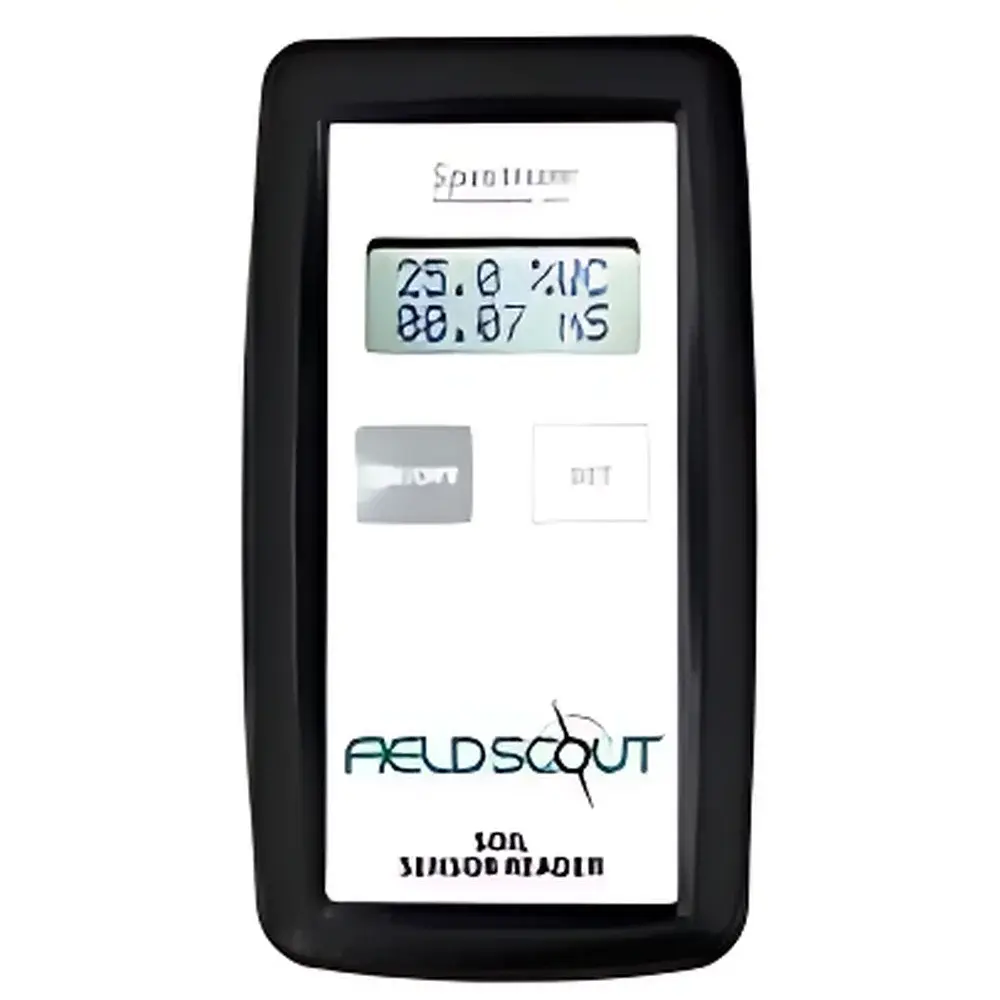
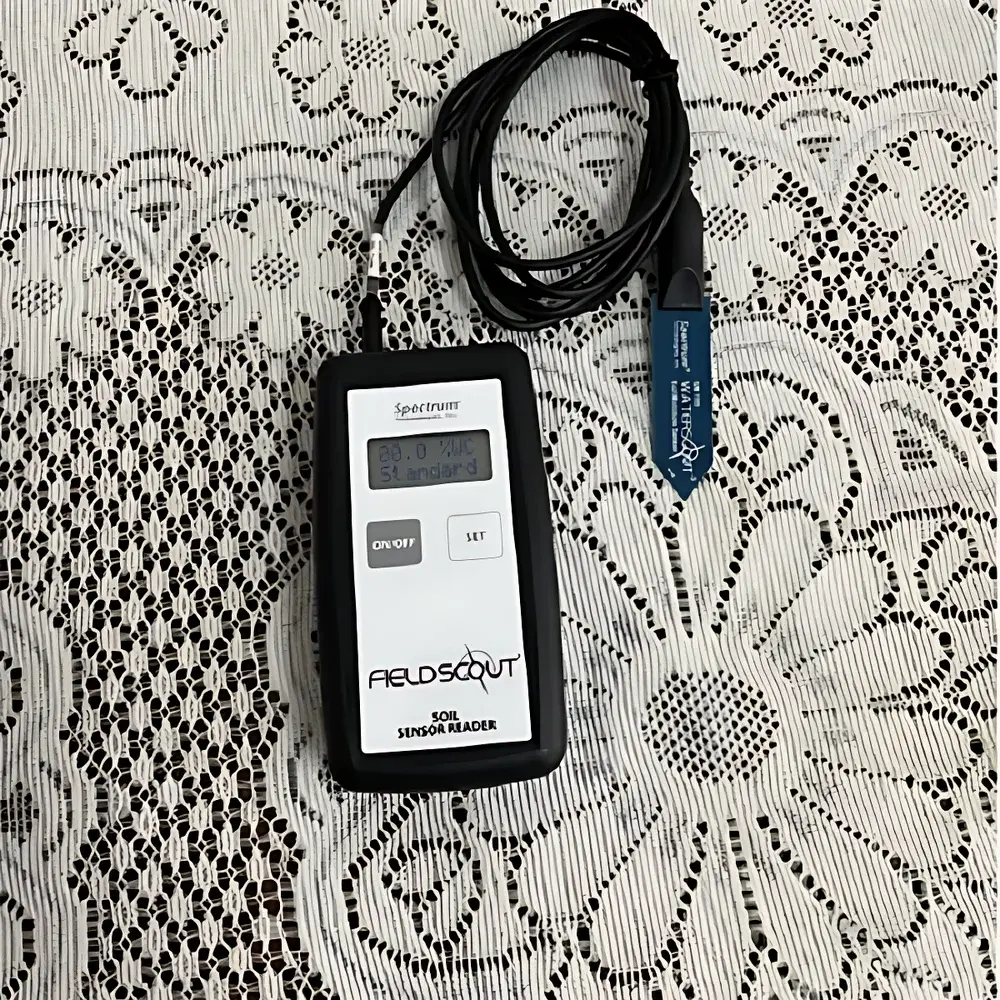
- Modular plug-and-play design: detachable sensor probe and handheld reader enable flexible deployment—single-probe field surveys or multi-sensor networked logging via optional 4-channel reader.
- Integrated data logger stores >150,000 timestamped readings (6+ months at 1-min intervals), eliminating reliance on external devices during extended campaigns.
- Ruggedized splash-resistant enclosure rated for continuous outdoor operation from –40 °C to +50 °C—validated for use in arctic tundra, desert margins, and humid subtropical zones.
- Low-power consumption (6–10 mA @ 3–5 V DC) supports extended battery life and compatibility with solar-charged field power systems.
- Standardized 2.5 mm stereo jack interface ensures interoperability with third-party dataloggers (e.g., Campbell Scientific CR1000X, Onset HOBO UX120) and custom IoT gateways.
Sample Compatibility & Compliance
The SM100 sensor is validated for direct insertion into mineral soils, structured horticultural substrates, and compacted landfill cover layers. Its shallow sensing volume (6 × 2 × 0.3 cm) enables discrete profiling without significant soil disturbance. Performance remains within ±3% VWC accuracy for bulk electrical conductivity up to 8 mS/cm—covering most agricultural and remediation scenarios outside highly saline coastal or irrigated sodic soils. The device conforms to ASTM D5792-22 (Standard Practice for Determining Volumetric Water Content of Soils Using Electromagnetic Methods) and supports GLP-compliant field data collection when paired with timestamped, audit-trail-enabled software workflows. While not intrinsically certified for hazardous locations, its low-voltage operation and non-sparking interface meet IEC 60079-11 requirements for use in Zone 2 environments.
Software & Data Management
Data retrieval is performed via USB connection using Spectrum’s proprietary LogView software (Windows/macOS compatible), which provides raw VWC values, excitation voltage verification, temperature-compensated diagnostics, and batch export to CSV/Excel formats. All logged entries include UTC timestamps, sensor ID, and measurement duration metadata. For integration into enterprise environmental monitoring platforms, the SM100 supports ASCII serial protocol over USB CDC emulation—enabling scripted ingestion into Python-based data pipelines, SQL databases, or cloud services (e.g., AWS IoT Core, Azure IoT Hub) with full traceability. Audit logs record firmware version, calibration date, and user-defined site identifiers—supporting FDA 21 CFR Part 11 compliance when deployed under validated SOPs.
Applications
- Precision irrigation management in row crops, orchards, and vineyards—enabling real-time deficit irrigation decisions based on root-zone VWC thresholds.
- Long-term edaphic monitoring in climate change research plots, including permafrost thaw studies and drought resilience assessments.
- Verification of soil moisture restoration following land reclamation, mine spoil remediation, or post-wildfire rehabilitation efforts.
- Calibration reference for satellite-based soil moisture products (e.g., SMAP, Sentinel-1) through coordinated ground-truth campaigns.
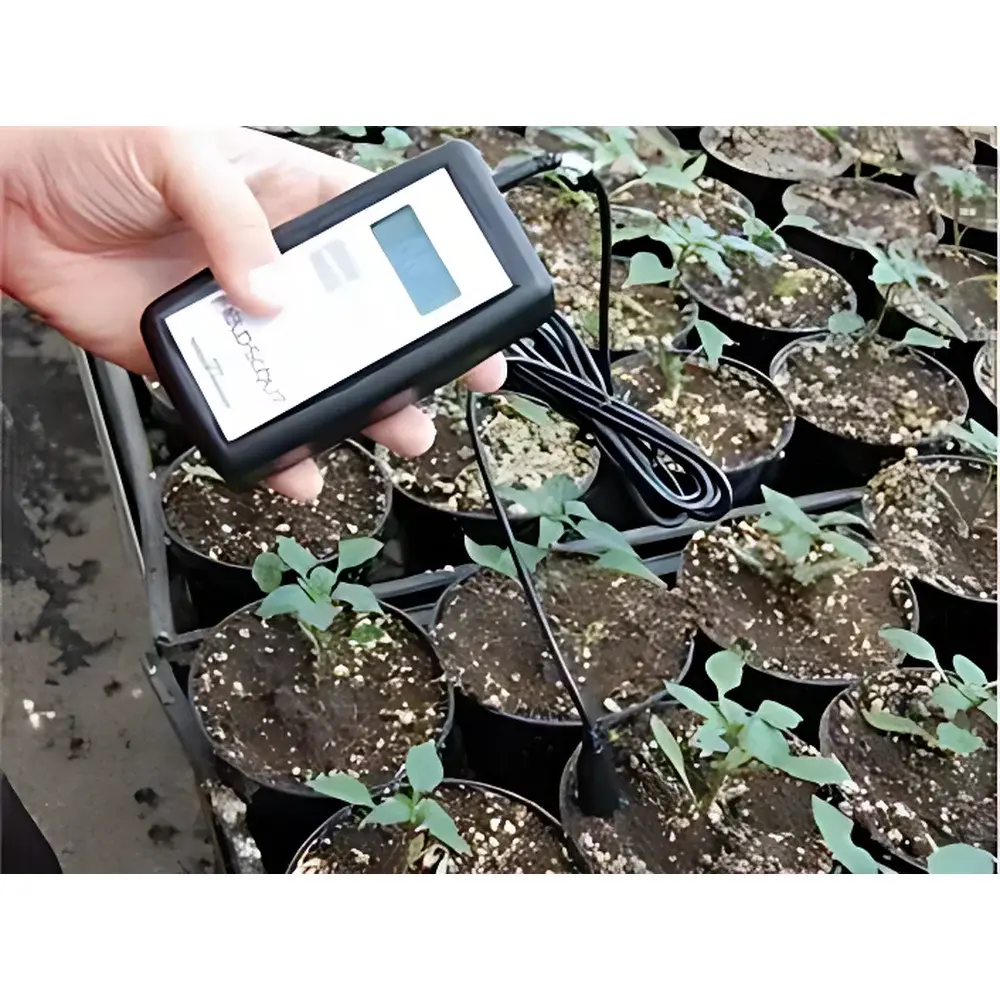
- Quality control in nursery production—monitoring substrate moisture uniformity across propagation trays and container stock.
FAQ
Does the SM100 require soil-specific calibration?
No. The factory calibration is traceable to NIST-standard gravimetric soil moisture references and applies across standard mineral soils and common organic media. Field recalibration is only recommended if operating in highly conductive (>8 mS/cm) or high-clay (>60%) matrices where empirical correction may improve accuracy.
Can the sensor be buried permanently?
Yes—its stainless-steel electrodes and epoxy-sealed housing are rated for continuous burial. However, cable strain relief and conduit protection are advised for installations exceeding 6 months in dynamic soil environments.
Is the 4-channel reader compatible with existing SM100 probes?
Yes. All SM100 sensors use identical 2.5 mm stereo interface pinout and voltage scaling; no firmware update or adapter is required when upgrading from single- to multi-channel operation.
What is the maximum cable extension limit without signal degradation?
The analog voltage output maintains linearity up to 15 m total length when using shielded twisted-pair cable (24 AWG, 100 Ω characteristic impedance) and proper grounding at the reader end.
How does temperature affect measurement stability?
The sensor includes internal temperature compensation; published accuracy (±3% VWC) accounts for the full –40 °C to +50 °C operating range. No external thermal shielding is necessary for typical field deployments.







