
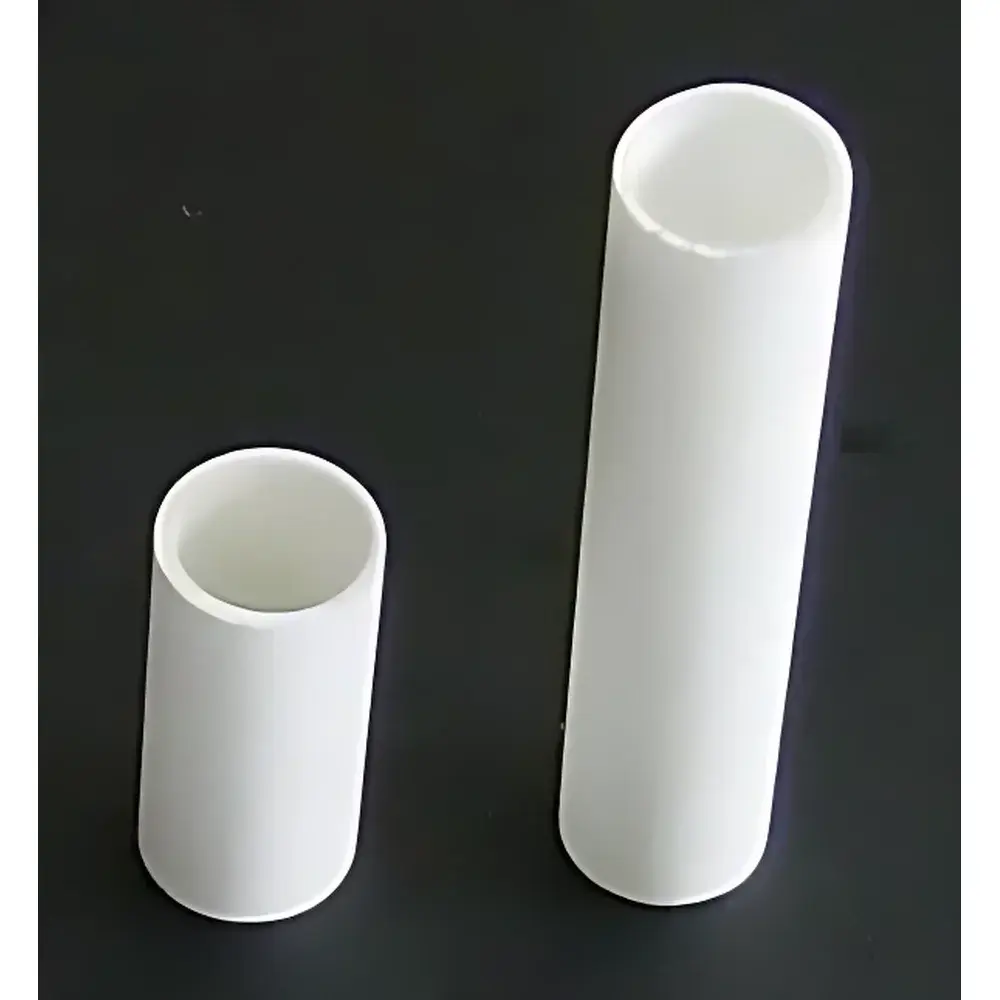
SPG Porous Glass Membrane Separation System
| Origin | Imported |
|---|---|
| Manufacturer Type | Authorized Distributor |
| Model | SPG |
| Pricing | Available Upon Request |
Overview
The SPG Porous Glass Membrane Separation System is an engineered inorganic membrane platform developed by SPG Corporation (Japan) in 1981, based on phase-separated Shirasu porous glass technology. Unlike polymeric or ceramic membranes, SPG membranes are fabricated through a precisely controlled thermal–chemical process: a borosilicate glass precursor—composed of volcanic ash (Shirasu), silica, lime, and boric oxide—is melted at 1350 °C, then subjected to controlled phase separation at ~700 °C to generate nanoscale immiscible domains of CaO·B₂O₃ (soluble) and Al₂O₃·SiO₂ (insoluble). Subsequent leaching in acidic solution selectively removes the soluble phase, yielding a rigid, chemically stable, three-dimensional network of uniform cylindrical pores. This deterministic fabrication enables reproducible pore size distribution (±5% CV), exceptional mechanical integrity under high-pressure operation, and long-term resistance to organic solvents, strong acids/bases, and elevated temperatures (up to 400 °C in inert atmosphere). The system is deployed primarily for precision emulsification, microencapsulation, controlled gas dispersion, and sterile filtration where pore geometry fidelity, thermal stability, and batch-to-batch consistency are critical.
Key Features
- Monodisperse pore architecture with tunable diameters ranging from 0.05 µm to 50 µm—achieved via precise control of heat treatment duration, acid concentration, and leaching time
- Two standard configurations: tubular (outer diameter 5–10 mm, wall thickness 0.4–0.8 mm, length 20–500 mm) and disc-shaped (diameter 5–20 mm, thickness 0.4–0.7 mm)
- Zero surface fouling tendency due to hydrophilic, non-adsorptive Al₂O₃·SiO₂ matrix—eliminates need for surfactants in many emulsification protocols
- High-pressure compatibility (rated up to 1.0 MPa for tubular modules; 0.6 MPa for disc formats) with minimal flow resistance
- Autoclavable and compatible with CIP/SIP protocols—meets requirements for pharmaceutical-grade process validation
- No organic binders or sintering aids used during manufacturing—ensures ultra-low extractables and compliance with USP <661> and ISO 10993-12
Sample Compatibility & Compliance
SPG membranes demonstrate broad chemical compatibility across aqueous, alcoholic, chlorinated, and polar aprotic solvent systems—including acetone, THF, DMF, and 30% HNO₃. They are inert toward enzymes, proteins, and labile APIs, enabling direct processing of biologics without denaturation. Tubular modules integrate seamlessly into standard 1/4″ or 3/8″ sanitary clamp manifolds (DIN 11851, ISO 2852). Disc formats mount into custom stainless-steel holders compliant with ASTM F838-22 (bacterial retention testing) and ISO 4003:1998 (membrane filter integrity standards). All SPG membrane lots undergo certificate-of-analysis verification per ISO 9001:2015 and include traceable pore size calibration data certified against NIST-traceable latex sphere standards.
Software & Data Management
While SPG membranes themselves are passive components, integration into automated emulsification or continuous separation platforms requires precise transmembrane pressure (TMP) monitoring and flow rate synchronization. Compatible instrumentation—including digital pressure transducers (0–2.0 MPa, ±0.1% FS), mass flow controllers (0.1–500 mL/min), and PLC-based sequencing logic—supports full audit trail generation compliant with FDA 21 CFR Part 11. When paired with validated SCADA systems (e.g., Siemens Desigo CC or Rockwell FactoryTalk), operational parameters—including TMP, ΔP across membrane stack, temperature, and cumulative throughput—are logged with electronic signatures, time stamps, and user access controls. Raw data export supports CSV, XML, and SQL formats for statistical process control (SPC) and Minitab-based capability analysis (Cp/Cpk).
Applications
- Pharmaceutical emulsion synthesis: production of nanoemulsions (e.g., propofol analogs) and microemulsions with tight droplet size distribution (Dv₉₀/Dv₁₀ ≤ 1.8) per USP <729>
- Food-grade encapsulation: controlled release of flavors, probiotics, or omega-3 oils using edible wall materials (e.g., maltodextrin, gum arabic)
- Industrial catalyst dispersion: uniform distribution of Pt/Pd nanoparticles in fuel cell electrode slurries
- Sterile gas sparging: oxygen transfer in mammalian cell culture bioreactors with bubble size control <50 µm (reducing shear stress)
- Reference standards: calibration of laser diffraction particle analyzers (Malvern Mastersizer, Beckman Coulter LS series) via monodisperse emulsion generation
FAQ
What is the maximum operating temperature for SPG membranes in aqueous environments?
Continuous use is rated to 120 °C; short-term exposure up to 150 °C is permissible during SIP cycles.
Can SPG membranes be regenerated after organic fouling?
Yes—standard regeneration includes sequential rinsing with 0.1 M NaOH (30 min), deionized water (3× volume), and 0.5 M HNO₃ (30 min), followed by autoclaving at 121 °C for 20 min.
Is pore size certification provided with each shipment?
Yes—each lot includes a Certificate of Conformance listing mean pore diameter (via mercury intrusion porosimetry), bubble point pressure (ASTM F316-21), and hydraulic permeability (L/m²·h·bar) measured at 25 °C.
How does SPG compare to track-etched polycarbonate membranes in emulsification?
SPG offers superior geometric fidelity (cylindrical vs. tortuous pores), higher pressure tolerance (>10×), and no edge effects—resulting in narrower droplet size distributions and reduced coalescence during scale-up.
Are custom geometries available beyond standard tube and disc formats?
Yes—custom capillary arrays, multi-channel flat-sheet modules, and flanged housings for pilot-scale (5–50 L/h) systems are available under NDA-supported engineering collaboration.



