
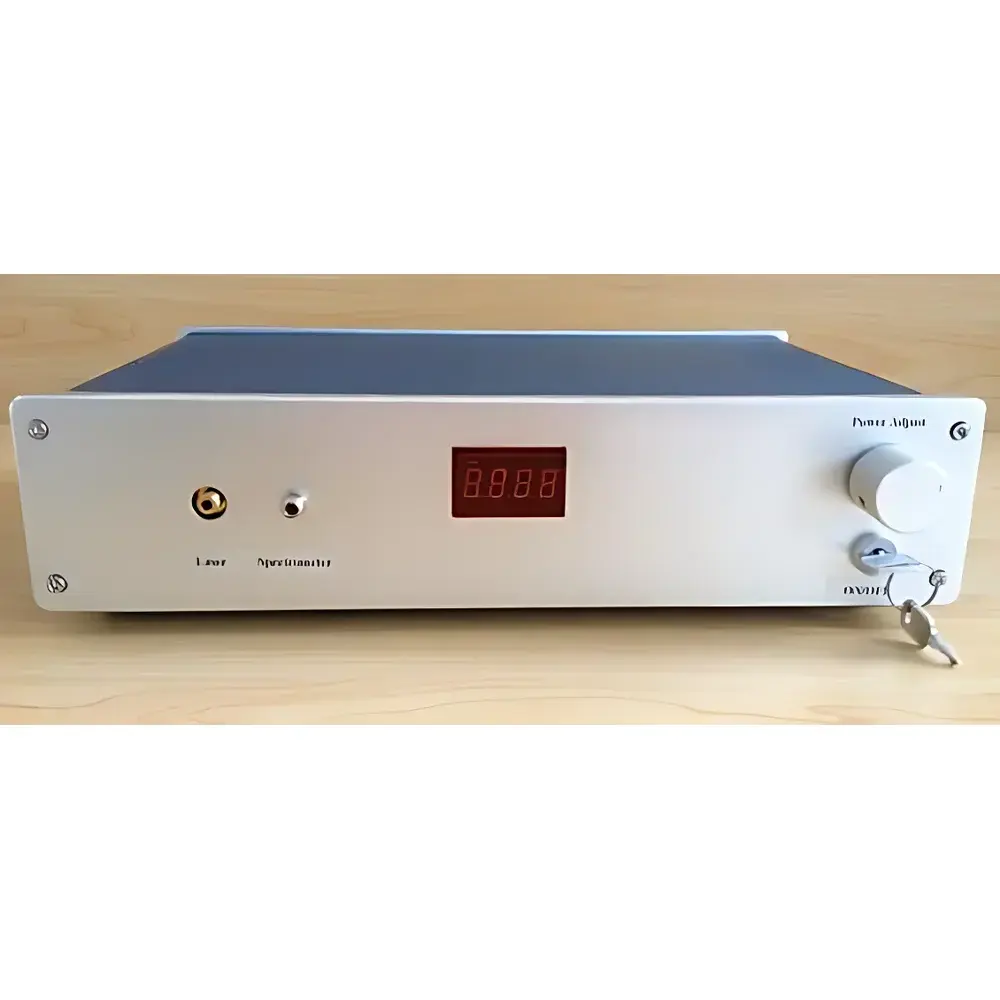
SPL RAMAN-785 Portable Raman Spectrometer
| Brand | SPL Photonics |
|---|---|
| Origin | Zhejiang, China |
| Model | SPL-RAMAN-785 |
| Instrument Type | Portable / Handheld Raman Spectrometer |
| Spectral Range | 200–4000 cm⁻¹ |
| Spectral Resolution | 13 cm⁻¹ @ 1000 cm⁻¹ |
| Excitation Wavelength | 785 ± 1 nm |
| Laser Power | Adjustable |
| Probe Option | SPL-RPB-785 Fiber-Coupled Raman Probe (785 nm CW laser, OD6 notch filter, 105 µm excitation / 200 µm collection fiber) |
Overview
The SPL RAMAN-785 Portable Raman Spectrometer is an engineered field-deployable analytical instrument designed for rapid, non-destructive molecular identification and qualitative/semi-quantitative analysis under ambient conditions. Based on spontaneous Raman scattering principles, the system utilizes a stabilized 785 nm diode laser to excite vibrational modes in chemical bonds, generating fingerprint-like spectral signatures between 200 cm⁻¹ and 4000 cm⁻¹. Its compact architecture integrates excitation optics, high-throughput spectrograph, thermoelectrically cooled CCD detector, and real-time signal processing firmware—enabling reliable performance in laboratories, manufacturing floors, customs checkpoints, forensic mobile units, and raw material receiving bays. The 785 nm excitation wavelength provides optimal balance between Raman cross-section efficiency and fluorescence suppression across diverse organic and inorganic samples, including pharmaceuticals, polymers, explosives, illicit substances, pigments, and 2D materials such as graphene.
Key Features
- Field-rugged design with integrated battery operation (optional external power supply), enabling >4 hours of continuous acquisition without tethering
- Adjustable laser power output (typically 10–500 mW) to optimize signal-to-noise ratio while minimizing thermal degradation or photobleaching of sensitive samples
- OD6 hard-coated notch filter ensures effective Rayleigh line rejection (>10⁶ attenuation), critical for detecting low-intensity Raman bands adjacent to the elastic peak
- Thermoelectrically cooled back-illuminated CCD detector (−10 °C typical operating temperature) delivers enhanced sensitivity and reduced dark current noise
- Modular probe interface supporting SPL-RPB-785 fiber-optic probe—featuring 105 µm excitation core and 200 µm collection fiber for efficient light coupling and flexible sampling geometry
- User-customizable spectral library builder: supports import of reference spectra (ASTM E1840, ISO 8573-9 compliant formats), spectral preprocessing (baseline correction, vector normalization), and match algorithms (cosine similarity, correlation coefficient)
Sample Compatibility & Compliance
The SPL RAMAN-785 accommodates solid, liquid, gel, and powder samples without requirement for extensive preparation. Through direct contact or standoff measurement (up to 10 mm working distance with optional lens adapter), it enables analysis of packaged materials—including transparent or semi-transparent containers—without opening. The system meets electromagnetic compatibility requirements per IEC 61326-1:2013 for industrial environments. While not certified for intrinsic safety (ATEX/IECEx), its Class 3B laser configuration complies with ANSI Z136.1-2022 and IEC 60825-1:2014 standards. Data integrity features support GLP/GMP-aligned workflows: audit trail logging, user access levels, and electronic signature readiness compatible with FDA 21 CFR Part 11 implementation when deployed with validated software configurations.
Software & Data Management
Bundled SPL Raman Analysis Suite (v3.x) provides intuitive GUI-driven acquisition, real-time spectral preview, automated peak detection, and multivariate analysis tools (PCA, PLS-DA). Raw data are stored in vendor-neutral .spc and .csv formats; metadata fields include timestamp, laser power, integration time, detector temperature, and operator ID. Software supports batch processing of multiple spectra, statistical outlier detection, and export of reports in PDF/PNG with embedded calibration verification records. For enterprise integration, RESTful API enables bidirectional communication with LIMS platforms (e.g., Thermo Fisher SampleManager, LabVantage) and supports scheduled spectral uploads to centralized repositories via secure SFTP or HTTPS endpoints.
Applications
- Pharmaceutical QA/QC: Raw material identity verification (USP , EP 2.2.48), counterfeit drug screening, polymorph differentiation
- Materials science: Graphene layer count assessment (G/2D band intensity ratio), carbon nanotube chirality mapping, stress/strain analysis in composites
- Forensics & security: On-site identification of narcotics, explosives (TNT, RDX), and hazardous chemicals without sample transfer
- Food & agriculture: Adulterant detection (melamine in milk, Sudan dyes in spices), authenticity verification of olive oil or honey
- Environmental monitoring: Microplastic particle characterization in water filters, soil contaminant screening (PAHs, PCBs)
- Academic research: In situ reaction monitoring, catalysis studies, battery electrode degradation analysis
FAQ
What is the minimum detectable concentration for common analytes like acetaminophen or caffeine?
Detection limits are matrix- and substrate-dependent; typical LODs range from 0.1% w/w in homogeneous solids to ~10 mM in aqueous solutions under standard 10 s integration and 100 mW excitation.
Can the system perform quantitative analysis out-of-the-box?
Yes—when calibrated with NIST-traceable reference standards and validated using ICH Q2(R2) guidelines, the system supports quantitative modeling via internal standardization or partial least squares regression.
Is spectral calibration traceable to national standards?
Factory calibration uses NIST SRM 2241 (silicon) and SRM 2242 (polystyrene); users may perform daily wavelength and intensity verification using built-in LED reference source.
Does the software support multi-user role-based permissions?
Yes—administrator, analyst, and reviewer roles enforce separation of duties; all actions affecting data integrity are logged with immutable timestamps and user identifiers.
What maintenance is required for long-term operational stability?
Annual optical alignment verification and detector dark current characterization are recommended; no consumables or routine recalibration are required under normal environmental conditions (15–30 °C, <70% RH).






