
StellarNet BlueWave Fiber Optic Spectrometer
| Brand | StellarNet |
|---|---|
| Origin | USA |
| Model | BlueWave |
| Spectral Range | 200–1100 nm |
| Detector Type | CCD (2048 pixels) |
| Optical Resolution | 0.13–6 nm (FWHM, configuration-dependent) |
| Sensitivity | 100 photons/count at 400 nm |
| Signal-to-Noise Ratio | 1000:1 (full well, single acquisition) |
| Dynamic Range | 2000:1 (with 6-decade linear response) |
| Stray Light | <1% |
| A/D Converter | 16-bit, high-speed |
| Interface | USB 2.0 (plug-and-play, Windows XP/Vista/7 compatible) |
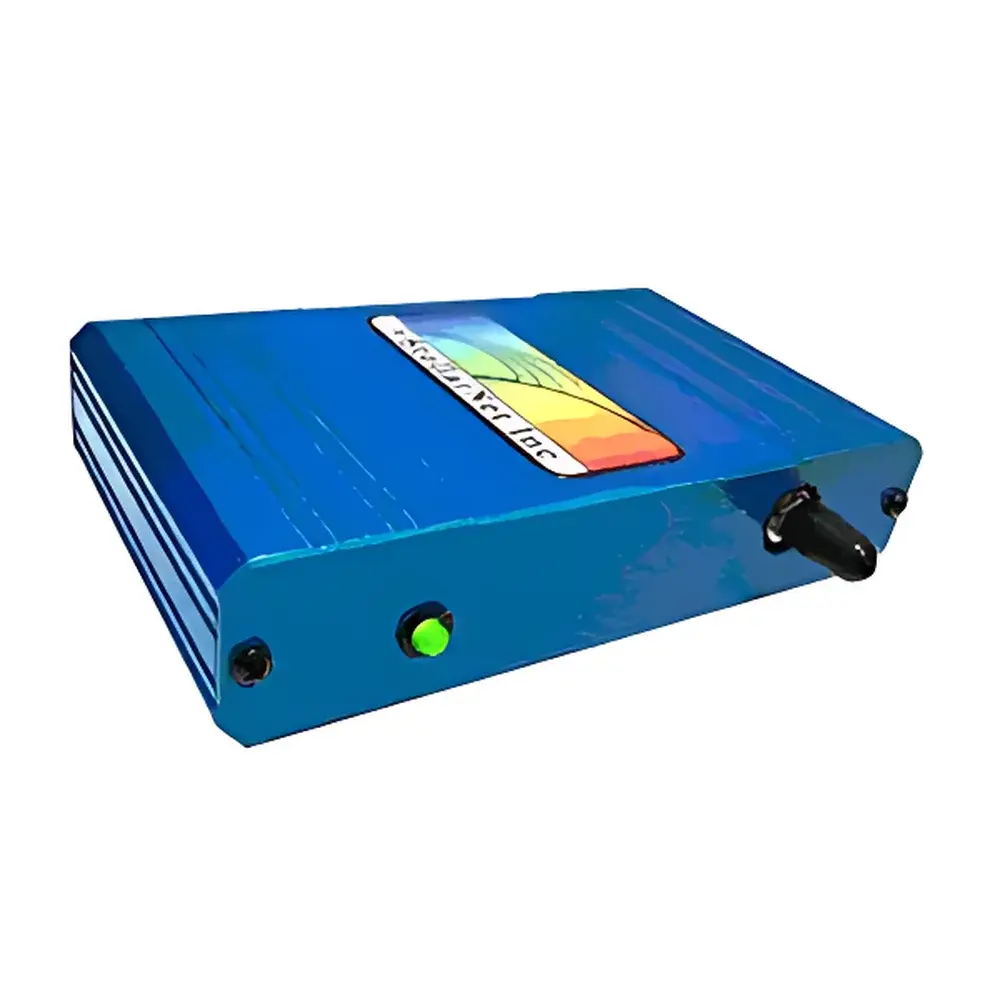
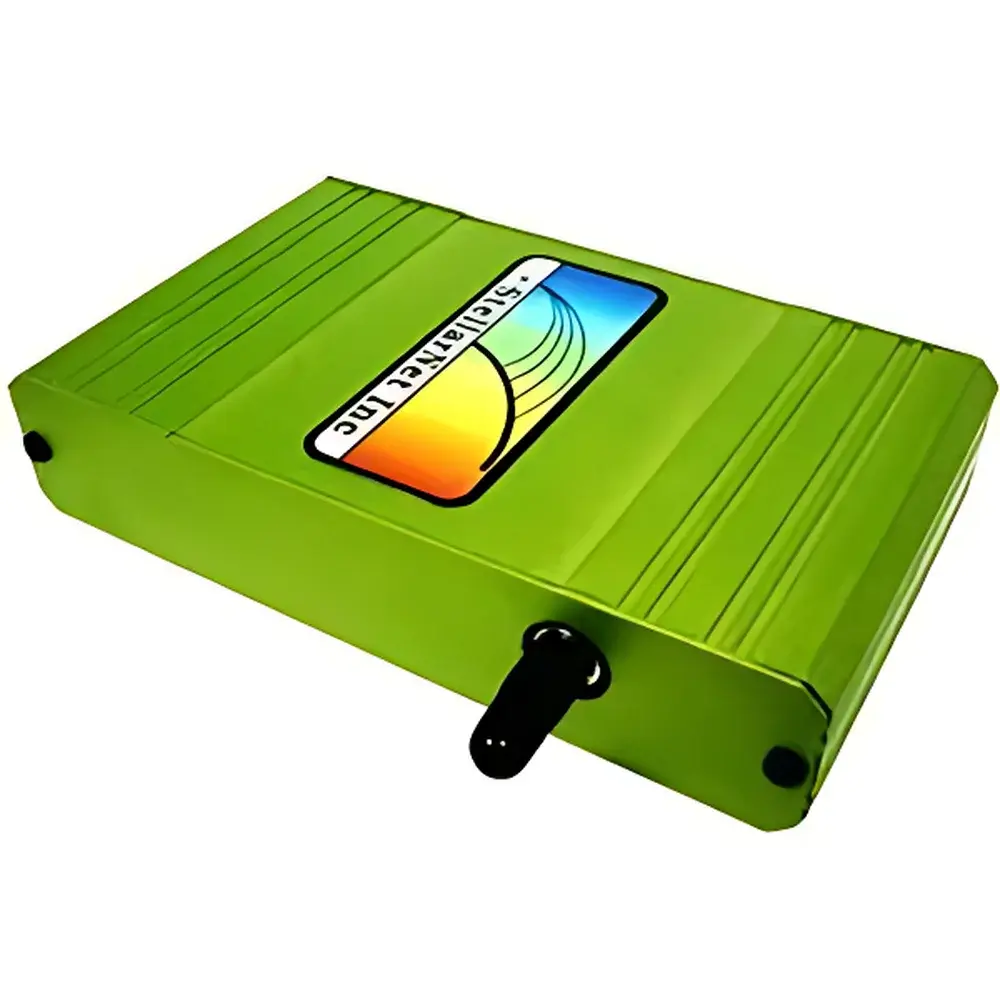
| Dimensions | 25.4 × 76.2 × 127 mm (1 × 3 × 5 in) |
| Software | Included SpectraWiz™ (free), LabVIEW & Excel/VBA SDKs |
Overview
The StellarNet BlueWave Fiber Optic Spectrometer is a compact, high-performance benchtop spectrometer engineered for precision UV-Vis-NIR spectral analysis across laboratory, field-deployable, and OEM integration environments. Based on a Czerny-Turner optical architecture with optimized holographic diffraction gratings and a thermally stabilized 2048-pixel linear CCD array, the BlueWave delivers calibrated spectral data from 200 nm to 1100 nm — covering deep ultraviolet through near-infrared regions critical for quantitative absorbance, reflectance, fluorescence, irradiance, Raman shift, and LIBS plasma emission analysis. Its modular fiber-coupled design enables seamless integration with light sources (e.g., deuterium-halogen, LEDs, lasers), sampling accessories (integrating spheres, cuvette holders, probe tips), and process lines — supporting both static measurements and real-time monitoring applications requiring robust reproducibility and thermal drift stability.
Key Features
- Compact form factor (25.4 × 76.2 × 127 mm) suitable for space-constrained setups, portable field use, and embedded OEM instrumentation
- 16-bit high-speed analog-to-digital conversion enabling rapid spectral acquisition (integration times from 1 ms to 10 s)
- USB 2.0 interface with full plug-and-play compatibility under Windows XP, Vista, and 7 — no external power supply required
- Thermally compensated optical bench minimizing wavelength drift (<0.05 nm/°C typical)
- Configurable resolution (0.13–6 nm FWHM) achieved via interchangeable slit widths (10–200 µm) and grating options (300–2400 grooves/mm)
- Low stray light (<1%) ensured by optimized baffling, order-sorting filters, and coated optical components
- High quantum efficiency CCD detector with peak responsivity at 400 nm (100 photons/count) and broad spectral response up to 1100 nm
Sample Compatibility & Compliance
The BlueWave supports diverse sample geometries and measurement modalities including transmission through cuvettes or gas cells, diffuse reflectance from solids and powders, specular reflectance from thin films, irradiance from LEDs or solar simulators, and fluorescence excitation-emission profiling. It complies with fundamental metrological requirements outlined in ASTM E334 (Standard Practice for Spectrophotometric Measurement of Reflectance and Transmittance), ISO 13406-2 (for display-related spectral radiance), and USP (Spectrophotometric Absorbance Measurements). While not certified for GMP/GLP-regulated production environments out-of-the-box, its hardware architecture and software audit trail capabilities (via SpectraWiz logging and optional timestamped HDF5 export) support alignment with FDA 21 CFR Part 11 requirements when deployed with validated workflows and controlled access protocols.
Software & Data Management
StellarNet provides SpectraWiz™ — a fully featured, royalty-free spectral acquisition and analysis suite supporting real-time plotting, baseline correction, peak identification, spectral math (ratio, subtraction, smoothing), and calibration curve generation. The software includes built-in NIST-traceable wavelength and intensity calibration routines using mercury-argon and tungsten-halogen reference sources. For system integrators, native LabVIEW VIs and Excel/VBA macros are supplied, enabling direct control of integration time, averaging, dark correction, and spectral export to CSV, TXT, or binary formats. All spectral data can be exported with metadata (timestamp, instrument ID, calibration file hash, user notes), facilitating traceability in QA/QC documentation and LIMS integration.
Applications
- LED and OLED spectral power distribution (SPD) characterization and chromaticity coordinate calculation (CIE 1931 xy, u’v’)
- In-line monitoring of chemical reaction kinetics via UV-Vis absorbance trends (e.g., nitrate reduction, dye degradation)
- Food quality assessment — chlorophyll, anthocyanin, and carotenoid quantification in fruits, vegetables, and beverages
- Pharmaceutical tablet coating uniformity analysis using NIR reflectance mapping
- Raman spectroscopy (with notch or edge filters) for polymer identification and crystallinity evaluation
- LIBS plasma emission line identification for elemental composition screening in metallurgy and geology
- Environmental water quality testing — detection of dissolved organic matter (DOM), nitrate, and turbidity indices
FAQ
What spectral calibration standards are supported?
The BlueWave ships with factory-applied wavelength and intensity calibrations traceable to NIST SRM 2031 (Hg-Ar lamp) and SRM 2032 (tungsten halogen lamp); users may perform re-calibration using optional calibration kits.
Can multiple BlueWave units be synchronized?
Yes — via external TTL trigger input/output ports, up to four units can be hardware-synchronized for multi-channel or spatially resolved spectral acquisition.
Is the detector cooled?
No — the BlueWave uses an uncooled, thermoelectrically stabilized CCD; active cooling is omitted to preserve portability and power efficiency while maintaining adequate dark current performance for most routine applications.
What is the maximum recommended integration time for low-light applications?
Up to 10 seconds per scan is supported; for longer exposures, external synchronization with gated light sources or signal averaging across multiple scans is recommended to maintain dynamic range integrity.
Does SpectraWiz support automated pass/fail criteria for QC workflows?
Yes — custom pass/fail thresholds can be defined per peak area, ratio, or centroid position, with results logged and exportable for SPC charting or electronic batch record systems.
Related Products






