
Stresstech GearScan Portable Gear Grinding Burn Detection System
| Brand | Stresstech Oy |
|---|---|
| Origin | Finland |
| Manufacturer Status | Authorized Distributor |
| Origin Category | Imported |
| Model | GearScan |
| Pricing | Available Upon Request |
Overview
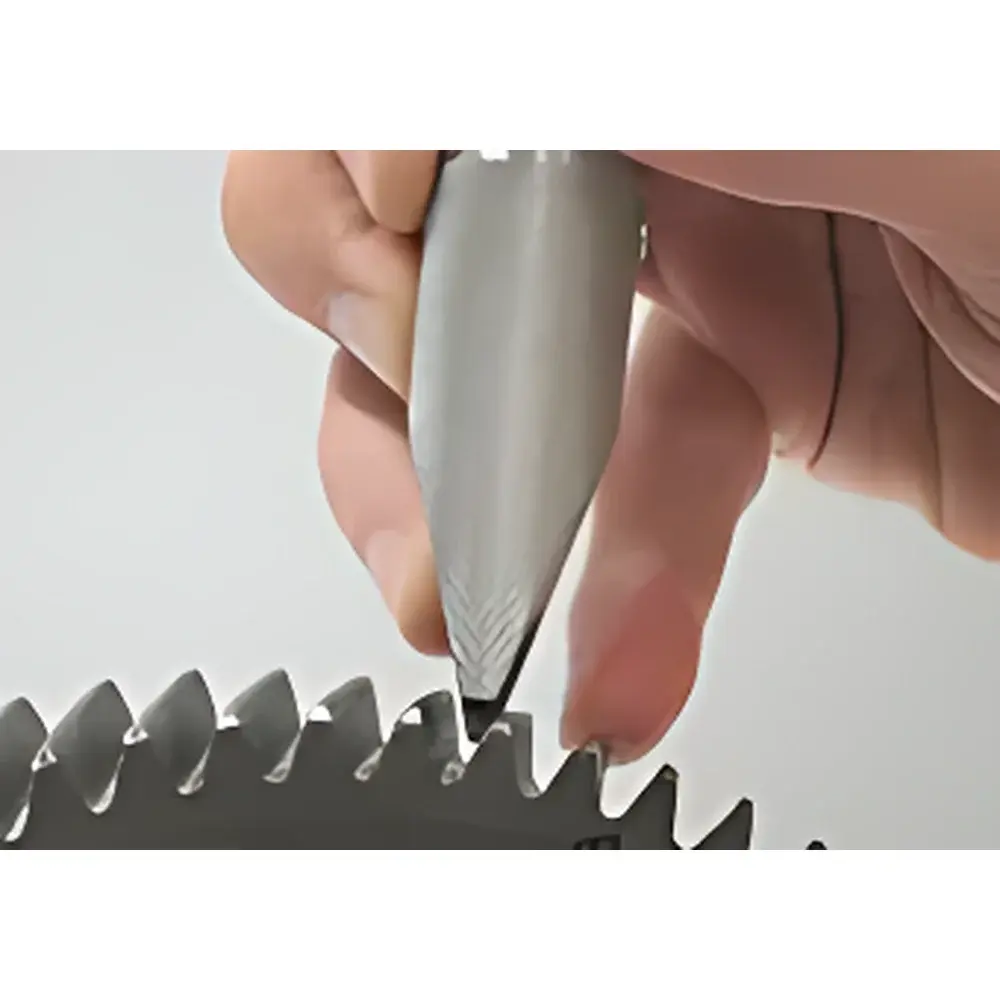
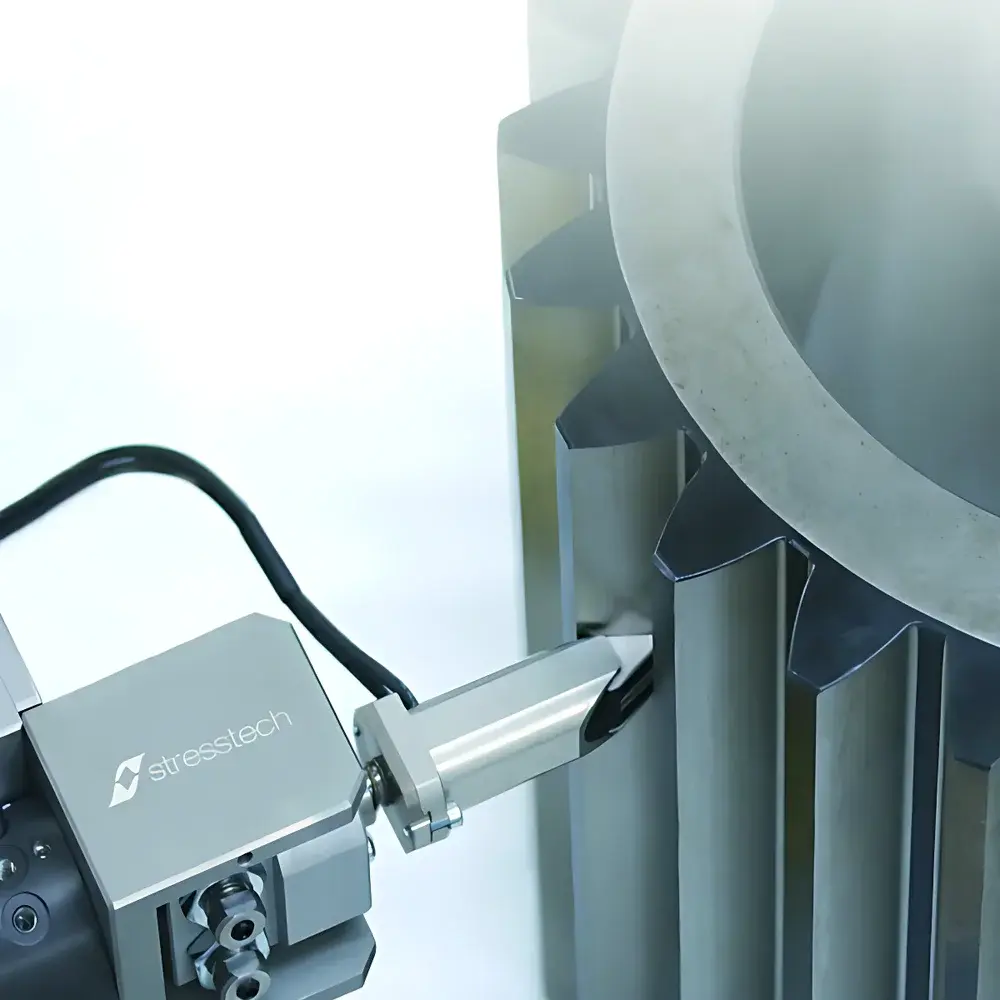
The Stresstech GearScan Portable Gear Grinding Burn Detection System is a non-destructive, surface-sensitive electromagnetic measurement instrument engineered for rapid, in-situ detection of grinding-induced thermal damage—commonly referred to as “grinding burn”—on case-hardened steel gears. Unlike X-ray stress analyzers (which measure residual lattice strain via diffraction), GearScan operates on the principle of eddy current testing (ECT) combined with magnetic permeability mapping. It detects localized microstructural changes—including untempered martensite, retempered zones, and tensile residual stresses—that arise from excessive heat input during grinding. These alterations modify the material’s electromagnetic response, enabling high-resolution spatial identification of subsurface burn zones down to ~50–100 µm depth. Designed explicitly for production-floor deployment, GearScan delivers quantitative, repeatable assessments without requiring part removal, surface preparation, or consumables—making it ideal for high-mix gear manufacturing, quality gate inspection, and process validation in automotive transmission, wind turbine, and aerospace drivetrain facilities.
Key Features
- Portable, battery-operated architecture with integrated ergonomic handle and ruggedized housing rated IP54 for shop-floor durability
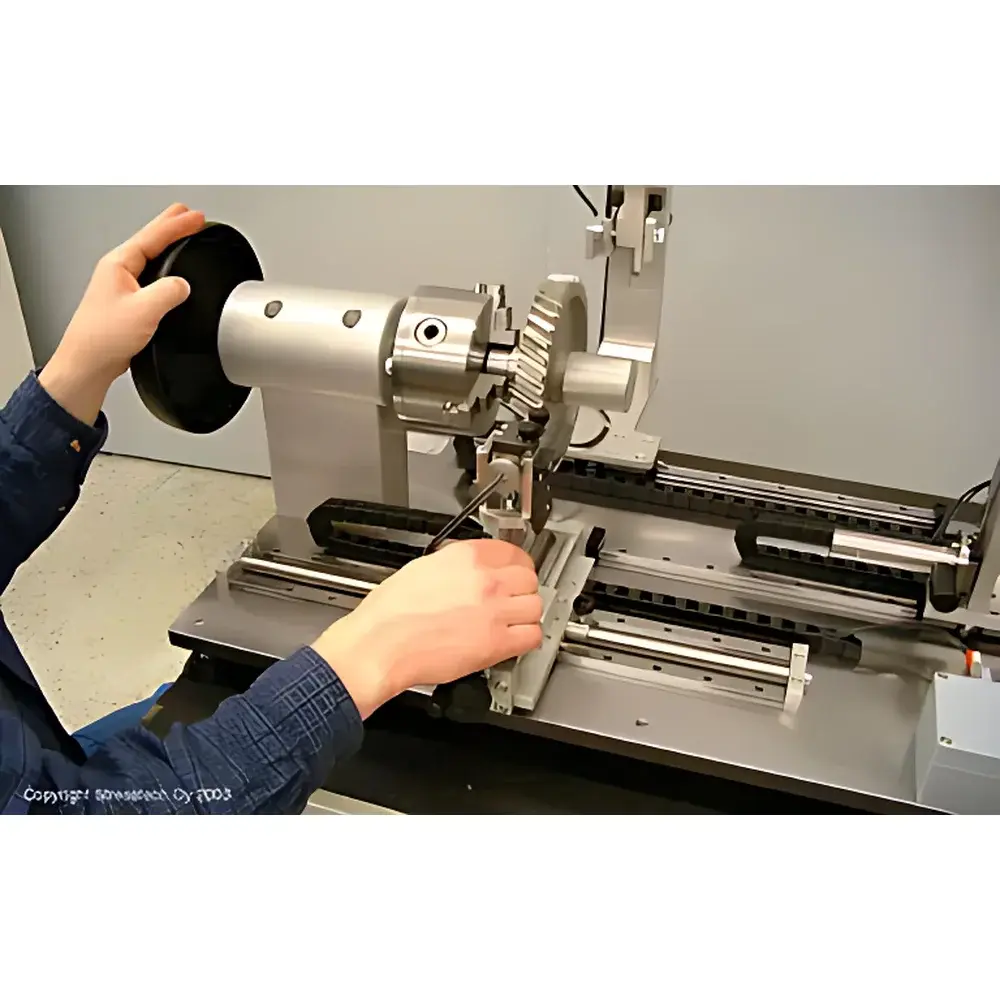
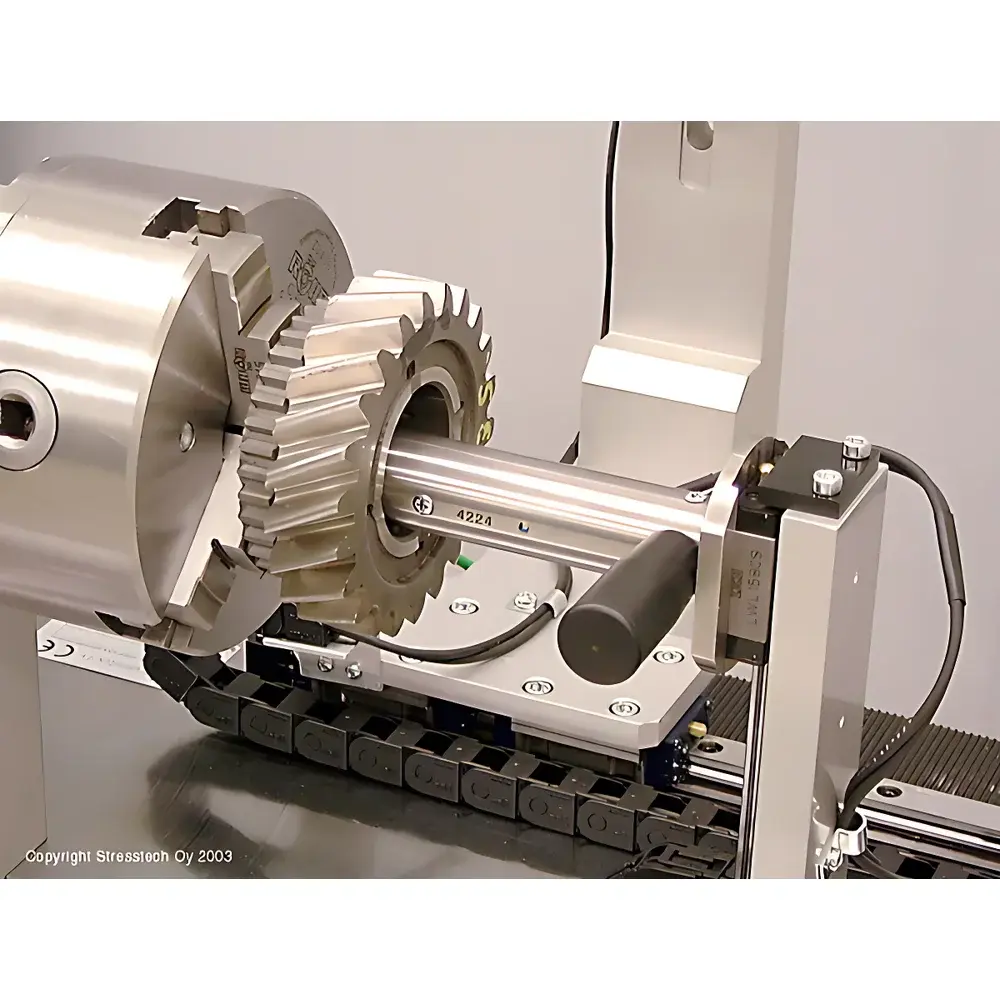
- Motorized multi-axis scanning head with programmable path generation—supports both manual positioning and automated contour-following across involute tooth flanks
- High-sensitivity differential eddy current probe array optimized for cylindrical gear geometries (spur and helical), with automatic pitch and helix angle compensation
- Real-time color-coded thermal damage mapping (“heat map”) overlay on 3D tooth surface visualization, enabling immediate spatial localization of burn severity gradients
- Dual-mode operation: single-point verification mode for quick pass/fail screening; full-tooth-scan mode for comprehensive SPC-grade data collection
- Integrated tactile feedback and audible tone alerts synchronized with threshold violations, supporting operator-guided inspection under noisy industrial environments
Sample Compatibility & Compliance
GearScan accommodates external spur and helical gears with module ranges from 1.0 to 12.0 mm, face widths up to 120 mm, and diameters from 40 mm to 600 mm. It supports both through-hardened and case-carburized (e.g., AISI 8620, 16MnCr5, 20MnCr5) and nitrided steels. The system complies with ISO 11484:2019 (metallic materials — guidelines for non-destructive testing of gears) and aligns with ASTM E3097-21 (standard guide for electromagnetic testing of ferromagnetic components). Measurement traceability is maintained per ISO/IEC 17025 requirements when used within a certified QA laboratory environment. Data export formats (CSV, XML, PDF) support integration into enterprise-level quality management systems compliant with IATF 16949 and AS9100.
Software & Data Management
The GearScan platform runs on Windows 10/11 and is powered by two complementary software modules: EasyGear (standard) and ViewScan (optional extension). EasyGear enables intuitive test setup—users input gear geometry parameters (pitch, pressure angle, helix angle, number of teeth), select preconfigured templates, and initiate scans with one click. All raw signal data, position metadata, and pass/fail logic are timestamped and stored with full audit trail. ViewScan adds advanced capabilities: 3D CAD-based gear modeling, dynamic path simulation, comparative overlay of multiple scans (e.g., pre- vs. post-process), and customizable reporting aligned with FDA 21 CFR Part 11 requirements (electronic signatures, user access controls, change history logs). Measurement files support automated upload to SPC platforms (e.g., Minitab, InfinityQS) via OPC UA or REST API interfaces.
Applications
- On-line verification of grinding process stability in high-volume gear production lines
- Root cause analysis of premature gear failure linked to thermal damage
- Qualification and periodic revalidation of grinding wheel dressing cycles and coolant delivery systems
- Supplier incoming inspection for automotive OEM Tier-1 suppliers operating under PPAP Level 3 documentation requirements
- Research and development of low-heat grinding strategies, including cryogenic and minimum quantity lubrication (MQL) processes
- Pre-shipment quality assurance for heavy-duty gear sets used in wind turbine gearboxes and marine propulsion systems
FAQ
Does GearScan require calibration against reference standards?
Yes—annual calibration using NIST-traceable gear burn reference specimens (available from Stresstech) is recommended. Field verification with certified reference blocks is performed before each shift.
Can GearScan detect subsurface cracks unrelated to grinding burn?
No—GearScan is specifically tuned for microstructural anomalies induced by thermal overload during grinding. It is not intended for general crack detection; dedicated ultrasonic or dye-penetrant methods remain appropriate for that purpose.
Is operator certification required to use GearScan in regulated industries?
Yes—Stresstech provides Level II ECT training aligned with EN ISO 9712. Certification documentation is required for use in GMP or AS9100-certified facilities.
How does GearScan handle gears with complex tooth modifications (e.g., tip relief, root fillet optimization)?
ViewScan’s CAD import function allows users to load STEP or IGES models and generate adaptive scan paths that conform precisely to modified tooth geometry, ensuring full coverage of critical stress concentration zones.
What is the typical measurement repeatability under controlled conditions?
Within ±3% relative standard deviation (RSD) for identical burn severity levels across repeated scans on the same tooth flank, when using fixed probe lift-off and consistent ambient temperature (20 ± 2 °C).





