
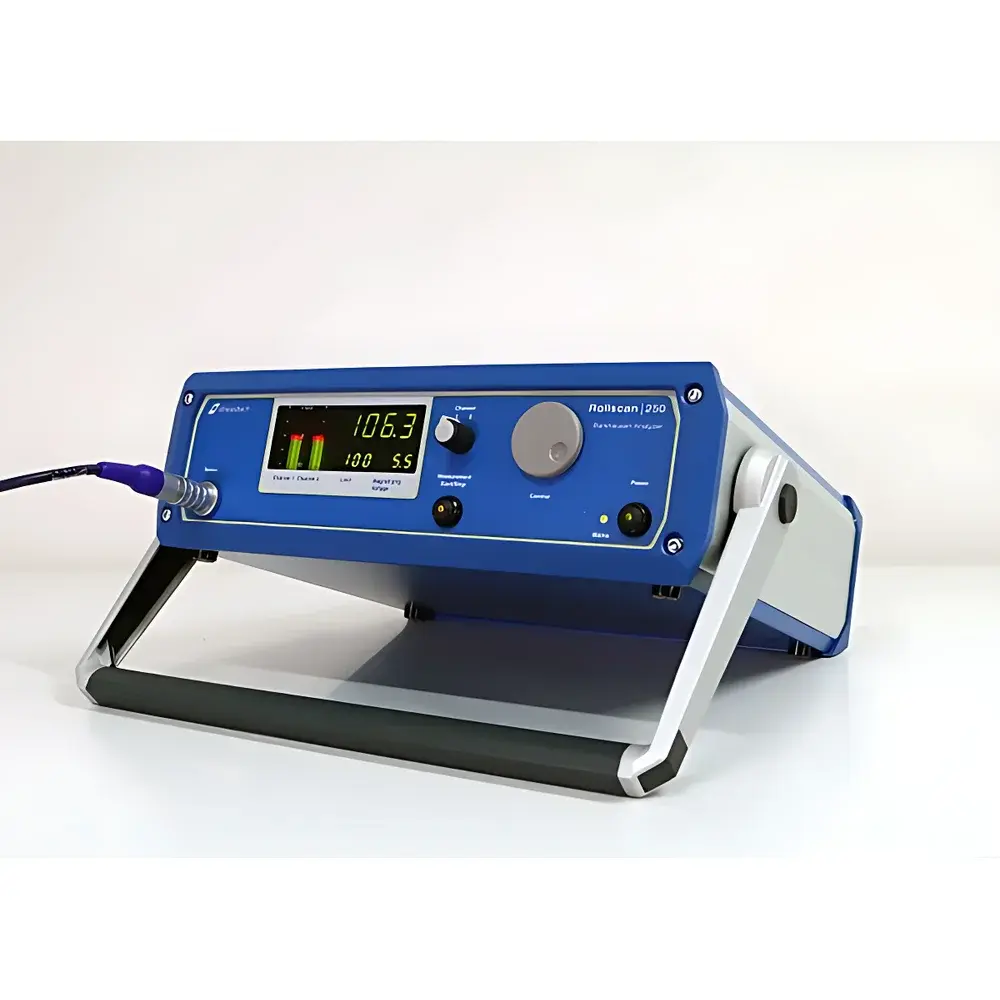
Stresstech Rollscan 250 Barkhausen Noise Analyzer for Surface Grinding Burn and Heat Treatment Damage Detection
| Brand | Stresstech Oy |
|---|---|
| Origin | Finland |
| Model | Rollscan 250 |
| Detection Principle | Magnetic Barkhausen Noise (MBN) |
| Channel Configuration | Single- or Multi-channel Probe Support |
| Measurement Time | ~2–5 seconds per spot |
| Environmental Rating | IP54 (industrial-grade dust/moisture resistance) |
| Compliance | ASTM E3167, ISO 20981, EN 10327 (applicable to MBN-based surface integrity assessment) |
| Software Platform | ViewScan v5.x with GLP-compliant audit trail and FDA 21 CFR Part 11 optional modules |
Overview
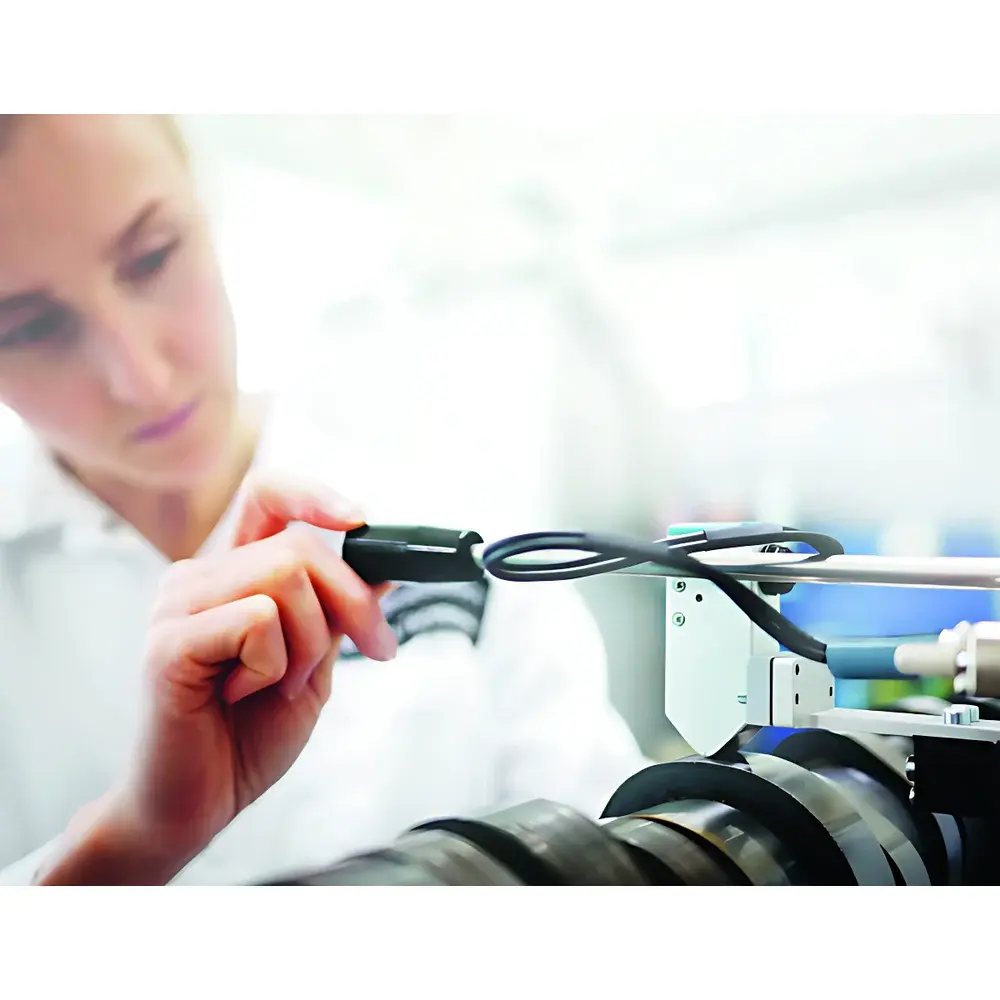
The Stresstech Rollscan 250 is a portable, high-sensitivity Barkhausen Noise Analyzer engineered for non-destructive evaluation (NDE) of surface and near-surface integrity in ferromagnetic components subjected to grinding, hard turning, or heat treatment. Unlike traditional destructive acid etching—historically used to reveal thermal damage through microstructural contrast—the Rollscan 250 quantifies localized magnetic domain wall dynamics induced by residual stress gradients, plastic deformation, and microstructural changes (e.g., untempered martensite, retained austenite instability, or grinding-induced phase transformations). Operating on the physical principle of Magnetic Barkhausen Noise emission, the instrument detects voltage pulses generated when an alternating magnetic field drives irreversible domain wall motion across pinning sites (dislocations, carbides, grain boundaries) in the material’s subsurface layer (typically 0.02–0.2 mm depth). This enables rapid, repeatable, and operator-independent identification of grinding burns, soft spots, rehardening zones, and heat-affected zone (HAZ) anomalies—without surface preparation, chemical exposure, or part downtime.
Key Features
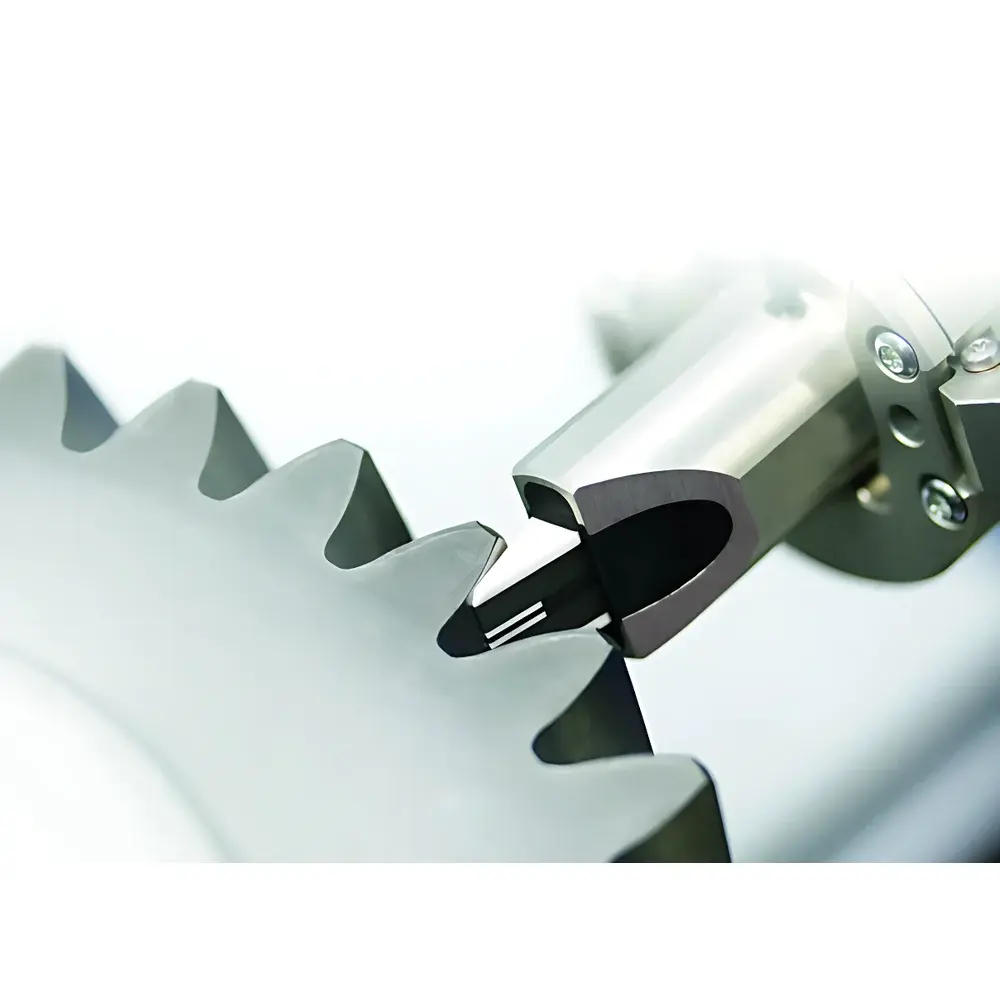
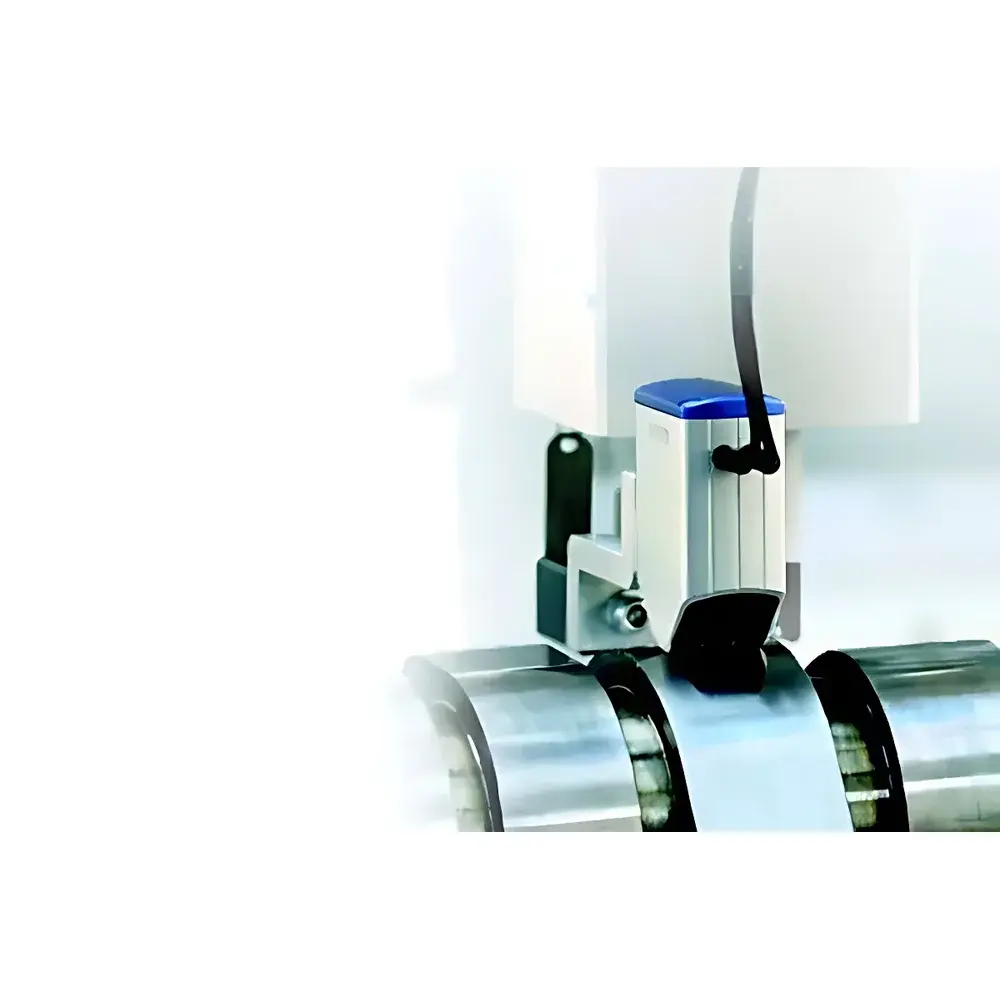
- Multi-channel probe architecture supporting simultaneous measurement at complex geometries—including shaft journals, gear flanks, bearing raceways, fillet radii, and contoured edges—via interchangeable probe heads (e.g., pencil-type, curved, miniature, and array probes).
- Real-time signal processing with adaptive noise suppression, enabling stable operation in electrically noisy production environments (e.g., near CNC grinders, induction hardening units, or welding stations).
- Ruggedized industrial housing rated IP54, qualified for continuous use in ambient temperatures from −10 °C to +50 °C and relative humidity up to 90% non-condensing.
- Integrated reference calibration using traceable NIST-traceable standards and certified test blocks per ASTM E3167 Annex A2, ensuring inter-laboratory reproducibility.
- Onboard data logging with timestamped metadata (operator ID, location tag, probe type, excitation parameters), exportable in CSV, XML, and proprietary .vsc formats.
Sample Compatibility & Compliance
The Rollscan 250 is validated for use on hardened steels (e.g., AISI 52100, 100Cr6, 16MnCr5), case-hardened alloys, tool steels, and nickel-based superalloys exhibiting sufficient ferromagnetic response. It complies with international standards governing magnetic NDE methodology: ASTM E3167 (Standard Practice for Electromagnetic (Eddy Current and Magnetic Particle) Testing of Ferromagnetic Materials), ISO 20981 (Non-destructive testing — Magnetic Barkhausen noise testing — General principles), and EN 10327 (Steel — Determination of surface hardness after heat treatment). When configured with audit trail and electronic signature modules, the system supports GLP/GMP-regulated workflows compliant with FDA 21 CFR Part 11 requirements for data integrity and traceability.
Software & Data Management
ViewScan v5.x serves as the full-featured acquisition, analysis, and reporting platform. It provides real-time waveform visualization, spectral density mapping, threshold-based defect classification (burn/soft spot/wear), and spatial overlay onto CAD-derived component schematics. All measurement sessions include immutable metadata logs, user access control (role-based permissions), and encrypted database storage. Export options support integration into enterprise LIMS and MES systems via OPC UA or RESTful API interfaces. Raw signal archives are preserved in lossless format for retrospective reanalysis, satisfying long-term archival mandates under ISO/IEC 17025.
Applications
The Rollscan 250 is deployed across mission-critical manufacturing and maintenance domains where surface integrity directly governs fatigue life and reliability: aerospace turbine shafts and landing gear components; automotive transmission gears and camshafts; power generation rotor forgings and bearing housings; nuclear reactor pump casings and valve stems; heavy-duty rolling mill rolls; and R&D validation of new grinding coolant formulations or pulse-electrochemical finishing processes. Its portability allows in-process verification directly on the shop floor—eliminating batch hold times associated with off-site acid etch labs—and supports preventive quality gate checks prior to final assembly or coating operations.
FAQ
How does the Rollscan 250 differ from conventional X-ray stress analyzers?
The Rollscan 250 does not perform X-ray diffraction (XRD); it is a dedicated Barkhausen Noise instrument. While Stresstech also manufactures XRD-based stress analyzers (e.g., Xstress 3000), the Rollscan 250 targets subsurface microstructural damage—not lattice strain—making it complementary rather than competitive.
Can it detect subsurface cracks?
No. MBN responds to microstructural and stress-state variations, not discontinuities. For crack detection, eddy current or ultrasonic testing remains appropriate.
Is probe calibration required before each measurement?
No. The system employs automatic zero-point compensation and built-in reference checks. However, periodic verification against certified test blocks (recommended every 8 hours of continuous use) ensures metrological continuity.
Does it require surface cleaning prior to inspection?
Yes—non-ferromagnetic contaminants (oil, grease, oxide scale, paint) must be removed, as they attenuate the magnetic coupling between probe and substrate. Light abrasive cleaning or solvent wiping suffices; no metal removal is needed.
What training is provided for operators?
Stresstech offers certified Level 2 NDT training per ISO 9712, including hands-on measurement protocol development, signal interpretation, and report generation—delivered onsite or at authorized training centers in Europe, North America, and Asia-Pacific.
Related Products



