
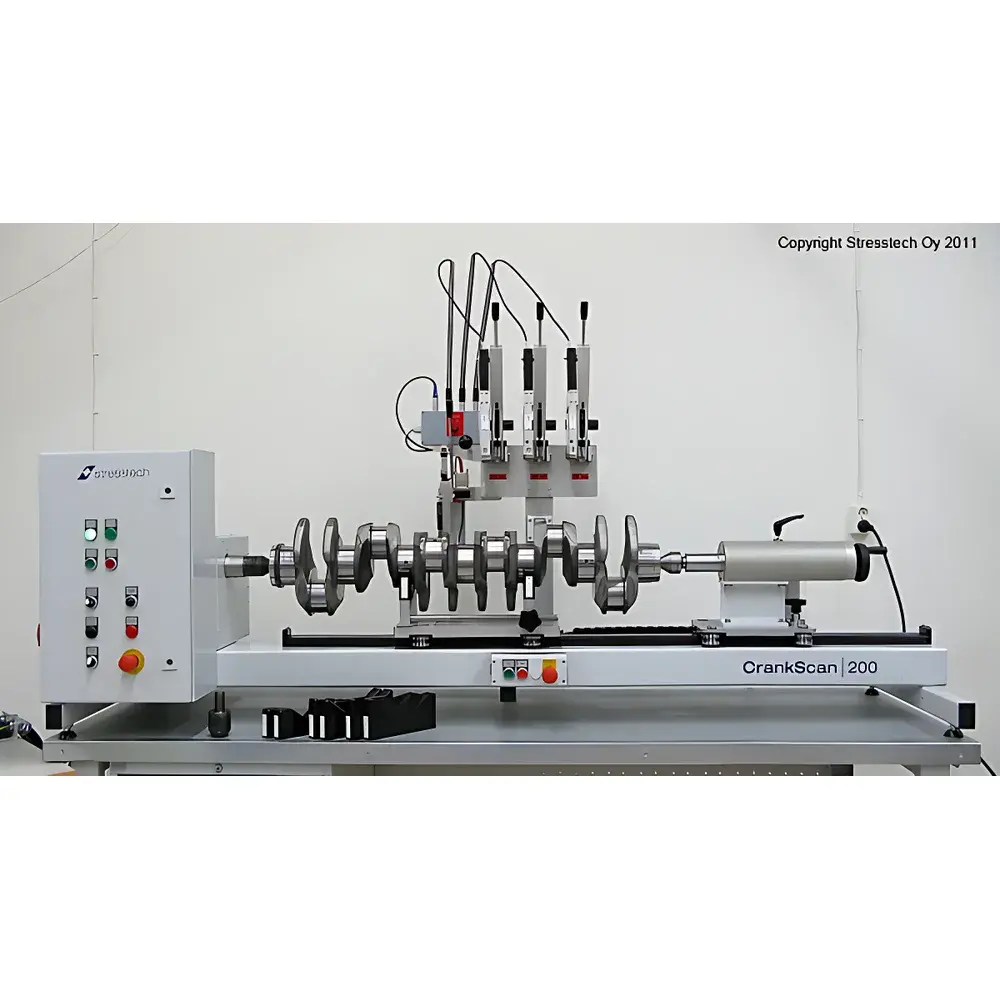
Stresstech Rollscan 250 Portable Barkhausen Noise Analyzer
| Brand | Stresstech Oy |
|---|---|
| Origin | Finland |
| Model | Rollscan 250 |
| Application | Non-destructive surface integrity assessment of ferromagnetic components |
| Measurement Principle | Magnetic Barkhausen Noise (MBN) analysis |
| Compliance | ASTM E3169, ISO 20914, EN 10327 (applicable to MBN-based surface condition evaluation) |
| Channel Configuration | Single- or multi-channel probe interface |
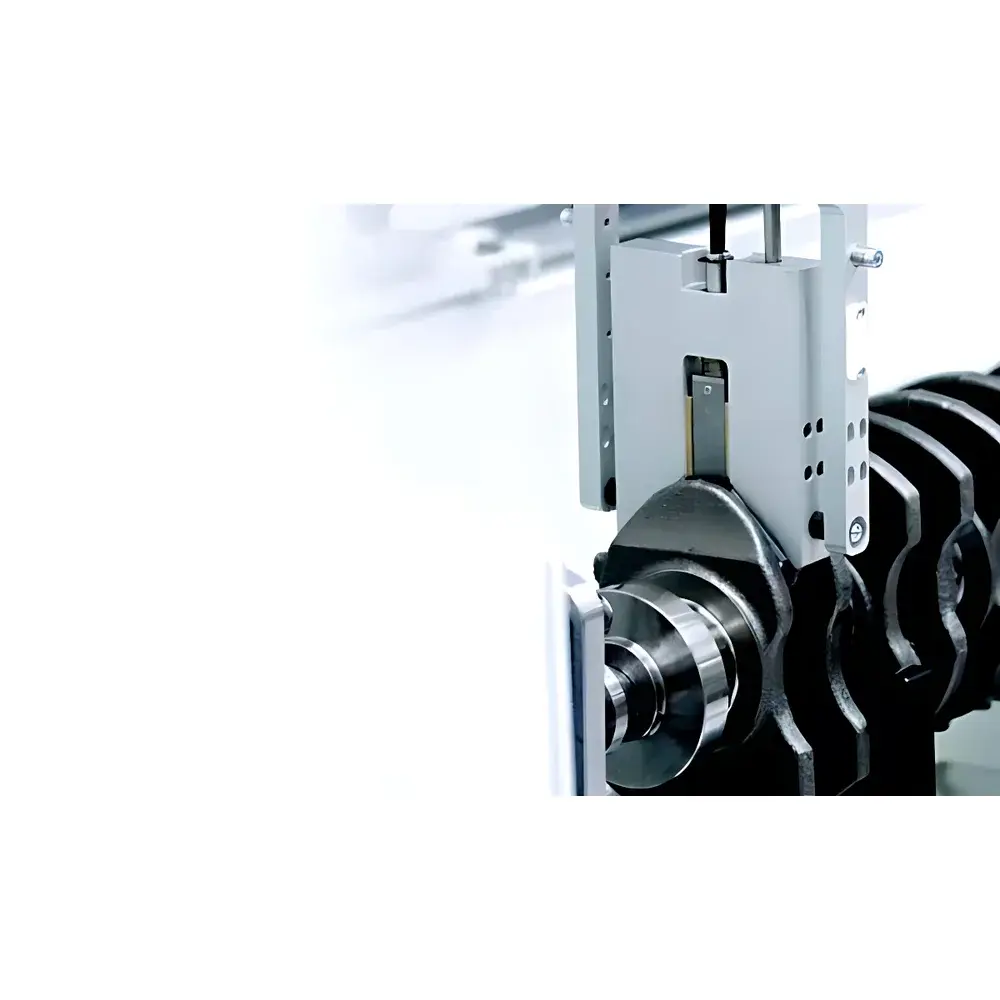
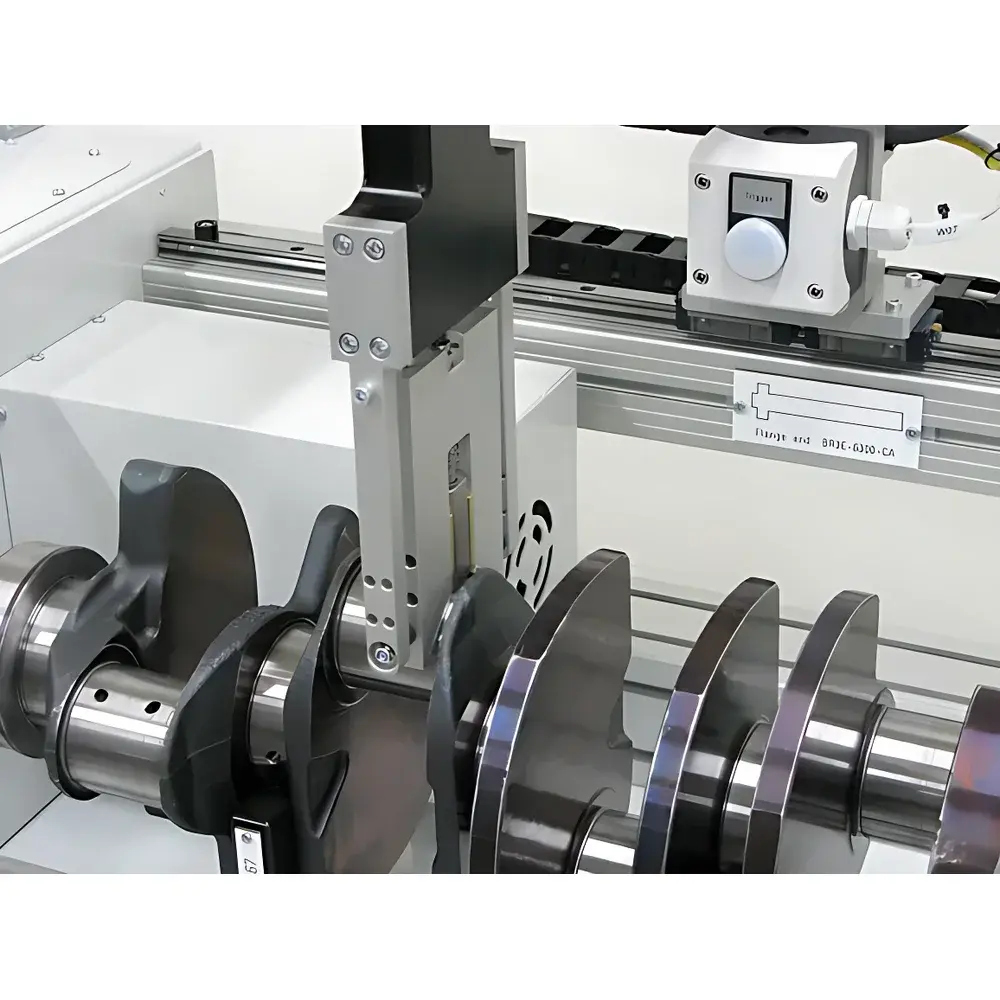
| Probe Options | Customizable sensor heads for shaft journals, bearing raceways, fillets, and complex geometries |
| Typical Measurement Time | < 5 seconds per location |
| Data Output | Quantitative MBN amplitude, RMS voltage, peak count rate, and frequency spectrum parameters |
Overview
The Stresstech Rollscan 250 is a portable, field-deployable Barkhausen Noise Analyzer engineered for non-destructive evaluation (NDE) of surface and near-surface integrity in ferromagnetic materials. It operates on the physical principle of Magnetic Barkhausen Noise—arising from irreversible domain wall jumps under controlled cyclic magnetization—and correlates stochastic MBN signal characteristics (amplitude distribution, pulse count density, spectral centroid, and RMS voltage) with microstructural anomalies induced by grinding burns, thermal damage, residual stress gradients, and localized soft spots. Unlike destructive acid etching or metallographic sectioning, the Rollscan 250 delivers repeatable, quantitative surface condition data without altering part geometry, surface finish, or functional properties. Its design targets high-reliability sectors where component failure due to subsurface defects carries critical safety or operational risk—including aerospace turbine shafts, railway axle journals, gear teeth, bearing raceways, and nuclear reactor components.
Key Features
- Portable, battery-operated architecture with ruggedized enclosure rated IP54 for shop-floor and field use.
- Modular probe interface supporting single-channel and multi-channel configurations—enabling simultaneous acquisition from up to four independently positioned sensors.
- Dedicated probe families optimized for geometric constraints: miniature contour-following probes for fillets and corners; high-resolution flat-surface transducers for raceway inspection; and flexible shaft-mounted fixtures for cylindrical journal scanning.
- Real-time signal processing engine with 16-bit ADC sampling at ≥1 MHz, capturing full MBN time-domain waveforms and enabling post-acquisition spectral decomposition.
- Integrated calibration traceability to Stresstech’s certified reference standards, aligned with ISO/IEC 17025-accredited metrology practices.
- Onboard storage and USB-C data export compatible with third-party analysis platforms and enterprise NDE databases.
Sample Compatibility & Compliance
The Rollscan 250 is validated for use on carbon steels, alloy steels, case-hardened components, and martensitic stainless steels within hardness ranges of 30–65 HRC. It requires no surface preparation beyond standard cleaning (e.g., degreasing); magnetic permeability uniformity and surface roughness (Ra < 3.2 µm) are key prerequisites for measurement repeatability. The system complies with technical requirements referenced in ASTM E3169 (“Standard Guide for Electromagnetic Acoustic Transduction and Barkhausen Noise Evaluation of Surface Integrity”), ISO 20914 (“Non-destructive testing — Electromagnetic methods — Guidelines for Barkhausen noise testing”), and supports audit-ready documentation for GLP and GMP environments. While not an X-ray instrument, its classification under “X-Ray Instruments” in certain procurement taxonomies reflects its role in complementary residual stress and integrity assessment workflows—particularly where X-ray diffraction (XRD) and MBN are deployed in tandem for cross-validated surface characterization.
Software & Data Management
Rollscan 250 operates with Stresstech’s ViewScan software suite (v5.2+), a Windows-based application providing real-time waveform visualization, spatial mapping of burn severity via color-coded heatmaps, and automated pass/fail classification based on user-defined thresholds. All measurements include embedded metadata: GPS coordinates (when enabled), operator ID, calibration timestamp, probe serial number, and environmental temperature. Data files (.vscn) are structured XML containers supporting digital signature validation and comply with FDA 21 CFR Part 11 requirements for electronic records and signatures when deployed in regulated manufacturing. Export options include CSV (for statistical process control integration), PNG/SVG (for report embedding), and HDF5 (for machine learning model training pipelines).
Applications
- Aerospace: Detection of grinding burns on titanium-alloy compressor blades and nickel-based superalloy turbine discs prior to final assembly.
- Railway: In-service inspection of axle journals and wheelset bearings to prevent thermally induced fatigue cracking.
- Power Generation: Assessment of surface integrity in steam turbine rotors and generator retaining rings after regrinding operations.
- Automotive: Validation of induction-hardened gear teeth and camshaft lobes during production line quality assurance.
- Research & Academia: Correlation studies between MBN parameters, electron backscatter diffraction (EBSD) crystallographic texture, and nanoindentation hardness gradients.
FAQ
Can the Rollscan 250 quantify residual stress magnitude?
No—it detects stress-induced changes in magnetic domain dynamics but does not provide absolute stress values. For quantitative stress measurement, Stresstech’s X-ray stress analyzers (e.g., Xstress 3000 series) are recommended as complementary tools.
Is operator certification required to perform compliant inspections?
Yes. Users must complete Stresstech-certified Level 2 MBN training per EN ISO 9712 and maintain documented competency records for audits in regulated industries.
Does the system require external magnetization equipment?
No. The Rollscan 250 integrates a programmable bipolar excitation coil capable of generating field amplitudes from ±0.5 to ±10 kA/m, with adjustable frequency sweep profiles and duty cycle control.
How is measurement repeatability verified across different operators and sites?
Through daily verification using Stresstech’s NIST-traceable MBN reference blocks (Type A/B/C), with acceptance criteria defined in internal procedure ST-PR-087 and aligned with ASTM E3169 Annex A2.





