
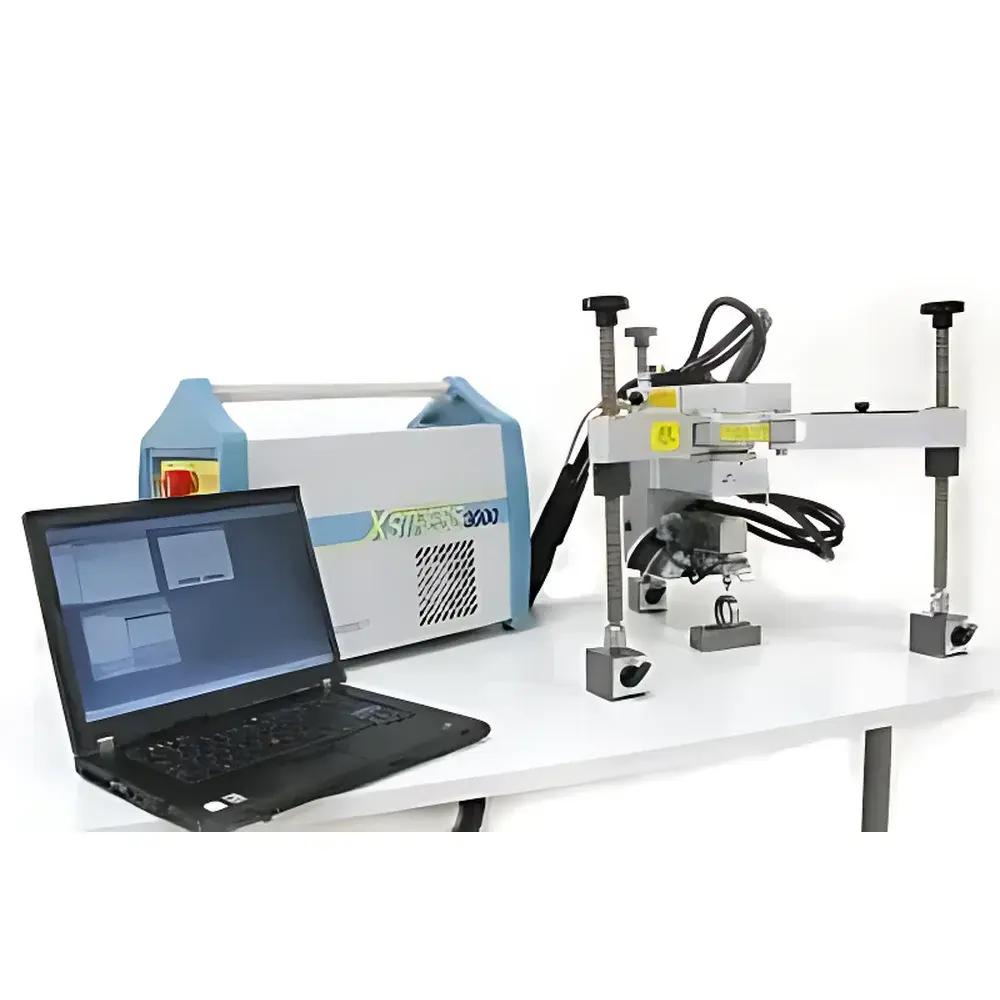
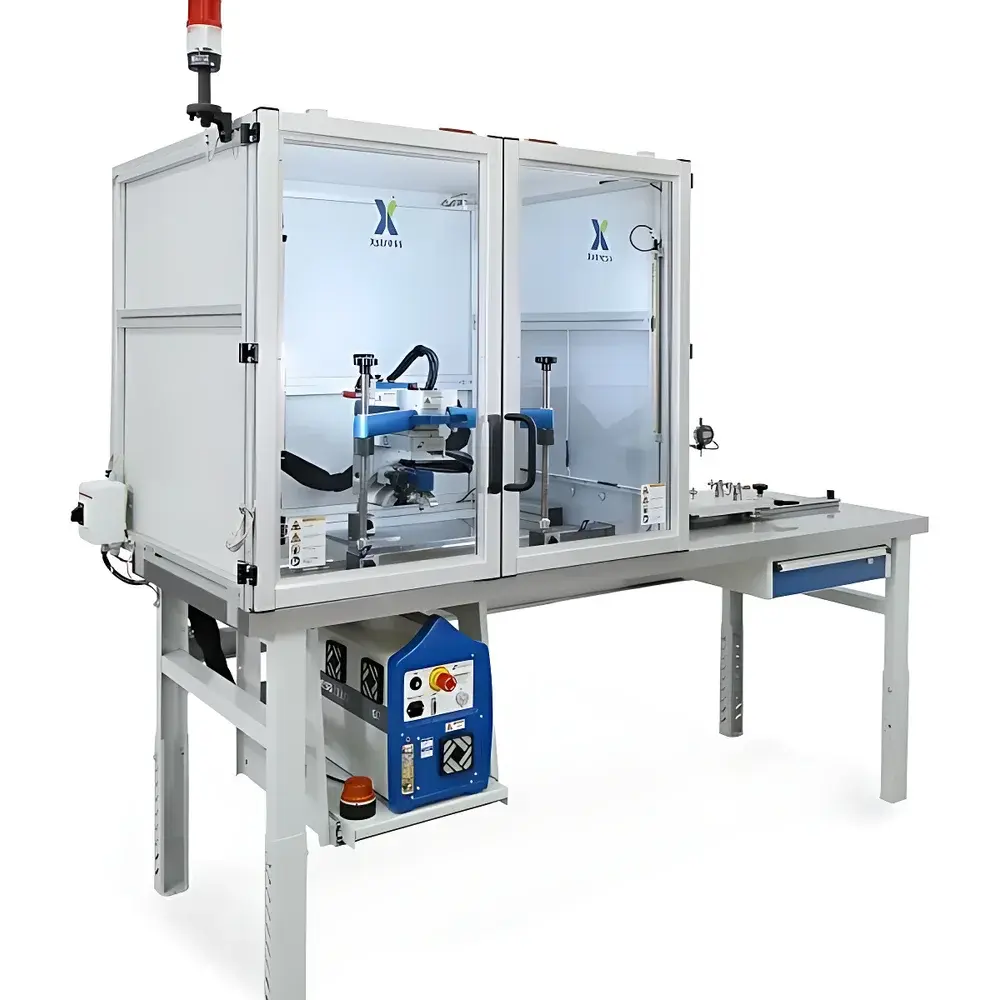
Stresstech xstress3000 X-Ray Residual Stress Analyzer
| Brand | Stresstech Oy |
|---|---|
| Origin | Finland |
| Model | xstress3000 |
| X-ray Tube | 5–30 kV / 0–10 mA / 300 W adjustable |
| Target Materials | Cr, Cu, Co, Ti, Mn |
| 2θ Range | 117°–170° continuous adjustment |
| Geometry | Modified y-geometry (side-inclination) |
| Detector Configuration | Symmetrically mounted dual detectors |
| Software Platform | Windows-based with real-time HV monitoring, multi-point exposure mode, cross-correlation peak shift analysis, and built-in material database |
| Power Supply | 100–240 VAC, 50/60 Hz |
| Tube Replacement | Tool-free, completed in <5 minutes |
Overview
The Stresstech xstress3000 X-Ray Residual Stress Analyzer is a portable, laboratory-grade instrument engineered for non-destructive, quantitative measurement of residual stress in crystalline metallic components using the sin²ψ X-ray diffraction (XRD) method. Based on Bragg’s law and lattice strain evaluation, the system determines microstructural elastic strain by precisely measuring angular shifts (Δ2θ) in diffraction peaks across multiple sample tilts (ψ angles). This principle enables direct calculation of principal residual stress components—σ₁, σ₂, and τ₁₂—in surface and near-surface layers (typically 10–50 µm depth, dependent on material and radiation energy). Unlike destructive techniques such as hole-drilling or layer removal, XRD-based stress analysis preserves part integrity while delivering traceable, repeatable results compliant with ASTM E915-22, ISO 21432:2020, and EN 15305:2022 standards. The xstress3000’s compact architecture and integrated battery-ready power management allow deployment beyond controlled lab environments—into production floors, maintenance hangars, field service sites, and even outdoor inspection zones.
Key Features
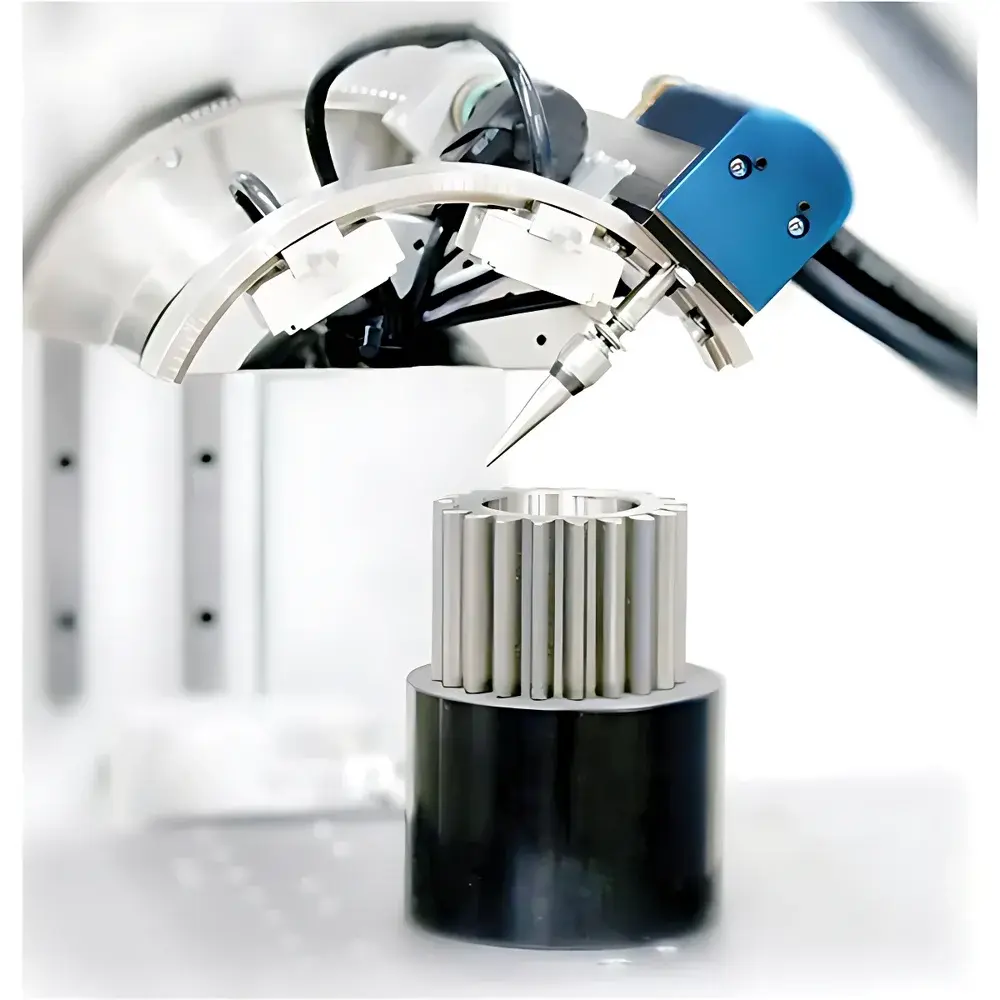
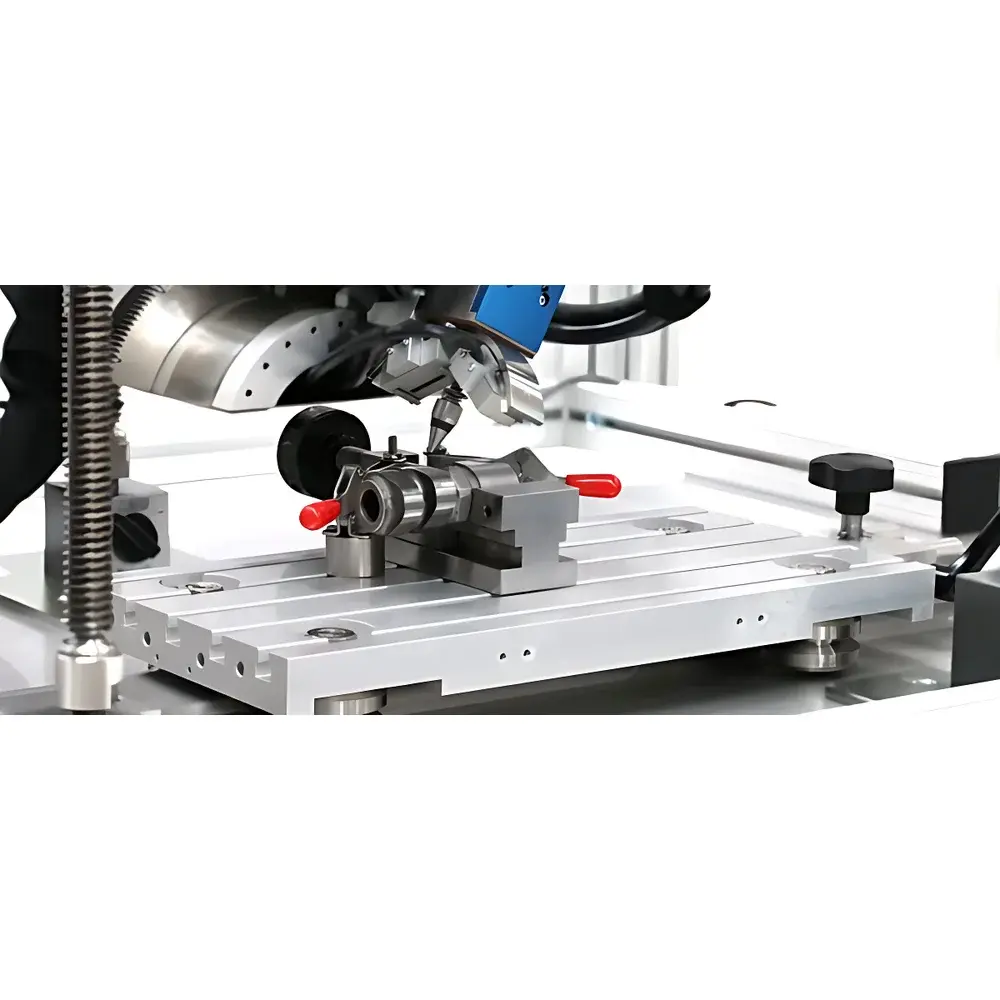
- Modular y-geometry configuration optimized for side-inclination (ψ-tilt) measurements, minimizing sample preparation requirements and enabling access to complex geometries including curved surfaces, weld seams, and turbine blades.
- Dual symmetrically mounted solid-state detectors ensure high signal-to-noise ratio and enable simultaneous acquisition of multiple diffraction orders—critical for robust peak centroid determination under variable surface conditions.
- Continuously adjustable 2θ range (117°–170°) supports optimal peak selection across diverse materials (e.g., Fe α-Fe {211}, Al {311}, Ti {102}) without mechanical reconfiguration.
- Microfocus X-ray tube (5–30 kV / 0–10 mA / 300 W) with interchangeable anode targets (Cr, Cu, Co, Ti, Mn) allows energy-tuned excitation to maximize diffraction intensity and minimize absorption artifacts.
- Tool-free X-ray tube replacement (<5 minutes) ensures minimal downtime during routine maintenance or target changeover—essential for high-availability industrial QA/QC workflows.
- Real-time high-voltage (HV) system monitoring with automatic interlock feedback provides operational safety compliance per IEC 61010-1 and EU Directive 2013/59/Euratom.
Sample Compatibility & Compliance
The xstress3000 accommodates ferrous and non-ferrous alloys—including steels, aluminum, titanium, nickel superalloys, and cast irons—with no requirement for conductive coating or vacuum chamber. Surface roughness up to Ra 6.3 µm is supported via adaptive beam collimation and peak-fitting algorithms. Measurement uncertainty is traceable to NIST-certified reference materials and validated against round-robin interlaboratory studies. All hardware and firmware comply with electromagnetic compatibility (EMC) directives (EN 61326-1), electrical safety standards (EN 61010-1), and radiation safety regulations (IEC 62495). Data acquisition protocols support audit-ready documentation aligned with GLP, GMP, and FAA/EASA Part 145 maintenance record requirements.
Software & Data Management
Stresstech’s proprietary Windows-based software suite provides full instrument control, automated measurement sequencing, and ISO-compliant reporting. Core functions include real-time X-ray tube parameter adjustment, live diffraction pattern visualization, multi-point exposure scheduling, and cross-correlation-based peak shift computation—eliminating subjective manual fitting. The embedded material database contains over 200 crystallographic entries with preloaded d₀ values, elastic constants, and preferred orientation corrections. All raw diffraction data, metadata (sample ID, operator, timestamp, environmental conditions), and processed stress tensors are stored in vendor-neutral HDF5 format. Export options include CSV, XML, and PDF reports with digital signatures—fully compatible with FDA 21 CFR Part 11 electronic record requirements when deployed with validated IT infrastructure.
Applications
- Aerospace: Residual stress mapping of landing gear components, compressor disks, and welded airframe joints prior to fatigue certification.
- Automotive: Verification of compressive stress profiles induced by shot peening or roller burnishing on crankshafts, camshafts, and gear teeth.
- Energy: In-service assessment of stress states in steam turbine rotors, nuclear reactor pressure vessel welds, and wind turbine bearing races.
- Manufacturing: Process validation for additive manufacturing (LPBF, DED), heat treatment cycles, and surface engineering techniques (nitriding, carburizing).
- R&D Laboratories: Correlation of processing parameters (cooling rate, plastic strain, thermal gradient) with near-surface stress evolution in new alloy development.
FAQ
What is the typical measurement depth for the xstress3000?
Measurement depth depends on material composition and X-ray energy; it ranges from ~10 µm in high-absorption alloys (e.g., steel with Cr Kα) to ~40 µm in low-absorption metals (e.g., aluminum with Cu Kα).
Can the system measure residual stress in coated or plated components?
Yes—provided the coating thickness is ≥2× the penetration depth and does not significantly attenuate the diffracted signal. Thin-film stress analysis requires specialized calibration and is supported via optional thin-film module.
Is third-party calibration required for regulatory audits?
No—Stresstech provides factory calibration certificates traceable to national metrology institutes. On-site recalibration services are available globally through authorized service centers with ISO/IEC 17025 accreditation.
Does the software support automated report generation for ISO 9001 quality records?
Yes—customizable templates generate fully compliant PDF reports containing measurement parameters, raw data thumbnails, statistical uncertainty estimates, and operator authentication logs.





