
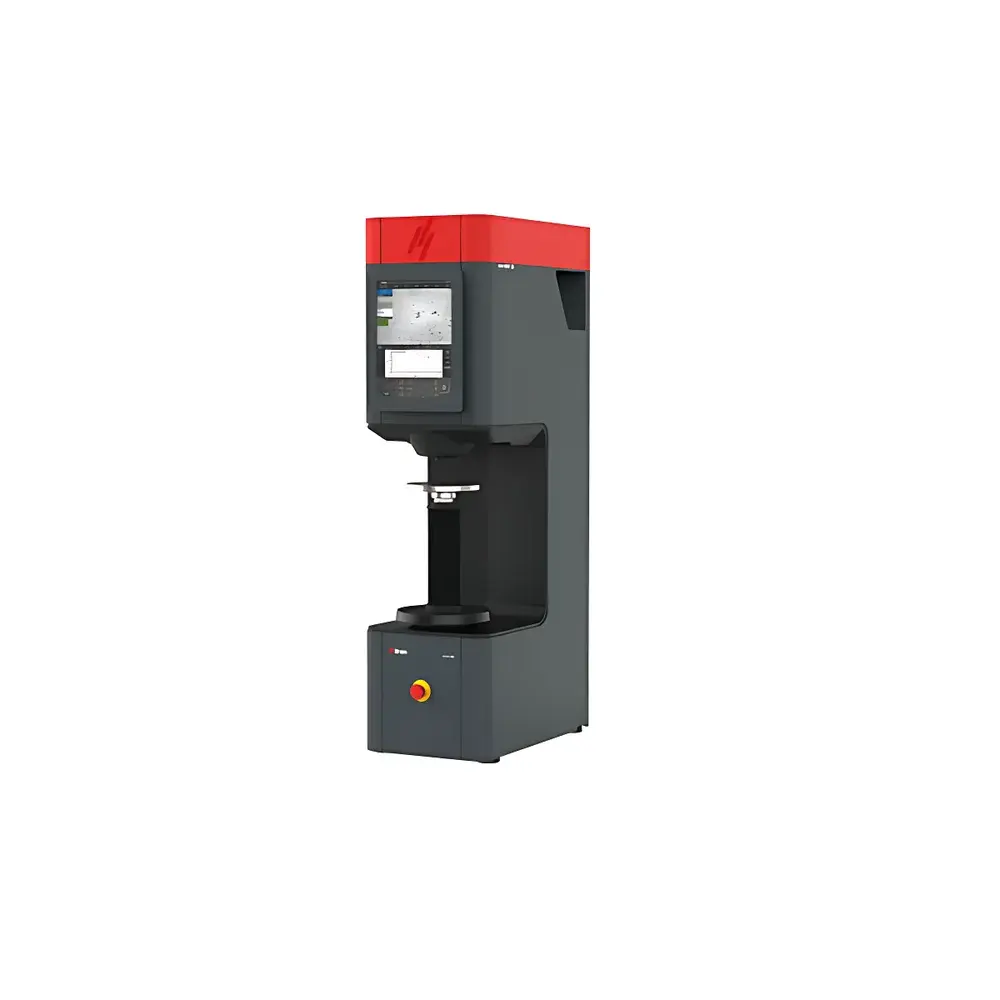
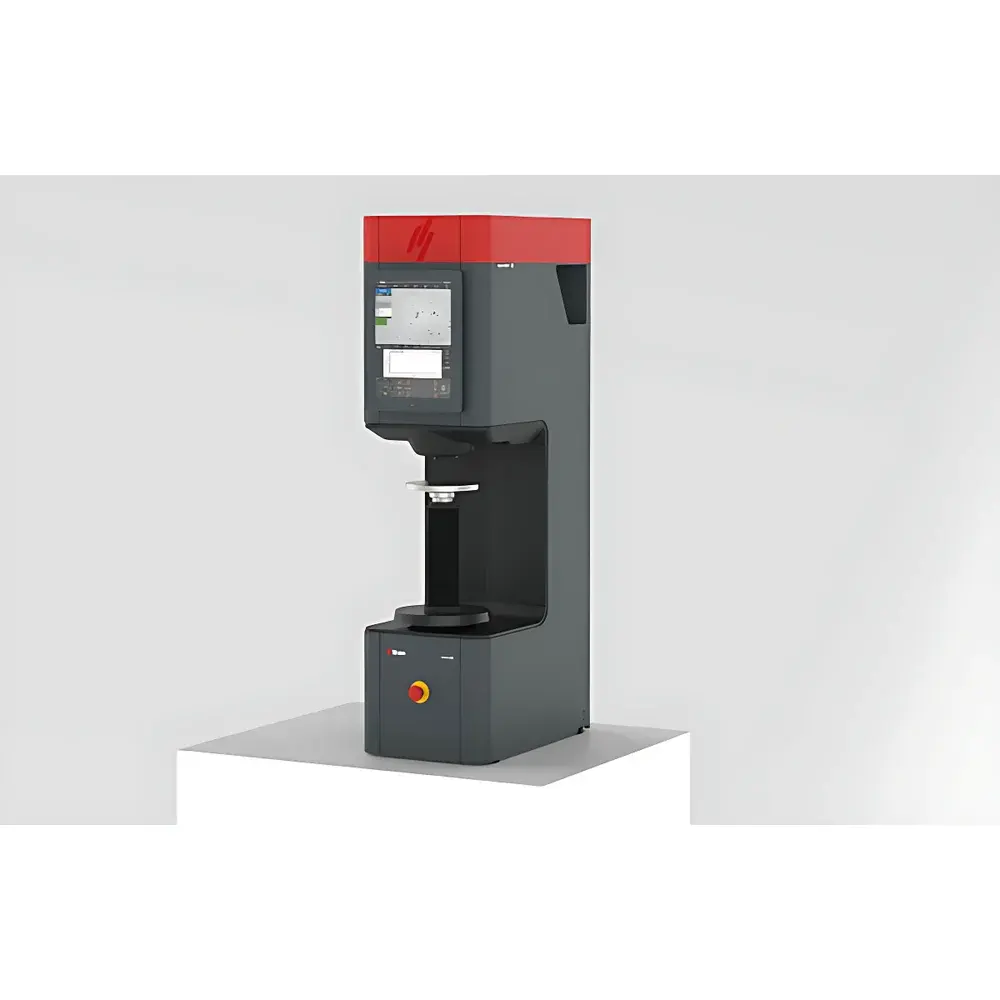
Struers Duramin-600 Semi-Automatic Universal Hardness Tester
| Brand | Struers |
|---|---|
| Origin | Denmark |
| Model | Duramin-600 |
| Load Ranges | 1–250 kgf |
| Test Methods | Vickers, Knoop, Brinell, Rockwell |
| Automation Level | Semi-automatic with motorized 6-position turret |
| Z-axis Options | Manual (M) or Motorized (Z) |
| Max Specimen Height | 330 mm |
| Max Specimen Depth | 260 mm |
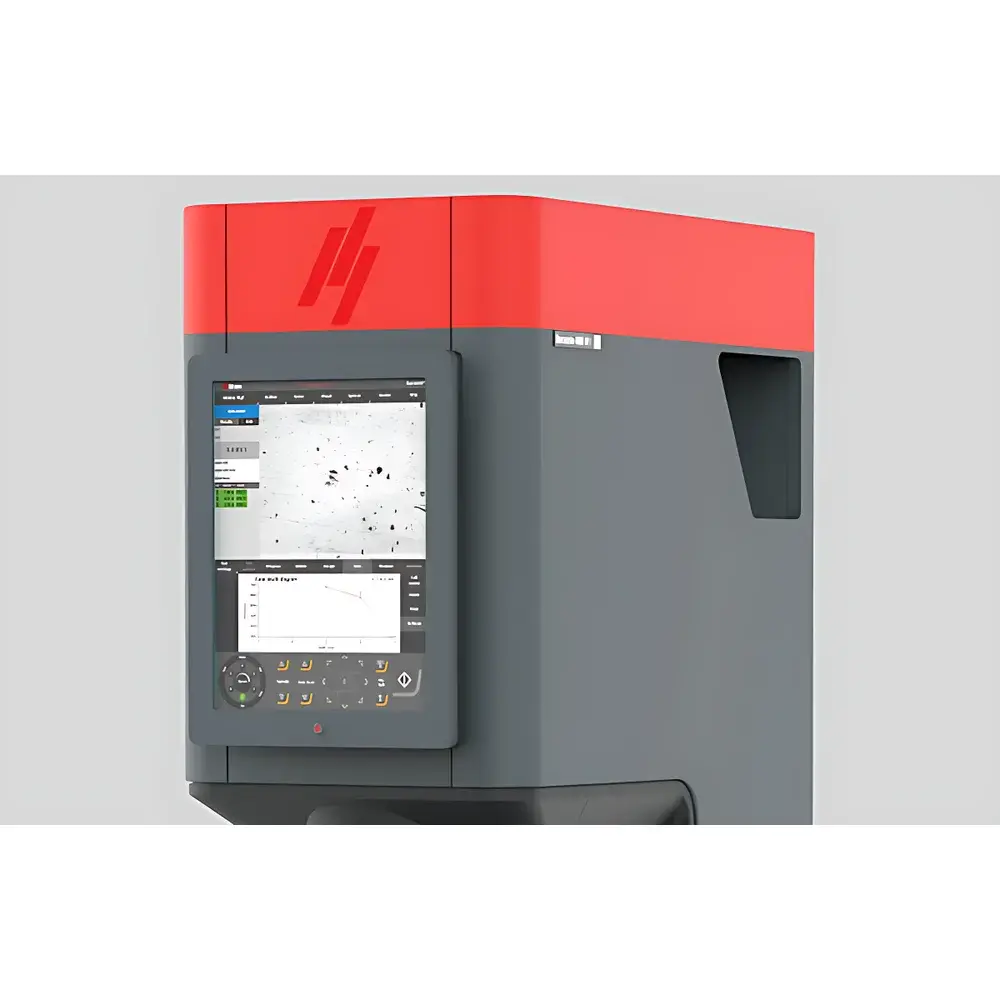
| Display | 15-inch color touchscreen |
| Force Measurement | Load cell-based |
| Illumination | Ring light with dark-field mode |
| Software Interface | Integrated embedded PC with touch/mouse operation |
Overview
The Struers Duramin-600 Semi-Automatic Universal Hardness Tester is an industrial-grade hardness measurement platform engineered for precision, repeatability, and long-term reliability in demanding production and quality control environments. Built on a robust 400 kg structural frame, the system implements load-cell-based force transduction — a metrologically traceable method that ensures high linearity, minimal hysteresis, and consistent indentation force application across its three configurable load ranges (1–250 kgf, 3–750 kgf, and 5–3000 kgf). Unlike traditional dead-weight or cam-driven systems, the Duramin-600’s closed-loop load control architecture enables real-time force feedback and dynamic compensation during loading and dwell phases, directly supporting compliance with ISO 6507 (Vickers), ISO 6506 (Brinell), ISO 6508 (Rockwell), and ISO 4545 (Knoop) standards. Its modular design accommodates both routine QC workflows and advanced metallurgical analysis, delivering standardized hardness values under ASTM E384, ASTM E10, ASTM E18, and EN ISO 14978 test protocols.
Key Features
- Load-cell-based force measurement system with ±0.5% full-scale accuracy and automatic thermal drift compensation
- Motorized 6-position turret enabling sequential, unattended switching between indenters (e.g., diamond pyramid, tungsten carbide ball, Brale cone) and objectives (5×, 10×, 20×, 40×)
- Integrated ring illumination with selectable bright-field and dark-field modes — optimized for contrast enhancement on soft metals, annealed alloys, and polished ceramics
- 15-inch high-resolution color touchscreen interface with intuitive icon-driven navigation and multilingual OS support (English, German, French, Spanish, Chinese, Japanese)
- Dual Z-axis configurations: manual fine-focus adjustment (Duramin-600 M series) or programmable motorized Z-stage with 0.1 µm resolution and 330 mm vertical travel (Duramin-600 Z series)
- Embedded industrial PC running Struers’ proprietary hardness testing software — no external host required
- Automatic image acquisition, indentation detection, diagonal measurement, and hardness calculation per ISO/ASTM criteria
- Full audit trail capability compliant with FDA 21 CFR Part 11 requirements when configured with user authentication and electronic signature modules
Sample Compatibility & Compliance
The Duramin-600 accommodates specimens up to 330 mm in height and 260 mm in depth, supporting large castings, forged components, heat-treated plates, and welded joints without sectioning. Its open-stage architecture permits direct mounting of irregular geometries using standard vise fixtures or custom clamping solutions. The system meets GLP and GMP documentation requirements through timestamped test records, operator ID logging, instrument calibration history, and raw image archiving. All hardness measurements are traceable to national metrology institutes (e.g., DKD, UKAS, NIST) via factory-certified load calibration certificates and annual verification kits. Optional accessories include micro-indentation stages for thin coatings (<5 µm), elevated-temperature test modules (up to 200 °C), and automated XY sample positioning for grid-based hardness mapping.
Software & Data Management
The embedded software suite provides full test method configuration, including dwell time (1–99 s), loading rate profiles (standard or ramped), and multi-point measurement sequences (up to 999 indents per program). Results are exported in CSV, PDF, or XML formats compatible with LIMS integration. Advanced reporting includes statistical summaries (mean, SD, CV%), histogram generation, and overlay-capable hardness distribution maps. Data integrity safeguards include encrypted local storage, role-based access control (administrator, technician, viewer), and optional cloud backup with TLS 1.2 encryption. Audit logs record every action — from parameter changes to report generation — satisfying ISO/IEC 17025 clause 7.7 and EU Annex 11 validation expectations.
Applications
- Metallurgical QA/QC in automotive and aerospace component manufacturing (e.g., gear teeth, turbine blades, landing gear forgings)
- Heat treatment process validation — case depth profiling via micro-Vickers cross-sections
- Weldment evaluation per AWS D1.1 and ISO 15614-1, including HAZ hardness mapping
- Tool steel and die material qualification under DIN 17007 and JIS G 0551
- Research-grade hardness anisotropy studies in additively manufactured (AM) metal parts
- Failure analysis labs requiring correlation between hardness gradients and SEM/EDS microstructural data
FAQ
What hardness scales does the Duramin-600 support?
Vickers (HV), Knoop (HK), Brinell (HBW), and Rockwell (HRA, HRB, HRC, HRD, HRF, HRG, HRH, HRR) — all executed under standardized test conditions per ISO and ASTM.
Is the system compliant with regulatory requirements for pharmaceutical or medical device manufacturing?
Yes — when equipped with 21 CFR Part 11-compliant software modules, it supports electronic signatures, audit trails, and secure user management required for FDA-regulated environments.
Can the Duramin-600 perform hardness mapping on large-area samples?
With the optional motorized Z-axis and third-party XY stage integration, automated grid-based hardness mapping is achievable; native software supports coordinate referencing and export of spatial hardness datasets.
How often does the system require recalibration?
Annual verification is recommended per ISO/IEC 17025; load cell and optical calibration checks should be performed before each shift using certified reference blocks and stage micrometers.
Does Struers provide installation qualification (IQ) and operational qualification (OQ) documentation?
Yes — factory-validated IQ/OQ protocols are available upon request, aligned with GAMP 5 guidelines and suitable for internal validation teams or third-party auditors.



