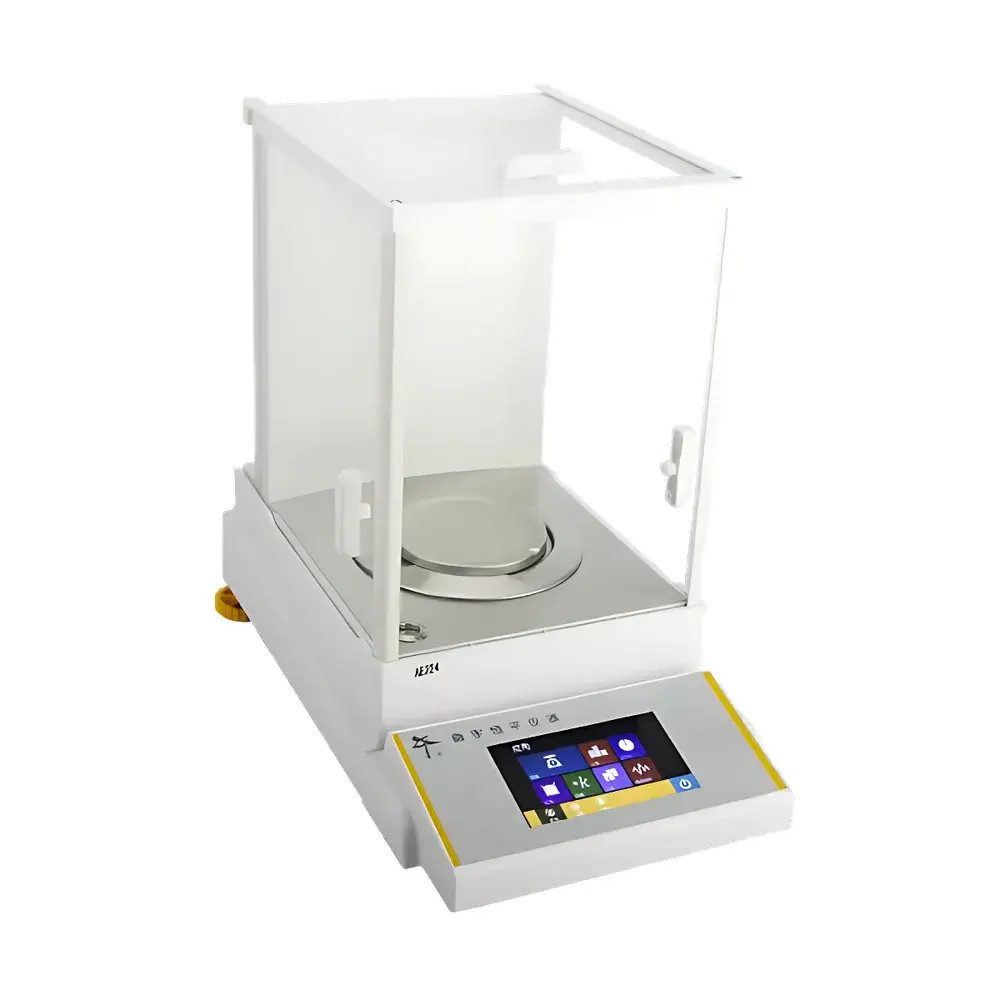
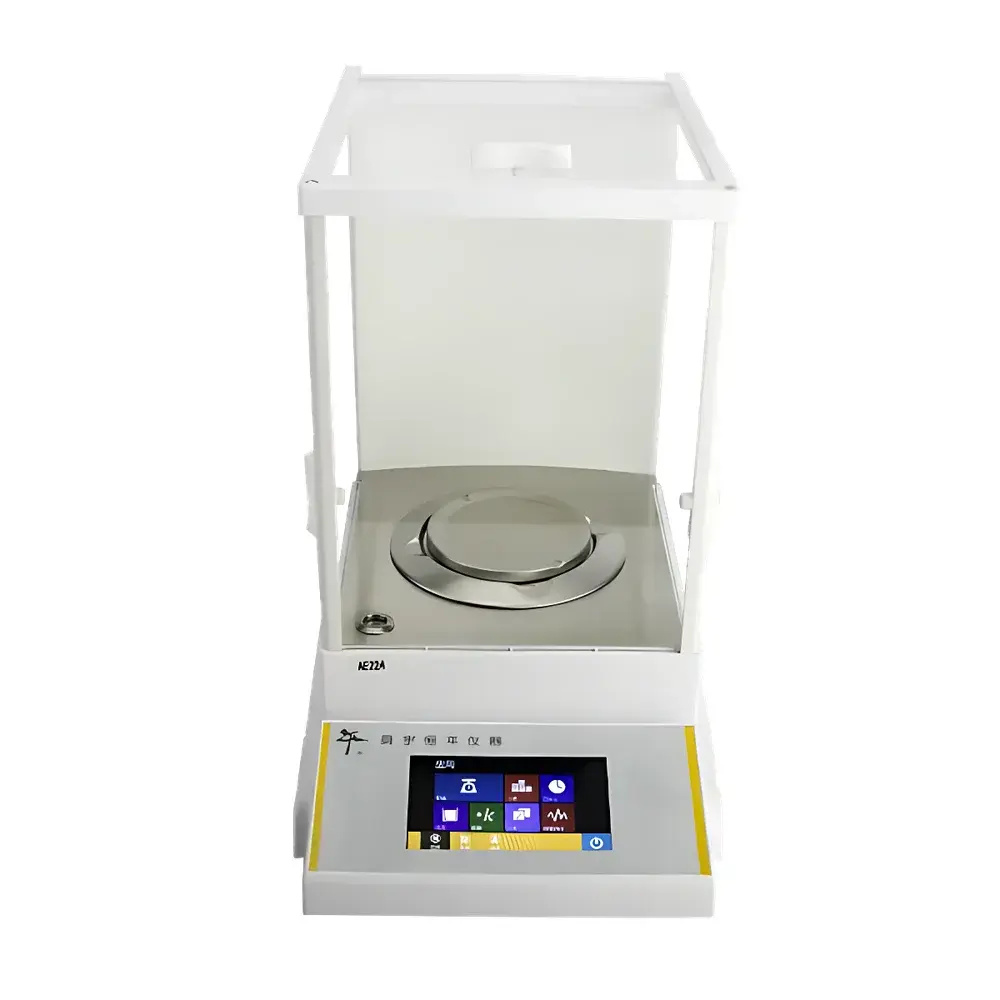
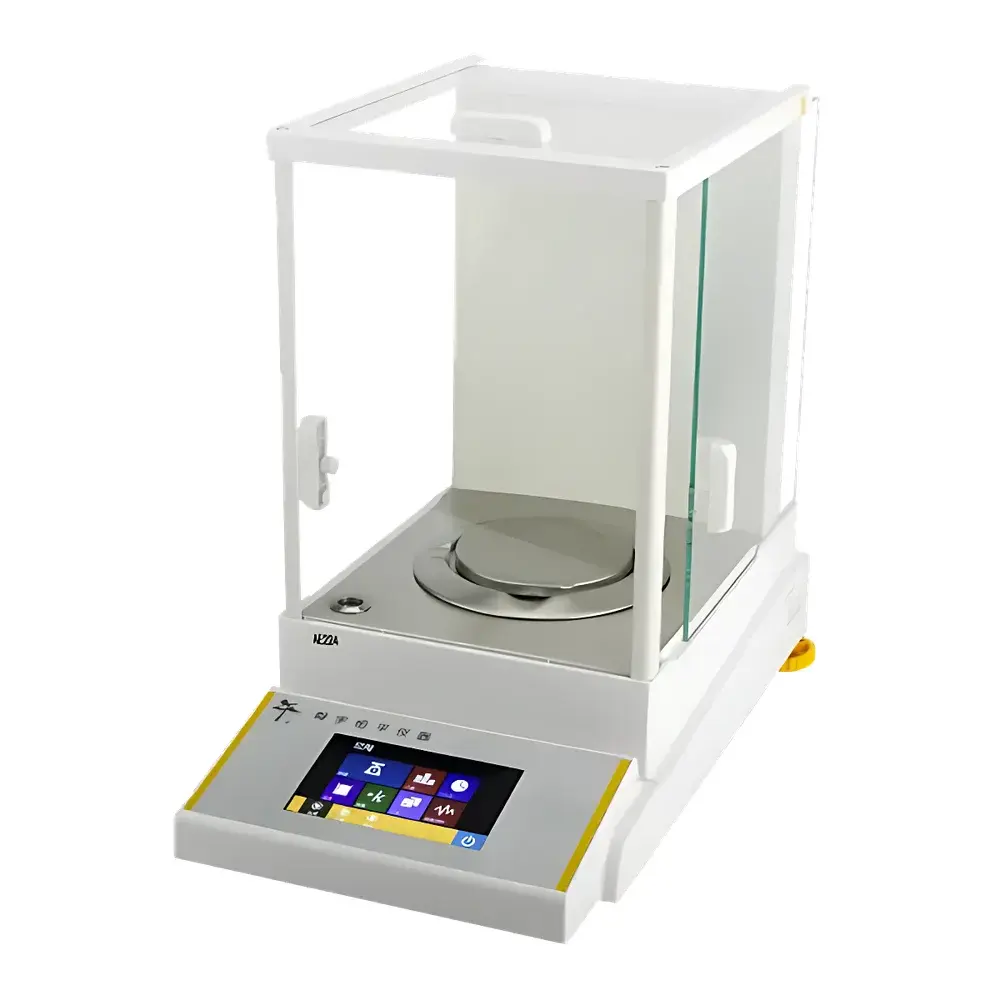
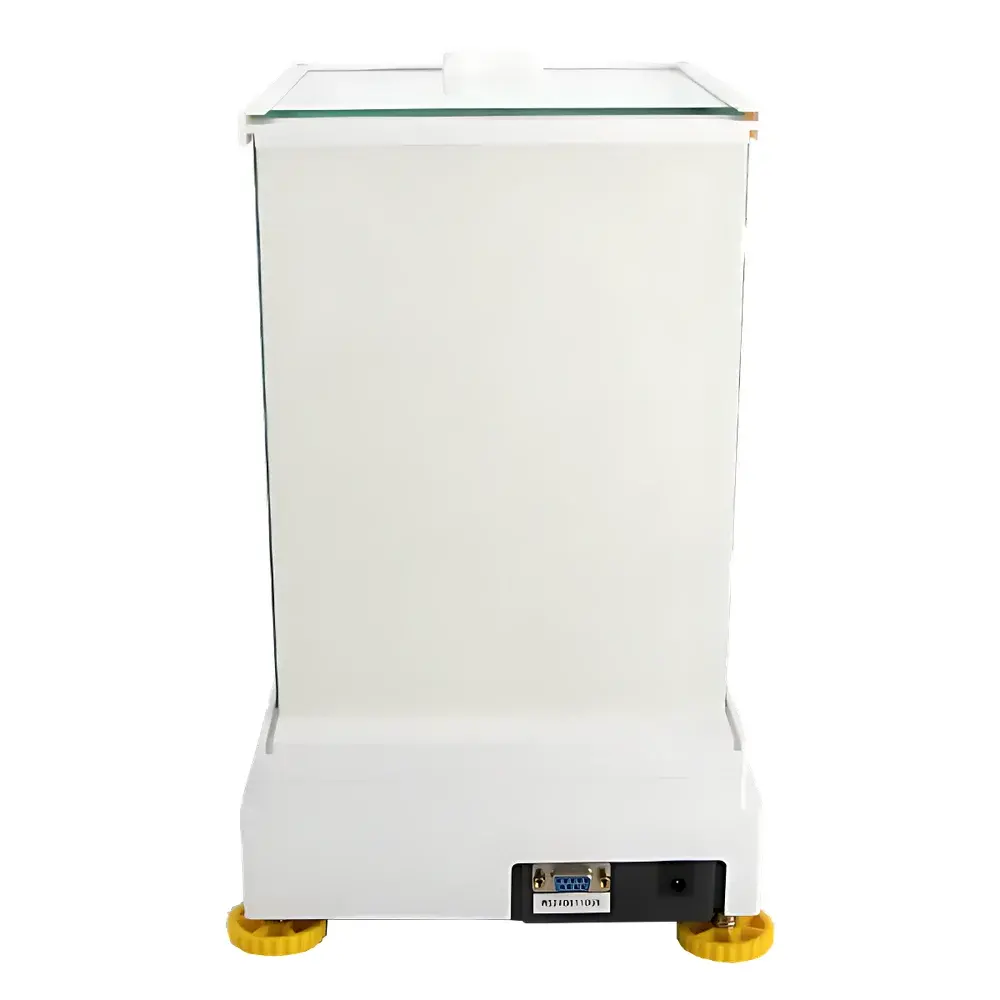
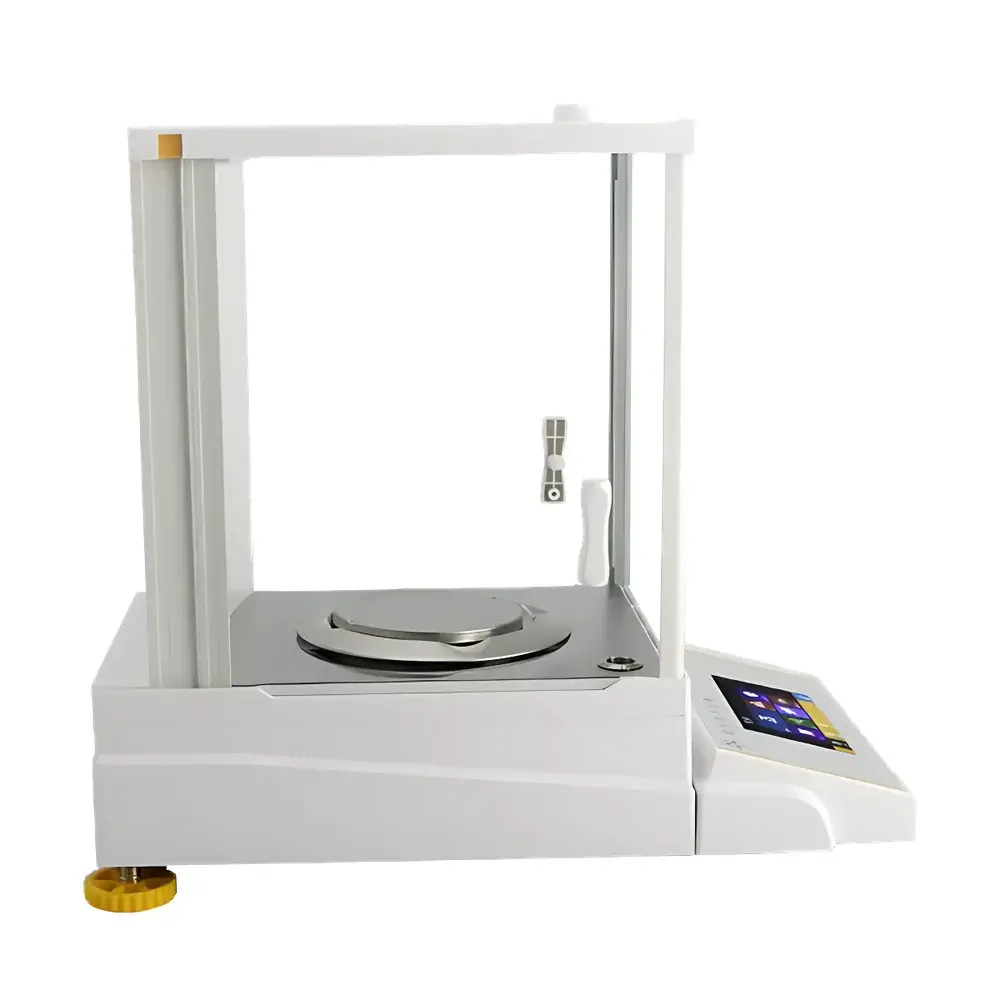
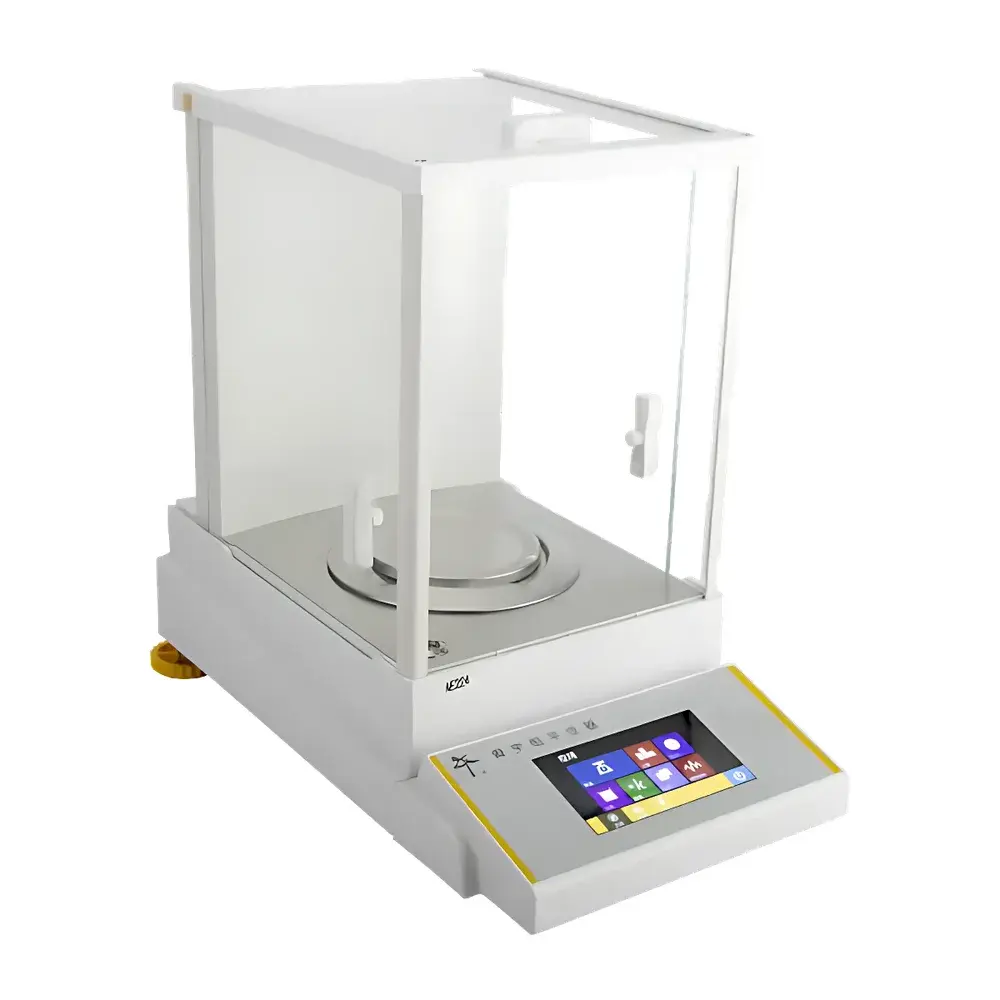
Sunny Hengping AE224 Color Touchscreen Analytical Balance
| Brand | Sunny Hengping Instrument |
|---|---|
| Origin | Shanghai, China |
| Manufacturer | Yes |
| Product Type | Analytical Balance |
| Maximum Capacity | 220 g |
| Readability | 0.0001 g |
| Repeatability | ±0.0001 g |
| Calibration | Internal and External |
| Display | 4.3-inch TFT color touchscreen |
| Weighing Pan Diameter | Φ90 mm |
| Draft Shield Dimensions (L×W×H) | 160 × 165 × 200 mm |
| External Dimensions (L×W×H) | 365 × 223 × 338 mm |
| Power Supply | DC 12 V, 12 W |
| Operating Temperature | 5–40 °C |
| Relative Humidity | ≤85% RH |
| Interface | RS232 |
Overview
The Sunny Hengping AE224 Color Touchscreen Analytical Balance is a high-precision laboratory instrument engineered for routine quantitative analysis, quality control, and research-grade mass measurement in regulated and non-regulated environments. Based on electromagnetic force compensation (EMFC) transduction technology, the AE224 delivers stable, drift-free measurements with 0.1 mg readability across its 220 g maximum capacity. Its core architecture integrates a monolithic aluminum base to dampen low-frequency mechanical vibrations—critical for achieving consistent repeatability under typical benchtop conditions. Designed for ISO/IEC 17025-compliant laboratories, the balance meets general requirements for analytical instrumentation per ISO 9001 and supports traceable calibration workflows through dual-mode (internal/external) calibration protocols. The device operates within an ambient temperature range of 5–40 °C and relative humidity up to 85% RH (non-condensing), making it suitable for diverse laboratory infrastructures—from university teaching labs to pharmaceutical QC suites.
Key Features
- 4.3-inch full-color TFT touchscreen display with intuitive metro-inspired UI, optimized for glove-compatible operation and reduced visual fatigue during extended use;
- Electromagnetic force compensation sensor with integrated temperature compensation and auto-zero tracking for enhanced long-term stability;
- Aluminum die-cast base structure that isolates the weighing mechanism from environmental vibration sources, improving measurement reproducibility;
- Dual calibration capability: programmable internal calibration (via built-in weight) and external calibration using certified reference masses (e.g., Class E2 or F1);
- Integrated draft shield with tempered glass doors and transport lock mechanism to protect the weighing cell during relocation or storage;
- RS232 serial interface compliant with standard ASCII protocol for direct data transmission to PCs, LIMS, or statistical process control (SPC) software;
- Protective screen cover and scratch-resistant display surface extend operational lifespan in multi-user environments;
- Preloaded application modes including parts counting, percentage weighing, density determination (with optional kit), and formulation weighing.
Sample Compatibility & Compliance
The AE224 accommodates standard laboratory samples ranging from powders and granules to small solid components and pre-weighed vials. Its Φ90 mm stainless-steel weighing pan and 160 × 165 × 200 mm sliding-glass draft enclosure ensure compatibility with common volumetric glassware and sample containers while minimizing air current interference. The balance conforms to OIML R76-1 (2021) class II accuracy requirements for analytical balances and supports compliance with pharmacopeial standards including USP and EP 2.1.6. While not inherently 21 CFR Part 11 compliant out-of-the-box, audit-trail functionality can be implemented via validated third-party data acquisition software when paired with the RS232 interface. Routine verification procedures align with ASTM E898 and ISO/IEC 17025 clause 6.4.7 for equipment performance monitoring.
Software & Data Management
Data output follows standard ASCII format over RS232 at configurable baud rates (9600/19200 bps), enabling seamless integration with spreadsheet applications, electronic lab notebooks (ELNs), and enterprise LIMS platforms. No proprietary drivers are required; communication is handled via standard terminal emulation or custom scripts (Python, LabVIEW). The onboard memory retains calibration logs, date/time stamps, and user-defined settings. For GLP/GMP environments, users may implement external timestamped logging solutions to satisfy audit trail requirements—including operator ID, event type (e.g., “calibration performed”, “zero reset”), and measured value. Firmware updates are delivered via USB-to-serial adapter and supported by Sunny Hengping’s technical documentation portal.
Applications
- Pharmaceutical formulation and active pharmaceutical ingredient (API) dispensing where ±0.1 mg precision is required;
- Chemical synthesis workflow support—reagent weighing, stoichiometric calculations, and yield determination;
- Materials science labs performing powder density analysis or catalyst loading quantification;
- Food safety testing labs conducting moisture content assays and nutrient labeling verification;
- Academic teaching laboratories requiring robust, ergonomic instruments for undergraduate analytical chemistry instruction;
- Environmental testing facilities measuring filter weights in particulate matter (PM2.5/PM10) analysis protocols.
FAQ
What is the difference between internal and external calibration on the AE224?
Internal calibration uses a motor-driven built-in mass to verify and adjust sensor linearity automatically. External calibration requires placement of a certified reference weight on the pan and initiates a manual or scheduled adjustment sequence.
Does the AE224 support connectivity with modern LIMS systems?
Yes—via RS232 ASCII output, it interfaces directly with LIMS platforms supporting serial data ingestion. Configuration files and parsing logic are provided in the user manual.
Can the touchscreen be operated with nitrile or latex gloves?
Yes—the capacitive touch layer is calibrated for reliable response under standard laboratory gloves without requiring stylus input.
Is the AE224 suitable for use in a fume hood?
It is not recommended for continuous operation inside active fume hoods due to airflow-induced instability; however, brief weighing tasks may be performed if the draft shield is fully closed and airflow is minimized.
How often should the AE224 be recalibrated?
Calibration frequency must be risk-assessed per ISO/IEC 17025. Typical practice includes daily zero checks, weekly internal calibration, and quarterly external verification using traceable standards—adjustable based on usage intensity and environmental variability.