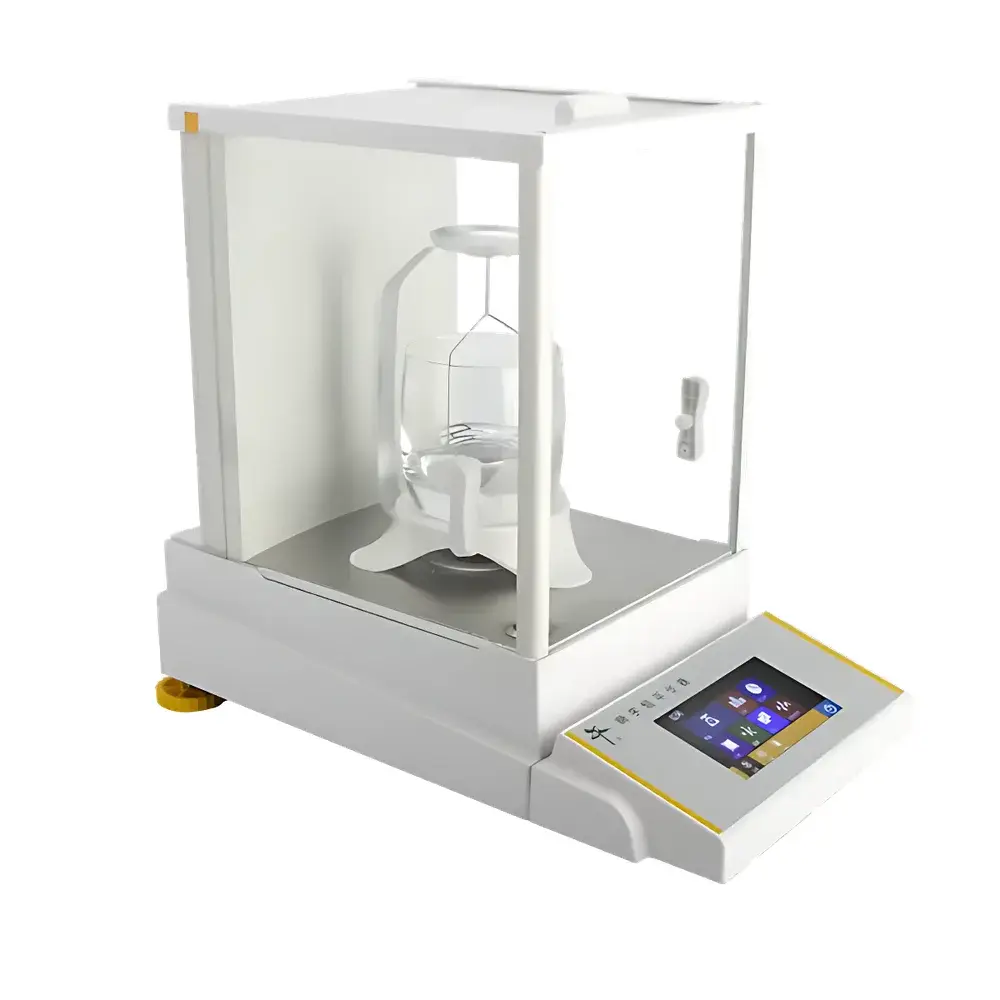
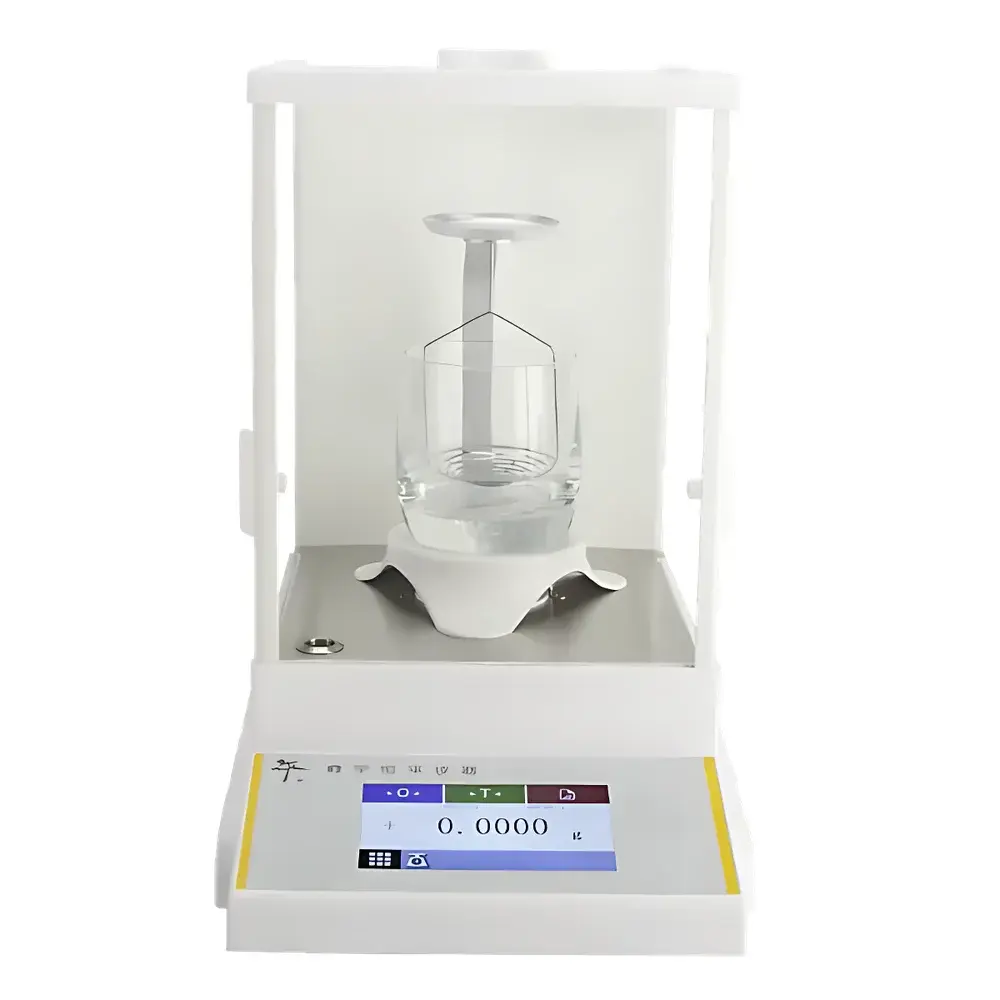
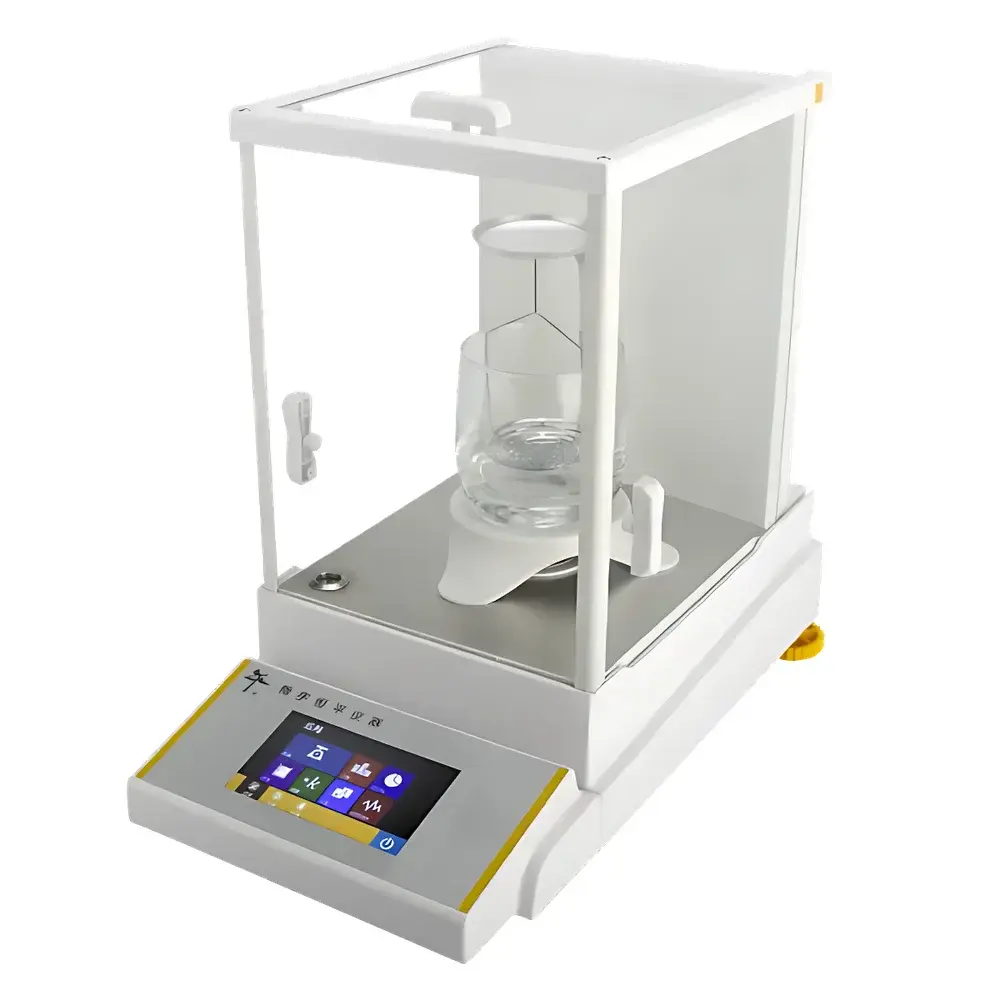
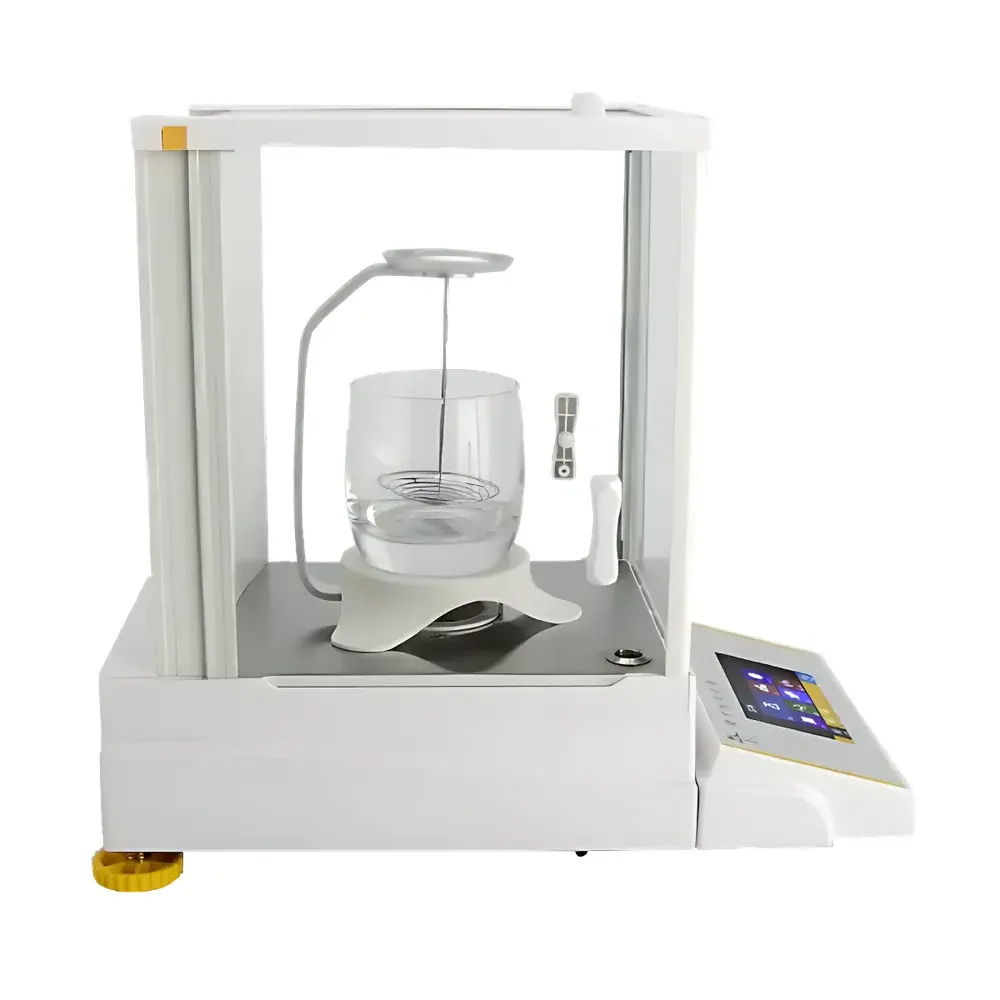
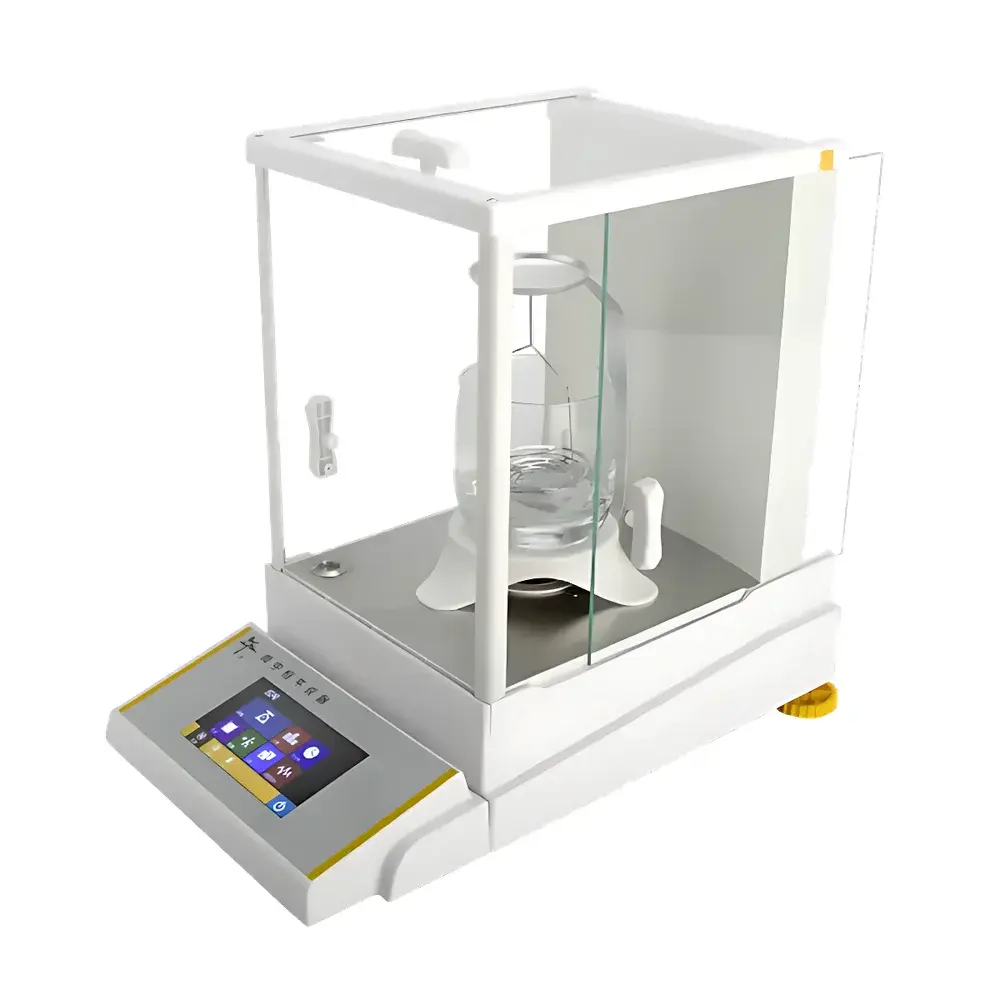
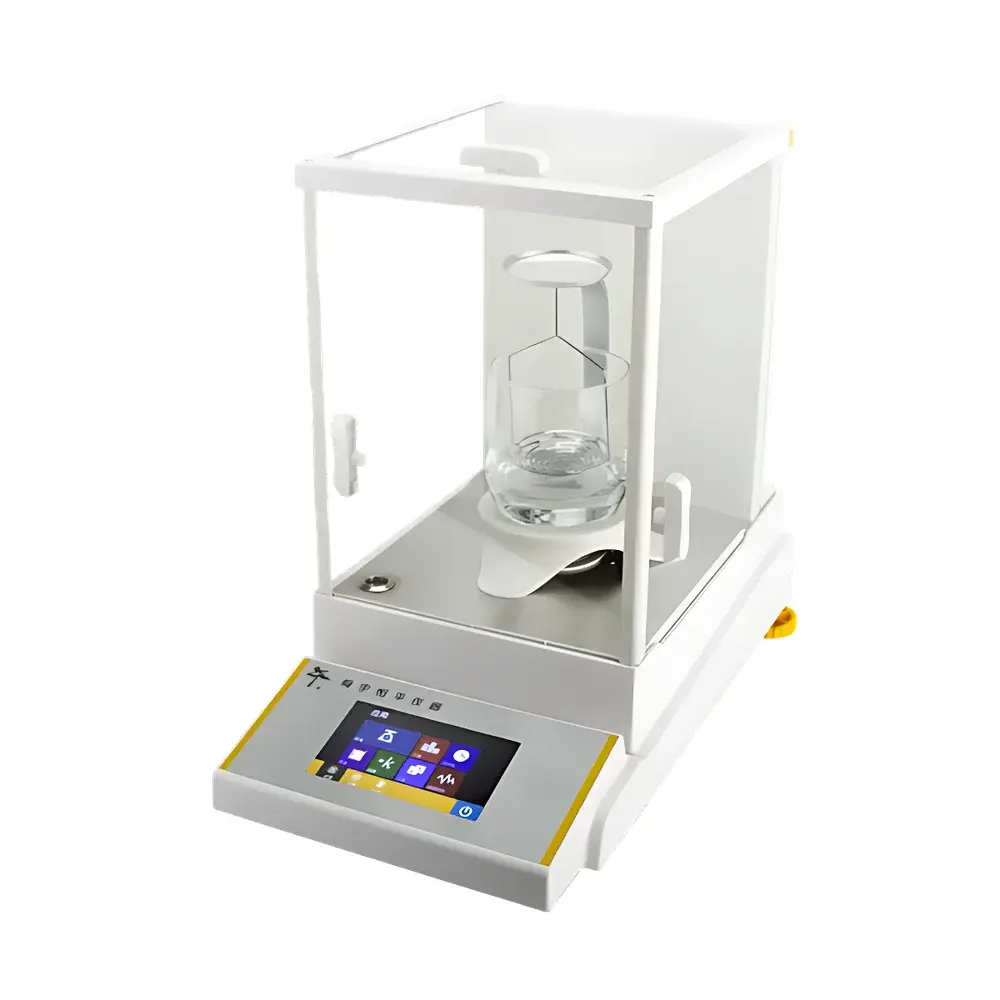
Sunny Hengping AE224J Touchscreen Density Balance
| Brand | Sunny Hengping Instrument |
|---|---|
| Origin | Shanghai, China |
| Manufacturer Type | Direct Manufacturer |
| Regional Category | Domestic (China) |
| Model | AE224J |
| Instrument Type | Analytical Balance |
| Maximum Capacity | 220 g |
| Readability | 0.0001 g |
| Repeatability | ±0.0001 g |
| Calibration Method | External |
| Density Measurement Principle | Archimedean Buoyancy (Liquid & Solid) |
| Display | 4.3-inch TFT Color Touchscreen |
| Pan Diameter | Φ90 mm |
| Draft Shield Dimensions | 160 × 165 × 200 mm (L×W×H) |
| Overall Dimensions | 365 × 223 × 338 mm (L×W×H) |
| Power Supply | DC 12 V, 12 W |
| Operating Temperature | 5–40 °C |
| Relative Humidity | ≤85 % RH |
| Interface | RS232 |
Overview
The Sunny Hengping AE224J Touchscreen Density Balance is an analytical balance engineered for precision mass measurement and integrated density determination in laboratory environments. Based on the principle of Archimedean buoyancy, it supports both solid and liquid density analysis without requiring external calculation or third-party software. The instrument combines high-resolution weighing (0.0001 g readability) with a dedicated, menu-driven density application—enabling direct digital readout of density values in g/cm³ or kg/m³. Its robust aluminum base minimizes low-frequency mechanical vibration interference, while the fully sealed draft shield (160 × 165 × 200 mm) ensures stable air displacement control during buoyancy-based measurements. Designed for routine QC, R&D, and academic applications, the AE224J complies with fundamental metrological requirements for analytical balances per ISO 9001-aligned quality systems and supports traceable calibration workflows via external weights.
Key Features
- 4.3-inch full-color TFT touchscreen interface with intuitive gesture-responsive navigation—operable with standard or double-layer laboratory gloves.
- Dedicated density application supporting three solid measurement modes: standard immersion, non-standard geometry (via auxiliary fixture), and floating-body analysis; plus liquid density mode using a supplied calibrated sinker.
- Ergonomic dual-Metro color scheme (soft blue/grey UI palette) reduces visual fatigue during extended use sessions.
- Integrated protective features: transparent acrylic draft shield with transport lock mechanism, scratch-resistant display cover, and reinforced aluminum alloy base for enhanced mechanical stability.
- RS232 serial interface enables bidirectional communication with LIMS, Excel, or custom data acquisition platforms—supporting ASCII protocol for automated result export.
- Built-in guidance prompts at each workflow stage—from tare initiation to density calculation confirmation—minimizing operator error and training overhead.
Sample Compatibility & Compliance
The AE224J accommodates a broad range of sample types within its 220 g maximum capacity and Φ90 mm stainless-steel weighing pan. Solid samples—including powders, granules, metals, polymers, and porous ceramics—are measured using standardized immersion techniques compliant with ASTM D792 (Standard Test Methods for Density and Specific Gravity of Plastics) and ISO 1183-1. Liquid density determinations follow ISO 16750 methodology for hydrometer-free assessment using calibrated sinkers. While not certified to OIML R76 or NIST Handbook 44 out-of-the-box, the balance meets internal validation criteria for GLP and GMP-aligned laboratories when used with documented calibration procedures and traceable reference masses (e.g., Class M1 or better). Environmental operation is validated from 5–40 °C at ≤85% RH non-condensing.
Software & Data Management
The onboard firmware includes preloaded applications for density, percentage weighing, parts counting, and formulation. All density results are timestamped and stored internally (up to 200 records), with optional export via RS232 to external databases. No proprietary software installation is required—ASCII-formatted output allows seamless integration into validated electronic lab notebooks (ELNs) or CSV-based QA reporting systems. Audit trail functionality is limited to manual recordkeeping; for 21 CFR Part 11 compliance, integration with external secure data capture platforms is recommended. Firmware updates are performed via USB-to-serial adapter (not included).
Applications
- Quality control of polymer pellets and injection-molded components in plastics manufacturing.
- Density verification of pharmaceutical excipients and active ingredients per USP <1210> guidance.
- Material characterization in metallurgy labs for alloy composition estimation.
- Academic teaching labs conducting Archimedes’ principle experiments with real-time digital feedback.
- Food science research evaluating fat content via density correlation in dairy emulsions.
- Geological sample screening for mineral density differentials in sediment analysis.
FAQ
Does the AE224J support internal calibration?
No—the AE224J requires external calibration using certified weights; it does not include motorized or built-in calibration mechanisms.
Can the density function measure porous or irregularly shaped solids?
Yes—via the “non-standard solid” mode, which allows user-input of suspension fluid density and sample volume offset to accommodate complex geometries or open-cell structures.
Is the RS232 interface compatible with modern Windows or macOS systems?
Yes—when paired with a standard USB-to-RS232 adapter and terminal emulation software (e.g., Tera Term or PuTTY), the interface supports reliable data streaming and command control.
What is the warm-up time required before first-use accuracy?
A minimum 30-minute stabilization period is recommended after power-on under ambient laboratory conditions (20–25 °C, low airflow) to achieve thermal equilibrium of the load cell and electronics.
Are replacement draft shields or calibration weights available directly from Sunny Hengping?
Yes—original equipment manufacturer (OEM) spare parts, including Class M1 calibration kits and acrylic shield assemblies, are available through authorized distribution channels with documented traceability certificates.