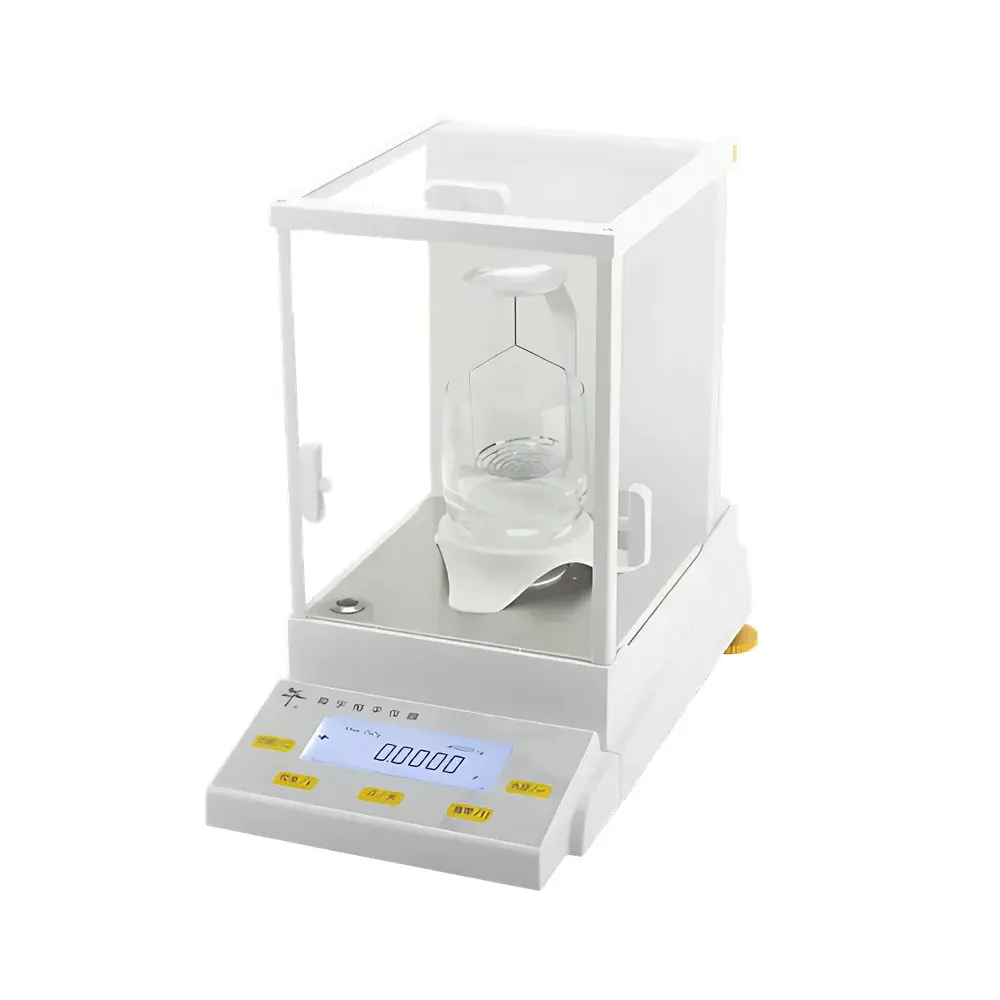
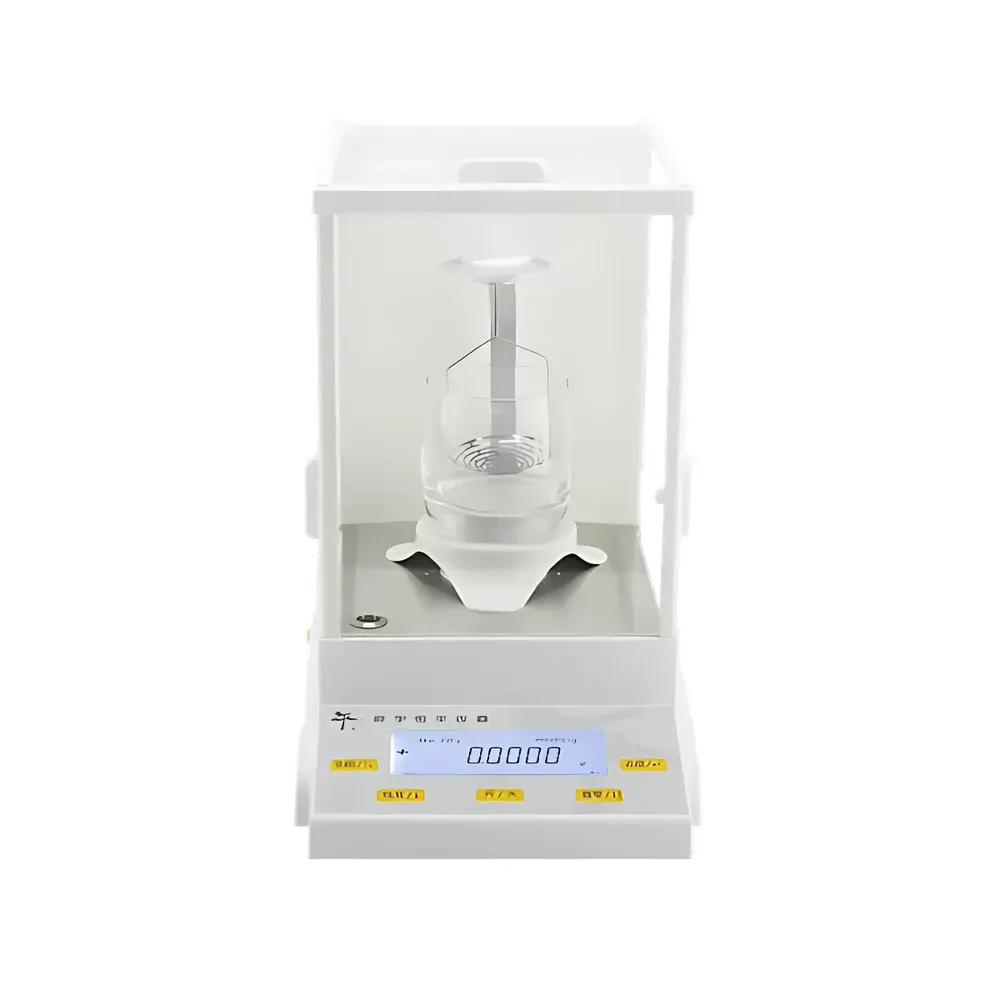
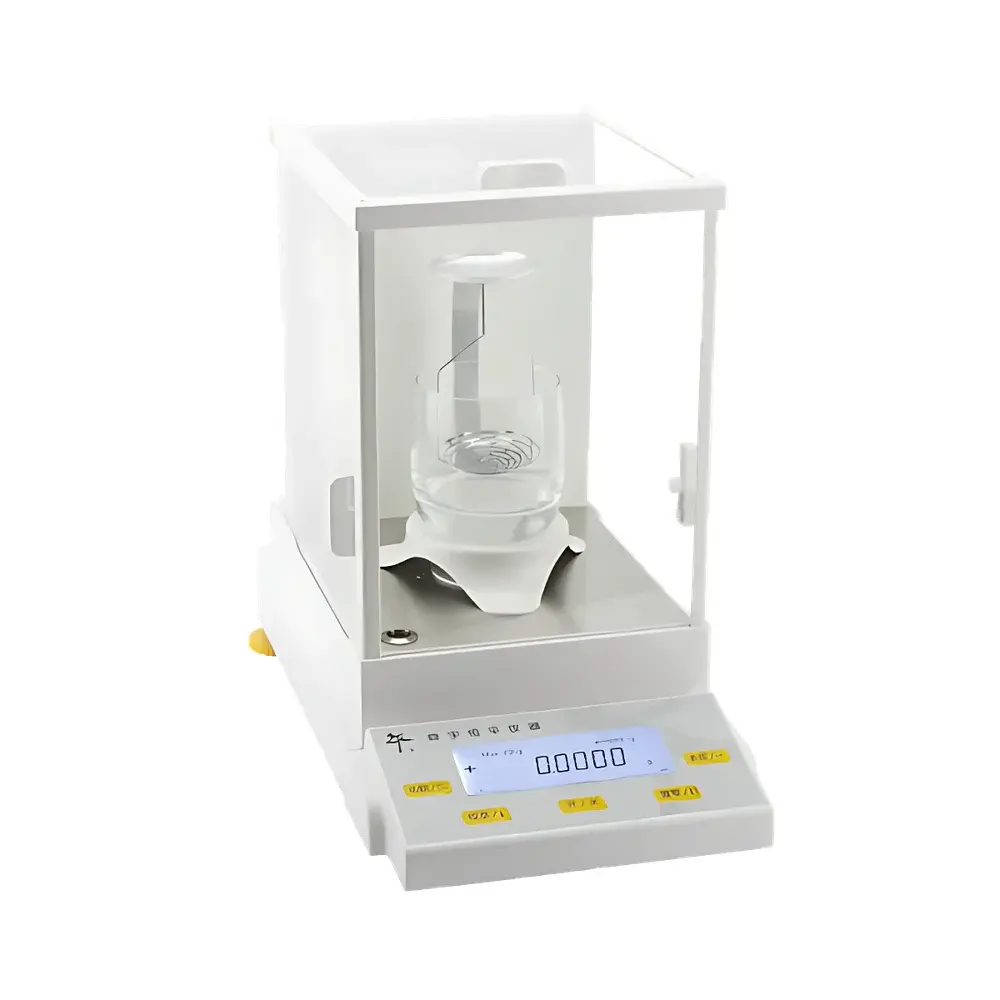
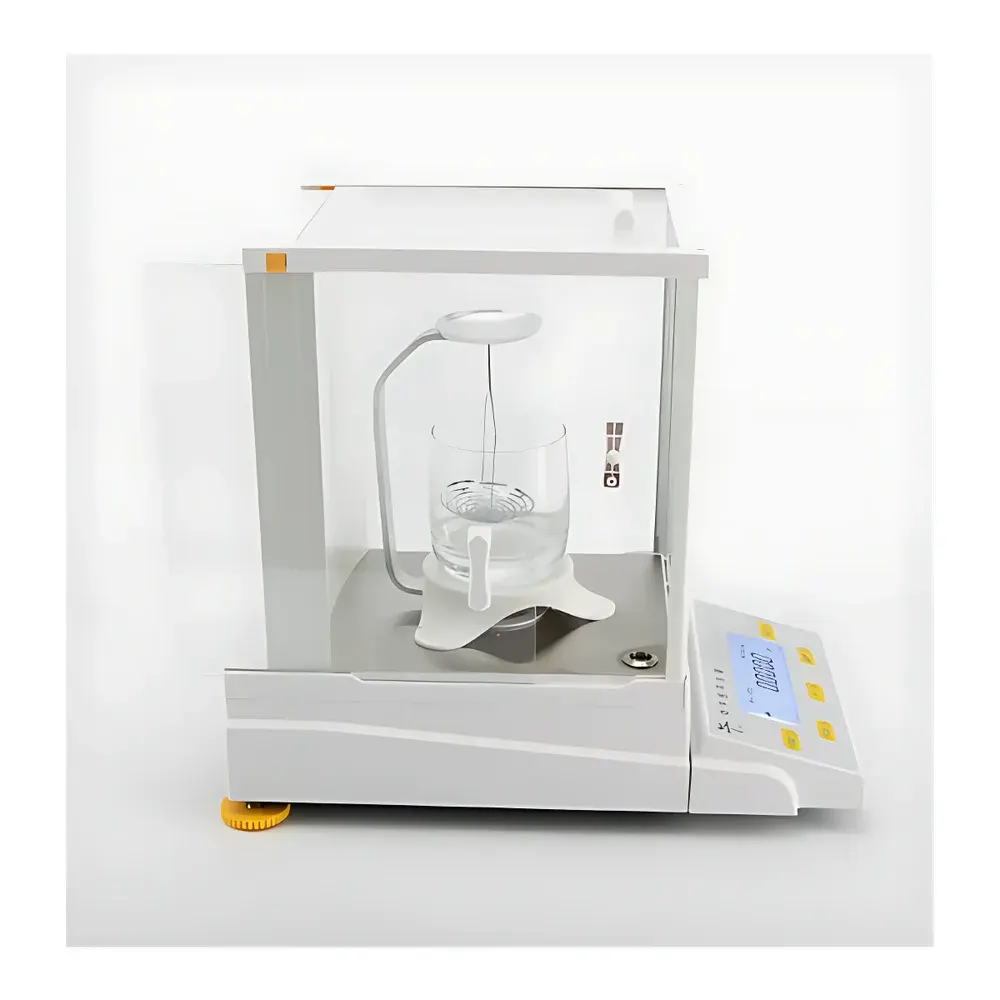
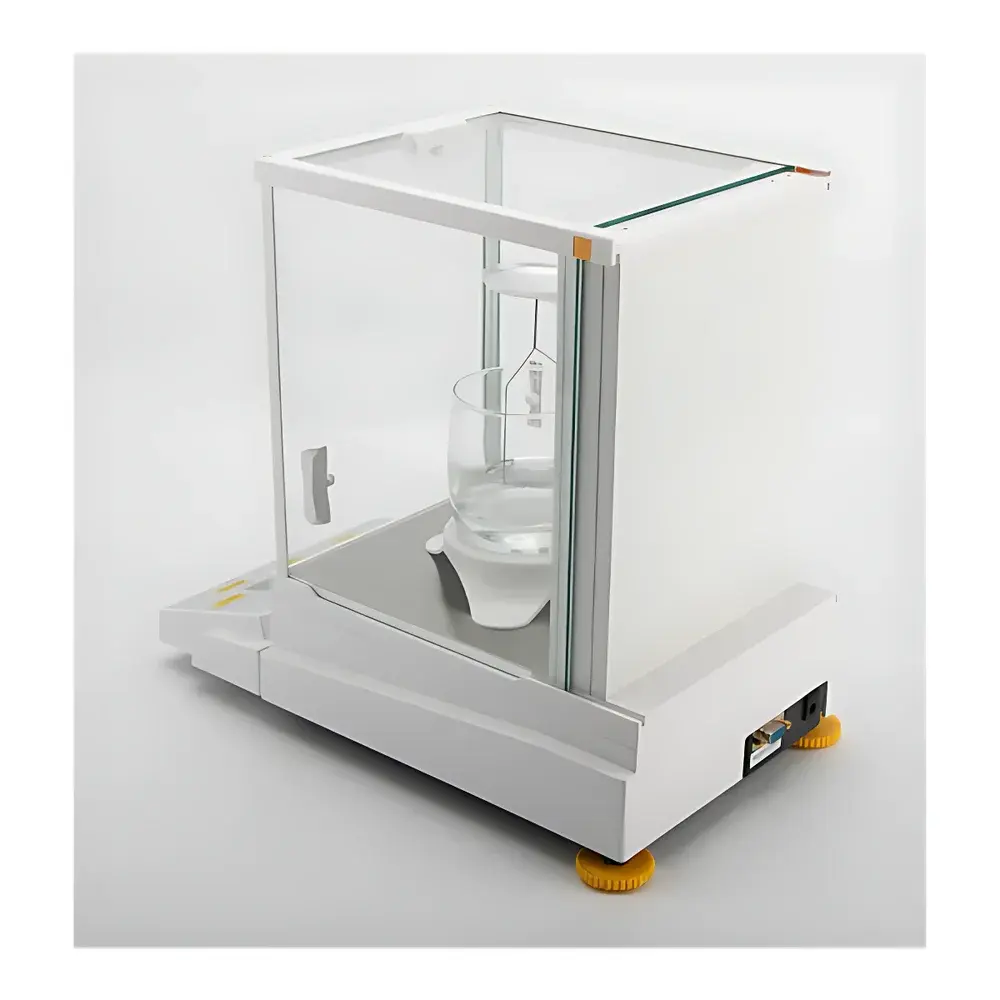
SUNNY HENGPING FA2104J Electronic Density Balance
| Brand | SUNNY HENGPING INSTRUMENT |
|---|---|
| Origin | Shanghai, China |
| Manufacturer Type | Direct Manufacturer |
| Product Category | Domestic (China-made) |
| Model | FA2104J |
| Instrument Type | Analytical Density Balance |
| Maximum Capacity | 210 g |
| Readability | 0.1 mg |
| Repeatability | ±0.1 mg |
| Calibration Method | External Calibration |
| Density Resolution | 0.001 g/cm³ |
| Sample Compatibility | Solids (standard, non-standard, floating), Liquids (with sinker kit) |
| Pan Diameter | Φ90 mm |
| Draft Shield Internal Volume | 165 × 150 × 200 mm (L×W×H) |
| Dimensions (W×D×H) | 365 × 223 × 338 mm |
| Net Weight | 6.8 kg |
| Operating Temperature | 5–40 °C |
| Relative Humidity | ≤85% RH |
Overview
The SUNNY HENGPING FA2104J Electronic Density Balance is an integrated analytical balance engineered for high-precision density determination of solid and liquid samples in laboratory and industrial quality control environments. It operates on the principle of Archimedean buoyancy—measuring sample mass in air and immersed mass in a reference fluid (typically distilled water at 23 °C)—and automatically computes density (g/cm³) using the built-in density calculation algorithm per ISO 1183-1 and ASTM D792 standards. Designed for metrological integrity, the FA2104J features a 0.1 mg readability sensor with <±0.1 mg repeatability and linearity error ≤±0.2 mg across its full 210 g capacity range. Its dual-mode operation supports both standard density measurement (for homogeneous solids) and non-standard protocols (e.g., porous or irregularly shaped materials requiring sinker correction), enabling traceable, GLP-compliant results without manual computation.
Key Features
- Integrated density calculation engine delivering direct g/cm³ readout to three decimal places (0.001 g/cm³ resolution), eliminating manual arithmetic and reducing operator-induced error.
- Robust all-aluminum base construction dampens low-frequency mechanical vibrations, enhancing weighing stability in shared lab environments or near HVAC systems.
- Full-height glass draft shield with transport lock mechanism safeguards sensitive load cell during shipment and provides dust/airflow protection during routine operation.
- RS232 serial interface enables bidirectional communication with external PCs or LIMS for automated data logging, audit trail generation, and instrument control.
- Large-diameter (Φ90 mm) stainless steel weighing pan accommodates bulky or irregular-density specimens—including granules, molded polymers, metal castings, and composite laminates—without compromising center-of-gravity alignment.
- Compliance-ready design supports external calibration using certified weights (200 g standard supplied), satisfying internal QA requirements and external accreditation audits (e.g., ISO/IEC 17025).
Sample Compatibility & Compliance
The FA2104J supports density analysis across diverse material classes: solid-phase samples ≥0.25 g in air mass and exhibiting ≥0.125 g buoyant force in water; liquids via sinker-based immersion method with user-selectable reference fluid density (e.g., water, ethanol, or custom-defined values). Applications span R&D and production QC in polymer science (plastic pellets, thermosets), metallurgy (sintered alloys, powder compacts), electronics (PCB substrates, conductive pastes), food science (baked goods porosity, dairy emulsions), and advanced ceramics. The system conforms to fundamental metrological requirements outlined in ISO 9001, ISO/IEC 17025, and USP , and supports documentation workflows aligned with FDA 21 CFR Part 11 when paired with compliant data acquisition software.
Software & Data Management
While the FA2104J operates autonomously via front-panel keypad and LCD display, its RS232 port permits integration with third-party software platforms for structured data capture. When connected to validated PC-based applications, the balance transmits timestamped mass readings (air + immersed), calculated density values, operator ID, calibration status, and environmental metadata (if ambient sensors are interfaced). All transmitted records support electronic signature, audit trail logging, and export to CSV or Excel formats—facilitating traceability in regulated environments governed by GMP or GLP principles. No proprietary software is bundled; users retain full control over data ownership and processing pipelines.
Applications
- Density verification of injection-molded plastic components to detect void content or resin degradation.
- Quality screening of rubber compounds and elastomeric seals for cross-link density consistency.
- Porosity assessment of sintered metal parts in automotive and aerospace supply chains.
- Concentration monitoring of aqueous chemical solutions (e.g., plating baths, etchants) via density correlation.
- Batch release testing of pharmaceutical excipients (e.g., microcrystalline cellulose, lactose) per USP monographs.
- Material authentication of recycled polymer streams using density fingerprinting against reference libraries.
FAQ
What density standards does the FA2104J comply with?
It implements calculation logic consistent with ISO 1183-1 (plastics), ASTM D792 (rubber and plastics), and ISO 2737 (liquids), supporting both standard and sinker-corrected methodologies.
Can the balance measure density of powders or porous materials?
Yes—using the non-standard solid mode with optional sinker accessories, it accommodates open-cell foams, ceramic filters, and powdered metals via vacuum saturation or surface-tension mitigation techniques.
Is internal calibration available?
No—the FA2104J relies exclusively on external calibration with traceable weights; this design enhances long-term stability and simplifies compliance verification.
What environmental conditions are required for optimal performance?
Operation is specified between 5 °C and 40 °C at ≤85% non-condensing relative humidity; stable temperature gradients (<0.5 °C/hour) are recommended for sub-milligram repeatability.
Does the unit support GLP/GMP documentation workflows?
When integrated with validated external software, it generates time-stamped, operator-identified records with full audit trail capability—meeting core data integrity expectations under ALCOA+ principles.