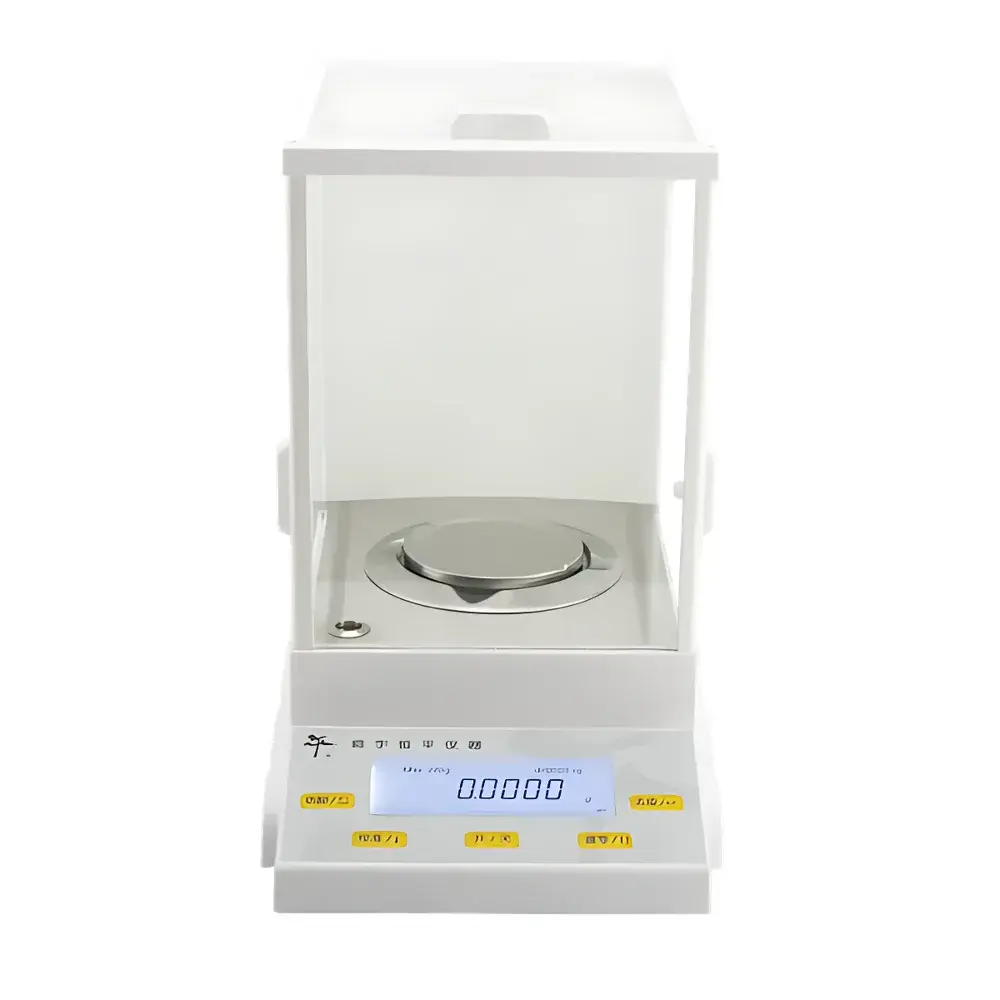
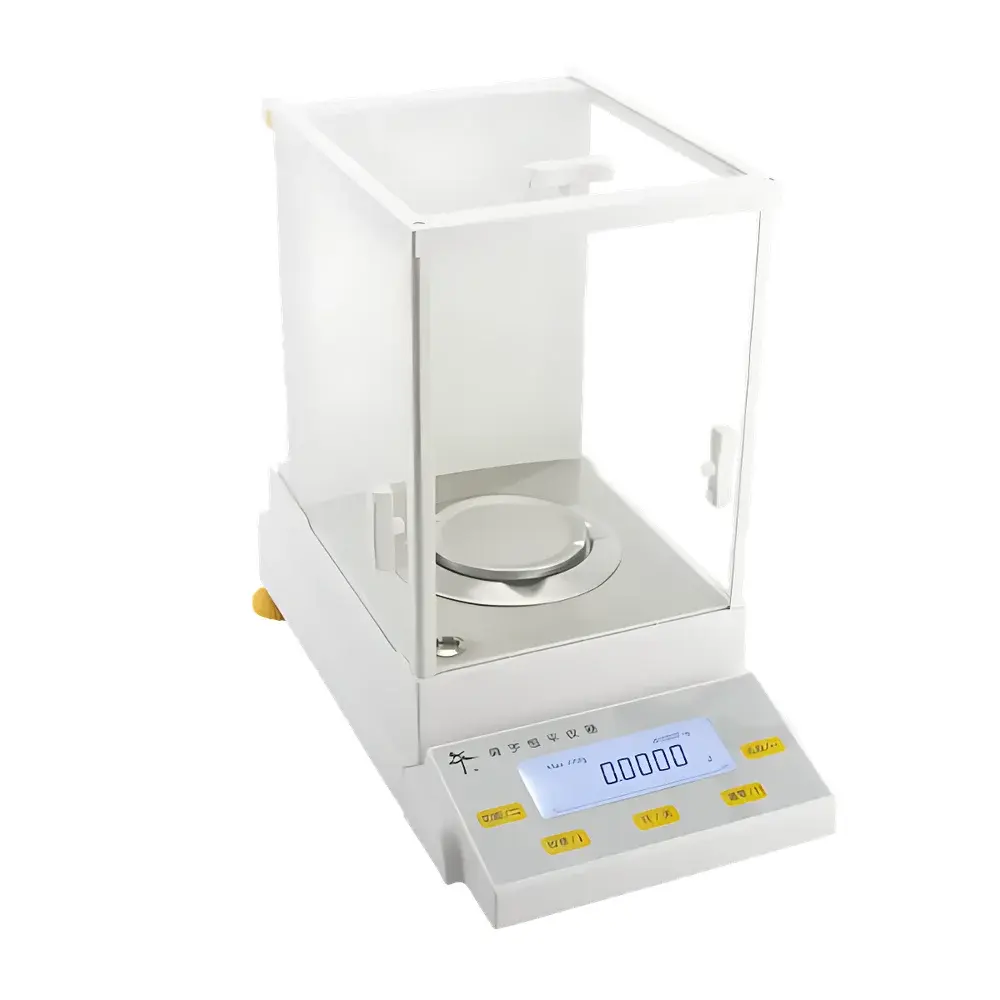
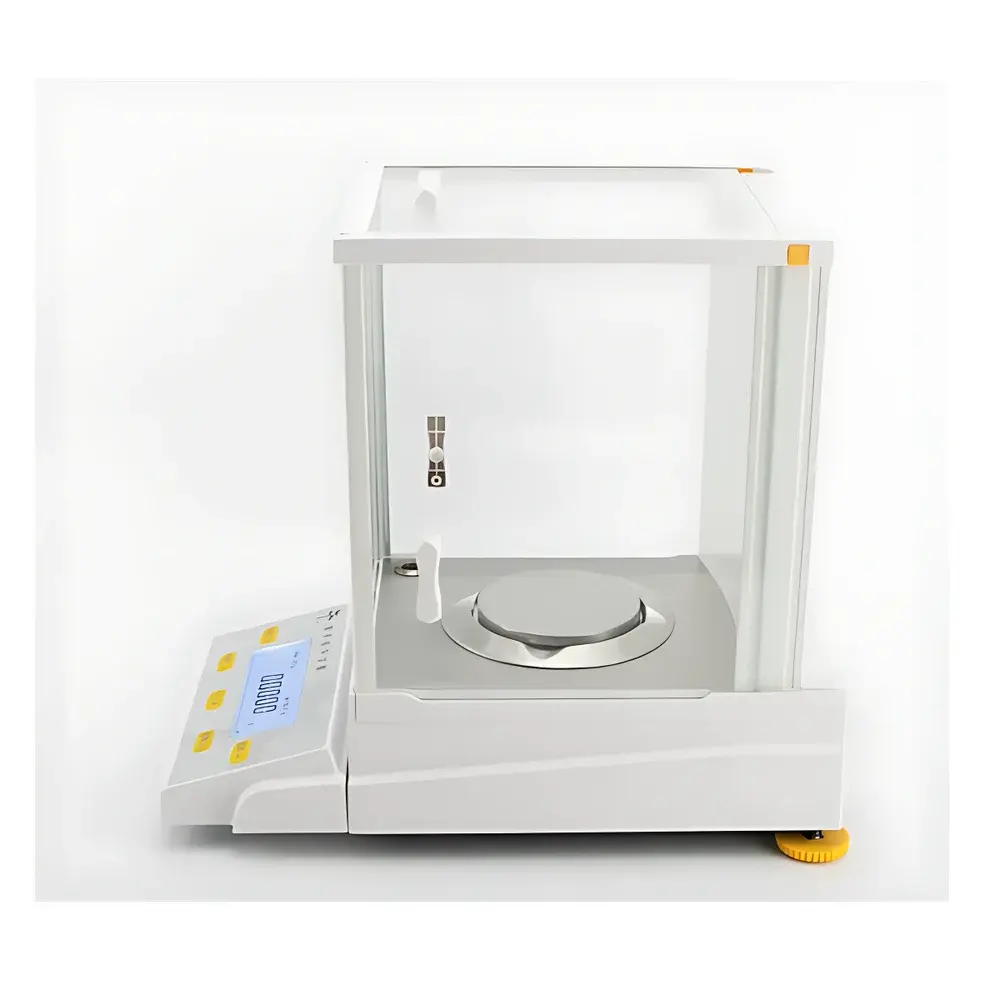
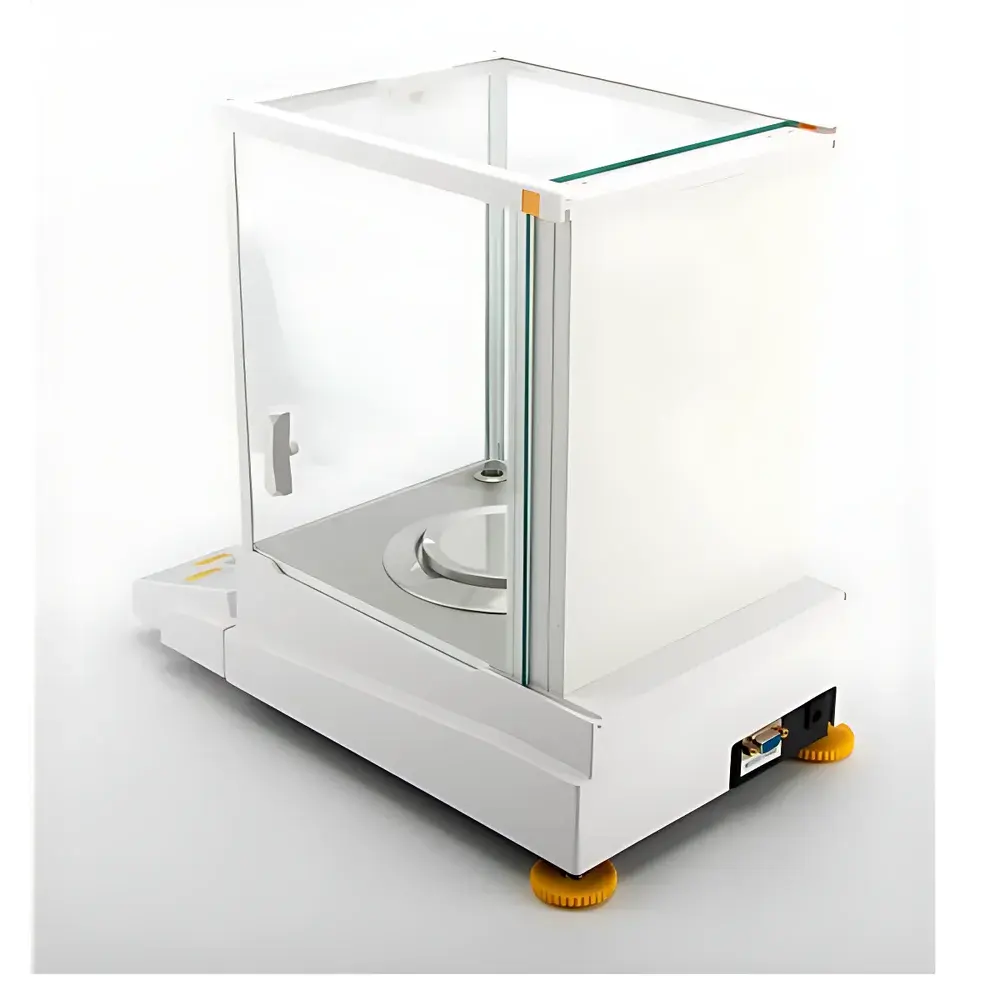
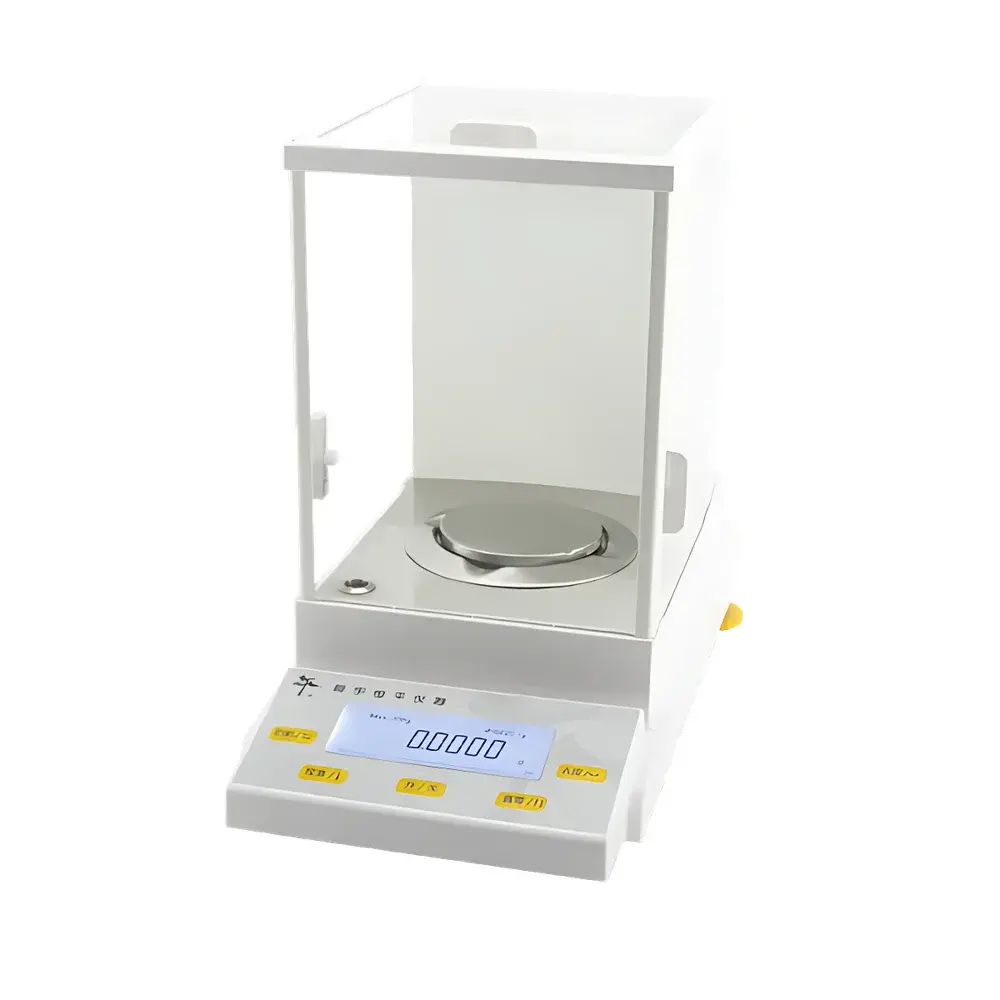
SUNNY HENGPING FB224 Automatic Internal Calibration Analytical Balance
| Brand | SUNNY HENGPING INSTRUMENT |
|---|---|
| Origin | Shanghai, China |
| Manufacturer Type | Direct Manufacturer |
| Instrument Type | Analytical Balance |
| Maximum Capacity | 420 g |
| Readability | 0.1 mg |
| Repeatability | ±0.1 mg |
| Linearity | ±0.2 mg |
| Calibration Method | Motor-driven internal calibration with built-in weights |
| Pan Size | Φ90 mm |
| Draft Shield Dimensions (L×W×H) | 165 × 150 × 200 mm |
| Overall Dimensions (L×W×H) | 365 × 223 × 338 mm |
| Operating Temperature | 5–40 °C |
| Relative Humidity | ≤85% RH |
| Power Supply | 220 V/50 Hz or 110 V/60 Hz |
| Sensitivity Drift | ≤±2.0 ppm/°C |
| Net Weight | 5.5 kg |
| Interface | RS232 |
Overview
The SUNNY HENGPING FB224 Automatic Internal Calibration Analytical Balance is a precision mass measurement instrument engineered for laboratory environments requiring high reproducibility, traceable accuracy, and operational reliability in routine analytical weighing tasks. Based on electromagnetic force compensation (EMFC) transduction technology, the FB224 delivers stable, drift-resistant measurements across its full 420 g capacity range with a readability of 0.1 mg. Its integrated motorized internal calibration system employs certified stainless-steel reference weights to perform scheduled or on-demand recalibration—eliminating manual handling errors and ensuring continuous compliance with ISO/IEC 17025 and GLP requirements. Designed for ISO Class II and III laboratory workflows, the balance meets fundamental metrological criteria defined in OIML R76 and ASTM E898 for analytical balances used in pharmaceutical QC, academic research, and materials characterization.
Key Features
- Motor-driven internal calibration with automatic temperature-compensated weight deployment—no external weights required for daily verification or adjustment.
- Electromagnetic force compensation sensor with low thermal drift (≤±2.0 ppm/°C) and robust mechanical damping for rapid stabilization (<3 s typical settling time).
- Full aluminum base plate and reinforced ABS housing provide structural rigidity and effective isolation from low-frequency environmental vibrations.
- Four-sided transparent glass draft shield with aluminum rear panel and integrated transport lock ensures consistent airflow control and physical protection during relocation.
- Sealed keypad and protective display cover minimize dust ingress and surface abrasion, extending service life under frequent use conditions.
- Under-pan weighing hook with overload protection enables density determination and suspended sample measurement without compromising sensor integrity.
- Configurable weighing speed (fast/standard/sensitive modes), adjustable auto-zero tracking, and programmable auto-tare across full capacity range.
- Multi-function operation including piece counting, percentage weighing, dynamic averaging, and unit conversion (g, mg, oz, ct, lb, etc.).
- RS232 serial interface supports bidirectional communication with LIMS, ELN, or statistical process control software—compatible with FDA 21 CFR Part 11 audit trail requirements when paired with compliant host systems.
Sample Compatibility & Compliance
The FB224 accommodates standard laboratory vessels—including crucibles, vials, beakers, and filter papers—within its 90 mm diameter stainless-steel weighing pan and 165 × 150 × 200 mm shielded chamber volume. Its sealed construction and corrosion-resistant ABS enclosure ensure compatibility with mildly aggressive solvents and routine cleaning agents. The balance conforms to international regulatory expectations for analytical instrumentation: it supports documented calibration procedures per ISO 9001 and ISO/IEC 17025; its internal calibration mechanism satisfies traceability requirements outlined in USP and EP 2.1.6; and its design aligns with mechanical safety standards IEC 61010-1. Routine verification using certified Class F1 or E2 weights is recommended at user-defined intervals to maintain metrological assurance.
Software & Data Management
The FB224 outputs ASCII-formatted data via RS232 at configurable baud rates (up to 19200 bps), enabling seamless integration with third-party data acquisition platforms. When connected to validated laboratory software (e.g., LabX, Empower, or custom Python-based parsers), the balance supports automated timestamped record generation, digital signature capture, and electronic archiving compliant with ALCOA+ principles. Built-in self-diagnostics report sensor status, calibration history, and error codes (e.g., E01 = overload, E05 = draft shield open), facilitating preventive maintenance planning and reducing unplanned downtime. Firmware updates are performed via PC utility provided by SUNNY HENGPING, with version logging embedded in device memory.
Applications
This analytical balance is routinely deployed in quality control laboratories for raw material assay, formulation batch release testing, and stability study sample preparation. It supports gravimetric standard solution preparation per USP , active pharmaceutical ingredient (API) loss-on-drying (LOD) analysis, and catalyst loading quantification in catalysis research. Academic users apply it in stoichiometric reaction setup, polymer molecular weight determination via end-group titration, and nanomaterial dispersion mass normalization. Its repeatability of ±0.1 mg and linearity error of ±0.2 mg make it suitable for applications demanding ≤0.05% relative uncertainty at nominal load.
FAQ
Does the FB224 require periodic external calibration?
Yes—while internal calibration maintains short-term accuracy, periodic verification using traceable external weights (e.g., Class E2) is required per ISO/IEC 17025 clause 6.5.2 and manufacturer recommendations.
Can the draft shield be removed for cleaning?
Yes—the glass shield is detachable with tool-free disassembly; however, reinstallation must follow alignment guides to preserve aerodynamic performance and measurement consistency.
Is the RS232 interface compatible with modern Windows/macOS systems?
Yes—when used with a USB-to-RS232 adapter and appropriate driver, the interface functions with standard terminal emulators or validated LIMS clients.
What environmental conditions affect measurement stability?
Air currents, static charge, temperature gradients >1 °C/hour, and electromagnetic interference from nearby centrifuges or RF sources may degrade repeatability—install in a dedicated bench with anti-vibration matting.
How often does the internal calibration execute by default?
The factory default is 2-hour intervals, but this can be adjusted from 1 minute to 24 hours—or disabled entirely—in the configuration menu.