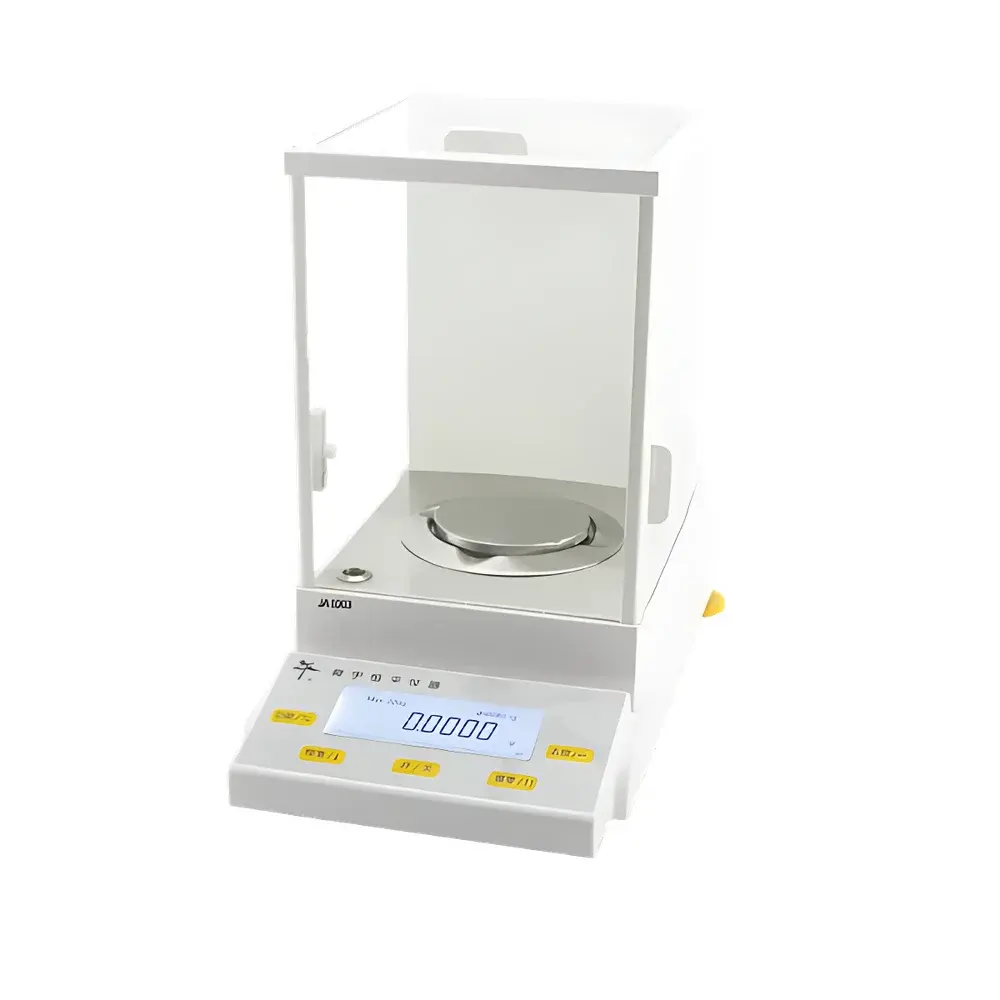
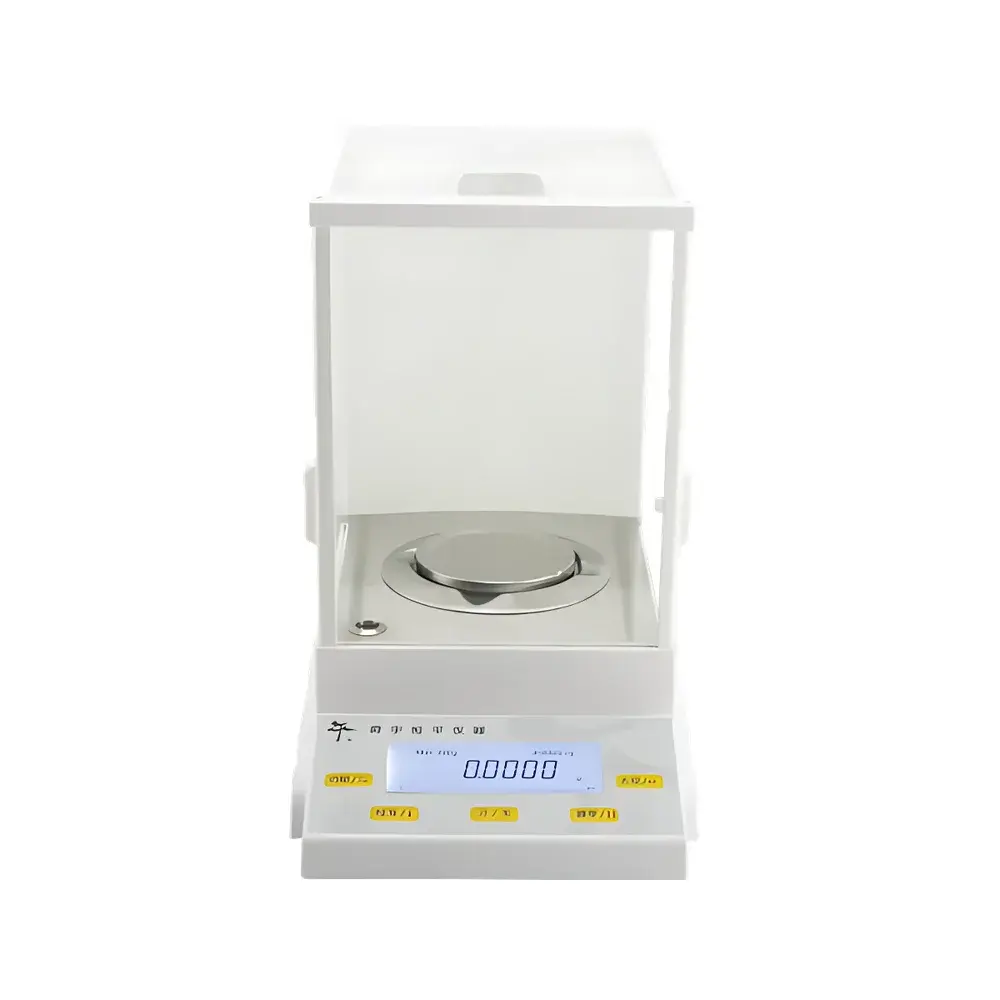
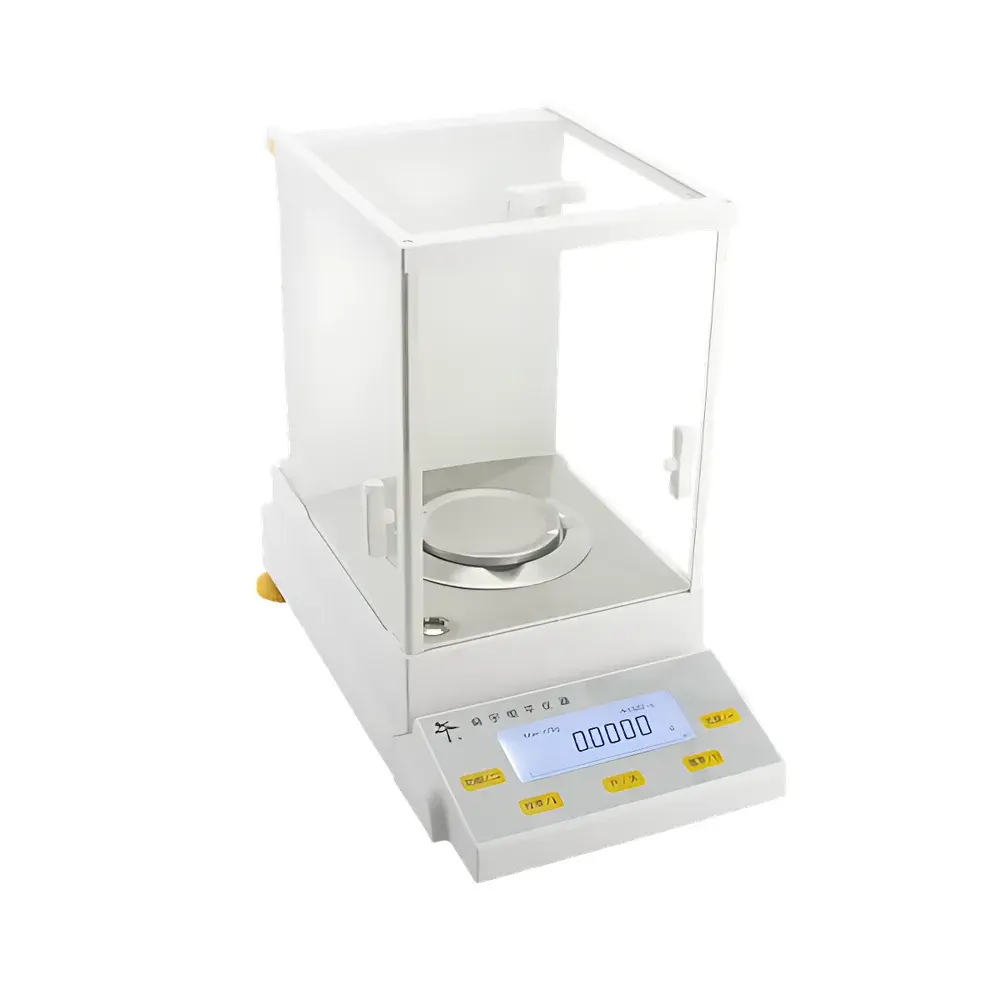
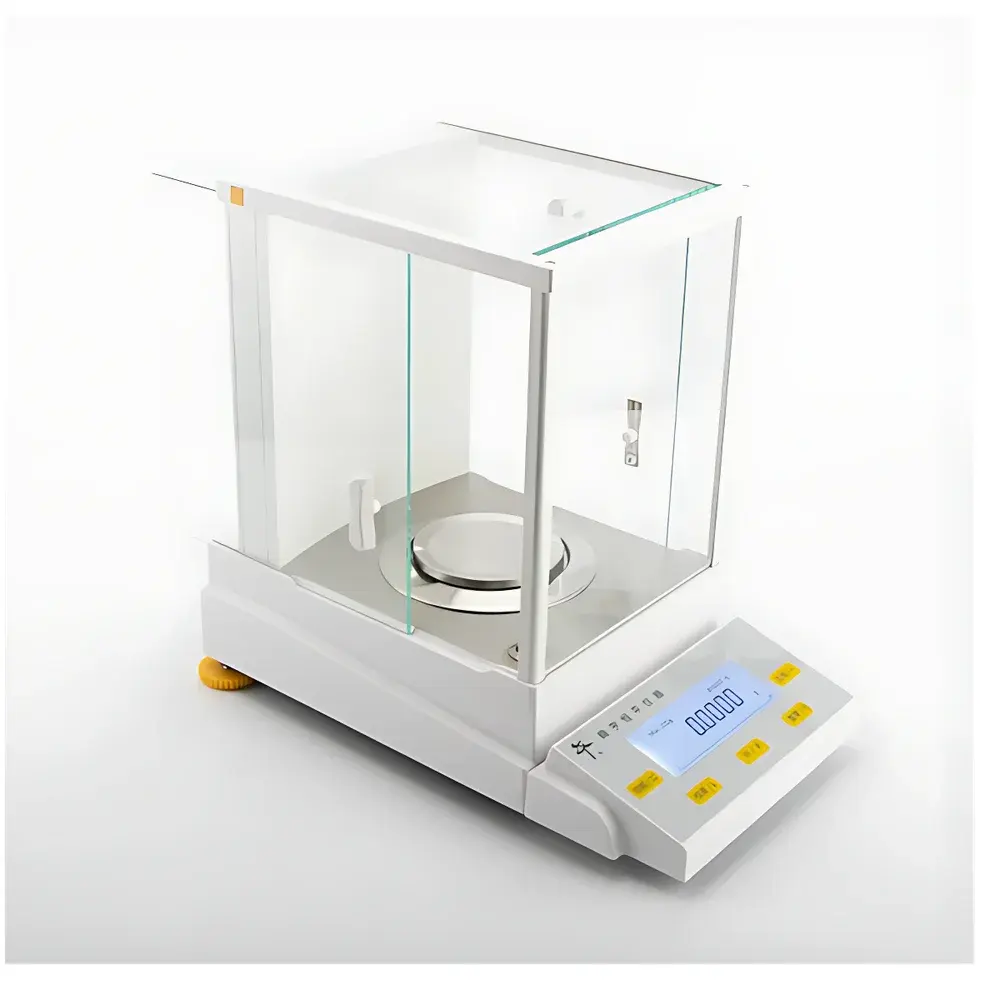
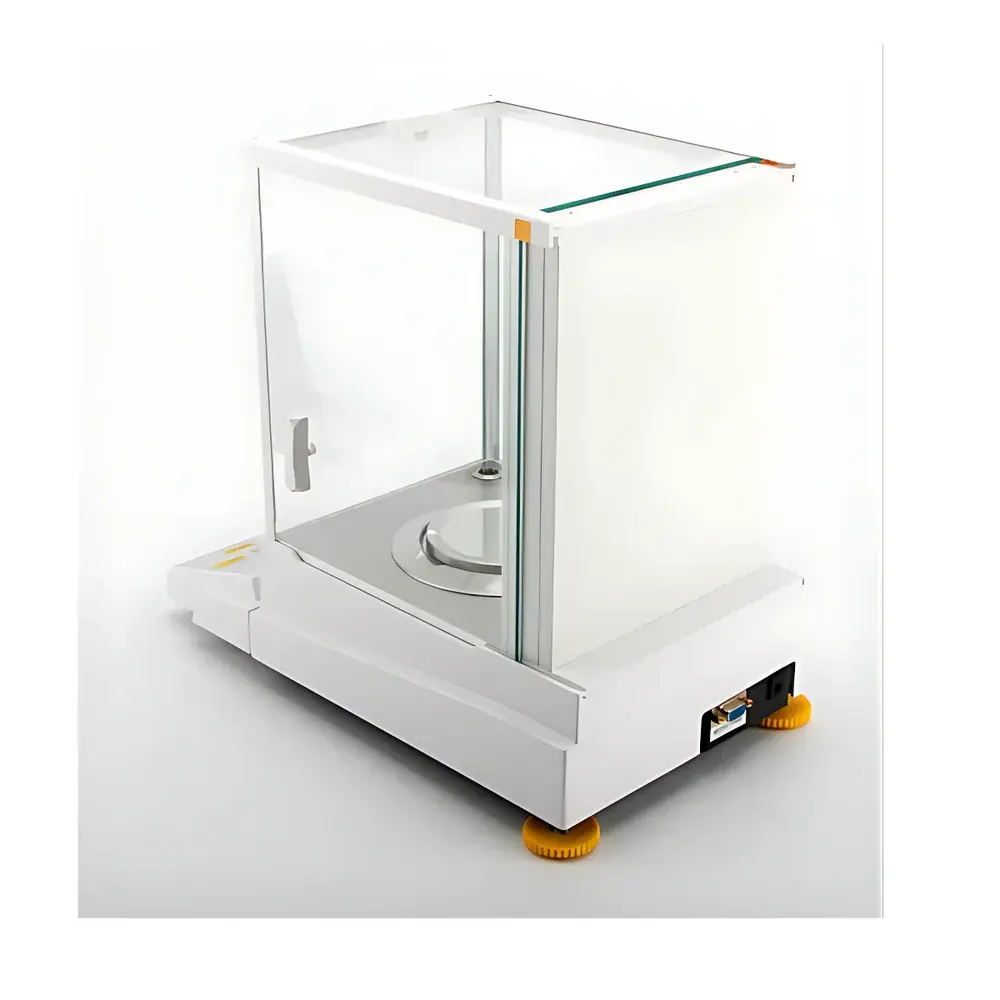
Sunny Hengping JA2003 Precision Balance
| Brand | Sunny Hengping Instrument |
|---|---|
| Origin | Shanghai, China |
| Manufacturer Type | Direct Manufacturer |
| Regional Classification | Domestic (China) |
| Model | JA2003 |
| Instrument Type | Precision Balance |
| Maximum Capacity | 500 g |
| Readability | 0.001 g |
| Repeatability | ±0.001 g |
| Calibration Method | External |
| Weighing Pan Diameter | Φ138 mm |
| Draft Shield Internal Volume (L×W×H) | 165 × 150 × 200 mm |
| Dimensions (L×W×H) | 365 × 223 × 338 mm |
| Power Supply | 220 V / 50 Hz or 110 V / 60 Hz |
| Power Consumption | 12 W |
| Net Weight | 5.5 kg |
| Operating Temperature | 5–40 °C |
| Relative Humidity | ≤85% RH |
| Interface | RS232 |
Overview
The Sunny Hengping JA2003 Precision Balance is an electromechanical analytical instrument engineered for high-reproducibility mass measurement in laboratory, quality control, and educational environments. It operates on electromagnetic force compensation (EMFC) principle—where the load-induced displacement of the weighing pan is counterbalanced by a precisely regulated current through a coil within a permanent magnetic field. The resulting current is linearly proportional to the applied mass and digitally converted into a stable, temperature-compensated readout with 0.001 g (1 mg) resolution across its full 500 g capacity range. Designed for ISO/IEC 17025-compliant workflows, the JA2003 meets general requirements for precision balances per ASTM E898 and JJG 1036–2008 (Chinese national metrological verification regulation), supporting traceable calibration via external standard weights.
Key Features
- Backlit large LCD display with intuitive icon-based navigation and real-time status indicators (e.g., stabilization, overload, calibration mode)
- High-sensitivity tactile keypad with ergonomic layout; integrated under-pan suspension hook for density and specific gravity measurements
- Robust aluminum alloy base structure dampens low-frequency mechanical vibrations, enhancing stability on non-dedicated lab benches
- Draft shield with four-sided transparent tempered glass and rear aluminum panel—fully removable for cleaning and accommodates samples up to 165 × 150 × 200 mm (L×W×H)
- Integrated transport lock for glass doors and protective acrylic display cover to mitigate dust ingress and surface abrasion during routine use
- Programmable weighing speed (fast/standard/slow) and four-stage shock absorption algorithm for dynamic sample placement or draft-prone environments
- Full-range tare functionality, piece counting (PCS), percentage weighing (%), and unit conversion (g, oz, ct, lb, etc.) without recalibration
- Auto-zero tracking with adjustable sensitivity, over-load protection up to 150% of rated capacity, and self-diagnostic error reporting (e.g., sensor drift, temperature instability)
Sample Compatibility & Compliance
The JA2003 accommodates a broad spectrum of solid and powdered samples—including reference standards, pharmaceutical excipients, chemical reagents, metallurgical specimens, and botanical materials—within its 138 mm diameter stainless-steel weighing pan. Its sealed EMFC sensor architecture and thermal mass design minimize drift under ambient fluctuations between 5 °C and 40 °C at ≤85% RH (non-condensing). The balance conforms to electromagnetic compatibility (EMC) requirements per IEC 61326-1:2013 and safety standards per IEC 61010-1:2010. While not certified for GMP-regulated production environments, it supports GLP-aligned documentation when paired with RS232-connected printers or LIMS-compatible data loggers. External calibration using Class M2 or better weights satisfies ISO/IEC 17025 clause 6.5.2 for measurement traceability.
Software & Data Management
Data output is delivered via standard RS232 serial interface (no proprietary drivers required), enabling direct integration with third-party software including LabX (Mettler Toledo), WinWedge (TAL Technologies), or custom Python/Excel VBA scripts. Output format is ASCII-based with configurable delimiters and optional timestamping. The balance transmits stabilized weight values only—eliminating transient noise—and supports automatic print-on-stabilization mode. For audit readiness, users may implement manual calibration logs with operator ID, date/time stamp, and reference weight serial number—aligning with FDA 21 CFR Part 11 principles where electronic records are locally archived and reviewed.
Applications
- Quantitative formulation in R&D labs (e.g., catalyst loading, polymer blend ratios)
- In-process checks for tablet weight variation per USP dissolution testing protocols
- Calibration of volumetric glassware using water density correction at defined temperatures
- Educational demonstrations of mass conservation, stoichiometry, and uncertainty propagation
- Inventory management via piece counting for standardized fasteners, microcentrifuge tubes, or assay plates
- Preparation of certified reference material (CRM) dilutions requiring sub-milligram repeatability
FAQ
What calibration standards are recommended for the JA2003?
External calibration must be performed using certified weights traceable to national metrology institutes (e.g., NIST, NIM), with nominal value equal to ≥1/3 and ≤2/3 of full scale (e.g., 200 g or 300 g for the JA2003). Class M2 tolerance is suitable for routine verification.
Can the JA2003 operate on battery power?
No—it requires continuous AC mains supply (220 V / 50 Hz or 110 V / 60 Hz) and does not support internal or external DC backup.
Is the draft shield removable for cleaning?
Yes—the glass windscreen is fully detachable and designed for solvent-safe wiping with lint-free cloths and isopropyl alcohol.
Does the balance support internal calibration?
No—calibration is exclusively external; no motorized internal weight mechanism is present.
How is temperature drift compensated?
The JA2003 employs dual-sensor thermal monitoring and adaptive zero-tracking algorithms—not active oven-controlled chambers—but achieves <0.002 g drift over 30 min at constant 23 °C ambient.