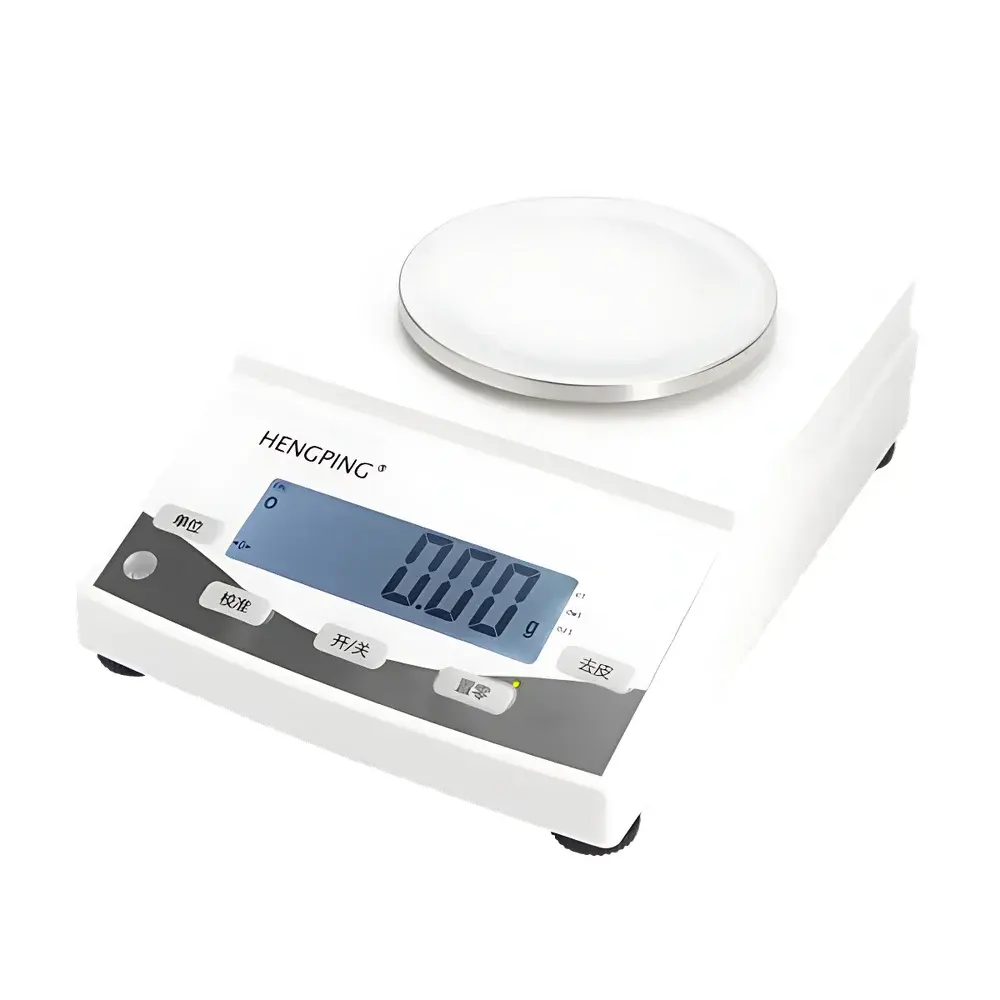
SUNNY HENGPING JY/YP Series Precision Electronic Balance
| Brand | SUNNY HENGPING INSTRUMENT |
|---|---|
| Origin | Shanghai, China |
| Manufacturer Type | Direct Manufacturer |
| Product Category | Domestic |
| Model | JY/YP Series |
| Price Range | USD 70–280 (est.) |
| Instrument Type | Precision Balance |
| Maximum Capacity | 200–2000 g |
| Readability | 0.01 g |
| Calibration Method | External Manual Calibration |
| Repeatability | ≤ ±0.01 g |
| Pan Diameter | Φ130 mm |
| Dimensions (L×W×H) | 257 × 295 × 75 mm |
| Stabilization Time | ≤ 3 s |
| Operating Temperature | 5–40 °C |
| Relative Humidity | ≤ 85% RH |
| Power Supply | AC/DC Dual Mode |
| Interface | RS232 Standard |
| Unit Conversion | Multiple Units (g, oz, ct, etc.) |
Overview
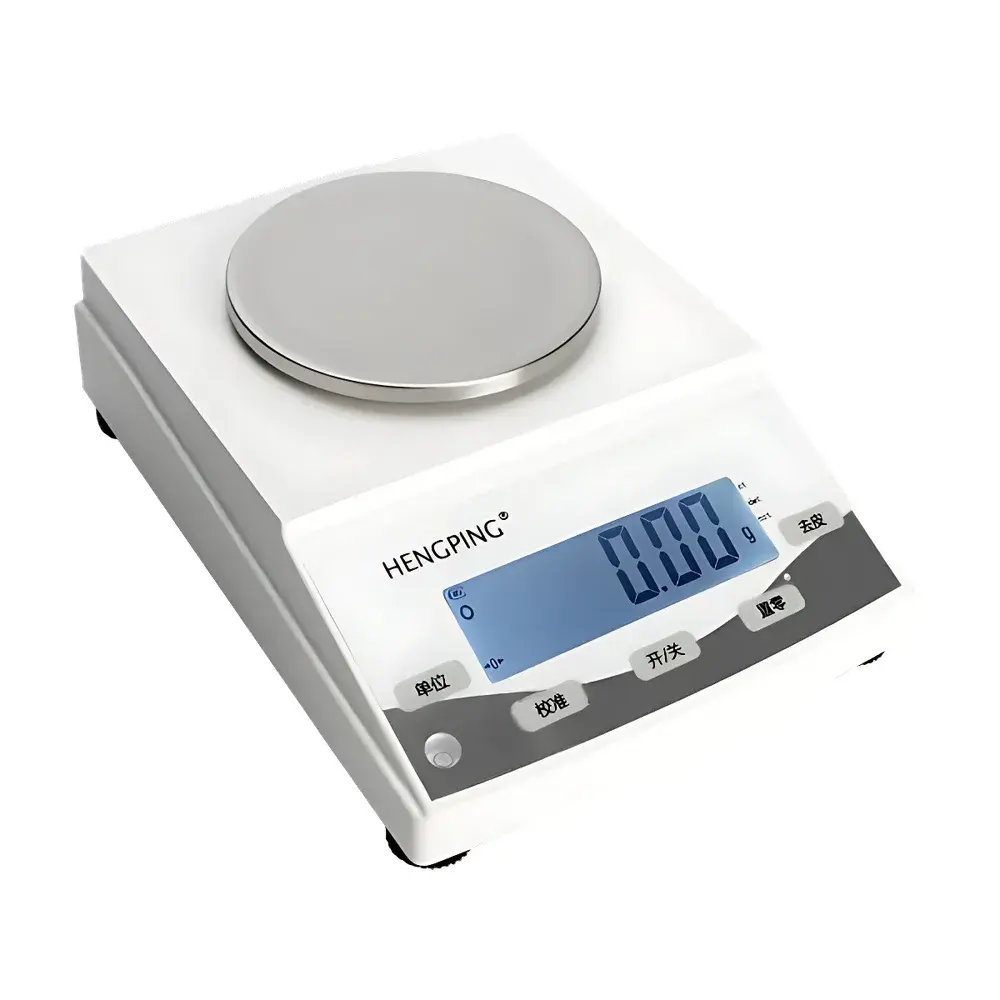
The SUNNY HENGPING JY/YP Series Precision Electronic Balance is a laboratory-grade weighing instrument engineered for consistent accuracy and operational reliability in routine analytical, quality control, and educational environments. Utilizing electromagnetic force compensation (EMFC) transduction technology, the balance delivers stable, drift-resistant measurements across its full capacity range—from 200 g to 2000 g—with a fixed readability of 0.01 g. Designed for ISO/IEC 17025-aligned workflows, it meets foundational metrological requirements for repeatability (≤ ±0.01 g), linearity (±0.02 g), and thermal stability under standard ambient conditions (5–40 °C, ≤85% RH non-condensing). Its compact footprint (257 × 295 × 75 mm), lightweight construction (1.2 kg net), and rapid stabilization time (≤3 s) support integration into space-constrained benchtop settings without compromising mechanical integrity or measurement fidelity.
Key Features
- Electromagnetic force compensation sensor with built-in overload and shock protection—designed to withstand accidental overloading up to 150% of maximum capacity without calibration drift or permanent damage.
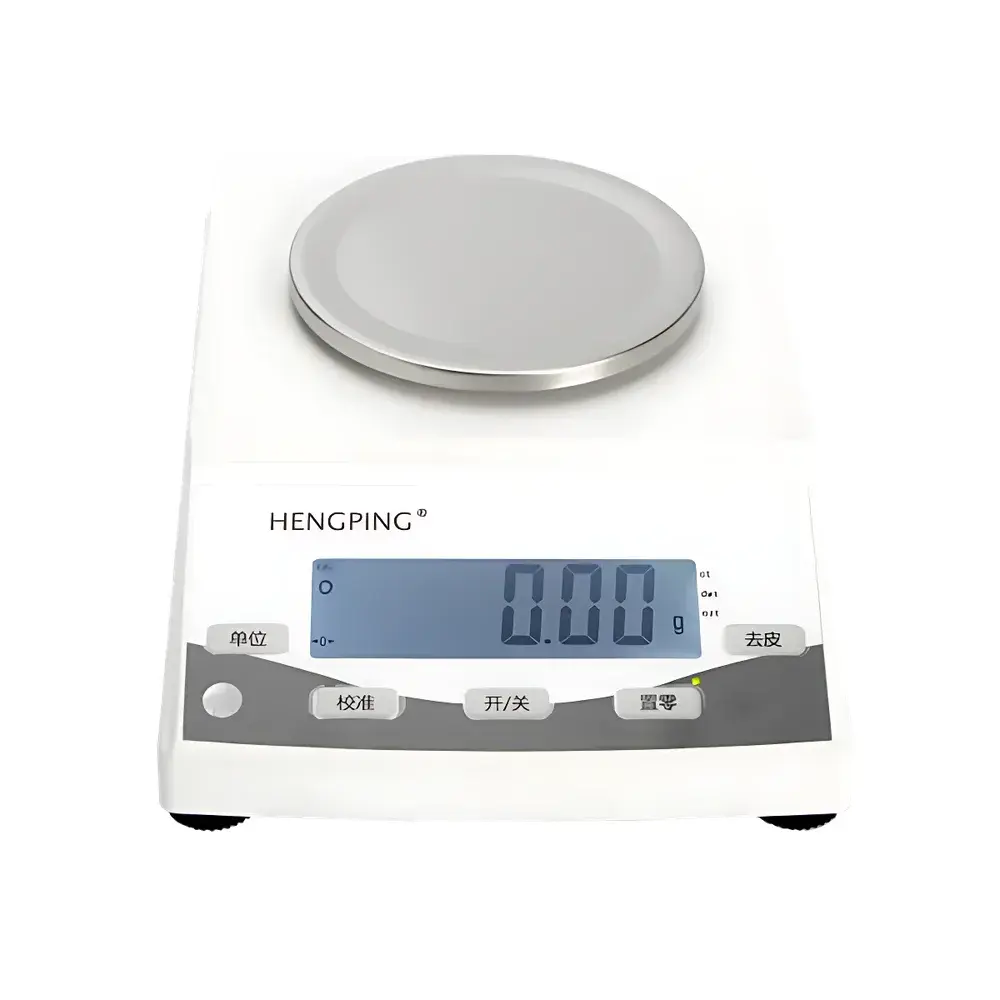
- High-contrast backlit LCD display with intuitive icon-driven interface; supports zero tracking, tare, auto-zero, and overload/underload warning indicators.
- Full-range tare function with memory retention; enables sequential weighing of multiple samples without manual re-zeroing.
- Multi-unit conversion capability—including grams (g), ounces (oz), carats (ct), grains (gr), and percent weighing—configurable via front-panel controls.
- RS232 serial interface compliant with EIA/TIA-232 standards; facilitates direct data transmission to PCs, printers, or LIMS systems without additional drivers.
- AC/DC dual power operation: includes universal input AC adapter (100–240 V, 50/60 Hz) and optional rechargeable battery module for portable or backup use.
- Robust ABS housing with corrosion-resistant stainless-steel weighing pan (Φ130 mm); optimized for chemical resistance and long-term dimensional stability.
Sample Compatibility & Compliance
The JY/YP series accommodates a broad spectrum of sample types—including powders, granules, liquids in containers, solid reference standards, and small-volume labware—without requiring specialized accessories. Its open-top design and low-profile pan enable easy placement and retrieval of vessels up to 120 mm in height. While not certified for GLP/GMP production environments requiring audit-trail-enabled calibration logs, the balance conforms to general-purpose laboratory standards including ASTM E1223 (Standard Guide for Use of Analytical Balances), ISO 9001:2015 clause 7.1.5 (Monitoring and Measuring Resources), and JJG 1036–2019 (Chinese National Verification Regulation for Electronic Balances). External calibration using traceable Class M2 or better weights is required prior to first use and at defined intervals per internal SOPs.
Software & Data Management
Data output follows standard ASCII protocol over RS232: each stabilized reading is transmitted as a fixed-length string (e.g., “+000.123 g”) followed by carriage return/line feed (CR/LF). No proprietary software is bundled; however, the device is compatible with common third-party tools such as LabX (Mettler Toledo), WinWedge (TAL Technologies), and custom Python/Excel VBA scripts using pySerial or DDE protocols. All transmitted data include timestamp placeholders (when enabled externally), unit identifiers, and sign notation—supporting traceable recordkeeping in accordance with FDA 21 CFR Part 11 principles when paired with validated system configurations.
Applications
- Routine QC testing in pharmaceutical manufacturing (e.g., tablet weight variation per USP <905>).
- Reagent preparation and volumetric solution standardization in chemistry teaching labs.
- Material density estimation via mass/volume correlation in polymer and metallurgy education modules.
- Inventory counting of standardized parts using piece-count mode (with user-defined unit weight).
- Calibration verification of pipettes and burettes against NIST-traceable mass standards.
- Pre-weighing of samples for FTIR, XRD, or TGA instrumentation where sub-10 mg uncertainty is acceptable.
FAQ
What calibration weights are recommended for external calibration?
Class M2 or better weights traceable to national metrology institutes (e.g., NIST, NIM) matching ≥50% of the balance’s maximum capacity are recommended. For a JY20002 (2000 g), a 1000 g M2 weight is optimal.
Does the balance support internal calibration?
No—calibration is strictly external and manual; no motorized or temperature-compensated internal calibration mechanism is included.
Can the RS232 interface connect directly to modern USB-only computers?
Yes—via a certified USB-to-RS232 adapter (FTDI chipset recommended); driver installation and COM port configuration are required prior to communication.
Is the balance suitable for use in fume hoods or high-humidity areas?
It is rated for ≤85% RH non-condensing environments; continuous operation inside unventilated fume hoods is not advised due to potential solvent vapor exposure affecting sensor longevity.
How often should recalibration be performed?
Frequency depends on usage intensity and environmental stability; daily zero checks and weekly external calibration are typical for moderate-use academic labs, while regulated environments may require documented calibration before each analytical session.