
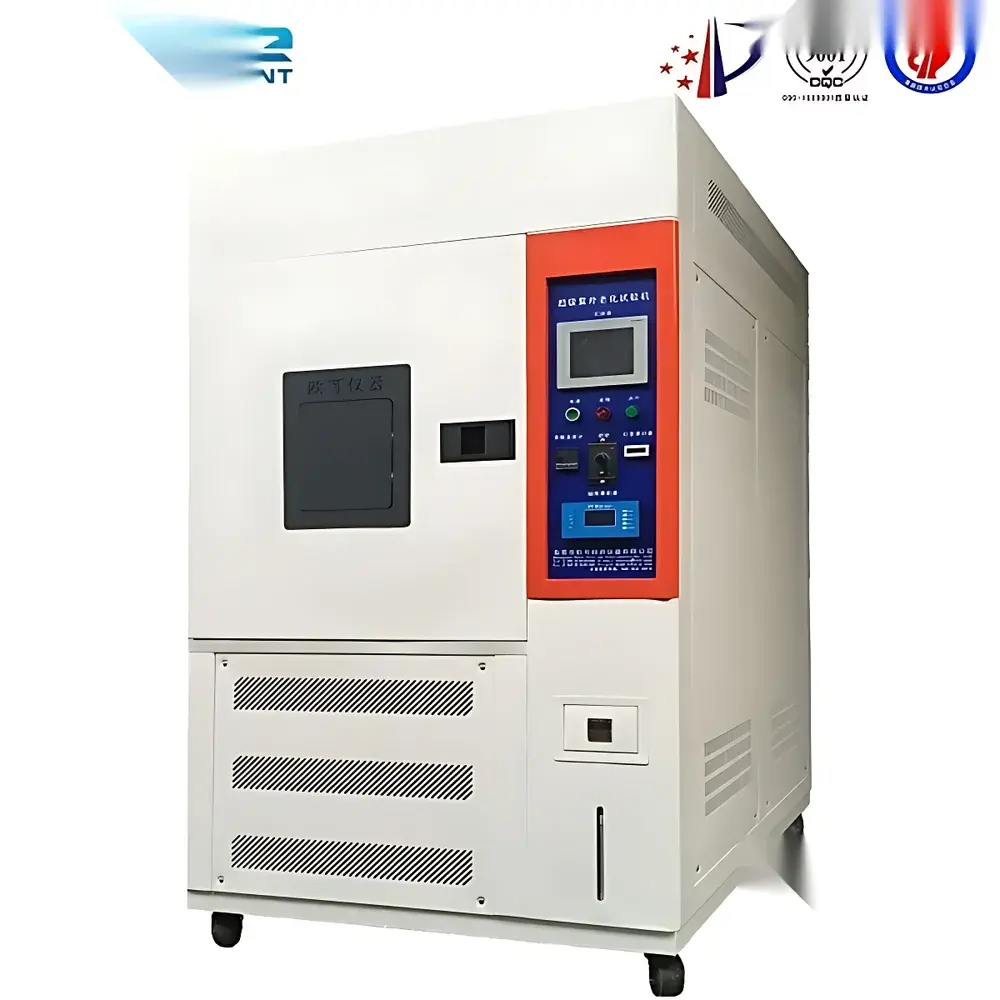
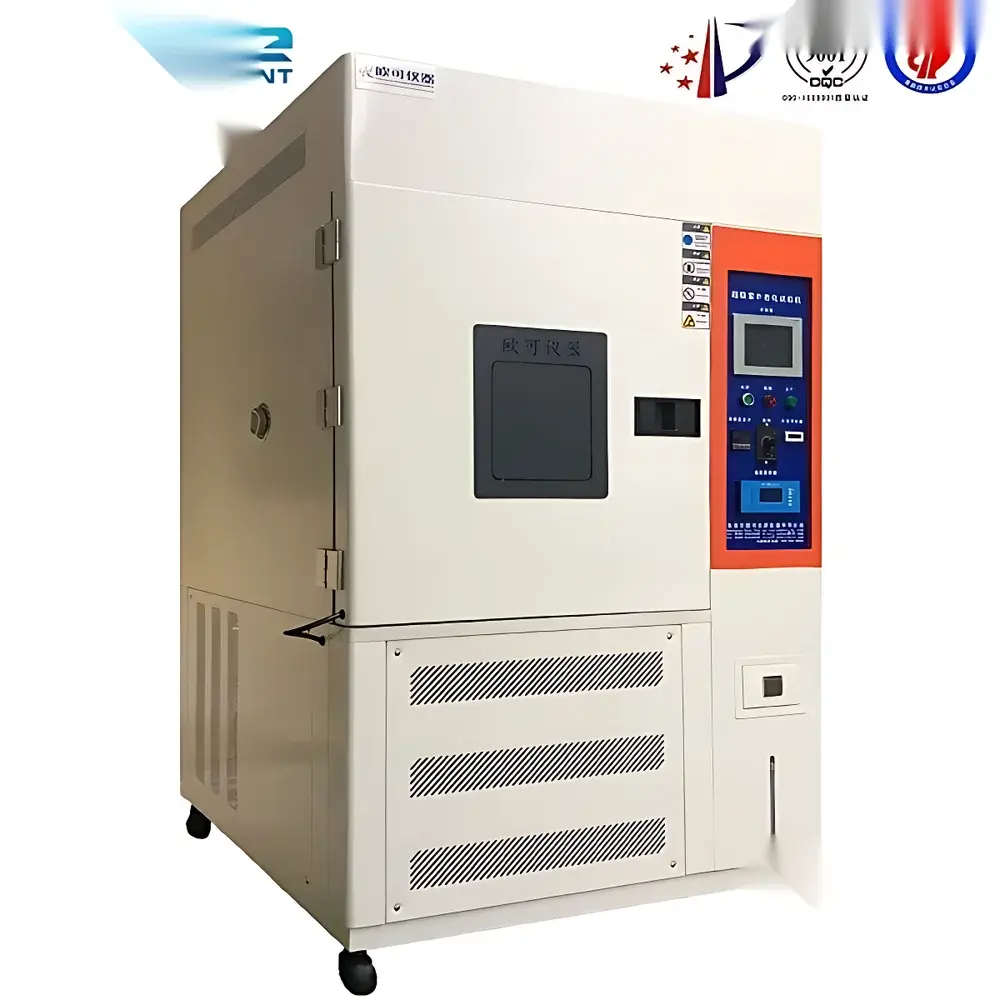
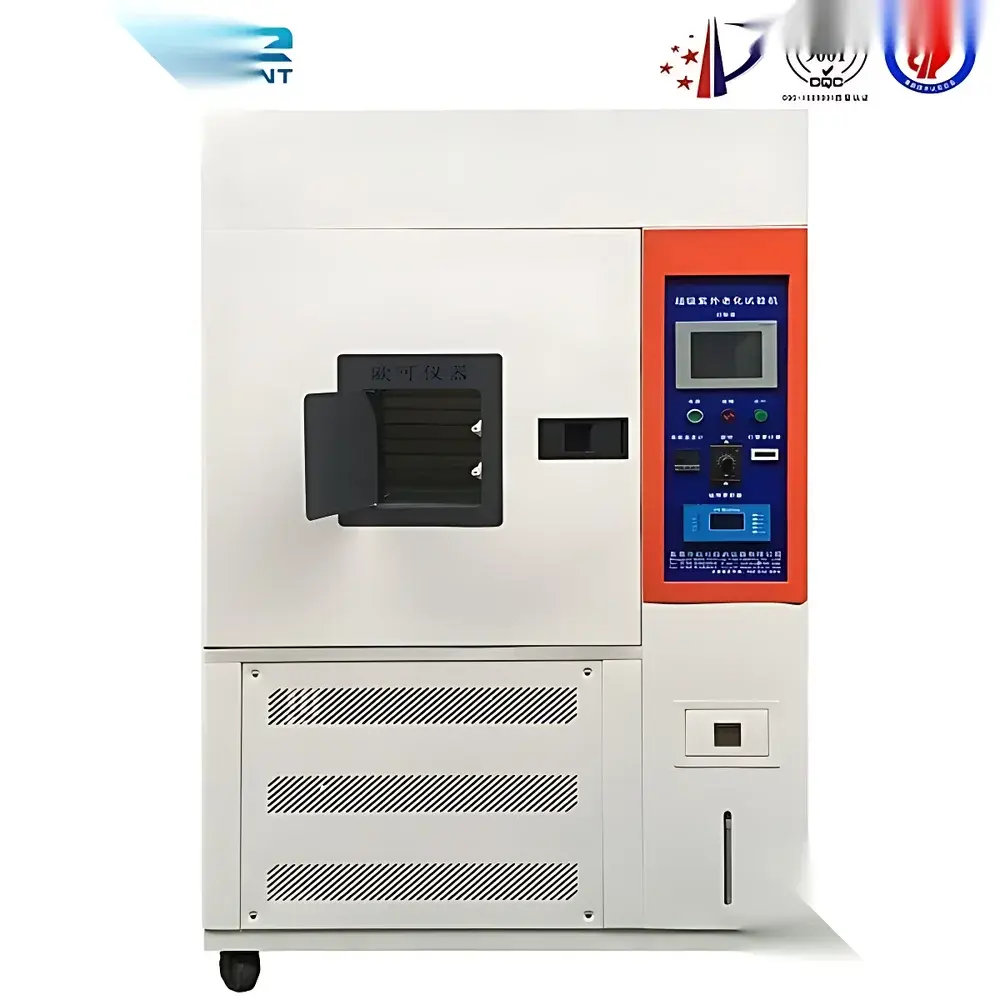
Super UV Accelerated Weathering Tester
| Brand | Other Brands |
|---|---|
| Origin | Imported |
| Manufacturer Type | General Distributor |
| Price | USD 21,500 (approx.) |
| UV Irradiance | 200 ± 8 W/m² |
| UV Spectral Irradiance Transmitter | Integrated, developed by Beijing Institute of Space Mechanics and Electricity (622 Institute) |
| IR-Reduction Filter | Custom 30% infrared energy attenuation filter (optional, specify at order) |
| Irradiance Monitoring | LCD-based cumulative irradiance meter with real-time auto-calculation |
| Cooling System | Internal forced-air circulation cooling |
| UV Transmitting Filter | Single custom high-borosilicate glass filter |
Overview
The Super UV Accelerated Weathering Tester is an engineered environmental test chamber designed to replicate and accelerate the photochemical degradation effects of natural sunlight—particularly ultraviolet (UV) radiation—combined with thermal cycling and moisture exposure. It employs metal halide lamps as the primary broadband UV source, delivering a spectral power distribution closely aligned with terrestrial solar UV irradiance (290–400 nm), including critical UVA and UVB bands. Unlike narrowband fluorescent UV sources (e.g., UVA-340 or UVB-313), metal halide lamps provide continuous spectrum output with high irradiance intensity, enabling realistic simulation of full-spectrum solar exposure under controlled laboratory conditions. This system operates on the principle of accelerated photodegradation: by elevating UV flux, temperature, and humidity cycles—including condensation and water spray—the tester compresses years of outdoor exposure into days or weeks. It is calibrated for quantitative irradiance control and conforms to core principles outlined in ASTM G154, ISO 4892-2, and SAE J2527 for non-filtered xenon-arc and metal halide-based exposure testing.
Key Features
- Metal halide lamp array delivering stable, high-intensity UV irradiance at 200 ± 8 W/m² across the 290–400 nm range, traceable to NIST-traceable reference standards.
- Integrated UV spectral irradiance transmitter—developed by the Beijing Institute of Space Mechanics and Electricity (622 Institute)—enabling real-time, in-chamber irradiance measurement without external calibration drift.
- High-borosilicate glass UV-transmitting filter optimized for spectral fidelity and thermal stability; minimizes unwanted visible/IR transmission while preserving UV transmittance profile.
- Optional 30% infrared energy attenuation filter available upon specification, reducing non-photochemical heating effects and improving test fidelity for thermally sensitive substrates.
- Intelligent irradiance monitoring system featuring an LCD interface with automatic cumulative dose calculation (J/m²), supporting time-based and energy-based exposure protocols.
- Forced-air internal circulation cooling architecture ensures uniform thermal management across lamp array and test chamber, preventing localized hot spots and maintaining stable black-panel temperature control.
Sample Compatibility & Compliance
The chamber accommodates large-format test specimens up to full automotive body panels, photovoltaic modules, and industrial electronic enclosures. Its interior dimensions and mounting flexibility support both horizontal and vertical orientation of samples. The system meets foundational requirements for regulatory and industry-standard test methods, including ASTM D4329 (plastics), ASTM D4587 (coatings), ISO 11341 (paints and varnishes), and SAE J2412/J2527 (automotive exterior materials). While not pre-certified to FDA 21 CFR Part 11, its data logging architecture supports GLP/GMP-compliant validation when integrated with qualified third-party software platforms that provide audit trails, user access controls, and electronic signature capability.
Software & Data Management
The tester operates via embedded microcontroller firmware with local LCD interface for manual operation, parameter setting, and real-time irradiance/dose readout. Raw irradiance, chamber temperature, and condensation cycle timing are logged internally with timestamping. For extended data integrity and compliance workflows, optional RS-485 or Ethernet connectivity enables integration with validated LIMS or SCADA systems. Exported CSV logs include irradiance integral (J/m²), elapsed exposure time, and thermal setpoint history—fully traceable for internal QA audits or external certification submissions.
Applications
This instrument is deployed primarily in R&D and quality assurance laboratories across automotive OEMs and Tier-1 suppliers for evaluating paint durability, polymer housing resistance, headlamp lens yellowing, and solar cell encapsulant stability. It is also used by PV module manufacturers to assess EVA discoloration and backsheet delamination under combined UV/thermal/humidity stress. Additional application domains include aerospace composite coatings, architectural sealants, and outdoor LED lighting housings—where long-term spectral stability and mechanical integrity under solar exposure are mission-critical performance criteria.
FAQ
What spectral range does the metal halide lamp cover?
The lamp emits continuously from 290 nm to 400 nm, with peak intensity in the UVA region (320–400 nm); minimal output below 290 nm ensures compliance with terrestrial solar UV limits.
Is irradiance calibration traceable to national standards?
Yes—the UV spectral irradiance transmitter is factory-calibrated against reference detectors traceable to the China National Institute of Metrology (NIM); users may perform periodic verification using NIST-traceable reference sensors.
Can the system operate without the IR-reduction filter?
Yes; the standard configuration includes only the high-borosilicate UV filter. The 30% IR attenuation filter is an optional accessory for applications requiring strict thermal load control.
What maintenance intervals are recommended for the lamp and filter?
Metal halide lamps require replacement every 1,200–1,500 operating hours; the high-borosilicate filter should be inspected quarterly and cleaned with spectroscopic-grade methanol to prevent UV transmission loss.
Does the system support programmable multi-step exposure profiles?
No—the current firmware supports fixed-parameter operation (irradiance, temperature, condensation duration); advanced profile sequencing requires external PLC or SCADA integration.
Related Products



