
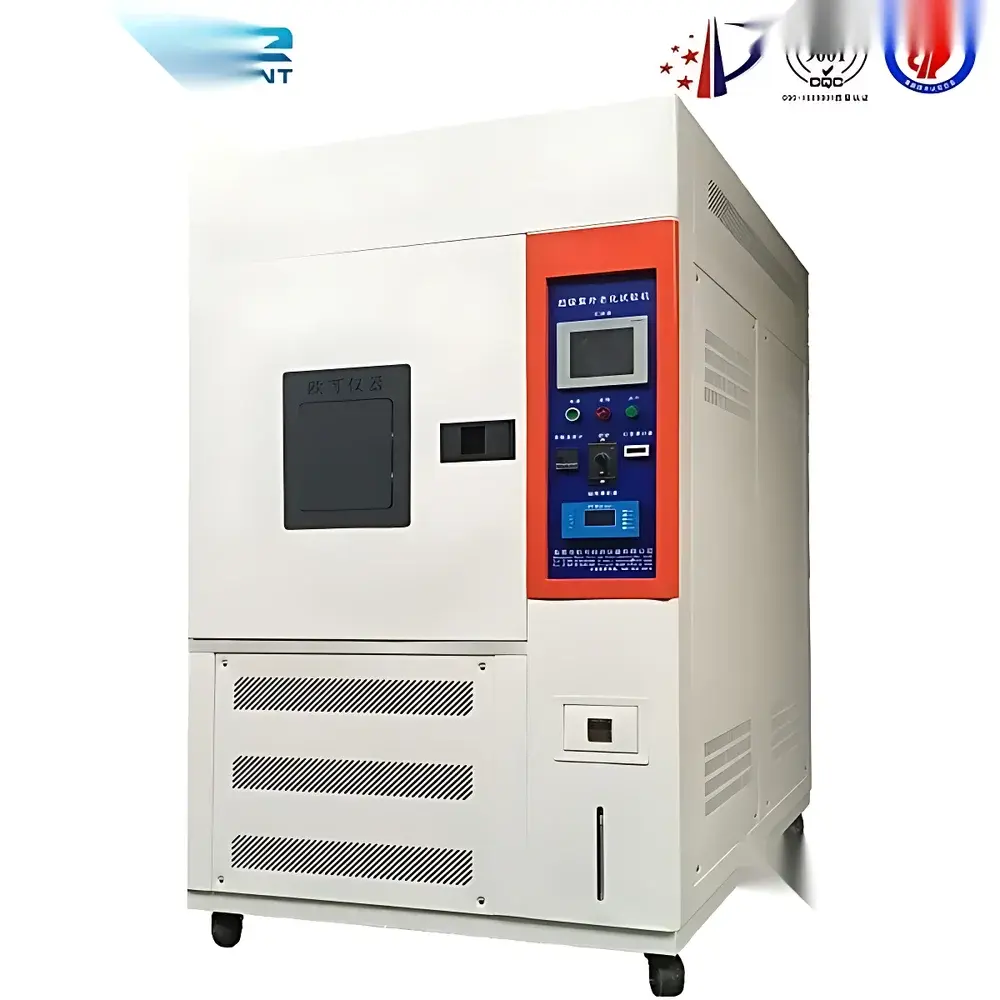
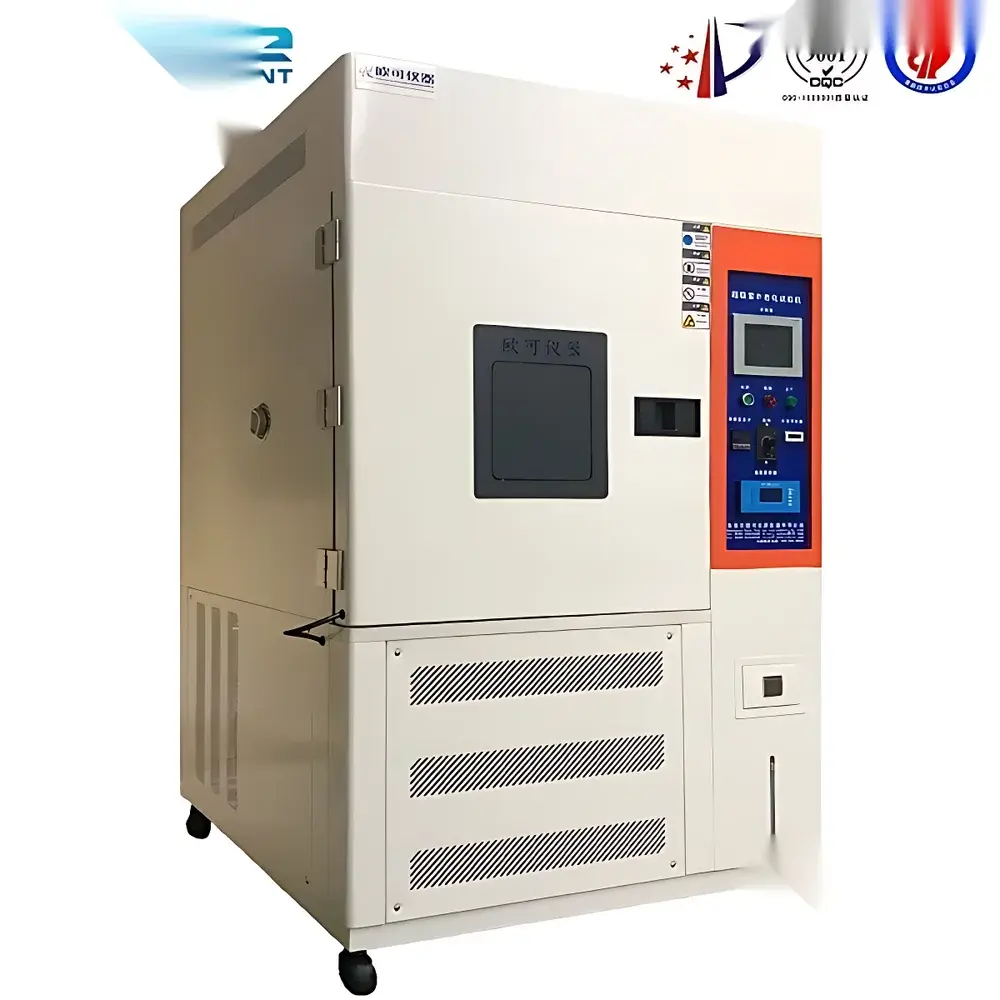
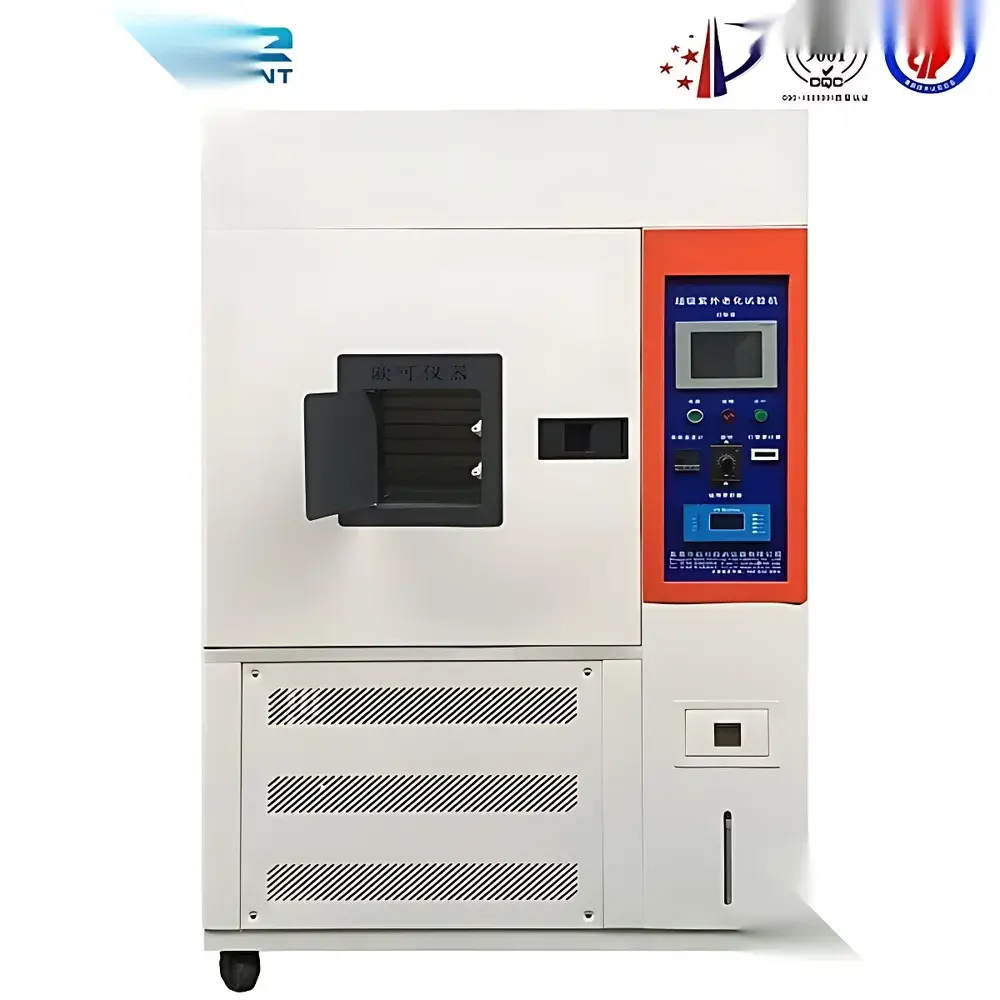
Super UV Weathering Test Chamber – Metal Halide Lamp-Based Accelerated Aging System
| Brand | Other Brands |
|---|---|
| Origin | Imported |
| Manufacturer Type | Authorized Distributor |
| Temperature Range | RT to 85°C (Operating Range: 50 ± 10°C) |
| Humidity Range | 40–70% RH (Illumination), 50–90% RH (Dark Cycle) |
| Temp. Control Accuracy | ±0.5°C |
| Humidity Control Accuracy | ±2.0% RH |
| Temp. Uniformity | ±2.0°C |
| Humidity Uniformity | ±3.0% RH |
| Heating Time | ≤25 min (RT → 85°C) |
| Light Source | 2.5 kW Air-Cooled Metal Halide Lamp (1 unit) |
| Sample Tray | 500 × 400 mm |
| Irradiation Geometry | Top-mounted, Direct Reflective Illumination |
| Spectral Range | 295–450 nm (UV-A/UV-B/VIS) |
| Irradiance | 200 ± 8 W/m² (broadband, 295–450 nm) |
| UV Radiometer | Integrated Spectral Irradiance Transmitter (developed by No. 622 Research Institute) |
| IR Filter | Optional 30% infrared energy rejection filter |
| Irradiance Monitoring | LCD-based Cumulative Irradiance Integrator |
| Cooling Method | Internal Forced-Air Circulation System |
| Irradiance Uniformity | ≥90% across sample plane |
Overview
The Super UV Weathering Test Chamber is an advanced accelerated aging system engineered for rigorous simulation of outdoor solar radiation, thermal cycling, and moisture-induced degradation mechanisms. Unlike conventional fluorescent UV chambers limited to narrow-band UVA-340 or UVB-313 spectra, this system employs a high-intensity 2.5 kW air-cooled metal halide lamp to deliver a continuous, spectrally broad output spanning 295–450 nm—encompassing biologically and chemically active UV-B, UV-A, and near-visible wavelengths. This spectral profile closely approximates the global solar irradiance distribution under direct and diffuse sky conditions, enabling highly relevant photodegradation kinetics for polymeric coatings, automotive composites, photovoltaic encapsulants, and electronic enclosures. The chamber integrates tightly coupled temperature and humidity control with real-time broadband irradiance monitoring, supporting standardized exposure protocols aligned with ISO 4892-2 (Plastics — Methods of exposure to laboratory light sources — Part 2: Xenon-arc lamps), ASTM G155 (Standard Practice for Operating Xenon Arc Light Apparatus for Exposure of Non-Metallic Materials), and SAE J2527 (Surface Vehicle Recommended Practice for Accelerated Exposure of Automotive Exterior Materials Using a Controlled Irradiance Water-Injected Xenon Arc Apparatus). Its design prioritizes reproducibility, spatial irradiance uniformity (>90%), and traceable radiometric calibration.
Key Features
- Metal Halide Broadband Light Source: Single 2.5 kW air-cooled lamp provides stable, solar-spectrum-mimicking irradiance (295–450 nm), eliminating spectral gaps inherent in fluorescent UV systems.
- Precision Environmental Control: Dual independent PID loops maintain temperature (RT to 85°C, ±0.5°C accuracy) and relative humidity (40–90% RH, ±2.0% RH accuracy) across defined irradiation and dark condensation cycles.
- Real-Time Radiometric Monitoring: Integrated UV spectral irradiance transmitter—calibrated per ISO/IEC 17025 requirements—enables continuous irradiance logging and cumulative dose calculation (J/m²) via LCD interface.
- Optimized Irradiation Geometry: Top-mounted lamp with reflective cavity ensures ≥90% irradiance uniformity over the 500 × 400 mm test plane; optional IR-rejection filter reduces non-photochemical thermal load on specimens.
- Robust Thermal Management: Internal forced-air circulation system dissipates lamp heat without external water connections, ensuring operational stability during extended exposure sequences.
- Compliance-Ready Architecture: Designed to support audit trails, user-access controls, and data export formats compatible with GLP/GMP documentation workflows and FDA 21 CFR Part 11-compliant software extensions.
Sample Compatibility & Compliance
This chamber accommodates large-format specimens up to 500 × 400 mm—including full-scale automotive exterior panels, solar module laminates, and industrial control housings—without requiring specimen segmentation. Its environmental profile satisfies key regulatory and industry-standard exposure conditions: ISO 4892-2 (Method A/B/C), ASTM D4329 (Fluorescent UV Exposure of Plastics), ASTM D4587 (UV-Condensation Exposure), and SAE J2412/J2527 for automotive materials. The metal halide spectrum enables accelerated evaluation of UV-initiated chain scission, photo-oxidation, and hydrolytic degradation pathways observed in field-aged polymers. All control parameters—including irradiance setpoint, temperature ramp rates, humidity dwell times, and cycle sequencing—are programmable and logged with timestamped metadata, facilitating full traceability for internal QA audits or third-party certification submissions.
Software & Data Management
The embedded controller supports multi-step exposure programming with up to 99 cycles, each configurable for irradiance level, temperature, humidity, and duration. Real-time sensor data (temperature, RH, irradiance) is displayed on a backlit LCD interface with historical trend graphs. Raw measurement logs are exportable via USB to CSV format for post-processing in MATLAB, JMP, or LIMS environments. Optional PC-based software (sold separately) adds remote monitoring, automated report generation (PDF/Excel), alarm escalation via email/SNMP, and integration with enterprise MES/QMS platforms. All irradiance integrations comply with CIE S 014-2/E:2006 spectral weighting conventions and reference NIST-traceable calibration certificates supplied with each UV radiometer.
Applications
- Accelerated weathering validation of automotive paint systems, plastic trim, and headlamp lenses per OEM specifications (e.g., GMW14124, Ford CETP 00.00-L-467).
- Stability assessment of ethylene-vinyl acetate (EVA) encapsulants and backsheets in photovoltaic modules under combined UV/thermal/humidity stress.
- Correlation studies between laboratory exposure and real-world service life for architectural sealants, roofing membranes, and marine coatings.
- Development and qualification of UV-stabilized engineering thermoplastics (e.g., PC, ABS, PBT) used in outdoor electronics and IoT enclosures.
- Failure analysis of optical clarity loss, surface microcracking, and tensile property decay in transparent polymer films and glazing materials.
FAQ
What spectral range does the metal halide lamp cover, and how does it compare to xenon arc or fluorescent UV sources?
The lamp emits continuously from 295 nm to 450 nm, covering UV-B, UV-A, and visible blue light—closer to terrestrial solar irradiance than narrow-band fluorescent tubes (e.g., UVA-340) and more stable than xenon arcs requiring frequent filter replacement.
Is irradiance uniformity verified across the entire test plane?
Yes—calibrated probe mapping confirms ≥90% irradiance uniformity over the 500 × 400 mm sample area per ISO 4892-2 Annex B requirements.
Can the system operate in condensation-only or spray-only modes without UV irradiation?
Yes—fully independent control allows dark condensation cycles (50–90% RH, 40–60°C), water spray cycles, or combined UV/humidity sequences per ASTM D4587 or ISO 4892-2.
What calibration documentation is provided with the UV radiometer?
Each unit ships with a NIST-traceable calibration certificate issued by the No. 622 Research Institute, valid for 12 months under standard operating conditions.
Does the chamber meet requirements for ISO/IEC 17025-accredited testing laboratories?
The system’s metrological architecture—including redundant sensors, audit-log functionality, and documented uncertainty budgets—supports implementation within accredited lab quality management systems when paired with validated SOPs.



