
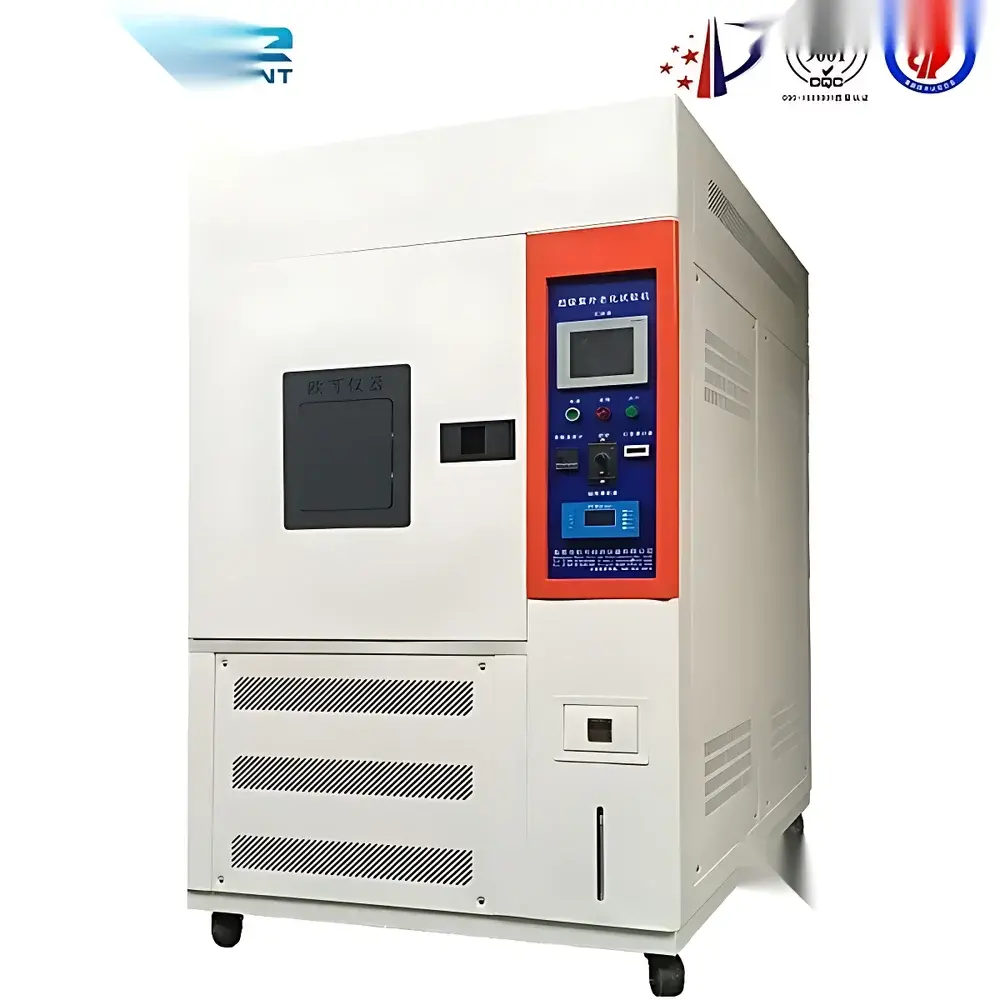
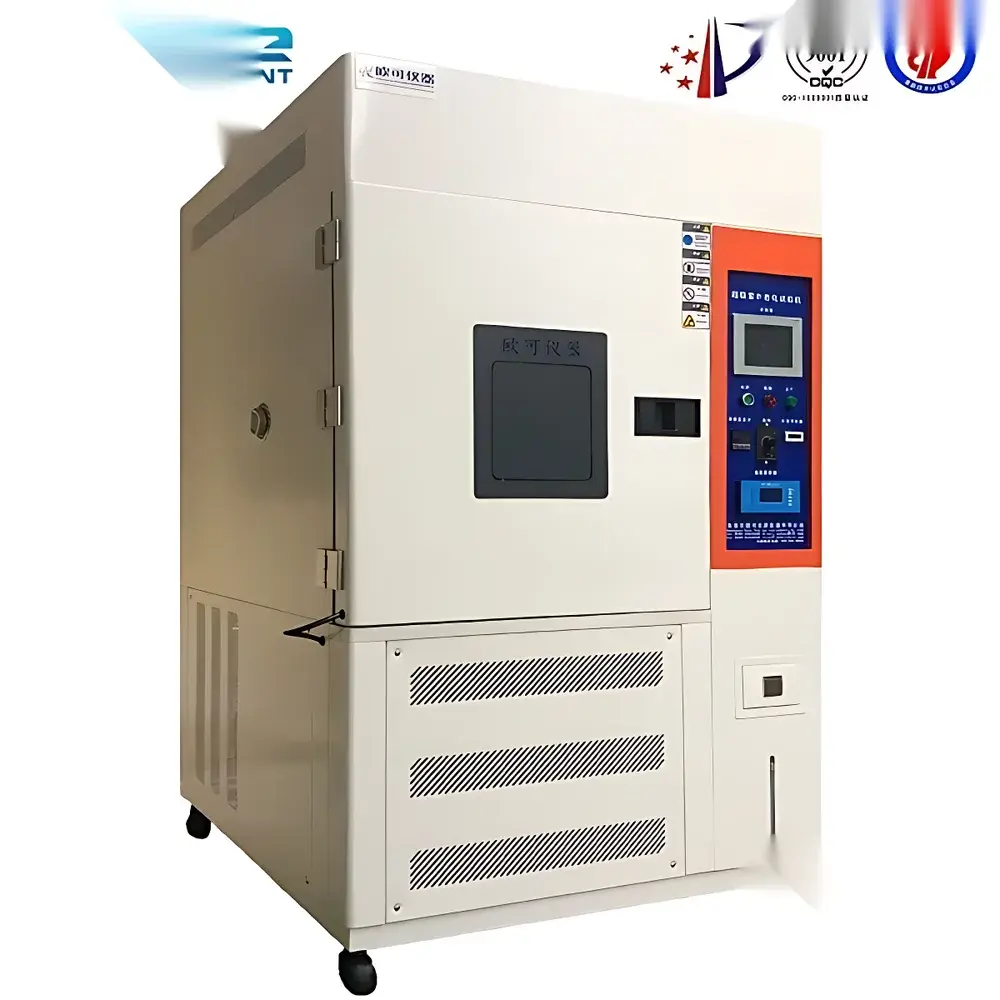
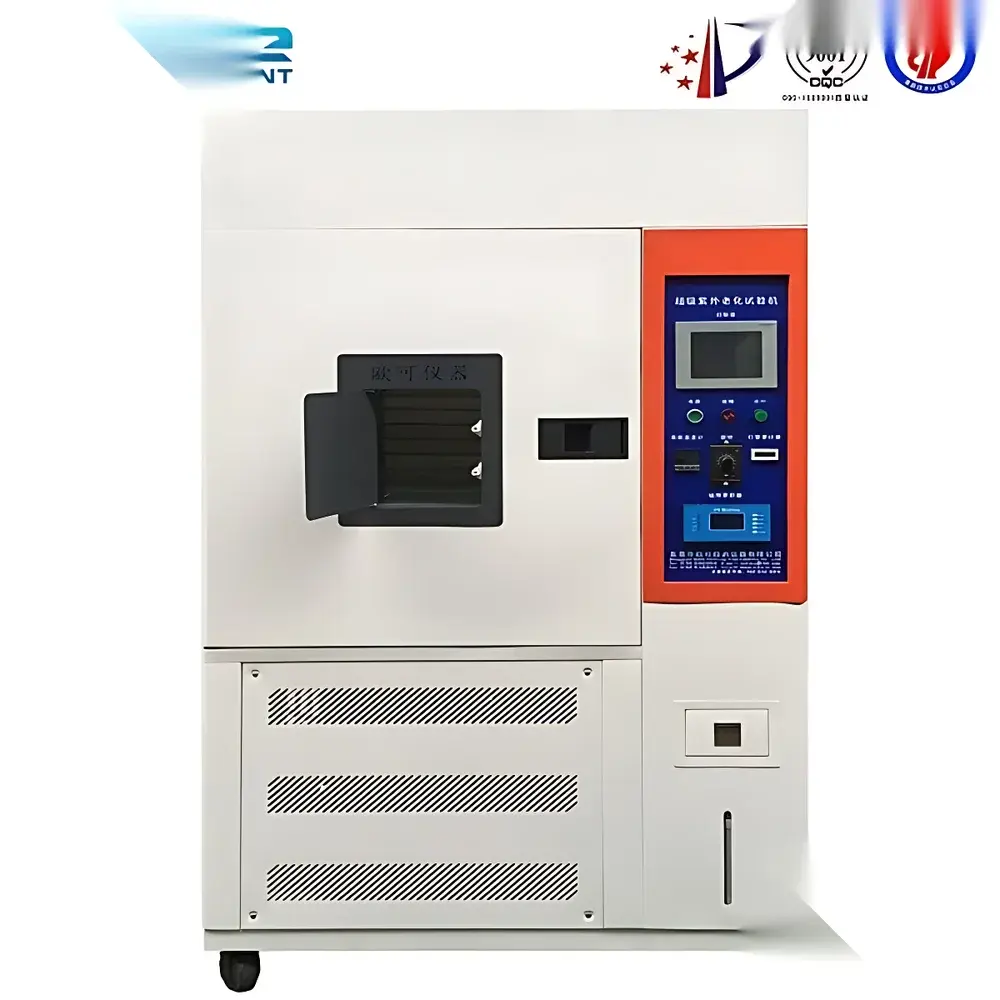
SuperUV Metal Halide Solar Radiation Aging Chamber
| Brand | Other Brands |
|---|---|
| Origin | Imported |
| Manufacturer Type | General Distributor |
| Price | USD 21,500 (approx.) |
Overview
The SuperUV Metal Halide Solar Radiation Aging Chamber is an advanced environmental test system engineered for accelerated artificial weathering simulation under controlled solar spectral irradiance. Unlike conventional UV fluorescent lamp-based chambers, this system employs air-cooled metal halide lamps as the primary radiation source—delivering a continuous, broad-spectrum output from 295 nm to 450 nm. This spectral range closely replicates the terrestrial solar ultraviolet and visible irradiance that reaches Earth’s surface after atmospheric filtration (equivalent to unfiltered AM1.5G irradiance attenuated by 3 mm of borosilicate glass). The chamber integrates simultaneous control of irradiance intensity, black standard temperature (BST), cabinet air temperature, and cyclic moisture exposure—including condensation cycles and programmable water spray (rain simulation)—enabling high-fidelity replication of real-world degradation mechanisms over compressed timeframes. It is specifically designed for evaluating long-term durability of large-format specimens such as automotive body panels, photovoltaic modules, architectural coatings, and outdoor-rated electronic enclosures.
Key Features
- Air-cooled metal halide lamp array with spectral output calibrated to match filtered terrestrial solar irradiance (295–450 nm), optimized for photochemical aging fidelity
- Real-time irradiance monitoring and closed-loop feedback control via calibrated UV broadband sensor (300–400 nm) mounted on specimen plane
- Programmable multi-step test cycles combining UV exposure, dark condensation (100% RH, 40–60°C BST), and water spray phases with adjustable duration, frequency, and droplet size distribution
- Uniform irradiance distribution across specimen plane (±15% deviation per ASTM G154 Annex A3 requirements)
- Stainless steel interior chamber with quartz viewing window and corrosion-resistant hardware compliant with ISO 11341 and ISO 4892-2 test method infrastructure
- Integrated black standard thermometer (BST) and air temperature sensors with independent PID control loops for thermal stability ±1.0°C
Sample Compatibility & Compliance
The chamber accommodates specimens up to 1200 mm × 800 mm × 200 mm (W × D × H), supporting full-size automotive components, solar panel substrates, and industrial control housings. Its operational parameters align with internationally recognized accelerated weathering standards including ISO 4892-2 (Plastics — Methods of exposure to laboratory light sources — Part 2: Xenon-arc lamps), ASTM G154 (Standard Practice for Operating Fluorescent Ultraviolet (UV) Lamp Apparatus for Exposure of Nonmetallic Materials), and IEC 61215-2 (Terrestrial photovoltaic (PV) modules — Design qualification and type approval — Part 2: Test procedures). While not a xenon-arc system, its metal halide spectral profile meets the intent of solar simulation in Clause 7.2 of ISO 4892-2 for non-xenon alternatives where UV/visible balance and photon flux density are prioritized over near-infrared fidelity. All control software logs support GLP-compliant audit trails per FDA 21 CFR Part 11 requirements when configured with user authentication and electronic signature modules.
Software & Data Management
The embedded controller features a 7-inch color touchscreen HMI running deterministic real-time firmware with preloaded test templates for ISO, ASTM, and OEM-specific protocols (e.g., GMW14124, PVQCT-100). Data logging records irradiance (W/m²), BST, chamber air temperature, relative humidity, spray timing, and lamp operating hours at user-defined intervals (1–60 sec resolution). Export formats include CSV and XML for traceability; historical data is stored locally for ≥12 months and supports USB export or Ethernet transfer to LIMS or MES platforms. Optional cloud synchronization enables remote monitoring and alarm notification via SMTP or MQTT. Calibration certificates for irradiance sensors are traceable to NIST standards and include uncertainty budgets per ISO/IEC 17025.
Applications
- Accelerated evaluation of UV stability in automotive clearcoats, elastomeric seals, and polymer composites per SAE J2527 and ISO 16322-2
- Photovoltaic module encapsulant yellowing, backsheet delamination, and solder bond integrity assessment under combined UV + thermal + moisture stress
- Outdoor LED housing material embrittlement and lens hazing kinetics modeling
- Architectural cladding adhesion loss quantification under cyclic wet/dry UV exposure
- Validation of UV stabilizer package efficacy in polyolefin geomembranes and agricultural films
FAQ
What spectral range does the metal halide lamp emit, and how is it filtered?
The lamp emits 295–450 nm radiation; a borosilicate glass filter (equivalent to 3 mm thickness) shapes the output to approximate terrestrial solar UV–visible distribution below 400 nm, attenuating excessive near-UV and IR components.
Can this chamber perform condensation-only cycles without UV exposure?
Yes—fully programmable dark condensation cycles (100% RH, 40–60°C BST) are supported independently of irradiation, enabling evaluation of hydrolytic degradation mechanisms.
Is the irradiance uniformity verified per international standards?
Yes—uniformity is measured per ASTM G154 Annex A3 methodology using a grid of 25 sensor points; typical deviation is ≤±12% across the standard specimen plane.
Does the system comply with FDA 21 CFR Part 11 for regulated industries?
When equipped with optional audit trail and electronic signature modules, the system supports Part 11 compliance for pharmaceutical packaging or medical device coating validation workflows.
What maintenance intervals are recommended for lamp replacement and sensor calibration?
Lamps require replacement every 1,200–1,500 operational hours; irradiance sensors must be recalibrated annually or after any lamp change, using NIST-traceable reference standards.



