
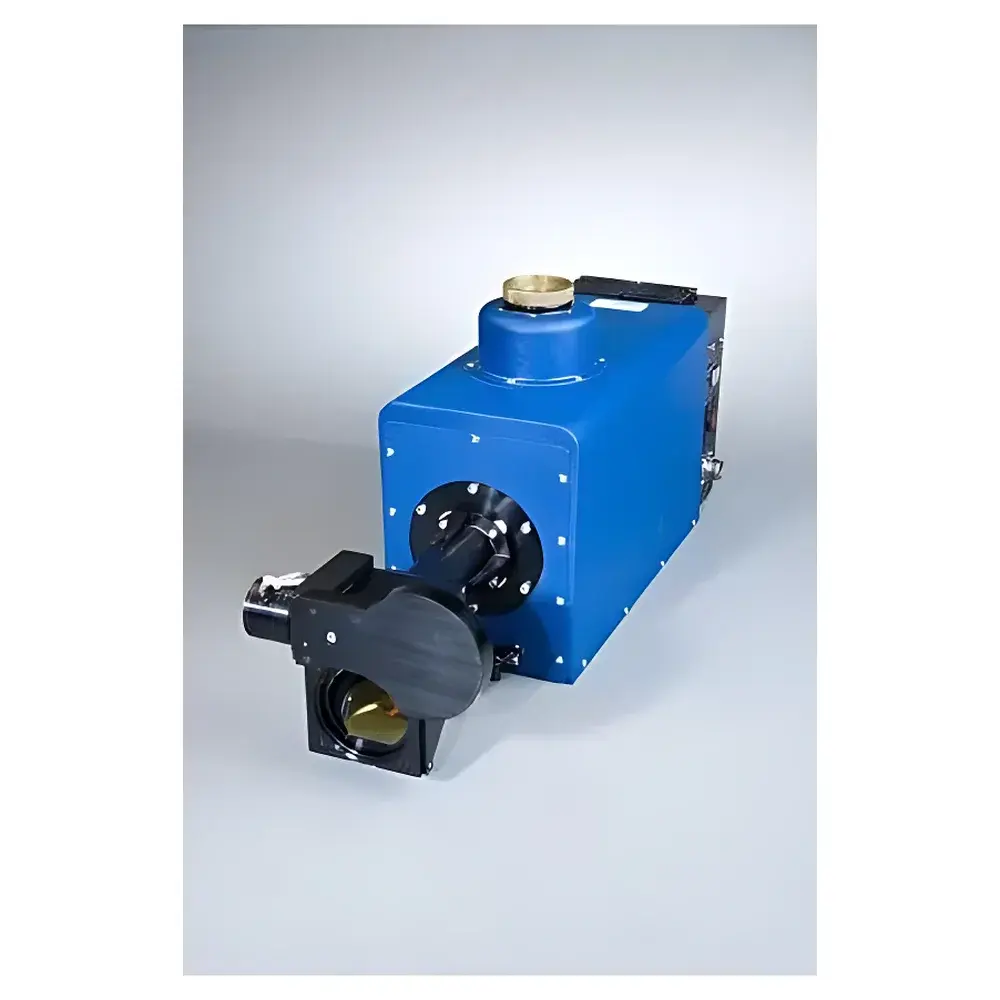
SurfaceOptics SOC750-HB/HS/HR Staring MWIR Hyperspectral Imaging Spectrometer Series
| Brand | SurfaceOptics |
|---|---|
| Origin | USA |
| Manufacturer Type | Authorized Distributor |
| Origin Category | Imported |
| Model | SOC750 |
| Pricing | Upon Request |
| Spectral Range | 2–5 µm |
| Spectral Resolution | 48–97 nm |
| Spatial Resolution Options | 256×240, 256×256, 512×512 pixels |
| Data Rate | Up to 15 hyperspectral cubes/sec |
| Bit Depth | 14-bit |
| Hyperspectral Cube Size | 5.25 MB to 32 MB |
| Software | HSAnalysis3 v4.x (GUI-based, real-time processing) |
Overview
The SurfaceOptics SOC750-HB/HS/HR series represents a family of staring, video-rate, mid-wave infrared (MWIR) hyperspectral imaging spectrometers engineered for quantitative spectral analysis of terrestrial and airborne targets in the 2–5 µm atmospheric window. Unlike scanning or push-broom architectures, the SOC750 employs a focal plane array (FPA)-based staring configuration with integrated dispersive optics and real-time vector processing, enabling full-frame spectral cube acquisition without mechanical scanning motion. This architecture delivers inherent radiometric stability, high frame-to-frame reproducibility, and immunity to motion-induced spatial-spectral misregistration—critical for field-deployable remote sensing, laboratory-based material characterization, and industrial process monitoring. The system operates on cooled HgCdTe detector technology, optimized for photon-limited MWIR conditions, and supports both snapshot (single-integration) and multi-integration acquisition modes to balance signal-to-noise ratio (SNR) and temporal resolution.
Key Features
- Staring FPA architecture with no moving parts—ensures mechanical robustness and long-term calibration stability
- Real-time hyperspectral cube generation at up to 15 cubes per second (SOC750-HS), supporting video-rate spectral monitoring
- Three configurable variants: HB (high bandwidth), HS (high speed), and HR (high resolution), each optimized for distinct trade-offs between spatial sampling, spectral fidelity, and data throughput
- Native 14-bit digitization with on-board non-uniformity correction (NUC), bad-pixel replacement, and radiometric linearization
- Integrated vector processor enables real-time spectral unmixing, endmember extraction, and library-matching algorithms directly onboard
- Modular optical interface compatible with C-mount lenses, telescope couplers, and custom fore-optics for standoff or macro-scale imaging
- Low-power, conduction-cooled design suitable for UAV integration, mobile labs, and embedded OEM applications
Sample Compatibility & Compliance
The SOC750 series is designed for non-contact, passive reflectance/emission spectroscopy of heterogeneous surfaces—including soils, vegetation, minerals, coatings, polymers, and thermal-emitting objects—under ambient or controlled illumination. It complies with ASTM E131-22 (Standard Terminology Relating to Molecular Spectroscopy) and ISO 18566:2017 (Remote sensing — Hyperspectral imaging systems — Performance testing methodology). All factory calibrations are traceable to NIST-standard blackbody sources and spectral line lamps. For regulated environments, the HSAnalysis3 software platform supports audit trails, user access controls, and electronic signatures compliant with FDA 21 CFR Part 11 when deployed under validated SOPs. System metadata embedding (wavelength grid, integration time, gain, temperature, GPS timestamp) ensures full GLP/GMP traceability for QA/QC workflows.
Software & Data Management
HSAnalysis3 is a Windows-based application providing full control, visualization, and quantitative analysis of SOC750 data. Its modular architecture includes real-time preview, batch calibration pipeline (dark current subtraction, flat-field correction, spectral calibration), ENVI-compatible .hdr/.dat export, and Python API (via PySOC) for custom algorithm integration. The software supports spectral library management (USGS, JPL, ECOSTRESS, and user-defined), supervised/unsupervised classification (SAM, SID, K-Means), and spectral angle mapping with confidence thresholding. All processing steps are logged with immutable timestamps and operator IDs. Raw data is stored in IEEE 754-compliant binary format with embedded XML metadata, ensuring interoperability with MATLAB, Python (scikit-image, spectral), and commercial platforms such as ERDAS IMAGINE and PCI Geomatica.
Applications
- Mineralogical mapping and lithological discrimination in geological survey and mining exploration
- Plant stress detection, species classification, and chlorophyll/carotenoid quantification in precision agriculture
- Counterfeit detection of pharmaceutical tablets, polymer additives, and coated materials via spectral fingerprinting
- Thermal anomaly identification and emissivity estimation in infrastructure inspection (e.g., solar panel delamination, insulation defects)
- Defense and security applications including camouflage detection, chemical agent residue screening, and IED signature analysis
- Environmental monitoring of hydrocarbon spills, soil moisture gradients, and wildfire fuel load assessment
FAQ
What spectral calibration standards are used for factory certification?
All SOC750 units undergo spectral calibration using NIST-traceable rare-earth oxide emission lamps (e.g., holmium oxide) and calibrated blackbody sources across the 2–5 µm range; certificate of calibration includes wavelength accuracy (±0.5 nm RMS) and radiometric uncertainty (±3% k=2).
Can the SOC750 be synchronized with external sensors (e.g., LiDAR, GPS, IMU)?
Yes—the system provides TTL sync I/O, PPS input, and ASCII command protocol over RS-422 or Ethernet, enabling hardware-level triggering and georeferenced data fusion in real time.
Is raw data accessible for third-party algorithm development?
Absolutely: binary cube files include complete header metadata; SDK documentation and C/C++/Python bindings are provided under NDA for OEM and research integrations.
What maintenance is required to sustain radiometric accuracy?
Annual recalibration is recommended; field NUC updates can be performed in <60 seconds using uniform thermal source—no disassembly or return-to-factory required.
Does the SOC750 support spectral binning or region-of-interest (ROI) readout to increase frame rate?
Yes—HSAnalysis3 allows dynamic ROI selection and on-the-fly spectral binning (2×, 4×) to prioritize temporal resolution over spectral detail, preserving SNR through hardware-level averaging.



