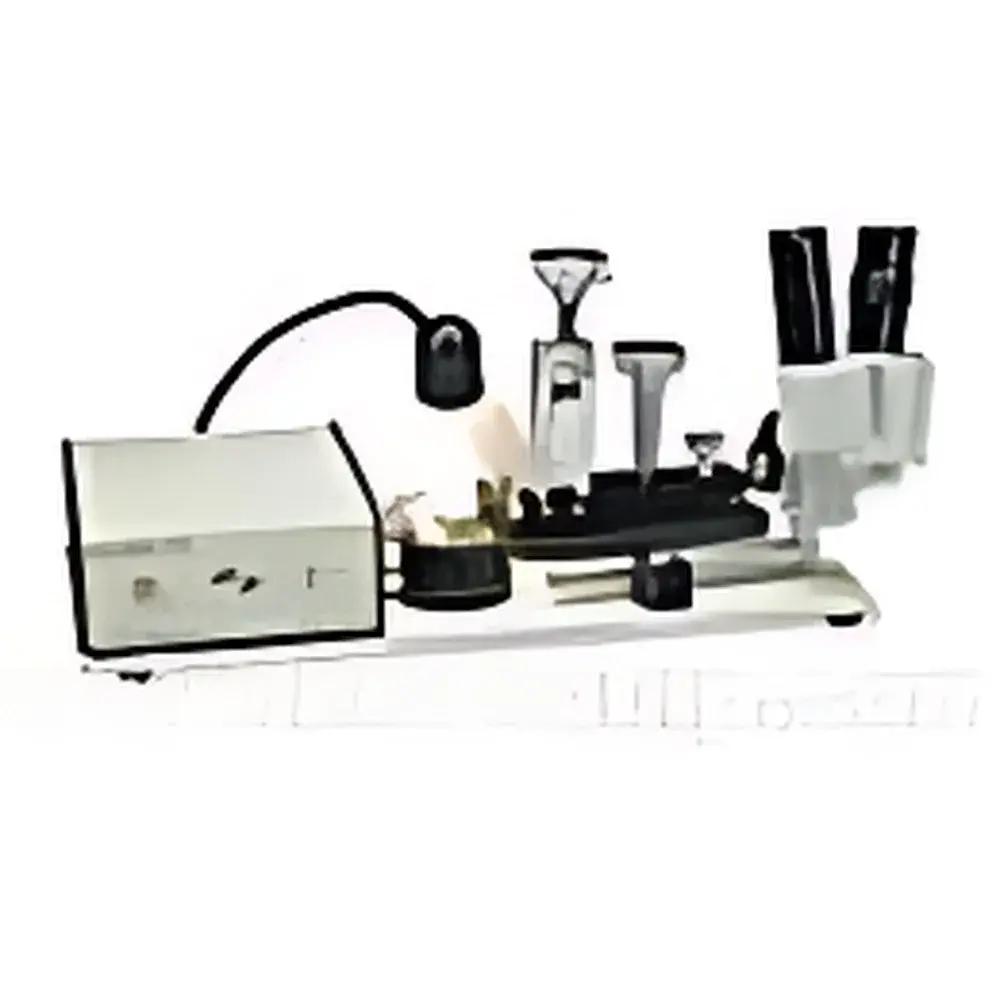
Sutter BV-10 Microelectrode Polishing System
| Brand | Sutter |
|---|---|
| Origin | USA |
| Manufacturer Type | Authorized Distributor |
| Origin Category | Imported |
| Model | BV-10 |
| Pricing | Upon Request |
| Heating Elements | Platinum-Iridium Wire & Tin-Lead Alloy Wire |
| Minimum Tip Diameter Achievable | < 0.3 µm |
| Control | Digital Precision Control of Heat and Tension (3 Independent Channels) |
| Construction | Corrosion-Resistant Housing |
| Footprint | Compact Benchtop Design |
| Primary Application | Patch-Clamp Electrophysiology, Intracellular Microinjection, Single-Cell Physiology |
Overview
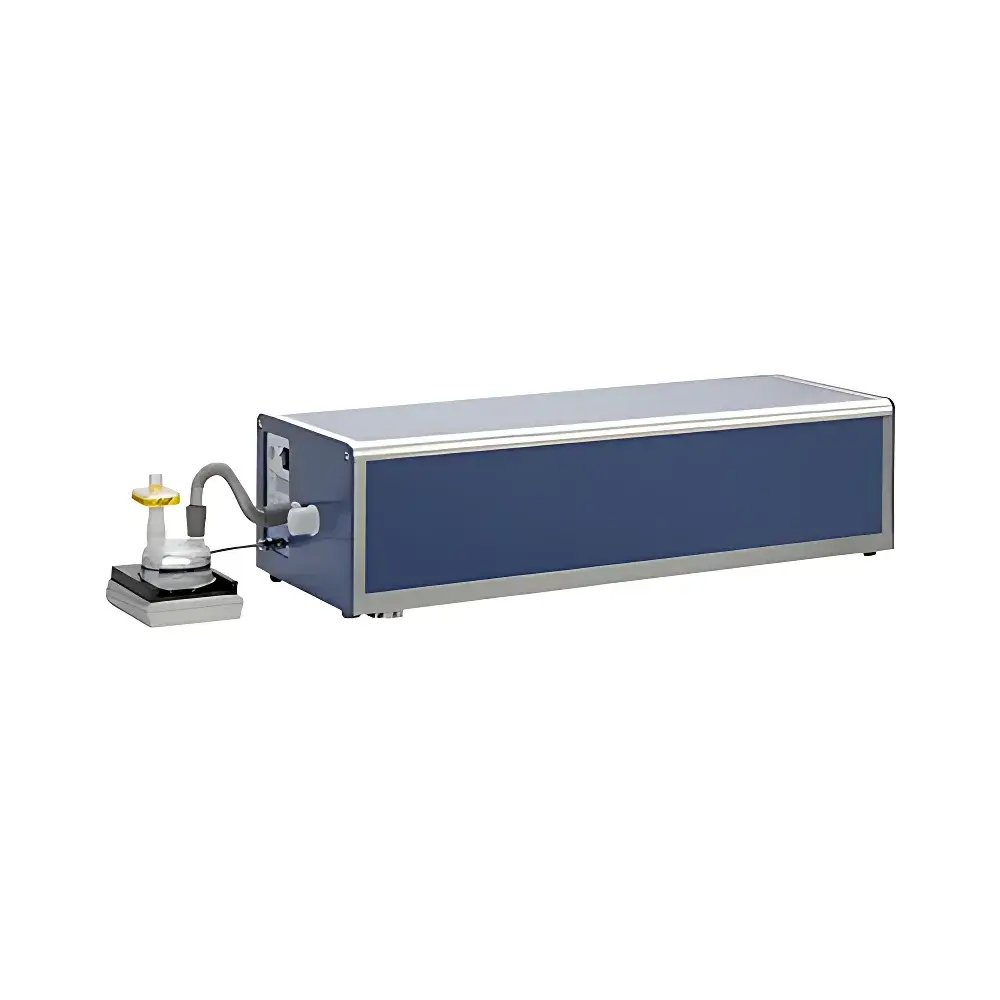
The Sutter BV-10 Microelectrode Polishing System is a precision-engineered benchtop instrument designed for post-pull optimization of glass micropipettes used in high-fidelity electrophysiological recording—particularly whole-cell and cell-attached patch-clamp configurations. Unlike passive fire-polishing methods, the BV-10 employs controlled resistive heating combined with programmable axial tension to reshape the electrode tip geometry with sub-micron repeatability. The system operates on the principle of localized thermal softening of borosilicate or quartz capillary glass, followed by precise mechanical retraction to produce smooth, symmetric, and contamination-free tip profiles. This process directly improves gigaseal formation probability (>90% success rate under standardized protocols), reduces electrical noise, and enhances signal-to-noise ratio in low-current recordings (<1 pA resolution). The BV-10 integrates seamlessly into established micropipette fabrication workflows, serving as the final critical step after electrode pulling (e.g., using Sutter P-1000 or similar pullers) and before backfilling and testing.
Key Features
- Digital triple-channel control system for independent adjustment of heat intensity, dwell time, and axial tension—enabling reproducible tip geometry across batches.
- Interchangeable heating filaments: high-stability platinum-iridium alloy wire (for ultra-fine tips ≤0.3 µm) and lower-melting-point tin-lead alloy wire (for rapid conditioning of thicker-walled pipettes).
- Dual-magnification optical viewing station: includes 10× and 40× achromatic objectives mounted on a coaxial alignment rail, allowing real-time observation of tip deformation during polishing without parallax error.
- Corrosion-resistant stainless steel and anodized aluminum chassis—engineered for long-term stability in humidified electrophysiology labs and cleanroom-adjacent environments.
- Compact footprint (20.3 × 15.2 × 17.8 cm) optimized for integration into laminar flow hoods, vibration-isolated optical tables, or shared core facility workstations.
- No external gas supply or vacuum required—fully self-contained operation compatible with ISO Class 5–7 laboratory environments.
Sample Compatibility & Compliance
The BV-10 accommodates standard filamented and filamentless borosilicate (e.g., BF150-86-10, GC150TF-10) and quartz (e.g., QF100-60-10) capillaries ranging from 1.0 mm to 1.5 mm outer diameter. It supports both single-stage and two-stage pull geometries. All operational parameters comply with IEC 61010-1:2012 safety standards for laboratory electrical equipment. The digital interface meets basic traceability requirements for GLP-compliant electrophysiology core facilities; while not FDA 21 CFR Part 11 certified out-of-the-box, audit trails can be maintained via external lab notebook documentation per institutional SOPs. The system is routinely validated in academic and pharmaceutical neuroscience labs adhering to ASTM E2500-22 (Guide for Specification, Design, and Verification of Pharmaceutical and Biopharmaceutical Manufacturing Systems).
Software & Data Management
The BV-10 operates via front-panel membrane keypad with LED status indicators—no proprietary software or driver installation required. Each polishing cycle stores no internal data; however, users may document settings (heat level: 1–10, tension: 1–10, duration: 0.1–5.0 s) in electronic lab notebooks (ELN) such as LabArchives or Benchling. For labs requiring automated recordkeeping, optional RS-232 serial output enables integration with custom Python- or LabVIEW-based logging scripts. Calibration verification is performed semi-annually using NIST-traceable thermocouple probes (Type K, ±0.5 °C accuracy) and calibrated force gauges (0.1 mN resolution).
Applications
- Routine preparation of patch-clamp electrodes for acute brain slice recordings (hippocampus, cortex, thalamus).
- Fabrication of low-resistance intracellular microelectrodes for sharp-electrode recording in Xenopus oocytes or Drosophila neurons.
- Tip conditioning of pressure-controlled microinjection pipettes used in CRISPR-Cas9 delivery or dye loading experiments.
- Reconditioning of previously used electrodes to restore tip integrity during multi-hour recording sessions.
- Training platform in graduate neurophysiology courses for teaching fundamental principles of glass physics and electrode–cell membrane interaction.
FAQ
What types of capillary glass are compatible with the BV-10?
Standard borosilicate (e.g., Kimax, VWR) and fused quartz capillaries with outer diameters between 1.0 mm and 1.5 mm, wall thicknesses 0.5–1.0 mm, and filament inclusion (or absence) as required by your pulling protocol.
Can the BV-10 be used with coated electrodes (e.g., silicone or Sigmacote-treated)?
Yes—however, coating must be applied *after* polishing to avoid thermal degradation of hydrophobic films; pre-coated capillaries will exhibit inconsistent heating and tip deformation.
Is routine calibration required, and how is it performed?
Annual thermocouple-based temperature verification and mechanical tension calibration using certified test weights are recommended per manufacturer guidelines and institutional quality assurance policies.
Does the BV-10 support automated protocol sequencing?
No—the system is manually operated with real-time visual feedback; automation requires third-party hardware integration via its RS-232 port.
How does the BV-10 compare to laser-based polishing systems?
Laser polishers offer higher throughput but less operator control over tip symmetry and risk thermal shock cracking in thin-walled capillaries; the BV-10 prioritizes deterministic, user-guided refinement for maximal seal reliability in demanding single-cell applications.