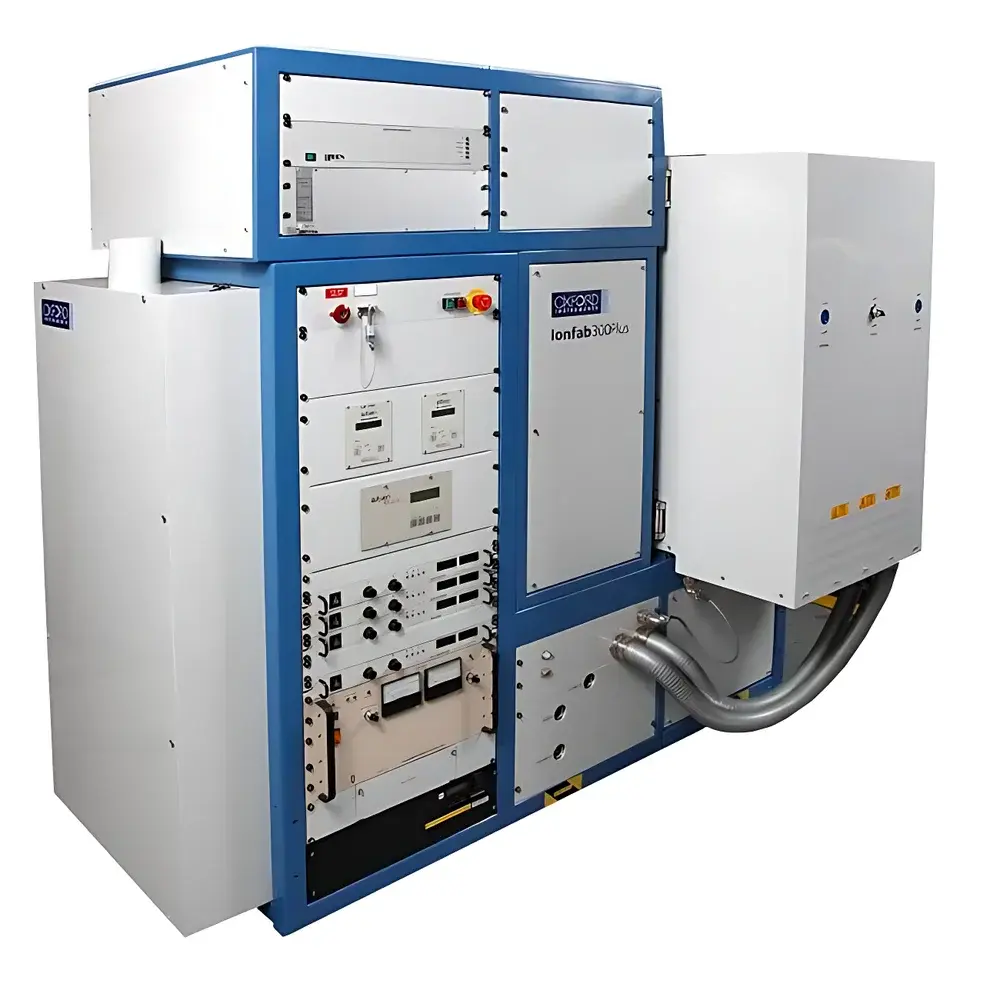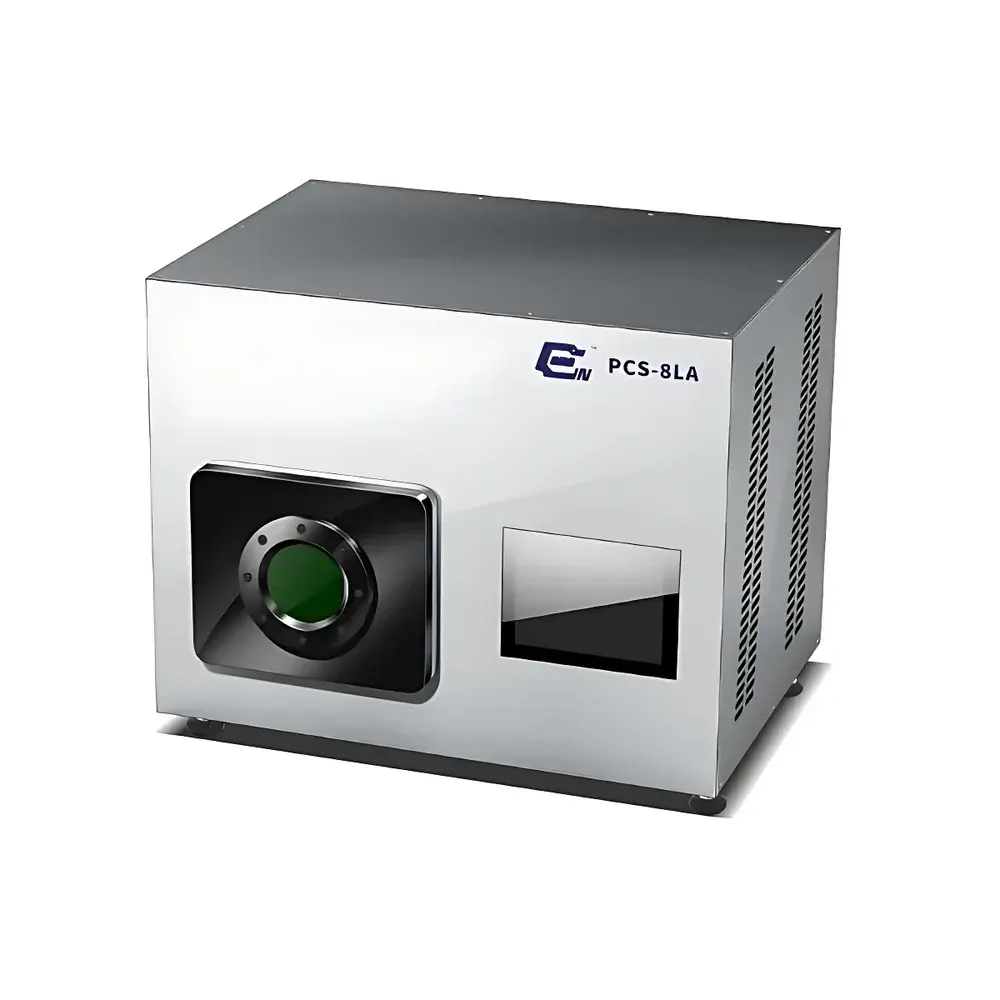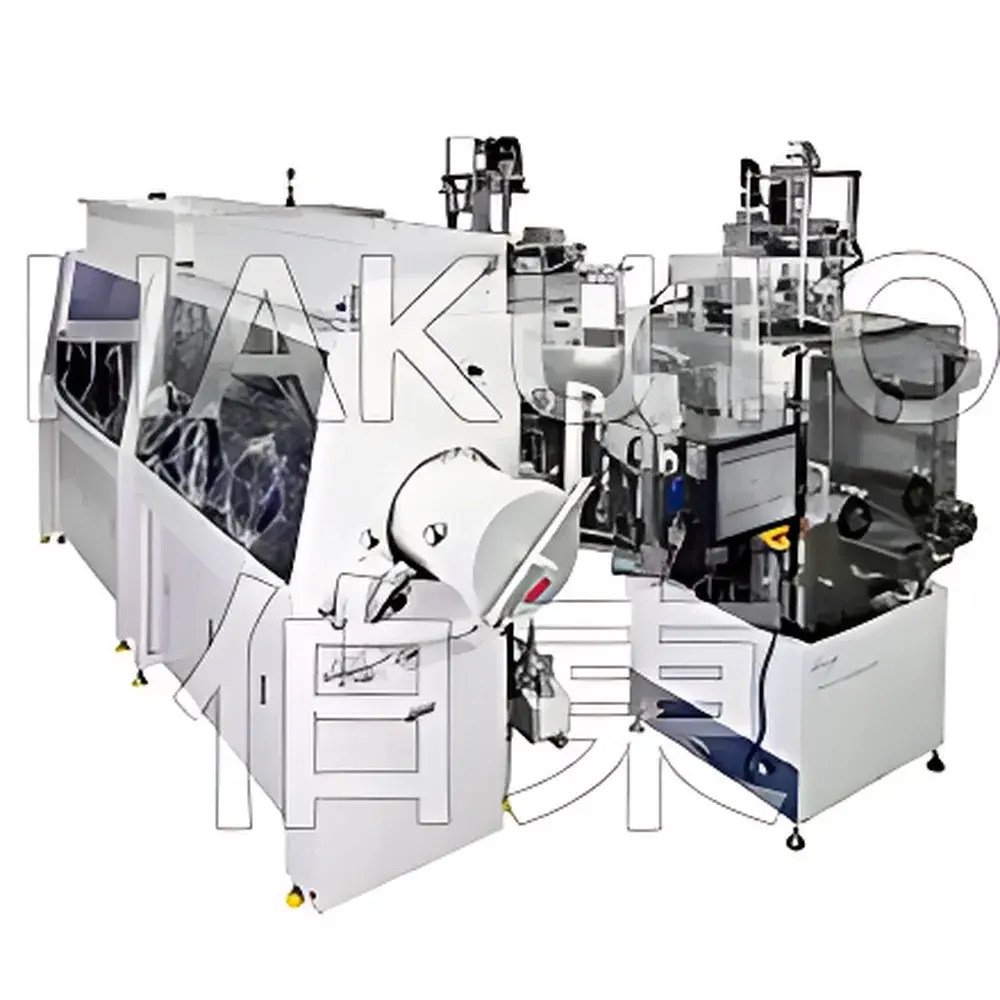
Syskey OLED/OPV Organic Thermal Evaporation Deposition System
| Brand | Syskey |
|---|---|
| Origin | Taiwan |
| Model | OLED, OPV |
| Instrument Type | Thermal Evaporation Coater |
| Substrate Size | Up to 12-inch wafer or 470 × 370 mm |
| Thickness Uniformity | ±3% |
| Evaporation Source Control Resolution | 0.01 Å/s |
| Source Temperature Stability | ±0.1 °C |
| Alignment Accuracy (CCD-based mask-to-substrate) | ±5 µm |
| Base Pressure | ≤5 × 10⁻⁷ Torr |
| Chamber Material | 304 Stainless Steel |
| Max. Evaporation Sources | 12 |
| Cooling | External Water-Cooled Jacket |
| Integration Options | Load-lock transfer chamber, robotic handler, glovebox interface, RGA |
Overview
The Syskey OLED/OPV Organic Thermal Evaporation Deposition System is a high-precision physical vapor deposition (PVD) platform engineered for controlled thermal evaporation of organic small molecules and metals under ultra-high vacuum (UHV) conditions. It operates on the principle of resistive heating—where organic or metallic source materials are heated in crucibles to their vaporization temperature, enabling directional condensation onto cooled or temperature-controlled substrates. Designed specifically for research and pilot-scale fabrication of optoelectronic thin-film devices, this system supports reproducible, layer-by-layer growth of multilayer architectures essential for organic light-emitting diodes (OLEDs), organic photovoltaics (OPVs), perovskite solar cells, and advanced material studies. Its architecture complies with fundamental UHV engineering standards—including all-metal sealing, bake-out compatibility, and low-outgassing internal surfaces—to ensure stable base pressure (<5 × 10⁻⁷ Torr) and minimal contamination during sensitive organic film deposition.
Key Features
- Modular multi-source configuration supporting up to 12 independently controlled thermal evaporation sources—enabling sequential deposition, co-evaporation, and gradient film synthesis.
- High-stability PID-controlled heating system with ±0.1 °C temperature regulation accuracy, compatible with metal, ceramic, graphite, and pyrolytic boron nitride (PBN) crucibles for diverse organic and metal precursors.
- Real-time deposition rate monitoring and closed-loop control down to 0.01 Å/s resolution, ensuring sub-monolayer thickness precision.
- Integrated CCD-based optical alignment system achieving ±5 µm positional accuracy between shadow mask and substrate—critical for pixel-defined OLED patterning and device array fabrication.
- Water-cooled 304 stainless steel vacuum chamber with front-loading door, dual quartz viewports (with manual shutter covers), and standardized flange interfaces (CF, ISO-K) for modular expansion.
- Full integration readiness: compatible with load-lock transfer chambers, in-vacuum robotic handlers, inert-atmosphere gloveboxes (N₂/Ar), and residual gas analyzers (RGA) for process diagnostics and contamination monitoring.
Sample Compatibility & Compliance
The system accommodates substrates up to 12-inch (300 mm) diameter wafers or rectangular glass panels measuring 470 × 370 mm—suitable for both rigid and flexible substrates including ITO/glass, PET, PI, and ultrathin silicon. All internal wetted surfaces are electropolished 304 stainless steel; no elastomeric seals are used in the main chamber, satisfying ASTM F2627–18 requirements for cleanroom-compatible UHV systems. The design supports GLP-compliant operation when paired with validated software (see Software & Data Management). Vacuum integrity meets ISO 2745–2019 specifications for thin-film deposition equipment, and thermal source calibration protocols align with NIST-traceable metrology practices.
Software & Data Management
The system is operated via a dedicated industrial PC running real-time Windows OS with deterministic I/O response. The control software provides synchronized logging of source temperatures, deposition rates, chamber pressure, shutter actuation timing, and substrate heater status—all timestamped with microsecond resolution. Audit trails, user access levels (admin/operator/technician), and electronic signatures comply with FDA 21 CFR Part 11 requirements when configured with optional validation packages. Raw data export is supported in CSV and HDF5 formats for post-processing in MATLAB, Python (NumPy/Pandas), or industry-standard thin-film analysis tools (e.g., WVASE, DeltaPsi²). Optional integration with LabArchives or ELN platforms enables automated metadata capture linked to sample IDs and process recipes.
Applications
- Fabrication of emissive and charge-transport layers in RGB and white OLED displays and lighting panels.
- Deposition of donor/acceptor bilayers and bulk heterojunctions in solution-processable and vacuum-deposited OPVs.
- Growth of interfacial buffer layers (e.g., LiF, MoO₃, WO₃) and reflective electrodes (Ag, Al, Mg:Ag) in tandem solar cells.
- Development of encapsulation barrier stacks using hybrid PVD/CVD approaches (e.g., evaporated Alq₃ followed by plasma-enhanced ALD Al₂O₃).
- Materials screening of novel thermally stable organic semiconductors, dopants, and host-guest systems under controlled stoichiometry and thickness gradients.
FAQ
What vacuum level is achievable, and how is it maintained?
The chamber achieves a base pressure of ≤5 × 10⁻⁷ Torr using a turbomolecular pump backed by a dry scroll pump. All internal components are UHV-bakeable (up to 150 °C), and the water-cooled jacket minimizes thermal outgassing during extended deposition cycles.
Can the system deposit both organic and metallic layers in a single run?
Yes—multiple independent evaporation sources allow simultaneous or sequential deposition of organics (e.g., NPB, Alq₃) and metals (e.g., Ag, Ca) without breaking vacuum, provided crucible compatibility and thermal cross-talk mitigation strategies are implemented.
Is remote monitoring and recipe management supported?
Standard Ethernet (TCP/IP) connectivity enables secure remote access via VNC or TLS-encrypted web interface. Recipe libraries support version control, parameter locking, and conditional logic (e.g., “pause if pressure exceeds 1 × 10⁻⁶ Torr”).
What safety features are integrated for organic material handling?
Interlocked source shutters, real-time overtemperature cutoffs, redundant pressure interlocks, and optional solvent vapor sensors meet IEC 61508 SIL2 functional safety requirements for laboratory-scale PVD tools.
Does the system support in-situ thickness monitoring?
Yes—quartz crystal microbalance (QCM) sensors are standard; optional in-situ ellipsometry or reflectance probes can be mounted through auxiliary CF40 ports for real-time optical thickness tracking.