
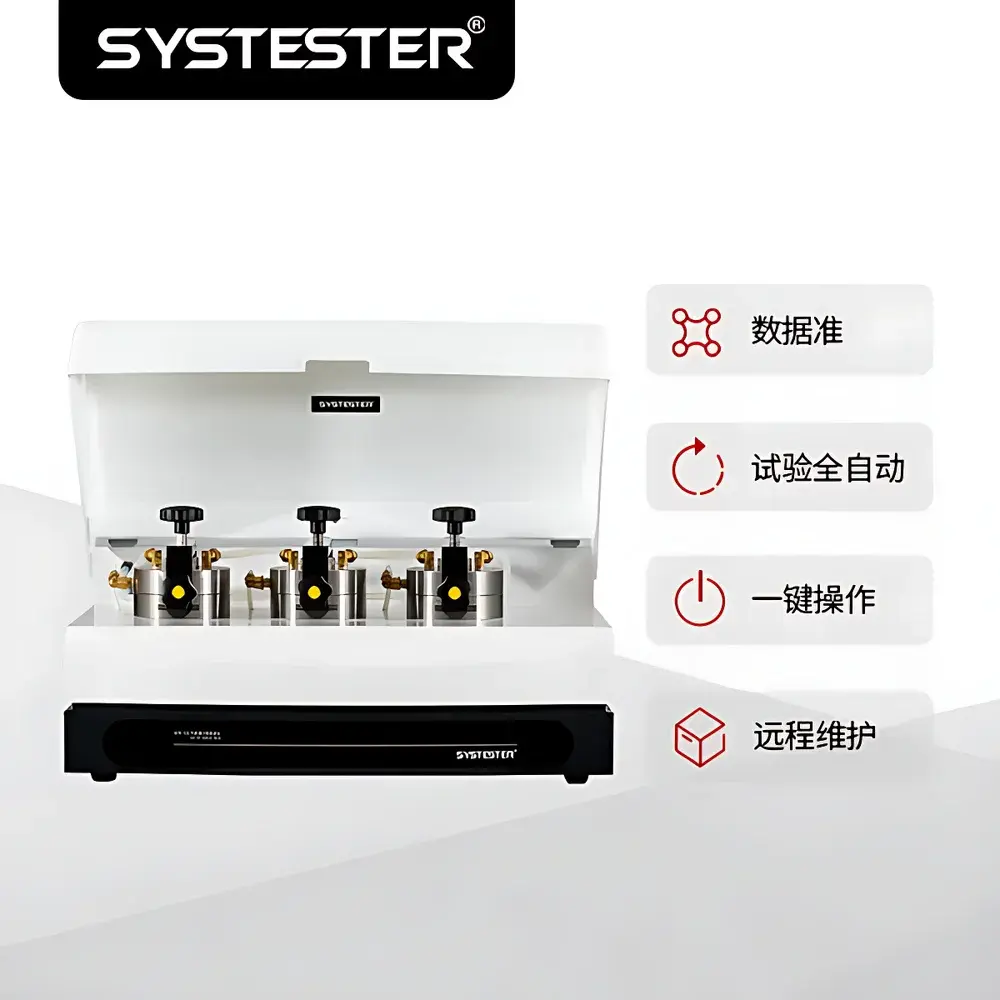
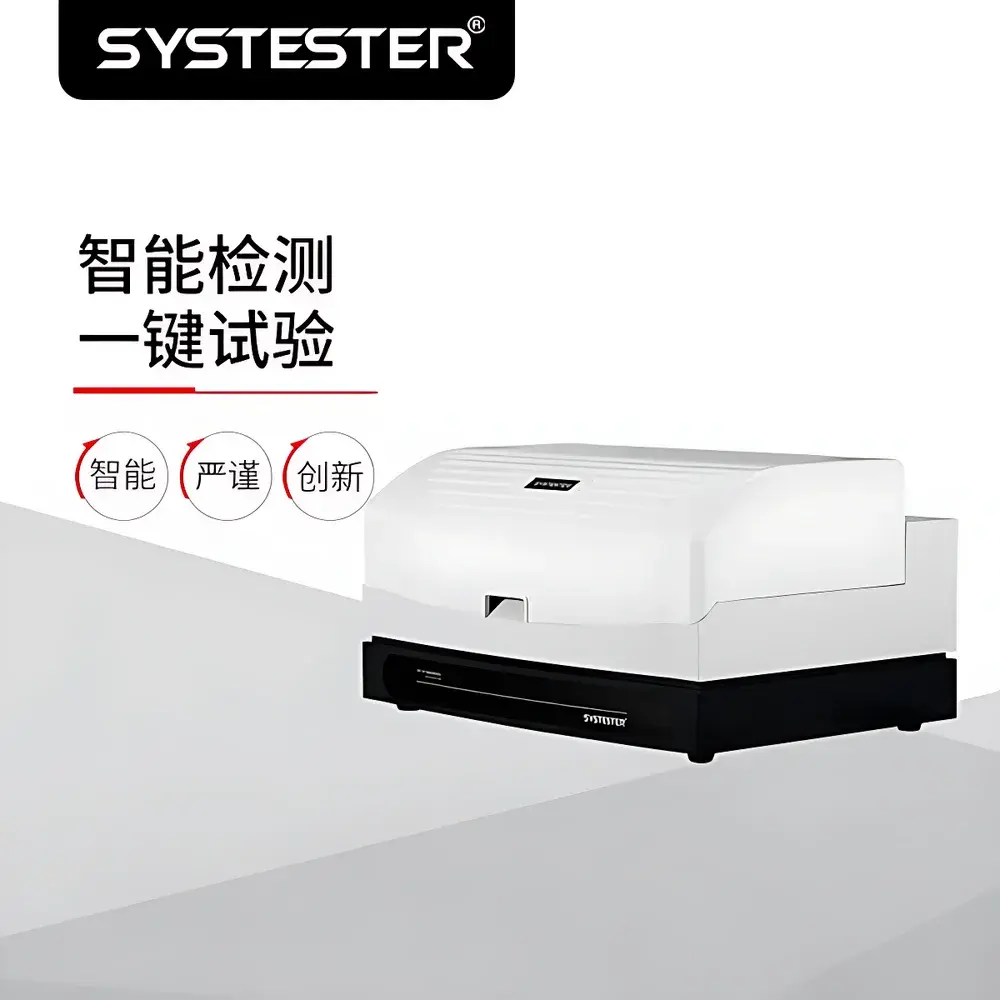
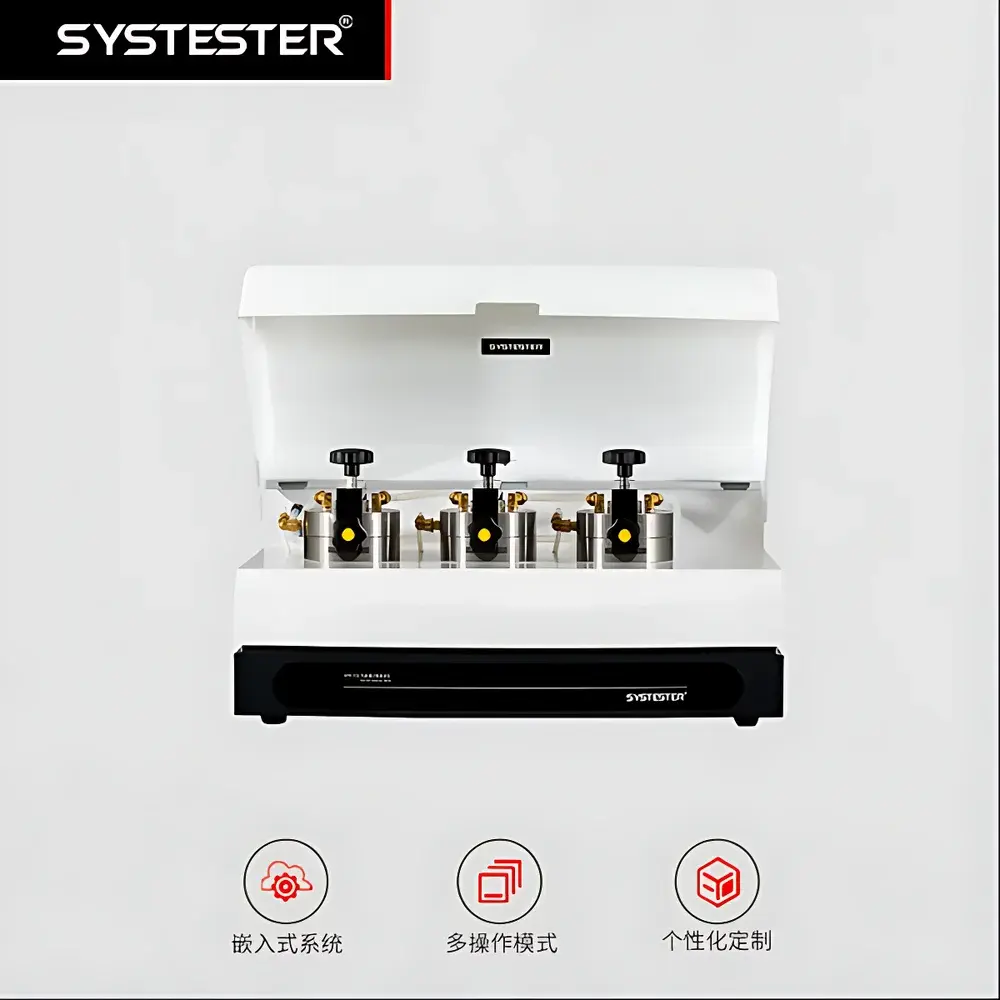
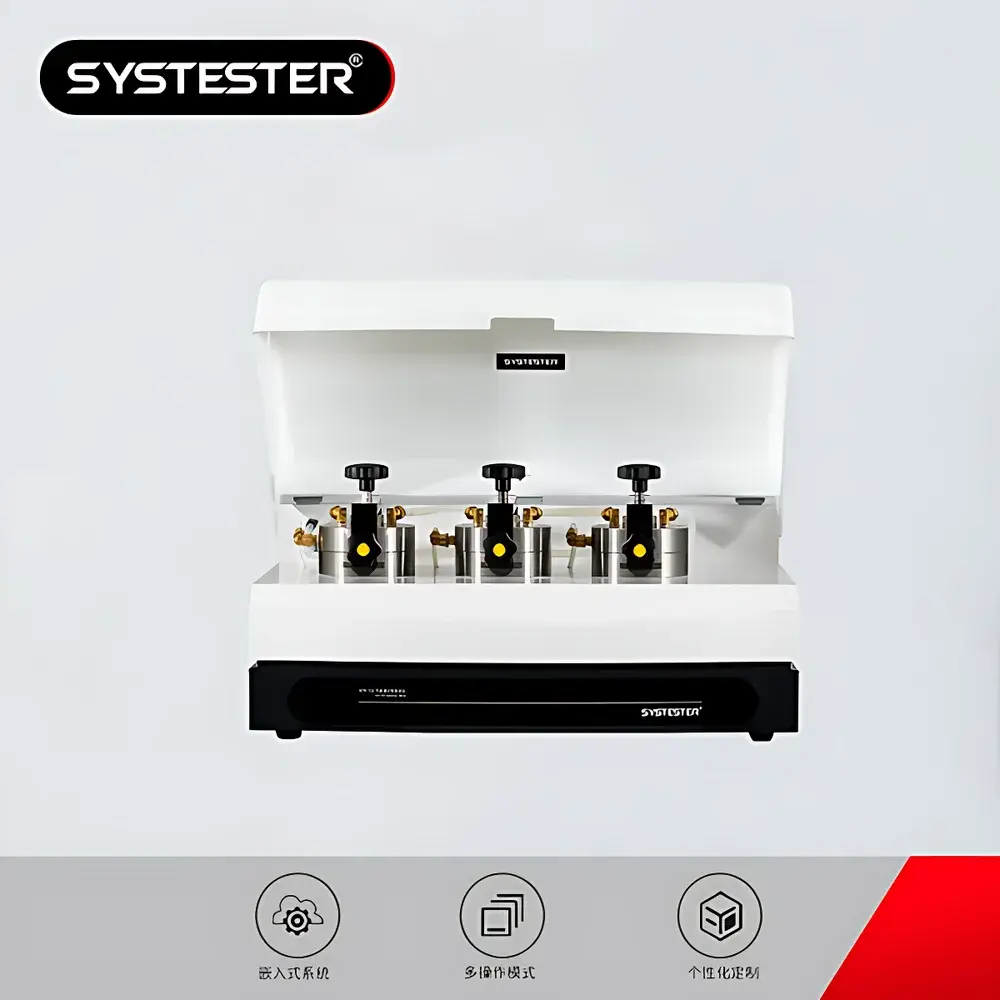
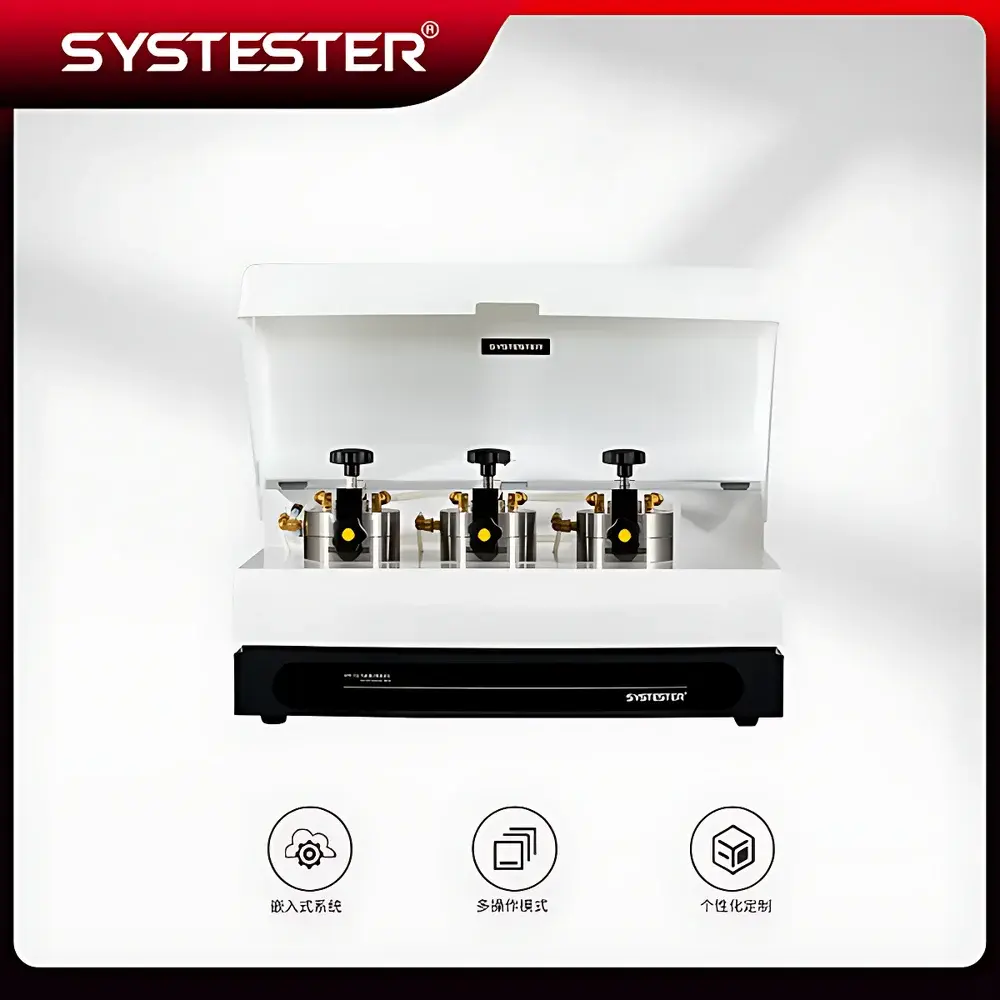
SYSTESTER OX2/231 Coulometric Oxygen Permeation Analyzer
| Brand | SYSTESTER |
|---|---|
| Origin | Shandong, China |
| Manufacturer Type | Authorized Distributor |
| Product Origin | Domestic (China) |
| Model | OX2/231 |
| Price Range | USD 28,000 – 42,500 |
| Measurement Principle | Coulometric Sensor (ISO 15105-2 Compliant) |
| Test Method | Isobaric Equal-Pressure Mode |
| Chambers | 3 Independent Testing Cells |
| Temperature Control Range | 5–95 °C |
| Temp. Accuracy | ±0.1 °C |
| Humidity Control | 0%RH, 35–90%RH (±1%RH accuracy) |
| Film OTR Range | 0.01–6500 cm³/m²·d (standard), up to 63,000 cm³/m²·d (optional) |
| Container OTR Range | 0.0001–62 cm³/pkg·d |
| Film Resolution | 0.001 cm³/m²·d |
| Container Resolution | 0.00001 cm³/pkg·d |
| Test Area | 48 cm² |
| Sample Size (Film) | ≥150 mm × 94 mm or circular |
| Sample Size (Container) | ≤Φ120 mm × 400 mm (H) |
| Max. Thickness | 3 mm |
| Carrier Gas | 99.999% High-Purity N₂ |
| Flow Rate | 0–200 mL/min |
| Interface | 1/8″ Stainless Steel Tubing |
| Power Supply | AC 220 V, 50 Hz |
| Dimensions (L×W×H) | 730 × 590 × 350 mm |
| Net Weight | 56 kg |
| Standards Compliance | GB/T 19789, ASTM D3985, ASTM F2622, ASTM F1307, ASTM F1927, ISO 15105-2, JIS K7126-B, YBB 00082003 |
| Software | Embedded Win-based Control & Analysis Suite with Audit Trail, Multi-level User Access (5 tiers), Real-time Curve Logging (T, RH, Flow, OTR), Optional DSM Laboratory Data Management System Integration |
Overview
The SYSTESTER OX2/231 Coulometric Oxygen Permeation Analyzer is an engineered solution for precise, traceable, and repeatable determination of oxygen transmission rate (OTR) and oxygen permeability coefficient (PO₂) in flexible packaging films, laminates, aluminum foils, rigid containers, and pharmaceutical blister formats. It operates on the fundamental principle of coulometric detection—per ASTM D3985 and ISO 15105-2—where oxygen molecules permeating through a conditioned test specimen are quantitatively measured via electrochemical reduction at a solid polymer electrolyte sensor. This method delivers inherent linearity, zero baseline drift, and long-term sensor stability without consumable reagents or frequent recalibration. Unlike paramagnetic or optical sensor-based systems, the coulometric approach ensures stoichiometric conversion of each O₂ molecule into a proportional electrical charge, enabling absolute quantification traceable to SI units. The instrument supports both flat-film and 3D container testing configurations under rigorously controlled temperature and humidity environments—critical for evaluating barrier performance under real-world storage conditions.
Key Features
- Triple independent test chambers with fully decoupled thermal and humidification control—each equipped with dedicated PT100 sensors and PID-regulated heating/cooling loops for ±0.1 °C temperature stability and ±1%RH humidity precision.
- Isobaric equal-pressure test mode compliant with ASTM F1307 and ISO 15105-2, eliminating pressure differential artifacts and ensuring physiologically relevant diffusion kinetics.
- Automated, script-driven operation via embedded Windows-based software: single-click test initiation, auto-zero calibration, dynamic flow compensation, and real-time OTR calculation per ASTM F2622 Annex A1.
- Configurable test profiles—including intelligent adaptive ramping, multi-step RH/temperature cycling, and custom dwell sequences—to support non-standard protocols and accelerated aging simulations.
- Comprehensive data integrity architecture: full 21 CFR Part 11–ready audit trail with immutable timestamps, user-action logging, electronic signatures, and role-based access control across five hierarchical permission levels.
- Integrated real-time visualization suite displaying synchronized time-series curves for OTR, chamber temperature, relative humidity, carrier gas flow rate, and sensor response voltage—exportable in CSV and PDF formats.
Sample Compatibility & Compliance
The OX2/231 accommodates standardized flat specimens (≥150 mm × 94 mm or Ø100 mm discs) up to 3 mm thick, as well as rigid or semi-rigid containers with maximum dimensions of Ø120 mm × 400 mm height. Its modular fixture design enables rapid transition between film and container modes using optional accessories—such as vacuum-sealed container holders and Peltier-cooled thermal jackets—that maintain thermal equilibrium during extended permeation assays. All operational parameters adhere strictly to globally recognized regulatory frameworks: GB/T 19789 (China), ASTM D3985 (film), ASTM F1307 (containers), ISO 15105-2 (coulometric method validation), and YBB 00082003 (Chinese pharmaceutical packaging standards). The system supports GLP-compliant workflows through mandatory electronic record retention, change control logs, and versioned method templates—ensuring readiness for FDA, EMA, or NMPA inspections.
Software & Data Management
Built upon a deterministic real-time kernel, the proprietary SYSTESTER Control Suite provides deterministic execution timing, deterministic I/O polling, and fail-safe error recovery—essential for GxP-aligned laboratories. The software enforces method locking, parameter interlocks (e.g., preventing OTR measurement outside validated T/RH ranges), and automatic report generation compliant with ISO/IEC 17025 documentation requirements. All raw sensor signals, environmental metadata, and derived metrics are stored in encrypted SQLite databases with SHA-256 hash integrity verification. Optional integration with the DSM Laboratory Data Management System (sold separately) extends functionality to centralized instrument fleet monitoring, cross-lab comparative analytics, automated trend reporting, and electronic batch record linkage—fully supporting digital quality management systems (QMS) and paperless QC operations.
Applications
- Barrier validation of medical device pouches (Tyvek®/PET/Alu laminates) per ISO 11607-1.
- Accelerated shelf-life prediction of snack food packaging under elevated humidity (e.g., 85%RH/40 °C).
- Comparative OTR screening of bio-based polymers (PLA, PHA) versus conventional PET or EVOH coextrusions.
- Container integrity assessment of HDPE pharmacy bottles and Alu-PVC blisters per USP <671>.
- Root-cause analysis of OTR excursions during process scale-up—correlating extrusion parameters with final film barrier performance.
- Regulatory submission dossier preparation requiring full traceability from raw data to final certified report.
FAQ
What carrier gas is required, and why must it be ≥99.999% pure nitrogen?
High-purity N₂ serves as the inert sweep gas on the detection side. Impurities—especially residual O₂ or moisture—introduce baseline offset and reduce signal-to-noise ratio. Industrial-grade N₂ (99.99%) may contribute up to 10 ppm O₂, exceeding the instrument’s lower detection limit (0.00001 cm³/pkg·d); thus, ultra-high-purity supply is mandatory for metrological validity.
Can the OX2/231 validate compliance with FDA 21 CFR Part 11?
Yes—the system implements all technical controls specified in Part 11 Subpart B: electronic signatures with identity authentication, audit trail with read-only archival, system validation documentation (IQ/OQ/PQ protocols available), and configurable user roles with password complexity enforcement.
Is calibration traceable to NIST or other national metrology institutes?
All factory calibrations are performed using certified reference materials traceable to NIST SRM 2811 (oxygen-permeable polymer film) and NIST SRM 2812 (low-permeability standard), with calibration certificates including uncertainty budgets per ISO/IEC 17025.
How does the triple-chamber design improve throughput without compromising reproducibility?
Each chamber operates autonomously with independent PID loops, eliminating thermal crosstalk. Statistical analysis per ISO 5725 confirms inter-chamber RSD < 1.8% for identical polyethylene film replicates—enabling concurrent testing of three distinct materials or conditions while maintaining within-laboratory precision equivalent to single-cell instruments.



