

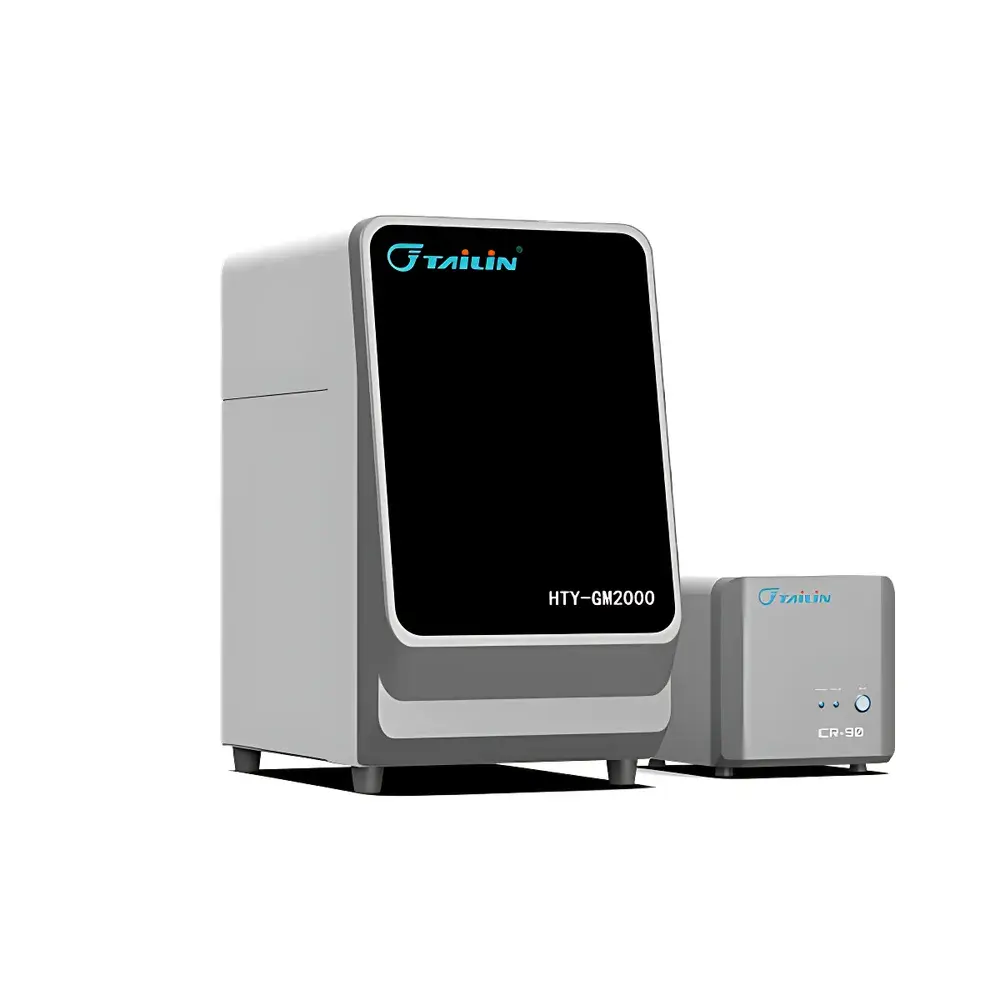
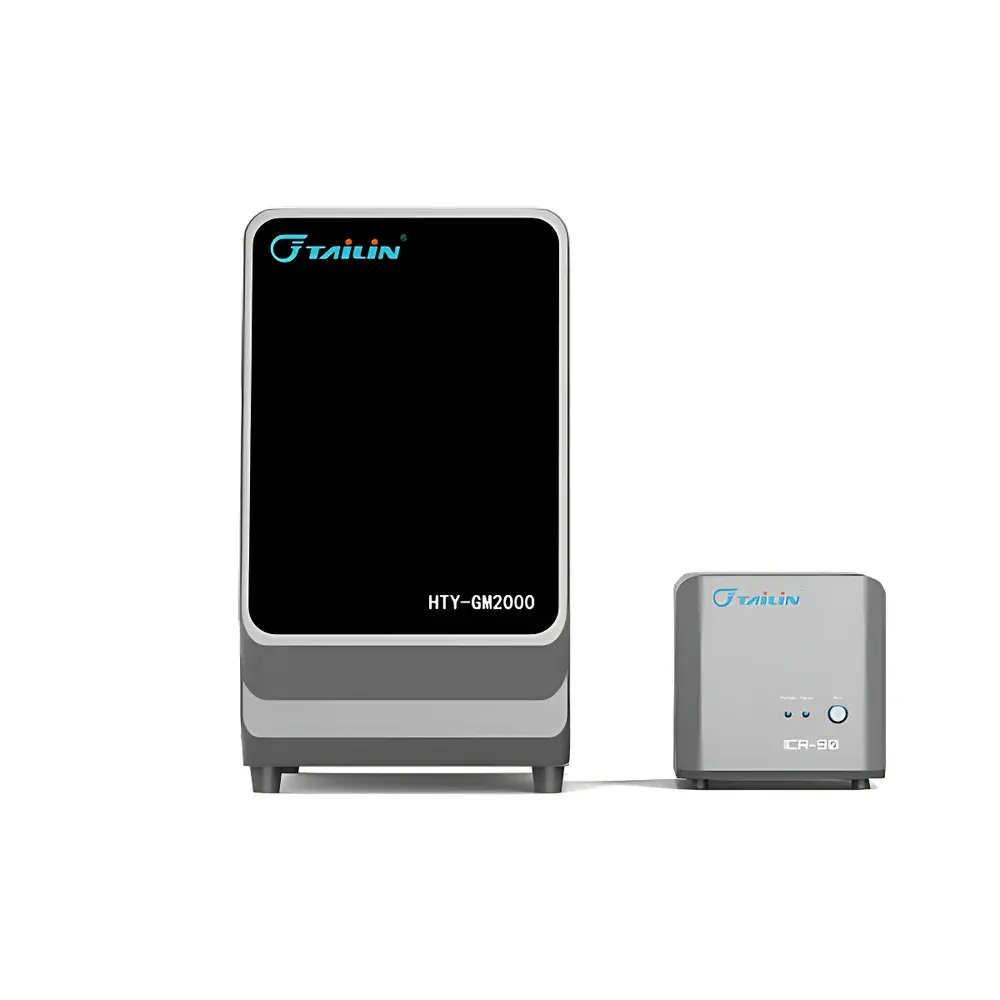
Tailin Biotech HTY-GM2000 Laboratory Total Organic Carbon (TOC) Analyzer with Membrane Conductivity Detection
| Brand | Tailin Biotech |
|---|---|
| Origin | Zhejiang, China |
| Manufacturer Type | Direct Manufacturer |
| Product Category | Domestic |
| Model | HTY-GM2000 |
| Instrument Type | Laboratory TOC Analyzer |
| Detection Principle | Membrane Conductivity Detection |
| Oxidation Method | UV/Persulfate Oxidation |
| Measurement Range | 0.000–20.000 mg/L |
| Repeatability | ≤3% |
| Sample Volume Requirement | 12 mL per analysis |
| Analysis Time | ≤20 min per sample |
| Detection Limit | <10 µg/L |
| IC Range | 0.000–5.000 mg/L |
| Accuracy (Indicated Value Error) | ±5% |
| Injection Speed | 0.6 mL/min |
| Dimensions | 480 × 300 × 540 mm |
Overview
The Tailin Biotech HTY-GM2000 is a laboratory-grade Total Organic Carbon (TOC) analyzer engineered for high-precision, regulatory-compliant water quality assessment in pharmaceutical, biotechnology, and environmental testing laboratories. It employs membrane conductivity detection — a robust, non-selective, and reagent-stable methodology — to quantify carbon content following complete oxidation of organic species. Unlike catalytic combustion or NDIR-based systems, this technique utilizes a gas-permeable hydrophobic membrane to selectively transfer CO₂ generated from UV/persulfate oxidation into a deionized carrier stream, where conductivity changes are measured with high linearity and minimal interferences. The system is designed to meet critical performance requirements outlined in USP , EP 2.2.44, JP 2.59, and ASTM D5907, supporting routine QC release testing, cleaning validation, and purified water/ultrapure water (PW/UPW) monitoring under GMP/GLP frameworks.
Key Features
- Fully automated operation: Integrated sequence control manages sample aspiration, acidification, persulfate dosing, UV oxidation (185 nm lamp), CO₂ stripping, membrane diffusion, conductivity measurement, and waste disposal — all without manual intervention.
- Cross-contamination mitigation: Onboard fluidic path cleaning cycles execute between analyses using high-purity water and optional sodium hydroxide rinse, validated per system suitability protocols.
- Low sample consumption: Requires only 12 mL of sample per full TOC/IC report, reducing demand on limited or precious matrices such as cell culture media, dialysate, or process water streams.
- Rapid throughput: Delivers a complete TOC + IC result in ≤20 minutes, including system equilibration and baseline stabilization — optimized for high-volume QC labs with tight batch release timelines.
- Modular architecture: Physically segregated control board, power management unit, and sensor module enable targeted maintenance, simplified calibration verification, and minimized downtime during service events.
- Intuitive software interface: Touchscreen HMI supports method creation, multi-sample queue definition, real-time signal monitoring, and audit-trail-enabled parameter logging compliant with FDA 21 CFR Part 11 requirements.
Sample Compatibility & Compliance
The HTY-GM2000 is validated for use with purified water (PW), water for injection (WFI), clean steam condensate, pharmaceutical process rinsates, and municipal/industrial wastewater effluents. Its membrane conductivity detection eliminates chloride interference up to 1,000 mg/L Cl⁻ and tolerates moderate levels of particulates (<5 µm) when paired with optional inline filtration. System suitability testing includes sucrose and 1,4-benzoquinone challenges per USP , ensuring recovery within 85–115% and repeatability ≤3%. All electronic records retain immutable timestamps, user authentication logs, and change history — fully traceable for regulatory inspections under ISO 17025, Annex 11, and MHRA GXP data integrity guidance.
Software & Data Management
Tailin’s proprietary TOC Control Suite v3.2 provides secure, role-based access control (administrator, analyst, reviewer), electronic signature capability, and configurable report templates (PDF/CSV). Raw conductivity signals, temperature-compensated calibration curves, and diagnostic flags (e.g., lamp intensity decay, membrane wetting status) are stored with SHA-256 hashing. Data export supports LIMS integration via ASTM E1384-compliant HL7 messaging or direct ODBC connection. Audit trails record every instrument state transition, parameter modification, and report generation event — retained for ≥36 months with automatic archiving and backup scheduling.
Applications
- Pharmaceutical water system validation and ongoing monitoring (PW/WFI distribution loops, storage tanks, point-of-use outlets)
- Cleaning-in-place (CIP) rinse water analysis for equipment residue clearance
- Bioprocess intermediate and final product water content verification
- Environmental compliance reporting for EPA NPDES discharge permits
- Research applications requiring low-level TOC quantification in ultrapure solvents and buffer formulations
FAQ
What oxidation methods does the HTY-GM2000 support?
UV photolysis at 185 nm combined with sodium persulfate chemical oxidation — enabling >95% oxidation efficiency for refractory compounds including pyrogens and humic substances.
Is the system compliant with FDA 21 CFR Part 11?
Yes — full electronic signature implementation, audit trail logging, and user access controls are embedded in firmware and validated during IQ/OQ/PQ.
Can the analyzer measure inorganic carbon (IC) independently?
Yes — acidification prior to oxidation allows selective IC determination; simultaneous TOC and IC reporting is standard in each analytical cycle.
What maintenance intervals are recommended?
UV lamp replacement every 12 months, membrane cartridge every 6 months (or after 500 injections), and quarterly conductivity cell calibration using NIST-traceable KCl standards.
Does the system support external autosamplers?
Yes — RS-485 and TTL-level trigger interfaces enable seamless integration with Tailin’s HTY-AS series and third-party XYZ robotic samplers meeting IEC 61000-4 EMC standards.







