
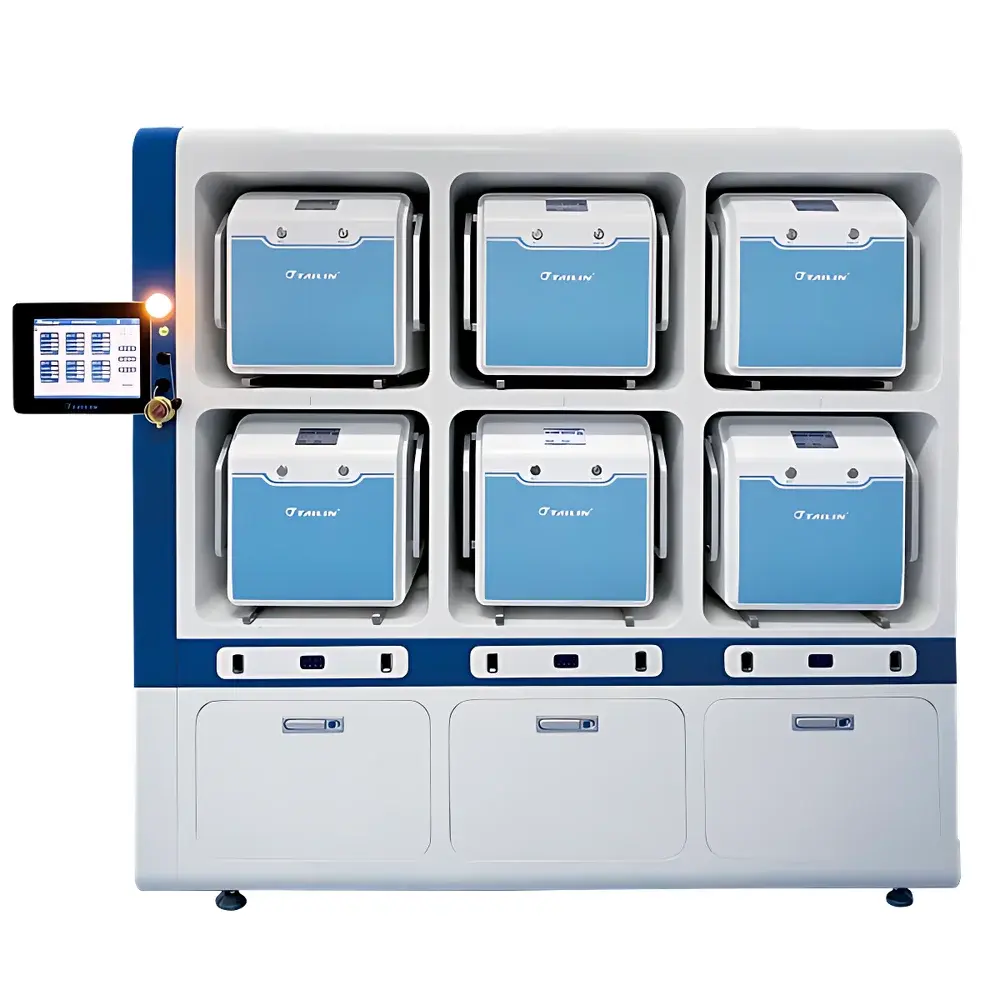
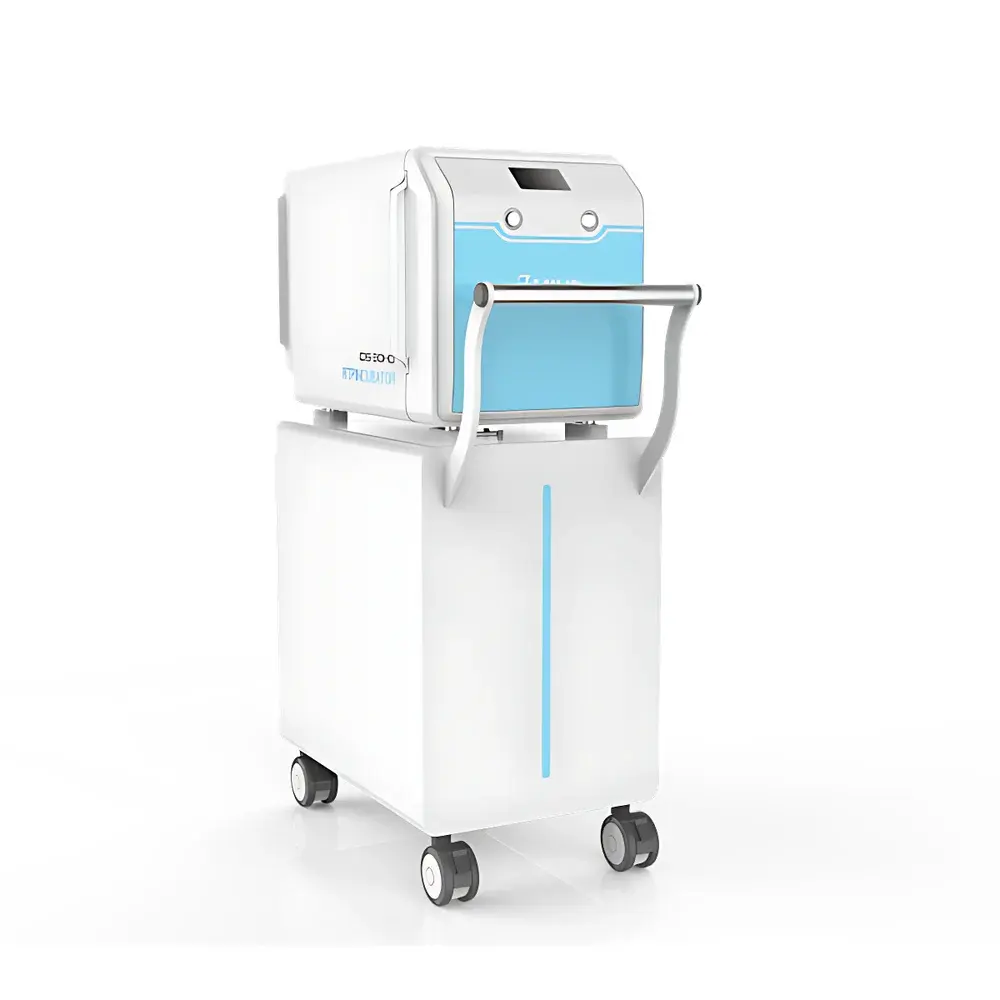
Tailin Honeycomb Cell Culture System
| Brand | Tailin |
|---|---|
| Origin | Zhejiang, China |
| Manufacturer Type | Manufacturer |
| Product Category | Domestic |
| Model | Honeycomb Cell Culture System |
| Pricing | Upon Request |
| Temperature Control Range & Accuracy | RT+5°C to 50°C (±0.2°C) |
| Temperature Uniformity | ±0.3°C at 37°C |
| CO₂ Concentration Control Range & Accuracy | 0%–20% |
| Chamber Capacities | 30 L, 60 L, 100 L |
Overview
The Tailin Honeycomb Cell Culture System is an integrated, closed-loop, GMP-compliant bioprocessing platform engineered for scalable, aseptic expansion of therapeutic cells—including T cells, mesenchymal stromal cells (MSCs), dendritic cells, and induced pluripotent stem cell (iPSC)-derived lineages. Unlike conventional CO₂ incubators, this system operates on a modular honeycomb architecture: multiple independently controlled, sterilizable culture modules are arranged in a spatially optimized grid within a sealed, Class A (ISO 5) laminar airflow environment—maintained continuously during operation via HEPA-filtered recirculation and real-time environmental monitoring. The core principle integrates precise thermal and gas regulation with validated vaporized hydrogen peroxide (VHP®) decontamination cycles, enabling full-cycle sterility assurance from inoculation through harvest—without reliance on external cleanroom infrastructure beyond ISO 8 (Grade D) ambient conditions.
Key Features
- Class A (ISO 5) aseptic environment maintained across all operational phases—no exposure to Grade C or lower air during media exchange, passaging, or sampling.
- Independent environmental control per honeycomb module: simultaneous yet distinct setpoints for temperature (RT+5°C–50°C, ±0.2°C accuracy), CO₂ (0–20%, ±0.1% accuracy), and humidity (optional RH sensor integration).
- Vaporized hydrogen peroxide (VHP) decontamination system with integrated cycle validation—achieving ≥6-log reduction of Geobacillus stearothermophilus spores per module; fully automated, non-destructive to sensors and internal surfaces.
- Modular scalability: base units (30 L) support up to 4 modules; mid-tier (60 L) accommodates 8; high-capacity (100 L) configures 12—each module functionally isolated with dedicated HEPA filtration, pressure monitoring, and alarm-triggered isolation valves.
- Integrated transport trolley with ISO 5 docking interface—enables seamless, contamination-free transfer between upstream cell processing workstations (e.g., centrifuges, washers, fill-finish systems) and the culture system under continuous laminar flow.
- Real-time, time-stamped environmental logging (temperature, CO₂, pressure differential, VHP concentration, door status) with encrypted local storage and optional secure cloud backup—fully compliant with FDA 21 CFR Part 11 requirements for electronic records and signatures.
Sample Compatibility & Compliance
The system supports adherence to current Good Manufacturing Practice (cGMP) standards for advanced therapy medicinal products (ATMPs), as defined by EMA Guideline on Human Cell-Based Medicinal Products and FDA Guidance for Industry: Human Cells, Tissues, and Cellular and Tissue-Based Products (HCT/Ps). All wetted materials comply with USP and cytotoxicity and systemic injection testing. Validation packages include IQ/OQ/PQ protocols aligned with ISO 13485:2016 and Annex 1 (2022) requirements for sterile manufacturing. Environmental monitoring data meets ALCOA+ principles (Attributable, Legible, Contemporaneous, Original, Accurate, Complete, Consistent, Enduring, Available) for regulatory audit readiness.
Software & Data Management
The embedded control software (v3.2+) provides role-based access control (RBAC), multi-level user authentication, and full audit trail functionality—including operator actions, parameter changes, alarm acknowledgments, and VHP cycle logs. Data export is available in CSV and PDF formats with digital signature embedding. Optional integration with MES (Manufacturing Execution Systems) and LIMS platforms via OPC UA or RESTful API enables end-to-end batch record automation. All electronic signatures conform to 21 CFR Part 11 Subpart B criteria, including identity verification, intent confirmation, and tamper-evident timestamping.
Applications
- Clinical-scale expansion of autologous and allogeneic cell therapies under cGMP conditions.
- Process development and tech transfer for suspension and adherent cell lines requiring strict environmental consistency.
- Stability studies of cryopreserved cell products under controlled CO₂ and thermal stress profiles.
- Multi-batch parallel cultivation for donor screening, potency assay qualification, and comparability studies.
- Integration into closed, automated cell therapy manufacturing suites—reducing manual intervention and associated contamination risk.
FAQ
What cleanroom classification is required for installation?
The system is certified for operation in Grade D (ISO 8) environments; no Grade C or higher ambient space is necessary.
Can individual honeycomb modules be sterilized without interrupting other ongoing cultures?
Yes—each module features independent VHP inlet/outlet manifolds and isolation dampers, enabling targeted decontamination while adjacent modules remain online.
Is remote monitoring supported?
Yes—via secure TLS-encrypted web interface with configurable email/SMS alerts for critical deviations (e.g., temperature excursion >±0.5°C, CO₂ drift >±0.3%).
Does the system support custom protocol programming for multi-stage culture processes?
Yes—the scheduler engine allows sequential parameter ramping (e.g., temperature shift from 37°C to 32°C for differentiation phases) with conditional triggers based on time, sensor thresholds, or operator input.
How is calibration traceability maintained?
All sensors are factory-calibrated against NIST-traceable references; calibration certificates and interval recommendations are stored in the device’s secure configuration archive and accessible during audit review.



