
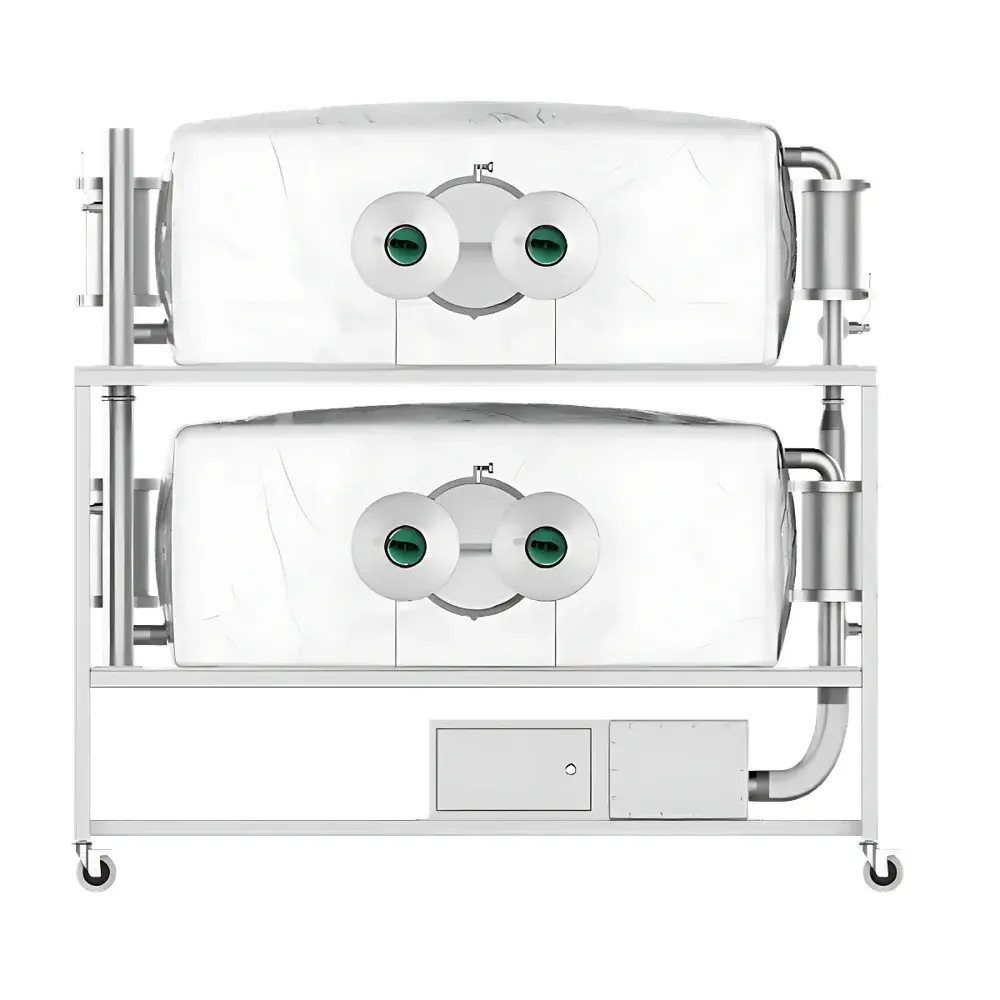
Tailin Soft-Wall Animal Isolator
| Brand | Tailin |
|---|---|
| Origin | Zhejiang, China |
| Manufacturer Type | Direct Manufacturer |
| Regional Classification | Domestic (China) |
| Model | Custom Configurable |
| Pricing | Upon Request |
Overview
The Tailin Soft-Wall Animal Isolator is an engineered containment system designed for the housing, breeding, and maintenance of specific-pathogen-free (SPF) and germ-free laboratory rodents—including mice and rats—in clustered, high-density configurations. Unlike rigid-wall isolators, this system employs a soft-wall architecture constructed from medical-grade polymer film, enabling rapid deployment, modular scalability, and spatial efficiency in vivariums with constrained floor area. The isolator operates on positive-pressure laminar airflow principles, with HEPA H14 filtration (≥99.995% @ 0.1 µm) applied to all incoming air streams. This ensures continuous particulate and microbial decontamination, maintaining ISO Class 5 (Class 100) cleanroom-equivalent conditions within the animal habitat. Its core function is to provide a physically and microbiologically segregated environment that meets international standards for barrier animal facilities—supporting GLP-compliant toxicology studies, immunocompromised model maintenance, and longitudinal breeding programs where environmental consistency and operator safety are critical.
Key Features
- Soft-wall chamber construction: Utilizes optically clear, puncture-resistant, chemically inert polymeric film with >90% light transmission—compatible with routine disinfection using 70% ethanol, hydrogen peroxide vapor (HPV), and sporicidal agents without degradation or hazing.
- Independent pressure-controlled zones: Each isolator module features a dedicated blower unit and digital pressure regulator, enabling precise differential pressure control (+20–+30 Pa relative to ambient) and eliminating cross-contamination risk between adjacent units.
- Ergonomic glove interface: Integrated matte-finish elastomeric sleeve ports minimize tactile resistance and static adhesion, supporting extended manual manipulation tasks (e.g., cage changing, injections, weaning) with reduced operator fatigue.
- Uniform airflow distribution: Computational fluid dynamics (CFD)-validated internal ducting ensures laminarized, low-turbulence air coverage across the entire chamber volume—eliminating dead zones and minimizing airborne particle re-entrainment near animal bedding surfaces.
- Single-hand material transfer system: Dual-side rigid acrylic access doors with integrated bayonet-lock mechanisms allow secure, repeatable sealing under positive pressure; door actuation requires no tools and maintains integrity during frequent use cycles.
- Modular structural framework: Available in both pre-assembled monolithic frames and bolt-together panel systems, facilitating installation through standard doorways and adaptation to existing HVAC infrastructure or mobile vivarium platforms.
Sample Compatibility & Compliance
This isolator supports standard IVC-compatible caging systems (e.g., Allentown, Tecniplast, Lab Products) up to 12 cages per chamber (depending on cage size and ventilation requirements). It is validated for use with SPF murine strains—including C57BL/6, BALB/c, NSG, and humanized models—and accommodates ancillary equipment such as automated watering manifolds, telemetry receivers, and environmental monitoring sensors. The design conforms to key regulatory expectations outlined in the Guide for the Care and Use of Laboratory Animals (NRC, 8th ed.), EU Directive 2010/63/EU, and ISO 14644-1 Class 5 air cleanliness requirements. While not certified to UL/IEC 61010-1 out-of-the-box, electrical components meet CE marking criteria for laboratory equipment when installed per manufacturer-specified grounding and ventilation protocols.
Software & Data Management
The isolator integrates with optional digital monitoring modules—including real-time pressure logging, temperature/humidity tracking, and filter lifetime estimation via differential pressure sensors. Data output is compatible with Modbus RTU or analog 4–20 mA interfaces, allowing seamless integration into centralized vivarium management platforms (e.g., LabVantage, Quartzy, or custom SCADA systems). Audit trails for alarm events and parameter adjustments comply with ALCOA+ principles, supporting 21 CFR Part 11 readiness when paired with validated electronic signature workflows and role-based access controls.
Applications
- Long-term SPF rodent colony maintenance with minimized biosecurity risk
- Preclinical oncology and immunology studies requiring stable microbiota control
- Genetic line preservation and cryorecovery workflows
- Training environments for aseptic surgical technique and gnotobiotic handling
- Temporary quarantine units during facility renovation or outbreak response
- Mobile research deployments (e.g., field stations, satellite labs)
FAQ
What is the maximum recommended operating duration between full decontamination cycles?
Based on validation data with hydrogen peroxide vapor (HPV), the isolator maintains bioburden control for up to 12 weeks under continuous SPF operation—subject to strict adherence to gowning protocols and material transfer SOPs.
Can the isolator be integrated with an existing building HVAC system?
Yes—exhaust air can be ducted to a dedicated exhaust plenum or recirculated via a secondary H14 filter bank, provided static pressure differentials and room air balance are verified by qualified HVAC engineers.
Is third-party IQ/OQ validation support available?
Tailin provides URS templates, FAT/SAT documentation packages, and on-site commissioning assistance; full GMP-grade qualification must be performed by the end user’s QA team or authorized CRO partners.
What film replacement intervals are recommended under daily use?
Under typical academic or industrial usage (2–3 cage changes/day), the primary chamber film demonstrates service life exceeding 18 months before optical or mechanical performance degradation necessitates replacement.




