
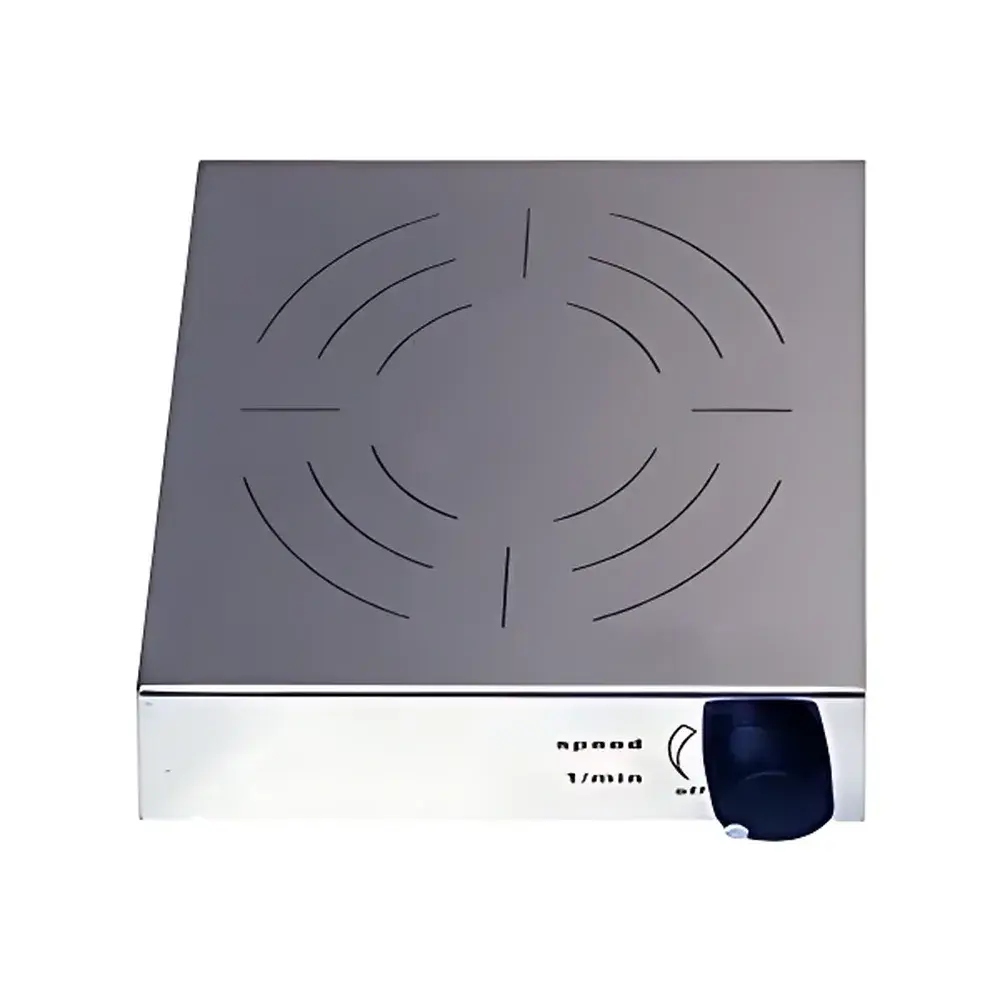
TAITEC ES-Direct-1 CO₂ Incubator-Compatible Low-Speed Rotational Stirrer
| Brand | TAITEC |
|---|---|
| Origin | Japan |
| Model | ES-Direct-1 |
| Instrument Type | Magnetic Stirrer |
| Max. Stirring Volume | 5 L |
| Speed Range | 5–120 rpm |
| Temperature Control | None |
| Enclosure Rating | IPX4-equivalent moisture-resistant design |
| Operating Ambient | –10°C to +56°C at 100% RH (–10°C to +40°C at ≤80% RH) |
| Power Supply | AC 100 V, ≤1 A |
| Dimensions (W×D×H) | 180 × 180 × 60 mm |
| Weight | 3.4 kg |
| Compliance | Designed for ISO 13485-aligned bioprocessing environments |
Overview
The TAITEC ES-Direct-1 is a purpose-engineered low-speed rotational stirrer designed explicitly for integration into humidified CO₂ incubators and roller bottle-based mammalian cell culture systems. Unlike conventional magnetic or overhead stirrers optimized for reagent dissolution or chemical homogenization, the ES-Direct-1 operates on a robust direct-drive rotational principle—mechanically coupling to roller bottles via precision-machined bottle cradles—enabling continuous, vibration-dampened, low-shear rotation at speeds ranging from 5 to 120 rpm. Its core function is to maintain uniform suspension of adherent and suspension-type mammalian cells (e.g., CHO, HEK293, hybridomas), insect cells (Sf9, Sf21), and high-density bacterial cultures (e.g., E. coli protein expression) under physiologically relevant conditions: elevated humidity (>95% RH), 5% CO₂ atmosphere, and tightly regulated temperature (typically 37°C). The unit’s thermally passive architecture eliminates internal heat generation—a critical requirement for incubator stability—while its stainless-steel top plate and sealed drive mechanism resist condensation ingress, ensuring long-term operational integrity in saturated environments.
Key Features
- Incubator-optimized mechanical design: No internal fans, motors, or electronics exposed to humid airflow—minimizes thermal load and condensation risk inside CO₂ incubators.
- Direct-coupled rotational drive: Eliminates belt slippage or magnetic coupling losses; delivers consistent torque across full speed range (5–120 rpm) with ±1 rpm repeatability.
- Modular bottle support configuration: Accommodates single 5 L roller bottle or four positions for smaller vessels (125 mL–8 L), including TAITEC’s proprietary 2 L single-position rotating bottles.
- IPX4-level moisture resistance: Sealed motor housing and stainless-steel structural components withstand continuous exposure to 100% relative humidity at –10°C to +56°C ambient.
- Low electromagnetic interference (EMI): Compliant with IEC 61326-1 for use alongside sensitive incubator sensors and CO₂ analyzers without signal disruption.
- Compact footprint (180 × 180 × 60 mm) and lightweight chassis (3.4 kg): Facilitates installation in space-constrained incubator shelves or stacked multi-unit configurations.
Sample Compatibility & Compliance
The ES-Direct-1 supports standard roller bottle formats used in upstream bioprocessing—including Corning, Nunc, and TAITEC-certified vessels—across volumes from 125 mL to 8 L. It is validated for use with serum-containing and serum-free media formulations commonly employed in monoclonal antibody production, viral vector manufacturing, and vaccine development workflows. From a regulatory standpoint, the device meets mechanical safety requirements per IEC 61010-1 and is routinely deployed in laboratories adhering to ISO 20944 (cell culture equipment performance standards), USP (ancillary equipment for biologics), and FDA 21 CFR Part 11–aligned environments when paired with compliant data logging systems. Its absence of active temperature control means it does not fall under “temperature-controlled equipment” qualification protocols—but its thermal neutrality ensures no adverse impact on incubator temperature mapping or CO₂ calibration stability.
Software & Data Management
The ES-Direct-1 operates as a standalone hardware unit with no embedded firmware, touchscreen interface, or digital connectivity. This analog design intentionally avoids software validation burdens associated with 21 CFR Part 11 compliance—making it suitable for GxP environments where auditability of mechanical parameters is prioritized over digital traceability. Speed settings are adjusted manually via calibrated rotary dial, with physical position locking to prevent accidental drift. For laboratories requiring electronic monitoring, third-party RPM loggers (e.g., optical tachometers or Hall-effect sensors) may be integrated externally and recorded in validated LIMS or ELN platforms. All operational parameters—including installed bottle volume, speed setpoint, and duration—are documented manually in batch records per GLP/GMP documentation practices.
Applications
- Mammalian cell expansion in roller bottles for bioreactor seed train preparation.
- Insect cell culture for baculovirus-mediated recombinant protein expression.
- High-cell-density E. coli fermentation under microaerobic or aerobic rolling conditions.
- Stem cell differentiation assays requiring prolonged, low-shear agitation in humidified incubators.
- Primary tissue dissociation support during enzymatic digestion protocols.
- Long-term stability studies of therapeutic proteins in solution under physiological gas and humidity conditions.
FAQ
Can the ES-Direct-1 be operated inside a standard CO₂ incubator with a maximum internal height of 180 mm?
Yes—its 60 mm profile allows installation on most incubator shelves, but users must verify vertical clearance between shelf and incubator ceiling before deployment.
Does the unit require calibration prior to use in GMP manufacturing?
No formal calibration is mandated; however, speed verification using a traceable tachometer is recommended at startup and after any mechanical maintenance.
Is the ES-Direct-1 compatible with non-TAITEC roller bottles?
It accommodates industry-standard cylindrical roller bottles with diameters between 60 mm and 120 mm and lengths up to 300 mm, provided they feature flat-bottomed contact surfaces.
What maintenance is required for long-term operation in high-humidity environments?
Annual inspection of drive shaft couplings and cleaning of stainless-steel contact surfaces with 70% ethanol is advised; no lubrication or internal servicing is necessary.
Can multiple ES-Direct-1 units be synchronized for parallel operation?
No synchronization capability is built-in; each unit operates independently. Synchronized timing must be managed externally via programmable timers or facility SCADA systems.



