
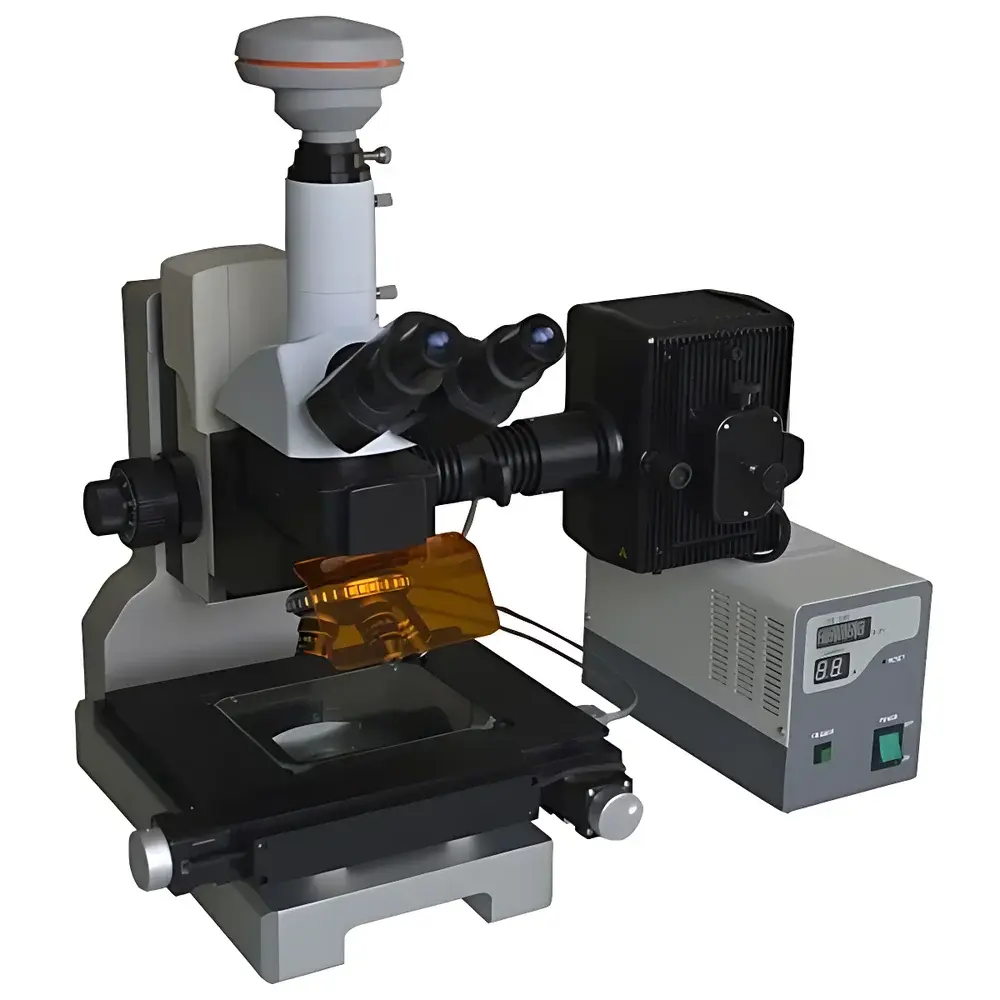
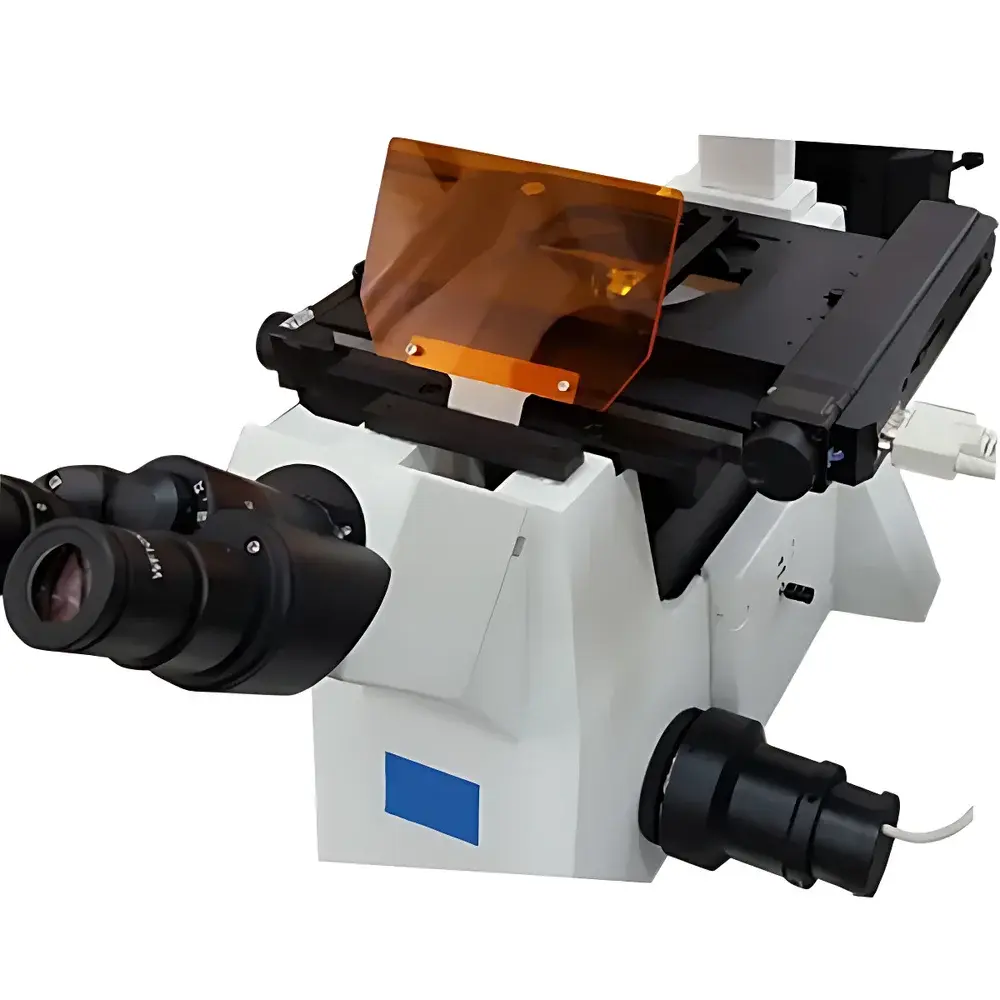
Tansi ACCUR1000 & ACCUR2000 Motorized Microscopy Stage for Image Analysis Systems
| Brand | Tansi |
|---|---|
| Model | ACCUR1000 & ACCUR2000 |
| Origin | Jiangsu, China |
| Drive Type | Stepper Motor with Precision Lead Screw & Preloaded Anti-backlash Nut |
| Guidance System | Crossed Roller Bearings |
| Platform Material | Cold-rolled Aluminum Alloy |
| Travel Range (X/Y) | Up to 100 mm × 100 mm (ACCUR1000), 200 mm × 200 mm (ACCUR2000) |
| Positioning Repeatability | < ±1 µm |
| Minimum Step Size (X/Y) | ≤ 0.1 µm (64-step microstepping) |
| Z-axis Focus Drive (Optional) | Stepper Motor Coupled to Microscope Coarse/Fine Focus Knob, Minimum Step ≤ 0.02 µm |
| Control Interface | RS-232 Serial Communication |
| Power Input | AC 220 V, 50–60 Hz, 30 VA |
| Dimensions (W×H×D) | 300 × 120 × 230 mm |
| Weight | 2.8 kg |
| Software Interface | TWAIN & DirectShow Compatible |
| SDK Available | C/C++ DLL Library for Custom Integration |
Overview
The Tansi ACCUR1000 and ACCUR2000 motorized microscopy stages are engineered precision motion platforms designed specifically for automated microscopic image acquisition, quantitative morphological analysis, and high-throughput sample screening in optical microscopy workflows. These stages operate on a closed-loop-compatible open architecture that integrates seamlessly with upright and inverted research-grade optical microscopes—enabling full XYZ automation without mechanical modification to the host instrument. The core motion principle relies on high-torque, low-vibration stepper motors coupled to ground-precision lead screws and preloaded anti-backlash nuts, eliminating mechanical hysteresis and ensuring deterministic positional control. Crossed roller bearing guidance provides sub-micron straightness and angular stability over extended travel ranges, while the cold-rolled aluminum base delivers torsional rigidity essential for maintaining optical alignment during multi-frame acquisition sequences. Unlike generic translation stages, the ACCUR series is purpose-built for image analysis applications: its kinematic design minimizes stage-induced focus drift, supports synchronized Z-axis focusing via optional motorized focus couplers, and maintains thermal and mechanical stability across prolonged scanning protocols typical in life science histology, materials porosity quantification, and industrial cleanliness validation.
Key Features
- Precision motion control with ≤ ±1 µm repeatability and ≤ 0.1 µm minimum incremental step resolution (64x microstepping)
- Modular XYZ configuration: X/Y translation stages (ACCUR1000: 100 × 100 mm; ACCUR2000: 200 × 200 mm) plus optional Z-axis focus actuation compatible with standard microscope coarse/fine focus knobs
- Crossed roller linear guides and preloaded anti-backlash nut assembly ensure zero backlash, minimal runout, and long-term positional fidelity
- Integrated mechanical limit switches with adjustable positioning—prevents overtravel damage to objective lenses, condensers, or stage components
- Dual-control operation: simultaneous support for RS-232 computer-driven automation and ergonomic handheld controller with variable-speed X/Y jog and dual-range Z-focus (coarse rotation + fine adjustment knob)
- Robust cold-rolled aluminum chassis (2.8 kg mass) dampens vibration and resists thermal expansion-induced misregistration
- Open software architecture with native TWAIN/DirectShow image acquisition support and programmable DLL interface for custom LabVIEW, Python, or MATLAB integration
Sample Compatibility & Compliance
The ACCUR stages accommodate diverse specimen formats—including standard glass slides (75 × 25 mm), petri dishes, wafer substrates, metallographic mounts, and irregularly shaped industrial parts—within their large working envelopes and ≥ 2 kg load capacity. The platform’s non-magnetic, anodized surface prevents interference with magnetic particle imaging or EM sample handling. While not certified to ISO/IEC 17025 or FDA 21 CFR Part 11 out-of-the-box, the system supports GLP/GMP-aligned workflows through audit-trail-capable software logging (via optional timestamped command history export), deterministic motion scripting, and hardware-level position feedback compatibility. Its mechanical design conforms to common microscope mounting standards (e.g., Nikon Eclipse, Olympus BX, Zeiss Axio series), and all electrical components meet CE-marked safety requirements for Class I laboratory equipment (IEC 61010-1).
Software & Data Management
The bundled ACCUR ScanControl software provides a unified interface for stage navigation, multi-field image capture, autofocus sequencing, and mosaic stitching—without requiring third-party licenses. It natively acquires images from any TWAIN- or DirectShow-compliant camera (including sCMOS, CCD, and USB3 vision sensors), applies real-time brightness/contrast correction, overlays calibrated scale bars and annotation layers, and exports annotated datasets in BMP/JPEG/PNG formats with embedded metadata (stage coordinates, timestamp, objective magnification). Advanced users may deploy custom acquisition pipelines using the provided C/C++ DLL library, enabling integration with ImageJ/Fiji macros, Python-based deep-learning inference loops, or enterprise LIMS systems. All motion commands are logged with microsecond-resolution timestamps, supporting retrospective traceability for regulatory documentation.
Applications
- Automated histopathology slide scanning for digital pathology archives and AI training datasets
- Quantitative pore structure analysis in cementitious materials, cast aluminum alloys, and battery electrode coatings per ASTM C496 and ISO 4527
- Particulate contamination assessment in automotive fuel injectors and hydraulic systems (ISO 4406, VDA 19.1)
- Multi-location fluorescence intensity mapping in live-cell time-lapse experiments
- Large-area mosaic generation for semiconductor wafer defect review and metallurgical grain boundary characterization
- Integration into optical tweezer setups requiring precise trap positioning relative to fixed cellular targets
FAQ
Is mechanical modification required to install the ACCUR stage on my microscope?
No. The ACCUR series uses standardized mounting brackets and adaptable couplers—no disassembly or permanent alteration of the microscope’s mechanical stage is necessary.
Can the Z-axis focus module be retrofitted to any microscope model?
Yes, provided the microscope features an externally accessible coarse/fine focus knob with sufficient torque transmission capability and rotational symmetry; compatibility verification is recommended prior to installation.
Does the system support autofocus algorithms beyond contrast-based methods?
The included software implements derivative-based contrast maximization; however, the DLL interface allows integration of custom algorithms such as depth-from-defocus, wavefront sensing, or machine learning–driven focus prediction models.
What is the maximum payload capacity under dynamic scanning conditions?
2.0 kg at full travel speed (5 mm/s); static load capacity exceeds 5 kg with negligible deflection.
Are firmware updates and SDK revisions available for long-term deployment?
Yes—Tansi provides version-controlled firmware patches and backward-compatible DLL updates through registered distributor channels, with documented change logs aligned to ISO 13485 quality management principles.





