
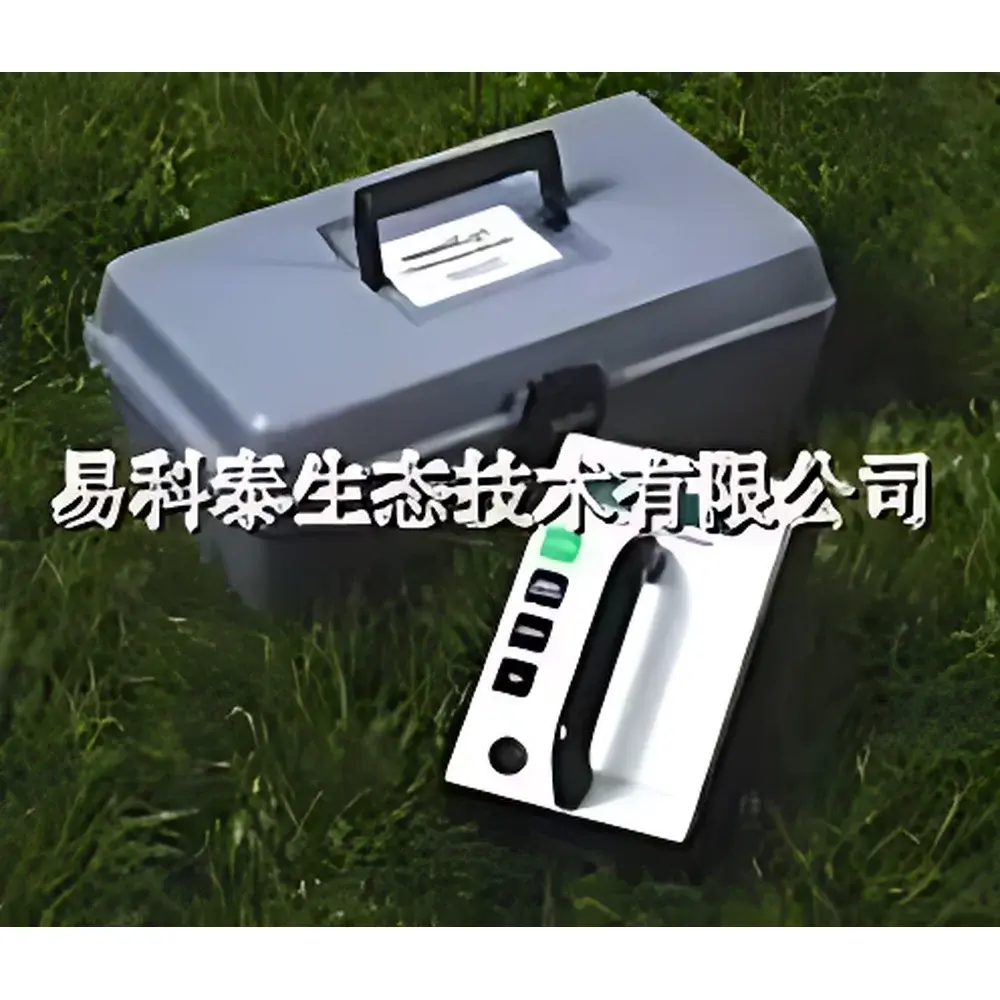
TCM 500 Turf Colorimeter
| Origin | USA |
|---|---|
| Manufacturer Type | Distributor |
| Origin Category | Imported |
| Model | TCM 500 Turf Colorimeter |
| Pricing | Upon Request |
| Measurement System | Internal LED-based reflectance at red (650 nm) and near-infrared (850 nm) wavelengths |
| Measurement Area | ~7.75 cm diameter (3.0 in) |
| Output Units | RED (%) and NIR (%), Green Index (0–9.9), NDVI = (NIR − RED) / (NIR + RED) |
| Repeatability | ±5% of reading |
| Data Storage Capacity | 3,250 measurements (GPS/DGPS disabled) |
| Power Supply | 9 V alkaline battery (~3,000 measurements per charge) |
Overview
The TCM 500 Turf Colorimeter is a field-deployable, LED-based reflectance spectrophotometer engineered for objective, quantitative assessment of turfgrass color as a non-destructive proxy for physiological status—including nitrogen sufficiency, water stress, and photosynthetic vigor. Unlike subjective visual rating scales (e.g., NTEP color charts), the TCM 500 employs dual-wavelength optical sensing—650 nm (red) and 850 nm (near-infrared)—to compute standardized spectral indices directly traceable to vegetation remote sensing principles. Its measurement geometry follows a fixed-source/detector configuration with diffuse illumination and cosine-corrected collection, ensuring consistent angular response across heterogeneous canopy surfaces. The instrument operates on the foundational premise that chlorophyll absorption in the red band and cellulose/water-related scattering in the NIR band yield robust, repeatable ratios—most notably the Normalized Difference Vegetation Index (NDVI)—which correlate strongly with leaf area index (LAI), biomass, and stomatal conductance in managed turf systems.
Key Features
- Dual-band LED optical system calibrated for stable 650 nm (red) and 850 nm (NIR) reflectance detection, minimizing spectral drift over time and temperature fluctuations.
- Fixed 7.75 cm (3.0 in) measurement aperture with integrated diffuser and ambient light rejection optics, enabling reproducible contactless readings under variable daylight conditions.
- Three operational modes: (1) Green Index (0.0–9.9 scale aligned with industry-standard turf color rating conventions), (2) Raw RED/NIR reflectance (%), and (3) Real-time NDVI calculation.
- Onboard memory supporting up to 3,250 measurements without GPS; reduced to 1,350 when GPS/DGPS geotagging is enabled—compatible with sub-meter DGPS receivers via optional cable interface.
- Low-power architecture powered by a single 9 V alkaline battery, rated for approximately 3,000 measurements per charge under typical field use.
- Rugged, weather-resistant housing designed for repeated outdoor deployment in golf course, sports field, and municipal landscape environments.
Sample Compatibility & Compliance
The TCM 500 is optimized for intact, living turfgrass canopies—including cool-season species (e.g., Poa annua, Lolium perenne) and warm-season varieties (e.g., Cynodon dactylon, Zoysia japonica). It accommodates mowed heights from 1.3 cm to 5.1 cm and tolerates moderate surface moisture and dew. While not a regulatory-grade analytical instrument, its output aligns with ASTM E2922-14 (Standard Guide for Spectral Reflectance Measurements of Turfgrass Canopies) and supports GLP-aligned data collection protocols when used with timestamped, georeferenced measurement logs. No calibration standards are required for routine operation, though periodic verification using certified ceramic reflectance tiles (e.g., 99% BaSO4-coated) is recommended for long-term consistency.
Software & Data Management
Data export is performed via USB connection using included Windows-compatible software, which supports batch download, CSV export, and basic statistical reporting (mean, SD, min/max per site). The software enables assignment of user-defined site IDs, date/time stamps, and optional GPS metadata fields. All raw measurements—including RED %, NIR %, Green Index, NDVI, and acquisition timestamp—are stored unaltered in binary format on-device and preserved during transfer. Audit trails are maintained through file creation timestamps and sequential record numbering. While the system does not implement FDA 21 CFR Part 11 electronic signature or audit trail features, it supports manual documentation workflows compliant with ISO/IEC 17025 internal quality control requirements when paired with laboratory notebook entries.
Applications
- Quantitative evaluation of nitrogen fertilizer response curves across application rates and timings.
- Early detection of drought-induced chlorosis prior to visible wilting or necrosis.
- Calibration and validation of satellite- or drone-based NDVI maps for precision turf management.
- Longitudinal monitoring of overseeding success, disease recovery, or post-aeration greening.
- Objective benchmarking of cultivar performance in turfgrass breeding and variety trials.
- Supporting irrigation scheduling decisions by correlating NDVI trends with soil moisture sensor networks.
FAQ
Does the TCM 500 require annual factory recalibration?
No—its solid-state LED sources and photodiode detectors exhibit minimal drift. Users are advised to perform quarterly verification using a stable reflectance standard and document results per internal QA procedures.
Can NDVI values from the TCM 500 be directly compared to satellite-derived NDVI?
Yes, in relative terms—though absolute values differ due to atmospheric path length and sensor spectral bandwidth. The TCM 500 provides ground-truth reference points for scaling and validating broader-scale remote sensing outputs.
Is the Green Index (0–9.9) traceable to any published standard?
It is empirically anchored to the National Turfgrass Evaluation Program (NTEP) visual rating scale and validated against Munsell Soil Color Charts for hue/value correlation in controlled trials.
What is the minimum recommended sample area for reliable measurement?
A homogeneous area ≥15 cm × 15 cm is advised to ensure full aperture coverage and minimize edge effects from adjacent bare soil or clippings.
Does the device support Bluetooth or wireless data transfer?
No—data transmission is conducted exclusively via wired USB connection to maintain signal integrity and avoid electromagnetic interference in RF-rich field environments.




