
TCT CEAS1000 Engine Direct-Sampling Emission Analysis System
| Brand | TCT |
|---|---|
| Origin | Fujian, China |
| Manufacturer Type | Authorized Distributor |
| Country of Origin | China |
| Model | CEAS1000 |
| Price Range | USD 42,000 – 70,000 (FOB) |
| Instrument Type | Online Fixed-Installation System |
| Detection Principle | Non-Dispersive Infrared (NDIR), Heated Chemiluminescence (HCLD), Heated Flame Ionization (HFID), Paramagnetic (PMD), and Non-Dispersive Ultraviolet Resonance Absorption Spectroscopy (NDUV/UVRAS) |
| Measurement Ranges | CO: 0–5,000 ppm / 0–10% vol |
| CO₂ | 0–20% vol |
| CH₄/THC | 0–10,000 ppm |
| NO/NO₂/NOₓ | 0–3,000 ppm / 0–1,000 ppm / 0–4,000 ppm |
| O₂ | 0–22% vol |
| Zero Drift | <1% FS/24h |
| Span Drift | <1% FS/24h |
| Repeatability | <0.5% FS |
| Linearity | <±1% FS |
| Noise | <1% FS |
| Response Time (T90) | <1.5 s |
| Preheat Time | 60 min |
| Sample Line Temperature | 191°C |
| Primary Filter | 5 µm, 191°C |
| Secondary Filter | 1 µm, 191°C |
| Heated Pump Flow Rate | 8–10 L/min at 15 psig |
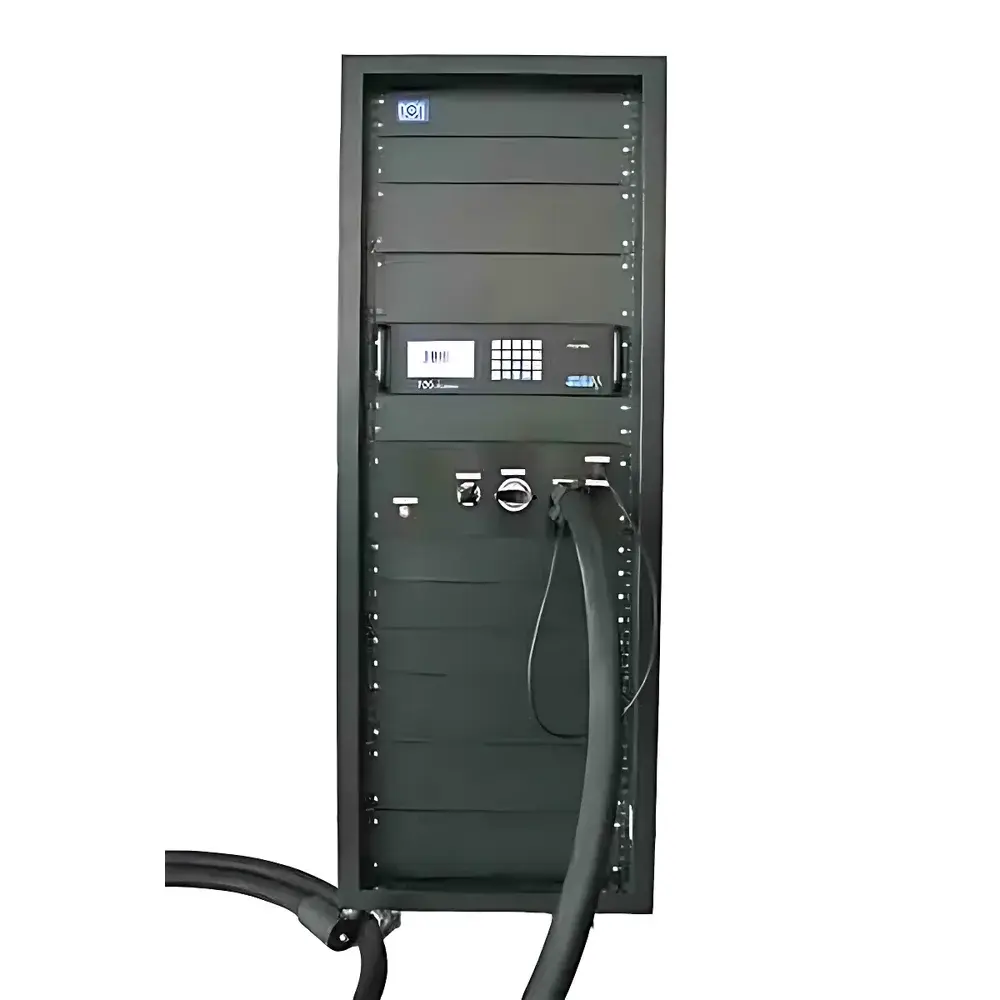
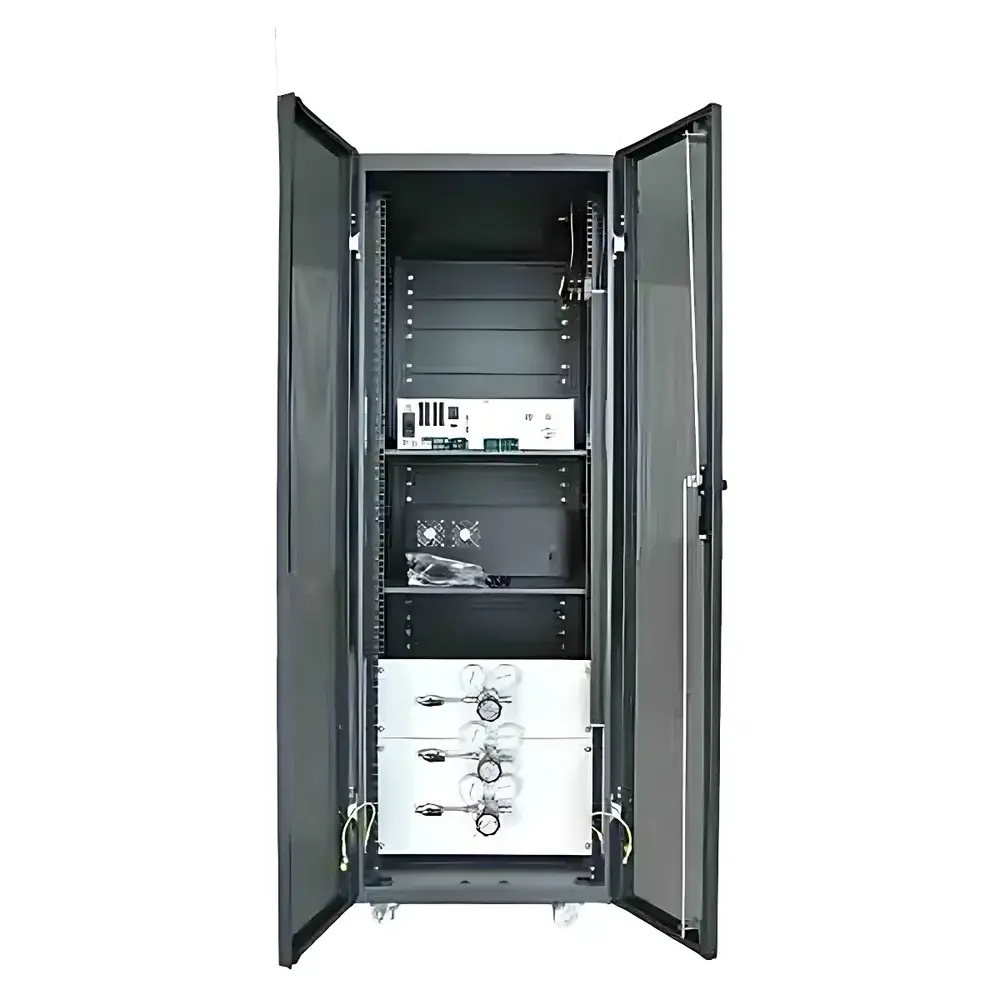
| Cabinet | 19-inch rack-mount industrial control enclosure with integrated pitot tube, condenser, internal sampling pump, heated tubing (3 m), quick-disconnect fittings, and controller |
Overview
The TCT CEAS1000 Engine Direct-Sampling Emission Analysis System is a fully integrated, online-capable emissions measurement platform engineered for regulatory-grade compliance testing of internal combustion engines. Designed to meet the stringent technical requirements of US EPA 40 CFR Part 1065, EU Regulation (EC) No 715/2007 and UNECE R49/R83, as well as China’s GB 17691–2018 and GB 14762–2002 standards, the CEAS1000 performs real-time, multi-component gas analysis directly from raw or diluted exhaust streams. Its architecture implements orthogonal detection methodologies—NDIR for CO and CO₂, PMD-based paramagnetism for O₂, HFID for total hydrocarbons (THC), methane (CH₄), and non-methane hydrocarbons (NMHC), HCLD/CLD for NO/NO₂/NOₓ, and NDUV/UVRAS for selective NOₓ speciation—ensuring metrological traceability and cross-method validation. The system operates under fully heated sample conditioning (191°C throughout the entire path), eliminating water condensation and sulfuric acid deposition that compromise accuracy in low-temperature sampling systems.
Key Features
- Fully heated sample train: 191°C primary and secondary filtration (5 µm and 1 µm), heated diaphragm pump (8–10 L/min at 15 psig), and insulated 3-meter heated transfer line to maintain dew point integrity and prevent analyte adsorption or phase separation.
- Multi-modal detection architecture compliant with ISO 8712, ASTM D6667, and EN 15058 for method-specific validation—NDIR channels calibrated per ISO 12039, HCLD per ISO 11566, HFID per ISO 8178-4, and PMD per ISO 10156.
- Integrated gas management subsystem with independent pressure-regulated ports for zero air, span gas, fuel gas, synthetic air, and O₂ supply—enabling automated calibration sequences per ISO 16183 and EPA Method 25A protocols.
- Rack-mounted 19-inch industrial control cabinet housing embedded controller, pitot-static flow sensor, thermoelectric condenser, internal sampling pump, and I/O interface for external dynamometer synchronization and CAN bus integration.
- Automated operational workflow: preheat verification, leak check, zero/span calibration, data logging, real-time curve visualization, and audit-trail-enabled report generation—all accessible via TCT’s proprietary Windows-based control software.
Sample Compatibility & Compliance
The CEAS1000 supports direct sampling from light-duty and heavy-duty engine test cells, chassis dynamometers, and dilution tunnels (CVS). It accommodates raw exhaust from spark-ignition (SI) and compression-ignition (CI) engines—including gasoline, diesel, natural gas (CNG/LNG), biodiesel, and hydrogen-fueled powertrains—as well as aviation turbine and marine propulsion systems. All analytical modules are configured to satisfy GLP and GMP documentation requirements, with full 21 CFR Part 11-compliant electronic signatures, user access levels, and immutable audit logs. Calibration certificates are traceable to NIST SRMs or equivalent national metrology institutes (e.g., PTB, NPL, NIM), and system performance verifications align with ISO/IEC 17025-accredited laboratory practices.
Software & Data Management
TCT Control Suite v4.2 provides ISO-standardized data acquisition, processing, and export functionality. Raw analog/digital signals from each analyzer are timestamped with microsecond resolution and synchronized to engine crank angle (via optional encoder input) or dynamometer torque/speed signals. Data is stored in vendor-neutral CSV and HDF5 formats, with metadata fields compliant with ASAM MCD-2 MC and ASAM ODS schemas. Built-in statistical tools support repeatability assessment (per ISO 5725), linear regression diagnostics (R², slope, intercept), and drift monitoring over 24-hour periods. Export modules generate reports formatted for submission to certification authorities including EPA e-GGRT, EU EEA, and CNEMC platforms.
Applications
- Regulatory type-approval testing for on-road vehicles (passenger cars, LCVs, HD trucks, buses) per WLTP, FTP-75, and China VI cycles.
- Development and validation of aftertreatment systems (DOC, DPF, SCR, GPF) under transient and steady-state conditions.
- Non-road mobile machinery (NRMM) certification per EU Stage V and EPA Tier 4 standards—including construction equipment, agricultural tractors, and locomotive engines.
- Aerospace propulsion research: lean-burn combustor characterization, NOₓ formation kinetics, and alternative fuel combustion efficiency studies.
- Marine diesel engine emissions monitoring in accordance with IMO MARPOL Annex VI and EU Monitoring, Reporting, and Verification (MRV) framework.
FAQ
What emission standards does the CEAS1000 support out-of-the-box?
The system is pre-configured for US EPA 40 CFR Part 1065, EU R49/R83, China GB 17691–2018, and ISO 8178 series. Custom configurations for Japan JC08, India BS-VI, or South Korea K-MOSS are available upon request.
Can the CEAS1000 be integrated with existing engine test beds?
Yes—it features analog (0–10 V, 4–20 mA), digital (RS-485, Ethernet TCP/IP), and CAN 2.0B interfaces for seamless integration with AVL PUMA, Horiba EX-1500, or dSPACE SCALEXIO environments.
Is the system suitable for ammonia (NH₃) measurement?
NH₃ quantification is supported via optional NDUV module with spectral resolution ≤0.5 nm and detection limit of 0.2 ppm (1σ, 1 s averaging), compliant with ISO 11469 and SAE J2747.
How is calibration traceability maintained?
Each analyzer undergoes factory calibration using certified reference gases (CRM) traceable to NIST or equivalent NMIs; calibration certificates include uncertainty budgets, stability data, and drift correction algorithms validated over 30-day intervals.
Does the CEAS1000 comply with cybersecurity requirements for connected lab instruments?
Firmware v3.1+ includes TLS 1.2 encryption, role-based authentication, secure boot, and configurable firewall rules aligned with IEC 62443-3-3 SL2 requirements for industrial control systems.
Related Products







