
TCT Handset Gas 2000 Portable Automotive Exhaust Gas Analyzer
| Brand | TCT (Xiamen Tongchuang) |
|---|---|
| Origin | Fujian, China |
| Model | Handset Gas 2000 |
| Instrument Type | Portable |
| Detection Principle | NDIR (CO, CO₂, HC), NDUV (NO, NO₂), Electrochemical (O₂) |
| Max. Permissible Error | <0.1% FS |
| Zero Drift | 0.01–0.03% FS/24h |
| Span Drift | 0.01–0.03% FS/24h |
| Repeatability | <3% RSD |
| Accuracy Class | OIML R99 Class 00 |
| Compliance | ISO 3930, GB 18285–2018, GB 3847–2018 |
Overview
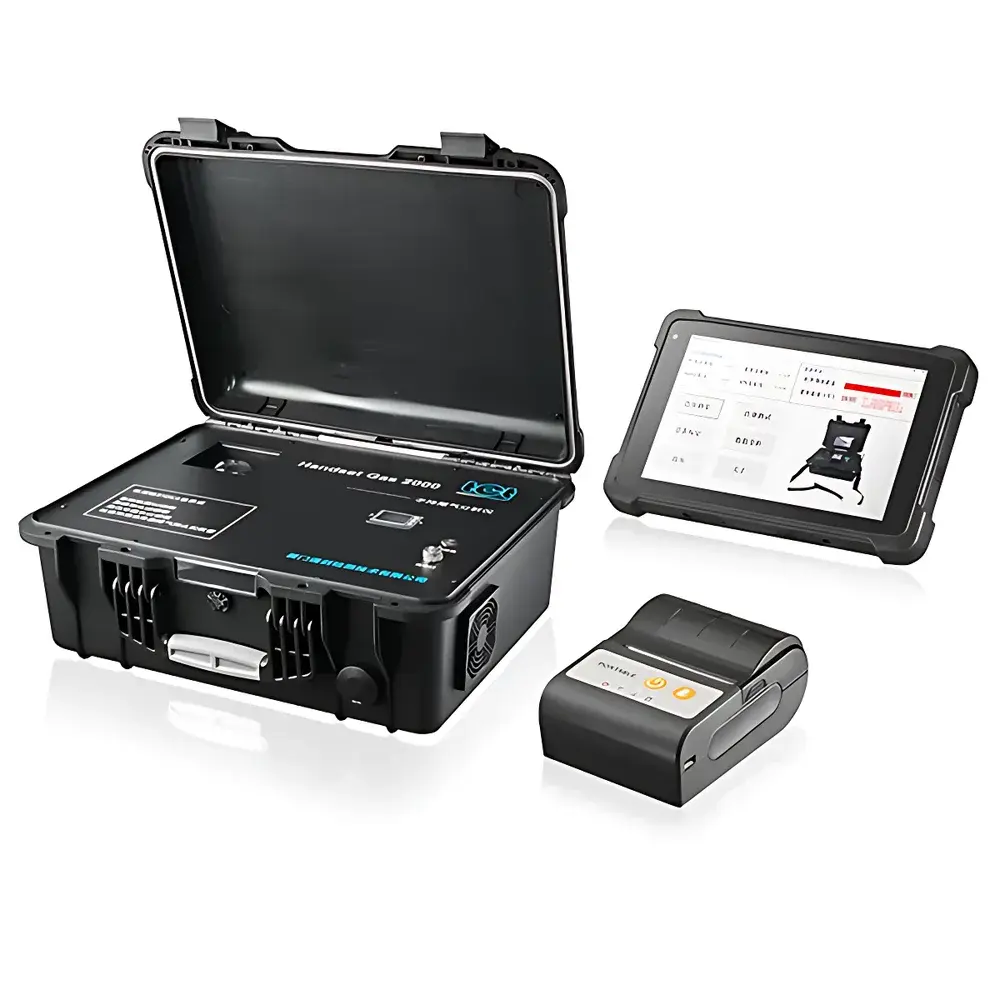
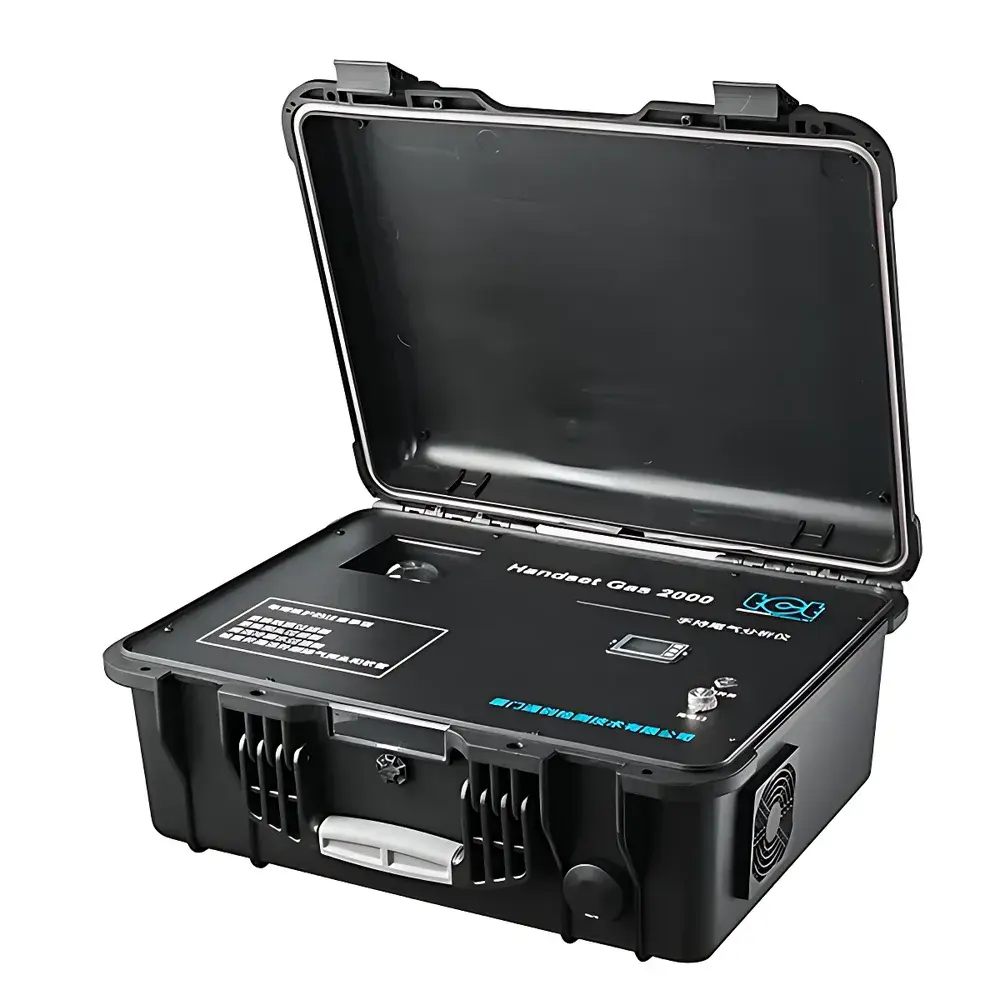
The TCT Handset Gas 2000 is a field-deployable, multi-gas automotive exhaust emission analyzer engineered for regulatory-grade measurement of combustion-derived pollutants from gasoline, diesel, LPG, and CNG engines. It employs dual optical detection architectures—non-dispersive infrared (NDIR) spectroscopy for CO, CO₂, and hydrocarbons (HC), and non-dispersive ultraviolet (NDUV) absorption for NO and NO₂—complemented by electrochemical sensing for O₂. This hybrid optical–electrochemical design enables simultaneous, real-time quantification of CO, CO₂, HC, NO, NO₂, NOx, λ (equivalence ratio), and optional engine parameters (RPM, coolant temperature). The instrument integrates an on-board gas conditioning system comprising a heated flexible probe (7 m), coarse particulate filter, automatic water–vapor separator, fine particulate filter, and flow-regulated sampling pump (>4 L/min), ensuring representative, stable sample delivery under variable ambient conditions (5–45 °C, 80–110 kPa, ≤80% RH). Its architecture meets the metrological requirements of OIML R99 Class 00 and ISO 3930, supporting legally defensible data acquisition in emissions compliance testing.
Key Features
- Multi-principle detection: NDIR channels for CO (0–15 %vol), CO₂ (0–20 %vol), and HC (0–20,000 ppm); NDUV channels for NO (0–5,000 ppm) and NO₂ (0–1,000 ppm); electrochemical cell for O₂ (0–25 %vol)
- True NOx calculation via independent NO and NO₂ measurement—no stoichiometric assumptions or conversion factors
- 10-point linear calibration capability for NO and NO₂ sensors, enabling traceable accuracy across full dynamic range
- Integrated auto-zero function with configurable drift compensation intervals and temperature-triggered recalibration logic
- Response times: T90 ≤ 3.5 s (NDIR & NDUV), T10 ≤ 3.7 s (NDIR), ensuring rapid stabilization during transient engine cycles
- Low-maintenance mechanical design with self-diagnostic firmware, onboard error logging, and sensor health monitoring
- Annual calibration interval supported by factory-certified reference gases and documented traceability to NIST-traceable standards
Sample Compatibility & Compliance
The Handset Gas 2000 accommodates exhaust streams from light- and heavy-duty internal combustion engines—including passenger vehicles, construction machinery, marine auxiliary engines, and agricultural equipment—operating on gasoline, diesel, liquefied petroleum gas (LPG), or compressed natural gas (CNG). Its sample conditioning train removes particulates (>1 µm), aerosol oil droplets, and condensed water without chemical scrubbing, preserving reactive nitrogen species integrity. The analyzer conforms to mandatory regulatory frameworks including China’s GB 18285–2018 (gasoline vehicle idle and high-idle testing) and GB 3847–2018 (diesel opacity and gaseous pollutant limits), as well as international metrological standards ISO 3930 (performance requirements for exhaust gas analyzers) and OIML R99 (class 00 precision for automotive applications). All measurement algorithms and data handling routines are designed to support GLP-compliant audit trails when used with validated software configurations.
Software & Data Management
Data acquisition and reporting are managed through a dedicated Windows-based control application running on the included ruggedized PDA tablet. The software provides real-time waveform visualization, time-synchronized parameter logging (gas concentrations, λ, RPM, temperature), and automated pass/fail evaluation against user-defined or regulation-mandated limit tables. Measurement records include timestamp, GPS coordinates (if enabled), operator ID, calibration status, and environmental metadata. Communication occurs over secure 802.11 b/g/n Wi-Fi between the analyzer and PDA; Bluetooth 4.2 LE links the unit to a portable thermal printer for immediate field reports. Export formats include CSV, PDF, and XML, with optional integration into centralized emissions databases via HTTP/HTTPS RESTful API endpoints. Firmware updates and configuration backups are performed locally via USB or OTA, maintaining full version control and change documentation per ISO/IEC 17025 requirements.
Applications
- Regulatory roadside inspection and I/M (Inspection and Maintenance) program enforcement at municipal and provincial environmental protection bureaus
- In-service conformity (ISC) testing for diesel and gasoline fleets in commercial transport and logistics operations
- Engine development and aftertreatment system validation in OEM and Tier-1 supplier laboratories
- Emissions verification of retrofit catalytic converters, SCR systems, and DPFs in certified repair facilities
- Marine and off-road mobile source certification per IMO MARPOL Annex VI and EU Stage V requirements
- Academic and vocational training in automotive diagnostics, environmental engineering, and air quality science
FAQ
What gas species does the Handset Gas 2000 measure natively, and which require optional modules?
The base configuration measures CO, CO₂, HC, NO, NO₂, NOx, O₂, and λ. Engine RPM and coolant temperature require the optional Tachometer & Temperature Probe module; OBD-II protocol decoding requires the separate TCT OBD Diagnostic Interface.
Is the instrument suitable for continuous monitoring during chassis dynamometer testing?
Yes—its fast response time (<3.5 s T90), wide dynamic range, and robust sample conditioning enable stable operation during transient driving cycles (e.g., WLTC, FTP-75) when connected via heated sampling line.
How is calibration traceability maintained for regulatory audits?
Each unit ships with a certificate of calibration referencing NIST-traceable standard gases; users receive editable calibration logs, electronic signatures, and audit-ready PDF reports compliant with ISO/IEC 17025 documentation requirements.
Can the analyzer be integrated into a larger emissions management platform?
Yes—via its RESTful API and standardized CSV/XML export, it supports ingestion into enterprise-level environmental data platforms (e.g., EPA EMTS, local EMS), subject to network security policy alignment.
What maintenance is required between annual calibrations?
Routine tasks include replacement of particulate filters every 200 hours, visual inspection of probe integrity, and verification of pump flow rate (>4 L/min) using a calibrated rotameter—no optical alignment or sensor reconditioning is needed.







