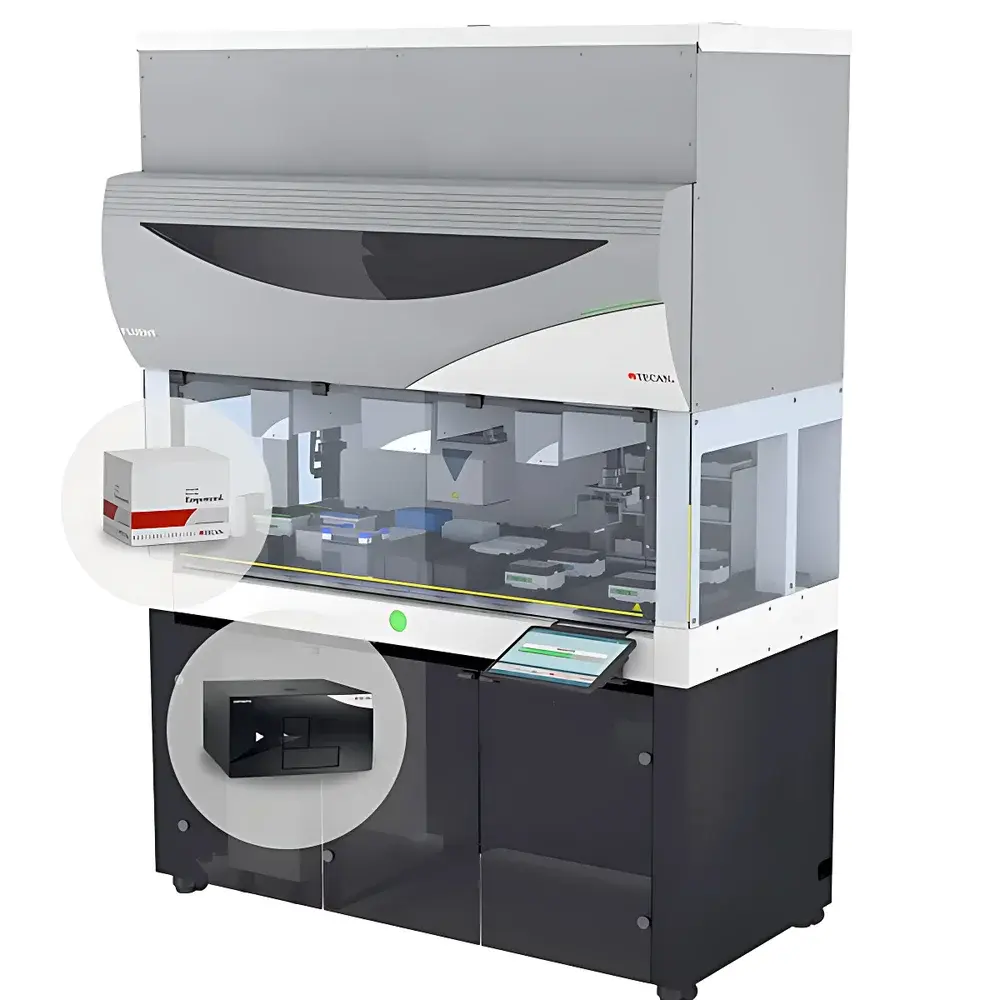
TECAN DreamPrep NGS Fully Automated Library Preparation System
| Brand | TECAN |
|---|---|
| Origin | Switzerland |
| Model | DreamPrep NGS |
| Sample Type | Purified nucleic acid samples |
| Throughput | 1–96 samples per run |
| Temperature Control Range (Sample Deck) | 0–105 °C |
| Pipetting Range | 0.5–1000 µL |
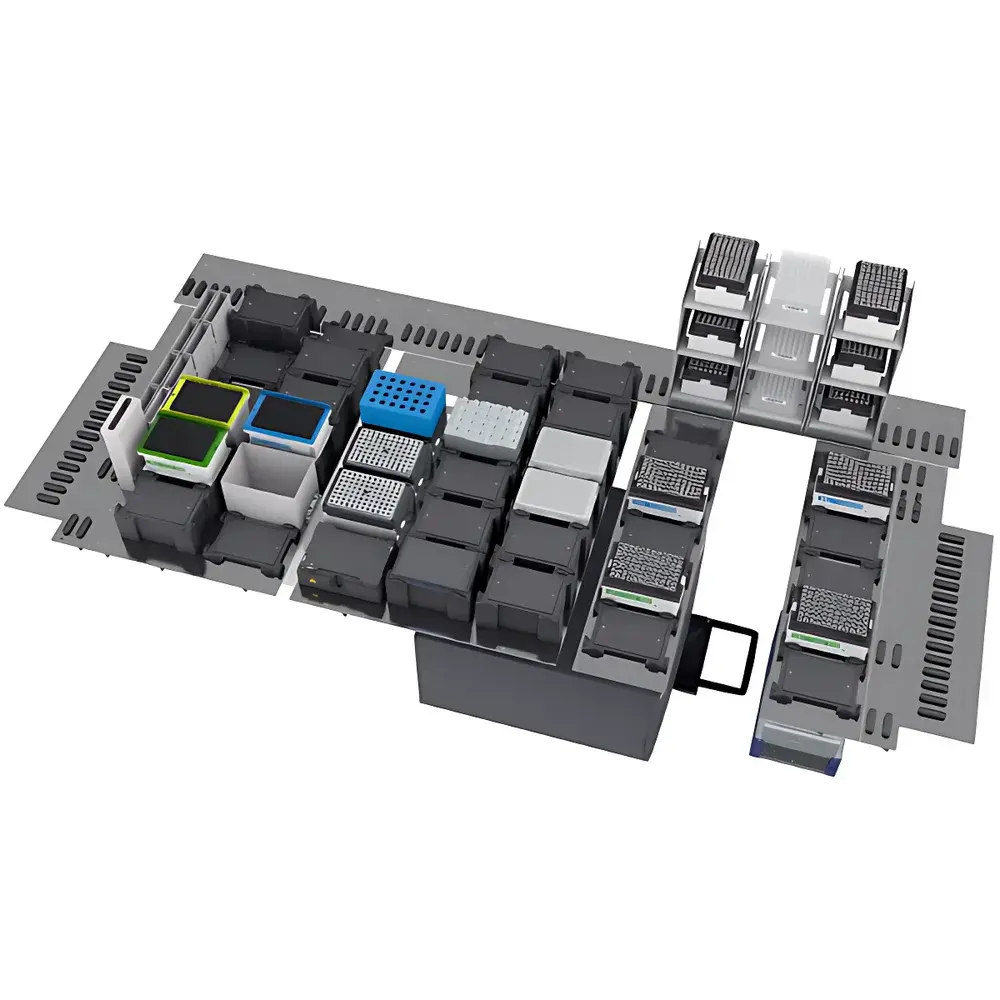
| Deck Capacity | 48 positions (non-expandable) |
| Platform Compatibility | Fully open — validated with >30 commercial NGS library prep kits for Illumina, BGI, Element Biosciences, PacBio, and Oxford Nanopore platforms |
| Software Compliance | Supports audit trail, electronic signatures, and protocol versioning in accordance with FDA 21 CFR Part 11 and GLP/GMP requirements |
Overview
The TECAN DreamPrep NGS Fully Automated Library Preparation System is an integrated, walk-away solution engineered for precision, reproducibility, and regulatory readiness in next-generation sequencing (NGS) workflow automation. Built upon the robust Fluent® liquid handling platform and enhanced by the Infinite® 200 Pro Reader F Nano+ multimode detection module, the system executes end-to-end library construction—including fragmentation, end repair, A-tailing, adapter ligation, size selection, and PCR amplification—without manual intervention. Its core architecture leverages air displacement pipetting with high-precision syringe-driven dispensing, ensuring sub-microliter accuracy across the full 0.5–1000 µL range. The system operates under programmable thermal control (0–105 °C) across all sample positions, enabling precise temperature management during enzymatic reactions such as ligase incubation or thermocycling steps. Designed for laboratories requiring scalable throughput—from single-sample validation runs to 96-well batch processing—the DreamPrep NGS delivers consistent library complexity, molar yield, and insert-size distribution, directly supporting downstream sequencing quality metrics including cluster density, Q30 scores, and alignment rates.
Key Features
- Full walk-away automation: Eliminates manual pipetting, tube transfers, and centrifugation steps across all major NGS library preparation chemistries.
- Thermally regulated deck (0–105 °C): Enables on-deck enzymatic reactions, heat-inactivation, and denaturation without external incubators or thermal cyclers.
- 48-position fixed deck architecture: Optimized layout supports standard SBS-format plates (96-well, 384-well, PCR strips), tubes (0.2–5 mL), and magnetic bead racks—all preconfigured for minimal reconfiguration.
- Open-system design: No proprietary consumables or locked protocols; fully compatible with third-party reagents, adapters, and enzymatic master mixes from over 30 vendors—including KAPA, NEB, Takara Bio, IDT, Swift Biosciences, and Illumina TruSeq.
- Integrated QC capability: Coupled with the Infinite® 200 Pro Reader F Nano+, the system performs real-time fluorometric quantification (e.g., Qubit-style assays) and fragment analysis (via dsDNA HS assay or optional capillary electrophoresis integration) prior to sequencing submission.
Sample Compatibility & Compliance
The DreamPrep NGS accepts purified DNA or RNA inputs—including FFPE-derived, cfDNA, amplicons, and sheared genomic material—with no requirement for input normalization prior to loading. It supports dual-indexed and single-indexed workflows, UMI-based error correction schemes, and both double-stranded and single-stranded library formats. All protocols are developed and verified under ISO 13485-aligned internal quality standards. System software includes configurable audit trails, user access levels, electronic signatures, and protocol version control—fully compliant with FDA 21 CFR Part 11, EU Annex 11, and GLP/GMP documentation requirements for clinical and regulated research environments.
Software & Data Management
Controlled via TE-CAN’s Freedom EVOware® software suite, the DreamPrep NGS provides a graphical protocol builder with drag-and-drop module sequencing, parameter validation, and real-time execution monitoring. Method files include embedded metadata (reagent lot numbers, operator ID, timestamp, environmental logs), exportable in CSV and XML formats for LIMS integration. Raw data outputs adhere to MIAME/MINSEQE-compliant structures, and QC results are automatically annotated into FASTQ header tags using standardized SAM/BAM conventions. Remote diagnostics and firmware updates are delivered through secure TLS-encrypted channels with role-based authentication.
Applications
- Whole-genome sequencing (WGS) library prep for germline and somatic variant detection
- Targeted panel enrichment (hybridization- and amplicon-based) across oncology and rare disease panels
- Single-cell and spatial transcriptomics library generation (with compatible 10x Genomics or Visium-compatible protocols)
- Long-read sequencing library construction for PacBio HiFi and Oxford Nanopore ultra-long DNA workflows
- Epigenomic profiling including ChIP-seq, ATAC-seq, and methylation sequencing (WGBS, RRBS)
- Regulatory-grade clinical assay development requiring traceable, auditable, and repeatable library prep
FAQ
Does the DreamPrep NGS require proprietary reagents or consumables?
No. The system is fully open and does not mandate vendor-specific kits, tips, or plates. All liquid handling methods are adaptable to standard ANSI/SLAS-format labware.
Can it be integrated with existing LIMS or ELN systems?
Yes. Freedom EVOware supports HL7, ASTM E1384, and custom API-based interfaces for bidirectional data exchange with major laboratory informatics platforms.
Is method validation support available for regulated environments?
TECAN provides IQ/OQ documentation templates, performance qualification protocols, and on-site installation qualification services aligned with ISO/IEC 17025 and CLIA requirements.
What maintenance intervals are recommended?
Preventive maintenance is scheduled every 6 months, including pipetting accuracy verification, thermal calibration, and robotic arm positional validation—performed by certified field service engineers.
How is cross-contamination prevented between runs?
The system employs positive-pressure tip ejection, UV-C irradiation of the workdeck between protocols, and customizable wash cycles using ethanol and DNase/RNase decontamination solutions.