
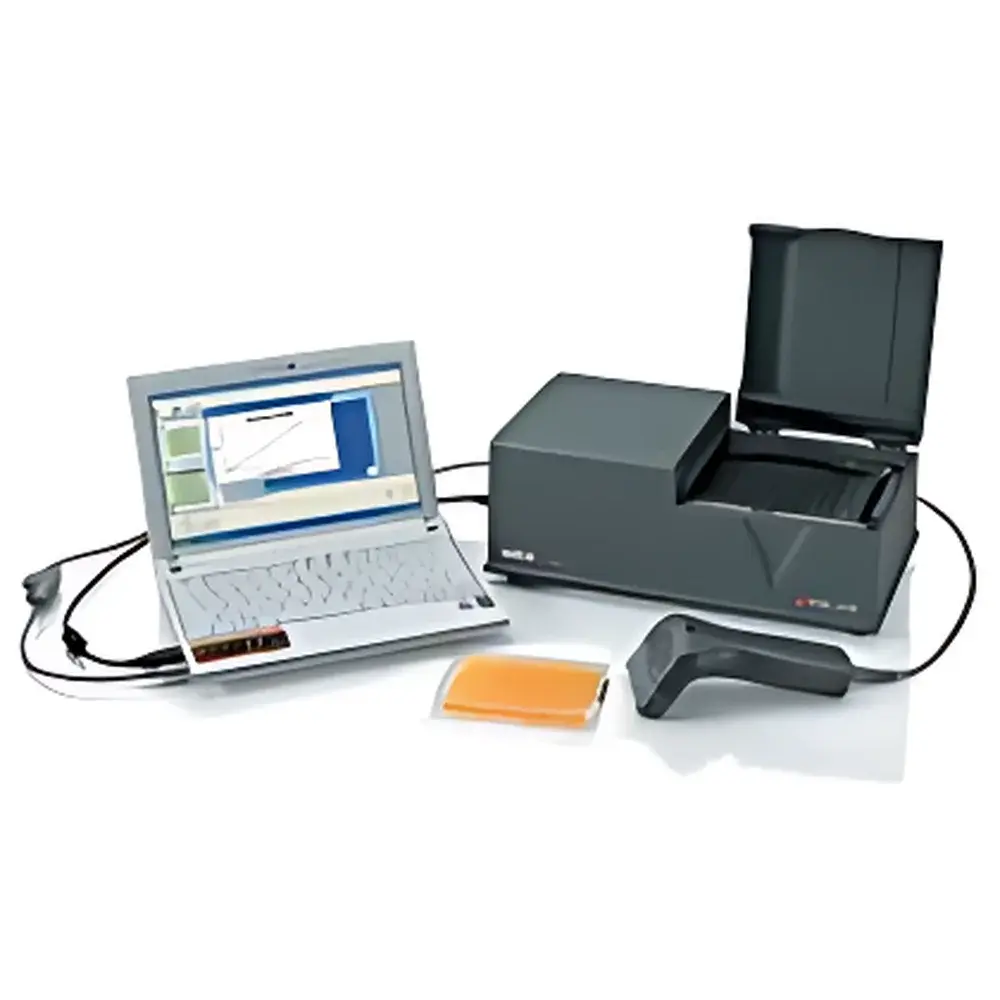
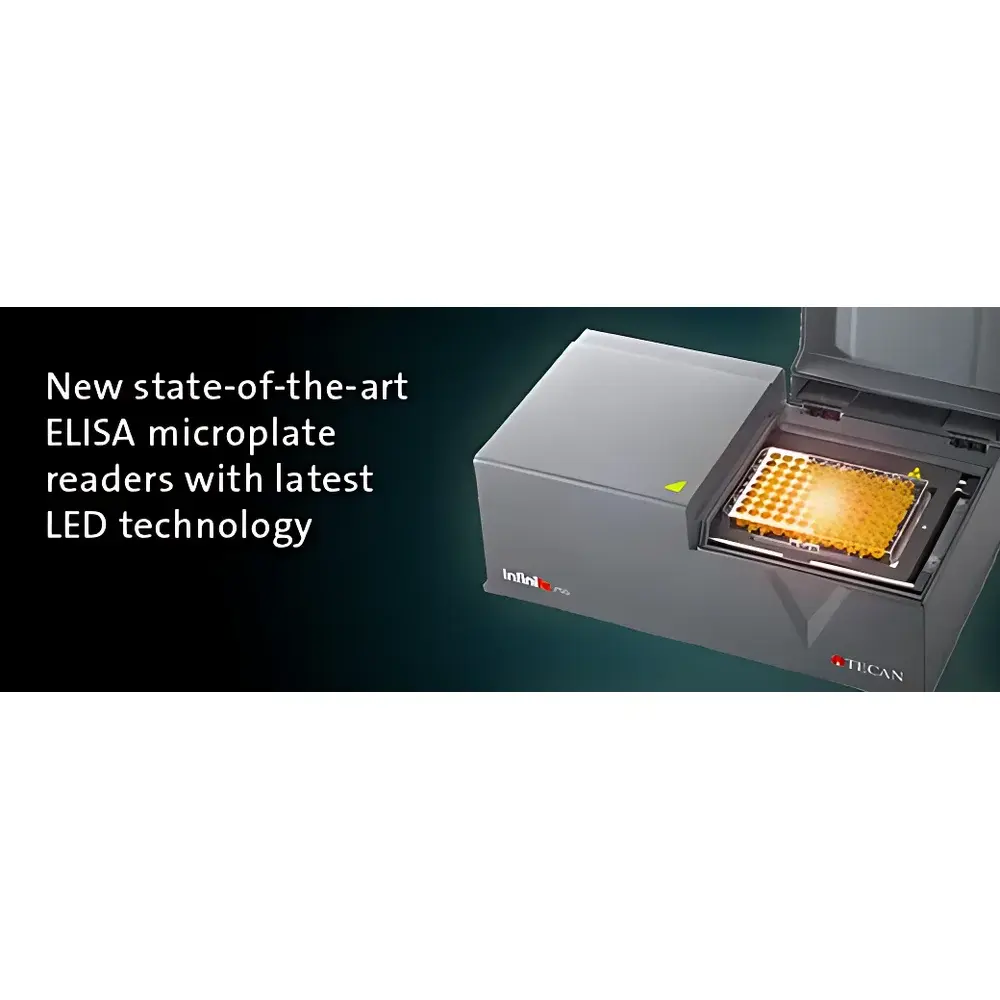
Tecan Infinite F50 Absorbance Microplate Reader
| Brand | Tecan |
|---|---|
| Origin | Switzerland |
| Model | F50 |
| Function Type | Multimode |
| Automation Level | Semi-Automated |
| Detection Method | Absorbance (Photometric) |
| Wavelength Range | 400–750 nm |
| Absorbance Range | 0–4.00 OD |
| Linearity Range | 0.000–2.000 Abs |
| Optical Channels | 8-Channel Simultaneous Detection |
| Wavelength Accuracy | ±2 nm |
| Absorbance Resolution | 0.0001 OD |
| Read Speed | <10 sec per 96-well plate (single wavelength) |
| Light Source | High-Stability LED Array |
| Plate Formats | 6–384-well microplates, cuvettes (optional) |
| Compliance | ISO 13485:2016, FDA 21 CFR Part 11 (with Magellan Tracker), EU IVD Directive 98/79/EC, RoHS & WEEE |
Overview
The Tecan Infinite F50 is a high-performance, semi-automated absorbance microplate reader engineered for precision photometric quantification in life science research, clinical diagnostics, and quality control laboratories. Based on robust LED-based photometry, the instrument implements a stable, eight-channel optical path architecture to deliver rapid, reproducible endpoint, kinetic, and multi-wavelength absorbance measurements across standard microplate formats (6–384-well). Unlike traditional halogen-lamp-based readers, the F50 employs a solid-state LED light source with calibrated spectral output across 400–750 nm—eliminating warm-up delays, lamp drift, and routine replacement cycles. Its design reflects Tecan’s long-standing commitment to reliability in regulated environments: validated mean time to first failure (MTTF) exceeds 100,000 plates under typical usage conditions, supporting sustained operational continuity in high-throughput workflows.
Key Features
- Eight parallel optical channels enable simultaneous detection across all wells of a 96-well plate—reducing total read time to under 10 seconds per measurement cycle.
- LED illumination system provides >10× longer service life than halogen lamps, with inherent intensity stability and minimal thermal load—critical for kinetic assays requiring consistent photon flux over extended durations.
- Optimized optical path includes reference channel compensation to correct for source intensity fluctuations and detector sensitivity variations in real time.
- Adjustable orbital shaking (speed and duration programmable) ensures homogeneous sample mixing prior to reading—essential for cell-based or precipitation-prone assays.
- Compact footprint (~170 × 250 mm) allows integration into space-constrained benchtop environments without compromising accessibility or ergonomics.
- Factory-calibrated photometric performance verified against NIST-traceable standards; linearity maintained from 0.000 to 2.000 Abs (R² ≥ 0.999) across full dynamic range.
- Two-year comprehensive warranty backed by Tecan’s global service infrastructure and >20,000 installed units worldwide.
Sample Compatibility & Compliance
The Infinite F50 supports standard ANSI/SLAS-compliant microplates (including opaque, clear, and UV-transparent variants), as well as optional cuvette adapters for standalone spectrophotometric validation. It is validated for use with ELISA, protein quantification (e.g., Bradford, BCA), enzyme activity assays (e.g., β-galactosidase, LDH), cell viability (MTT, XTT), and nucleic acid analysis (A260/A280). Regulatory compliance is embedded at the system level: hardware and Magellan software are developed and verified per ISO 13485:2016 for in vitro diagnostic devices. When configured with Magellan Tracker, the platform meets audit requirements for electronic records and signatures under FDA 21 CFR Part 11 and EU Directive 98/79/EC. Full RoHS and WEEE conformance ensures environmental safety in disposal and recycling phases.
Software & Data Management
Controlled exclusively via Tecan’s Magellan software suite (v7.x or later), the F50 integrates seamless assay setup, real-time monitoring, and statistically rigorous data reduction. Magellan supports all major curve-fitting algorithms—including linear, quadratic, logarithmic, sigmoidal (4PL/5PL), and polynomial regression—with automatic outlier detection and goodness-of-fit reporting (R², SE, residuals). Built-in QC tools generate Levy-Jennings plots, inter-plate control tracking, and trend analysis compliant with CLIA and ISO 15189 frameworks. Data export is natively supported in ASTM, ASCII, and Excel-compatible formats; import accepts external calibration tables and protocol templates. Magellan Tracker adds role-based user management, electronic signature workflows, full audit trail logging (including parameter changes, result overrides, and file exports), and secure database storage—enabling full traceability in GLP/GMP and clinical laboratory settings.
Applications
The Infinite F50 serves as a core analytical tool in diverse applications requiring quantitative absorbance readouts. These include: immunoassay development and validation (ELISA, competitive binding assays); enzymatic reaction kinetics (Vmax, Km, IC50 determination); microbial growth monitoring (OD600); cytotoxicity screening (resazurin, MTS); DNA/RNA purity assessment; and high-content screening pre-validation. Its versatility extends to academic teaching labs—where intuitive wizards, multilingual UI (English, German, French, Spanish, Italian, Portuguese, Russian, Chinese), and bundled tutorial protocols lower entry barriers for novice users—while maintaining technical rigor demanded by regulatory submissions.
FAQ
Does the Infinite F50 support kinetic measurements?
Yes—the instrument acquires time-resolved absorbance data at user-defined intervals (from seconds to hours), with built-in slope calculation, rate normalization, and integrated area-under-curve analysis.
Is wavelength selection manual or automated?
Wavelengths are selected via software; the fixed LED array covers 400–750 nm in discrete, factory-optimized bands—no moving parts or monochromator wear.
Can the F50 be integrated into LIMS or LIS environments?
Yes—via optional handheld barcode scanner (LIS interface module), which auto-populates sample IDs and plate metadata directly into Magellan and exports structured results to external laboratory information systems.
What is the recommended maintenance schedule?
None beyond routine cleaning of the plate carrier and optical window; the LED source requires no periodic recalibration or replacement during normal operation.
Is third-party software compatibility supported?
Magellan provides COM/ActiveX interfaces and ASCII export for integration with custom analysis pipelines or enterprise informatics platforms, though full instrument control is restricted to Tecan-certified software.
Related Products



