
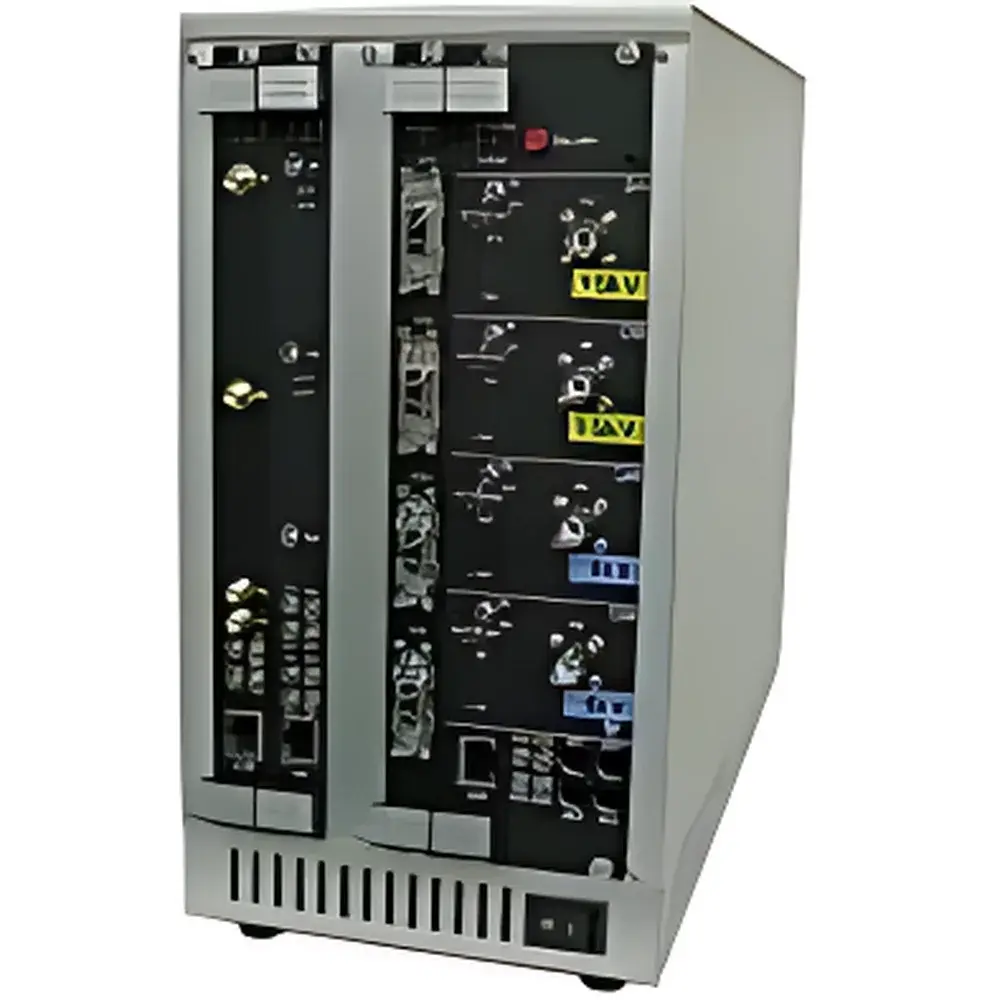
TechAP PLMS Positron Annihilation Lifetime Spectrometer
| Brand | Bunkoukeiki (Japan) |
|---|---|
| Origin | Japan |
| Manufacturer Type | Authorized Distributor |
| Origin Category | Imported Instrument |
| Model | PLMS |
| Pricing | Available Upon Request |
Overview
The TechAP PLMS Positron Annihilation Lifetime Spectrometer is a fully integrated, research-grade instrument engineered for quantitative defect characterization in advanced functional materials—particularly semiconductors, metals, polymers, and nanostructured thin films. It operates on the fundamental physical principle of positron annihilation spectroscopy (PAS), where injected positrons thermalize and become trapped at open-volume defects (e.g., vacancies, vacancy clusters, dislocation loops, or nanovoids) before annihilating with electrons. The resulting gamma-ray emission signatures encode critical information about local electron density, defect type, concentration, and spatial distribution. The PLMS implements three complementary measurement modes: conventional lifetime spectroscopy (LT), coincidence Doppler broadening (CDB), and age-momentum correlation (AMOC). Each mode leverages time-of-flight and energy-resolved detection to extract orthogonal material parameters with high statistical fidelity and sub-nanosecond temporal resolution.
Key Features
- Integrated 3 GSPS (giga-samples-per-second) digital time analyzer for lifetime histogram acquisition, enabling <100 ps timing resolution using dual BaF2 scintillation detectors with fast decay constants (~0.6 ns) and ultra-low afterglow;
- Dual high-purity germanium (HPGe) semiconductor detectors for CDB measurements, delivering energy resolution <1.8 keV FWHM at 511 keV and enabling precise reconstruction of two-dimensional Doppler-broadened spectra;
- AMOC capability synchronized via FPGA-based coincidence logic, allowing simultaneous acquisition of positron lifetime and correlated electron momentum distribution (via Doppler shift analysis);
- Modular architecture including programmable high-voltage power supplies (±1–5 kV, <0.01% ripple), low-noise preamplifiers with adjustable gain and shaping time, and a dedicated DSP-based multichannel analyzer (MCA) for real-time pulse processing;
- Self-contained rack-mount system with integrated cooling, EMI-shielded cabling, and standardized LAN interface for remote control and data streaming;
- Fully compliant with ISO/IEC 17025 traceability requirements for calibration of timing electronics and detector response functions.
Sample Compatibility & Compliance
The PLMS accommodates solid-state samples up to 25 mm in diameter and 10 mm thick—including single crystals, polycrystalline wafers, amorphous films, and porous ceramics—without requiring vacuum-compatible metallization. Sample positioning is achieved via motorized XYZ stage with ±1 µm repeatability. All electronic modules meet IEC 61000-4 electromagnetic compatibility standards; high-voltage components conform to IEC 61010-1 safety regulations. Data acquisition protocols support audit trails and user-access logging, aligning with GLP and FDA 21 CFR Part 11 requirements for regulated environments. Calibration certificates for detector efficiency, timing offset, and energy linearity are provided per ASTM E1427–22 (Standard Guide for Positron Annihilation Spectroscopy).
Software & Data Management
Control and analysis are performed using TechAP’s proprietary PASLab Suite v4.x, a Windows-based application built on Qt and Python scientific stack (NumPy, SciPy, Matplotlib). The software provides real-time spectrum visualization, automated background subtraction, multi-exponential lifetime fitting (using MLE or CONTIN algorithms), CDB peak deconvolution, AMOC projection mapping, and batch processing for comparative studies. Raw data are stored in HDF5 format with embedded metadata (sample ID, beam current, acquisition time, detector gains, HV settings), ensuring FAIR (Findable, Accessible, Interoperable, Reusable) principles. Export options include ASCII, CSV, and NIST-compatible .spe formats. Remote operation via SSH or VNC is supported, and API access enables integration with laboratory information management systems (LIMS).
Applications
- Quantification of vacancy-type defect evolution during ion implantation, annealing, or irradiation in Si, GaN, SiC, and oxide semiconductors;
- Characterization of free-volume distribution in glassy polymers and membranes for gas separation performance modeling;
- In situ monitoring of void coalescence in aluminum alloys under thermomechanical cycling;
- Identification of positron-trapping sites in metal–organic frameworks (MOFs) and battery electrode materials (e.g., Li-rich layered oxides);
- Correlation of defect kinetics with electrical transport properties in perovskite photovoltaic thin films;
- Validation of ab initio calculations of positron lifetimes and momentum densities in doped crystalline systems.
FAQ
What positron source configurations are compatible with the PLMS?
The system is designed for standard 22Na sources (with variable activity up to 10 MBq) mounted in removable source holders; custom configurations for pulsed positron beams (e.g., from LINACs or intense radioactive sources) can be integrated upon request.
Does the PLMS support temperature-dependent measurements?
Yes—optional cryostat (4–300 K) and high-temperature furnace (up to 1200 °C in inert atmosphere) stages are available with full software integration for dynamic defect tracking.
How is timing calibration maintained across long-term experiments?
Automated daily calibration routines use LED pulsers and reference radioactive sources (60Co, 137Cs) to correct for drift in TDC offsets and detector gain stability, with logs archived alongside experimental data.
Can raw time-stamp data be exported for custom analysis?
Yes—timestamp lists (TDC hits with channel ID and energy tags) are exportable in binary or ASCII format, preserving full event-by-event fidelity for advanced correlation studies.
Is technical support available outside Japan?
TechAP provides global engineering support through authorized regional partners, including on-site installation, preventive maintenance, and application-specific training delivered by certified PAS physicists.




