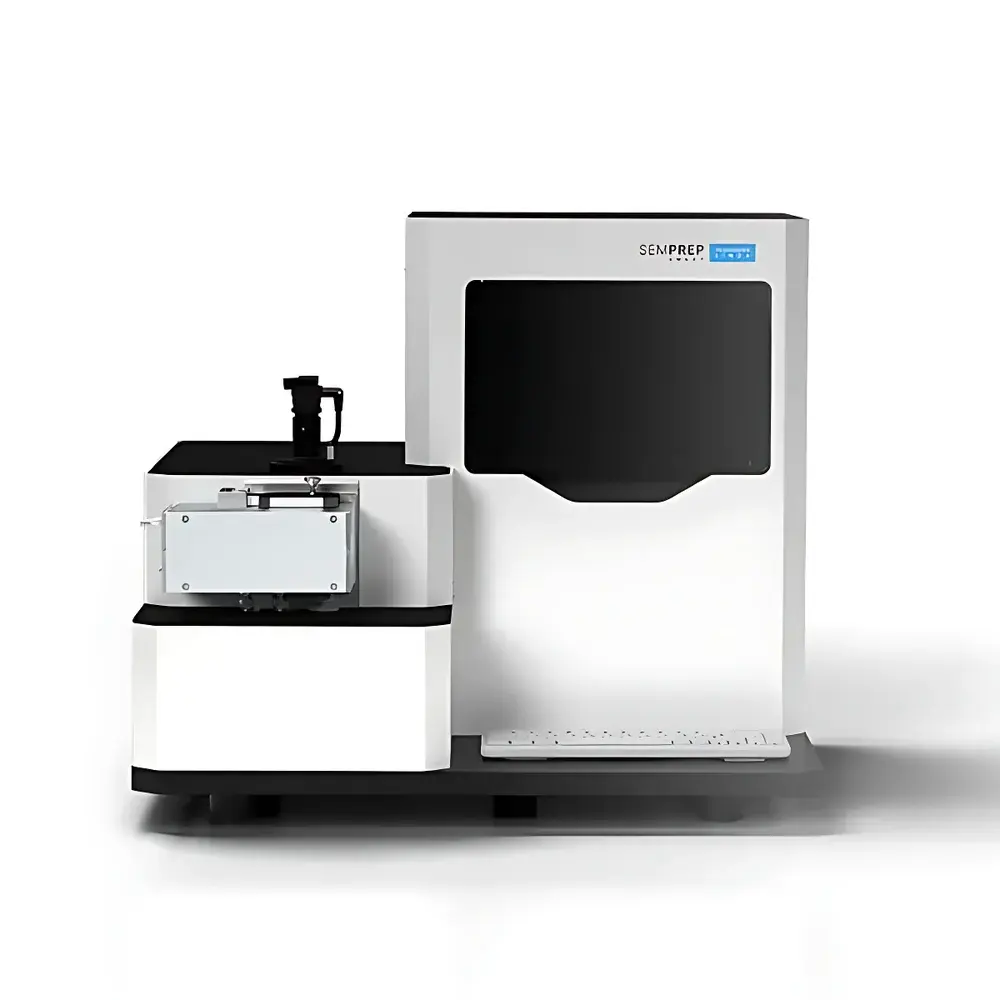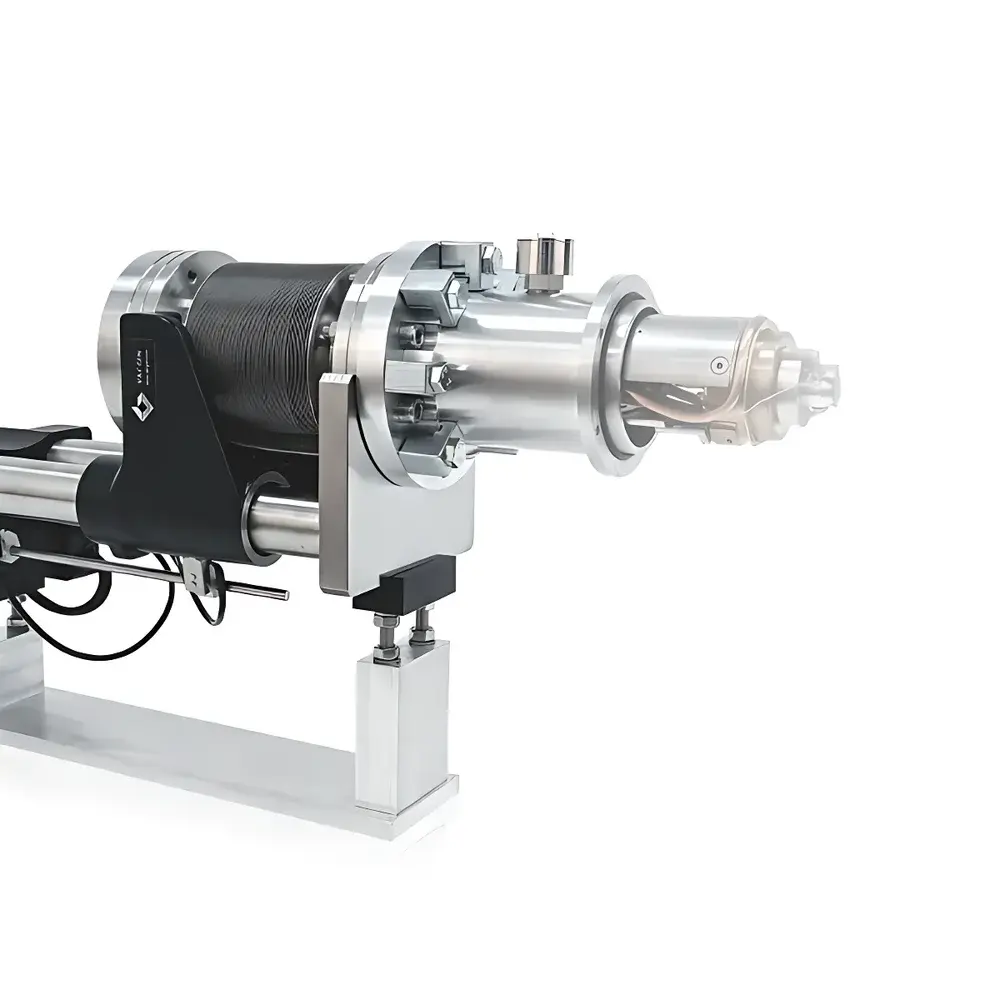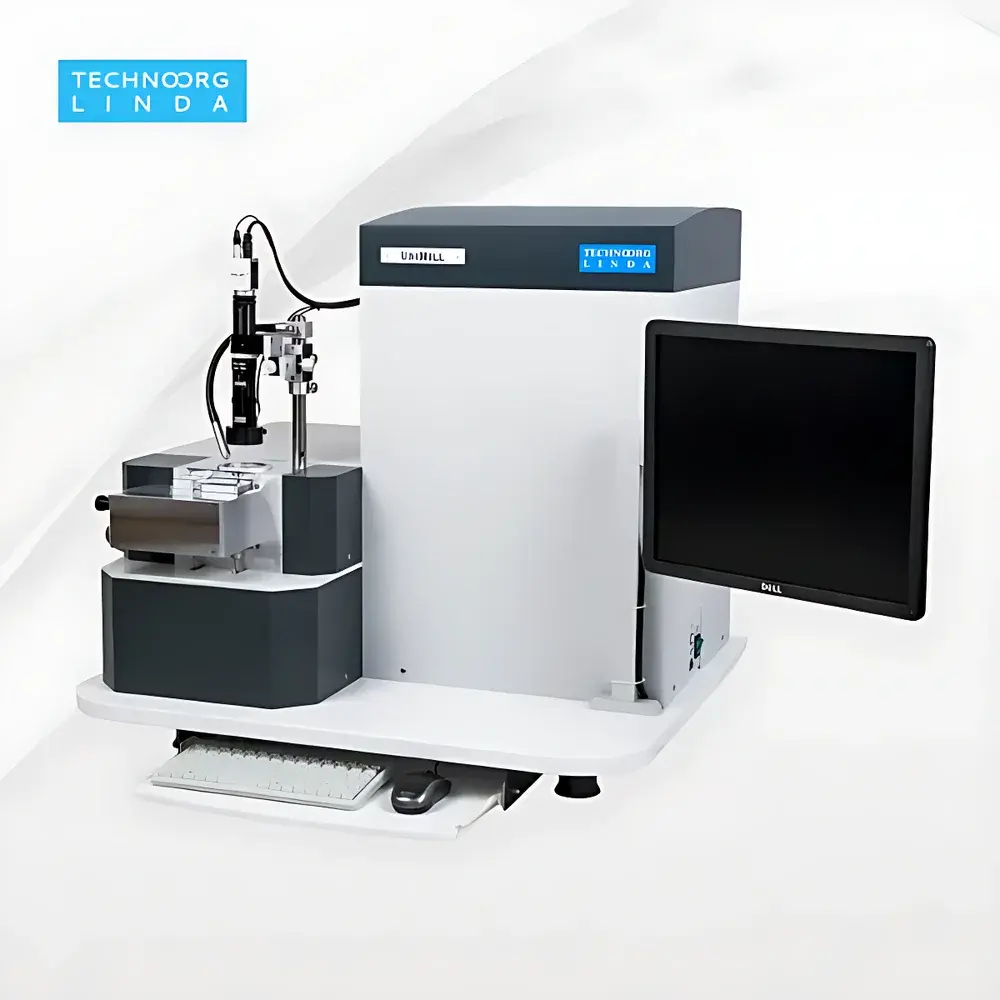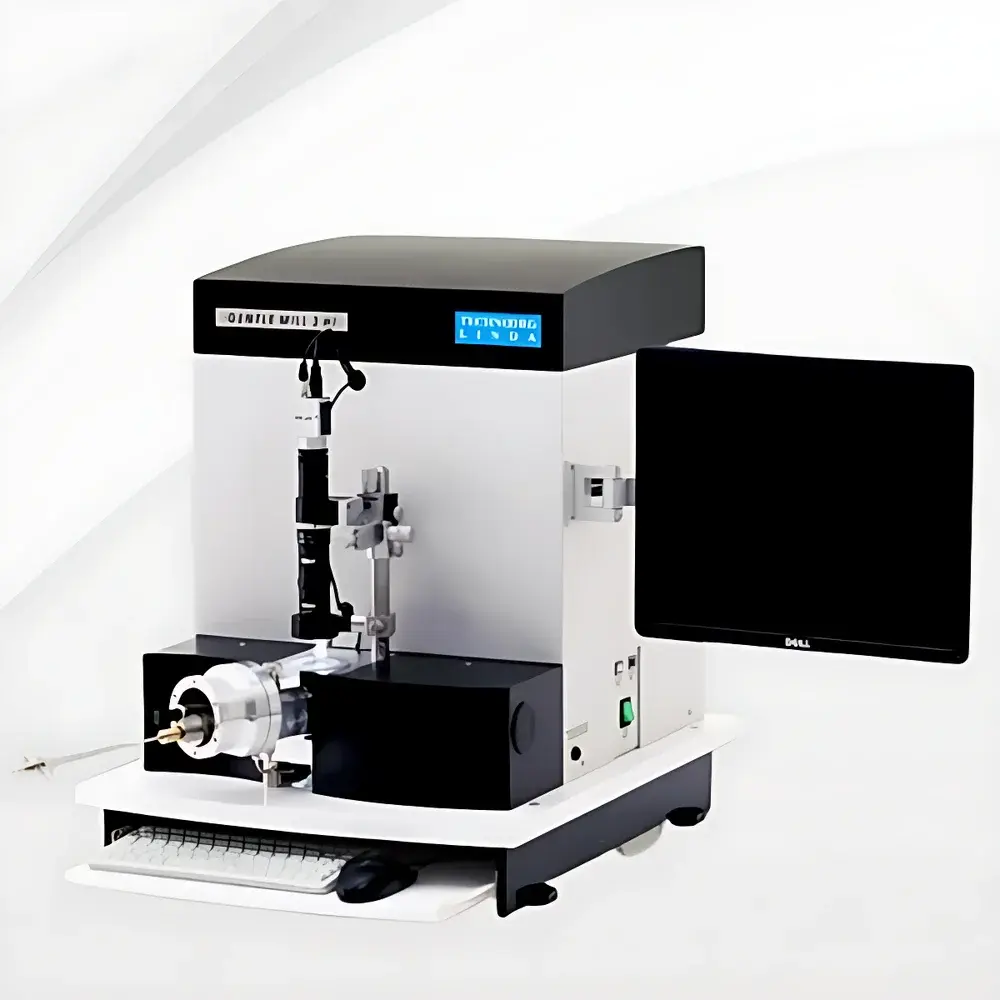
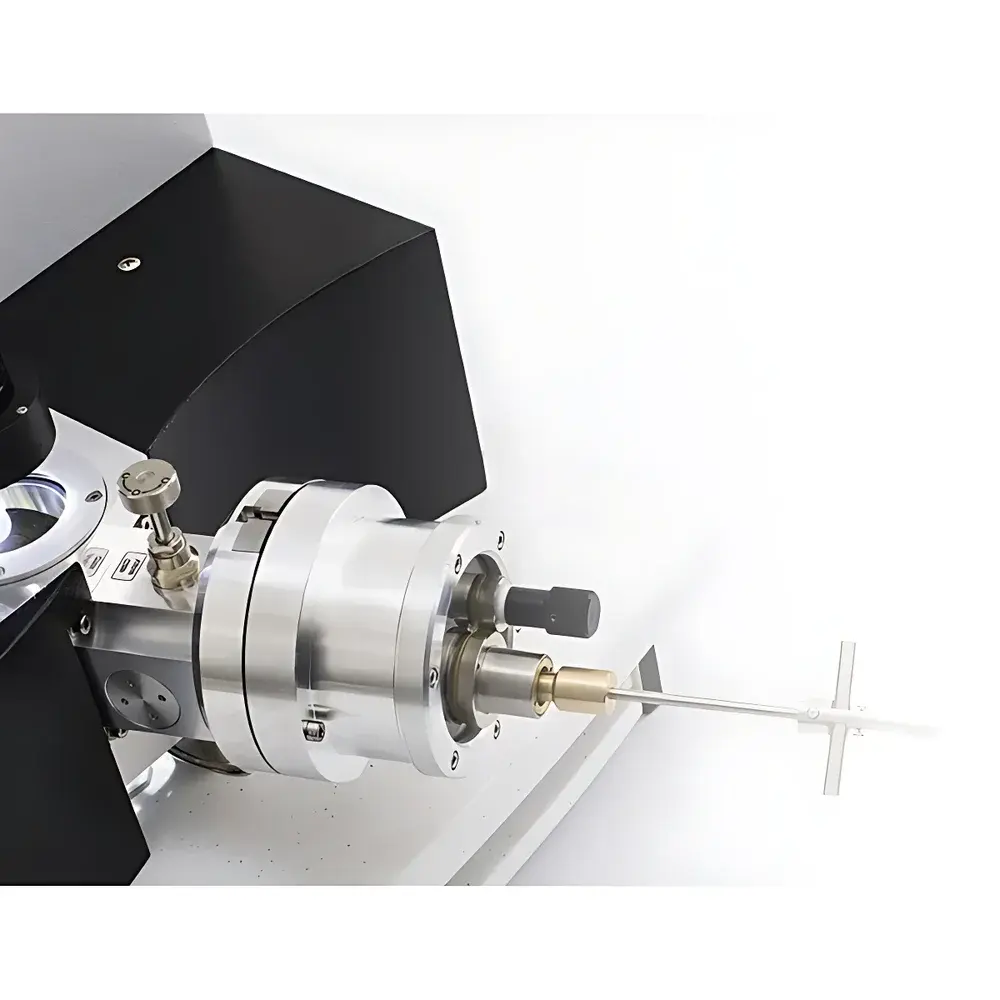

Technoorg Linda Gentle Mill Low-Energy Ion Milling System

| Brand | Technoorg Linda |
|---|---|
| Origin | Hungary |
| Model | Gentle Mill |
| Ion Energy | 100–2000 eV (continuously adjustable) |
| Ion Beam Current | 7–80 µA |
| Ion Current Density | up to 10 mA/cm² |
| Beam Diameter (FWHM) | 750–1200 µm |
| Sample Tilt Range | 0°–40° (0.1° increments) |
| In-Plane Rotation & Swing | ±10° to ±120° (10° increments) |
| Si Etch Rate at 2000 eV / 30° | 28 µm/h |
| TEM Sample Thickness Compatibility | 30–200 µm |
| Imaging | High-resolution color CMOS camera with 50×–400× manual zoom |
| Vacuum System | Pfeiffer dry diaphragm + turbomolecular pump, full-range Pirani/Penning gauge |
| Process Gas | 99.999% Ar, regulated at 1.3–1.7 bar absolute pressure with electronic outlet pressure monitoring |
| Power Supply | 100–120 V/3.0 A/60 Hz or 220–240 V/1.5 A/50 Hz, single-phase |
Ask about pricing, availability and specifications.
Overview
The Technoorg Linda Gentle Mill Low-Energy Ion Milling System is a precision ion beam workstation engineered for the final-stage thinning, polishing, and defect mitigation of transmission electron microscopy (TEM) and focused ion beam (FIB)-prepared specimens. Unlike conventional high-energy ion milling systems, the Gentle Mill employs a fixed low-energy argon ion source (100–2000 eV) operating under precisely controlled incidence angles and beam current densities—enabling atomic-scale surface refinement while minimizing amorphous layer formation, ion implantation, and lattice damage. Its design directly addresses the critical requirement for artifact-free, electron-transparent lamellae in high-resolution TEM (HRTEM), scanning transmission electron microscopy (STEM), and cross-sectional TEM (XTEM) applications. The system operates on the principle of physical sputtering via inert-gas ion bombardment, where kinetic energy transfer from Ar⁺ ions induces controlled ejection of surface atoms. At sub-keV energies, sputter yield decreases significantly but damage depth is reduced by orders of magnitude—making it ideal for preserving crystallographic integrity in semiconductor devices, multilayer heterostructures, and beam-sensitive materials such as oxides or organometallics.
Key Features
- Fixed low-energy Ar⁺ ion gun with continuous energy adjustment (100–2000 eV) and beam current control (7–80 µA), delivering stable, reproducible sputtering rates
- Precision sample stage with motorized tilt (0°–40°, 0.1° resolution) and programmable in-plane rotation/swing (±10° to ±120°, 10° increments) for multi-angle thinning and curvature correction
- Optically guided endpoint detection: integrated high-resolution color CMOS camera (50×–400× zoom) coupled with real-time image analysis algorithms to automatically terminate milling upon hole breakthrough or morphological stabilization
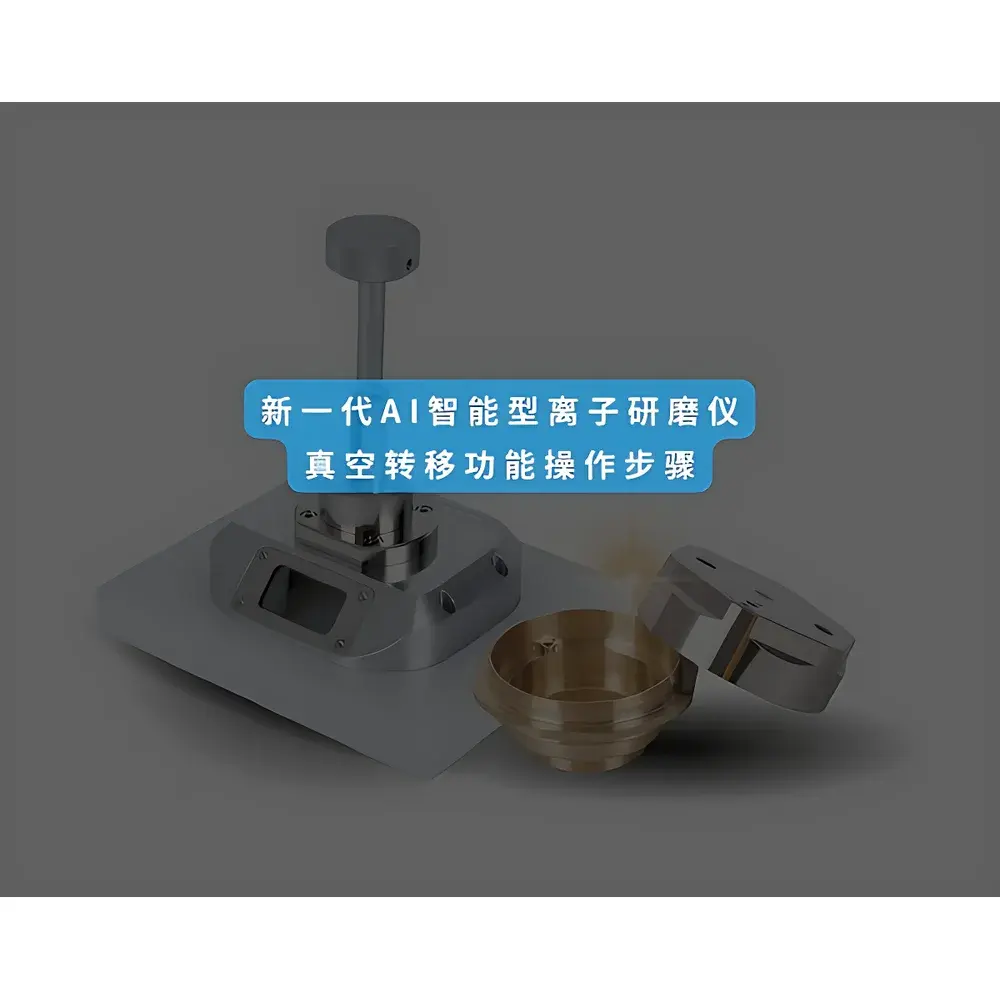
- Full mechanical, adhesive-free specimen loading using titanium TEM clamps and vacuum-compatible encapsulation—eliminating polymer residue and thermal drift during long-duration runs
- Dry, oil-free vacuum architecture: Pfeiffer diaphragm pump backed by turbomolecular pump, monitored by dual-range Pirani/Penning gauge (1×10⁻⁷–1000 mbar), ensuring ultra-clean, hydrocarbon-free environments essential for analytical TEM
- Industrial-grade embedded PC with intuitive GUI; all parameters—including gas flow, voltage, tilt, rotation, and exposure time—are controllable via mouse click or drag, supporting both manual operation and fully automated sequences
Sample Compatibility & Compliance
The Gentle Mill accommodates standard 3-mm TEM discs (30–200 µm thick) and FIB lift-out lamellae mounted on half-grid stubs or specialized holders. Its low-energy regime enables processing of beam-sensitive materials—including perovskites, 2D materials (e.g., MoS₂, graphene), metallic glasses, and biological mineral composites—without inducing thermal decomposition or preferential sputtering artifacts. The system complies with ISO 14644-1 Class 5 cleanroom integration standards and supports GLP/GMP-aligned workflows through audit-trail-enabled software logging (timestamped parameter sets, image captures, vacuum logs). While not FDA-certified per se, its argon-only gas path, absence of organic consumables, and traceable process parameters align with USP and ASTM E2821–19 recommendations for electron microscopy sample preparation validation.
Software & Data Management
The Gentle Mill’s proprietary control software provides deterministic sequence programming, enabling repeatable multi-step protocols—for example: coarse thinning at 2000 eV → intermediate shaping at 1000 eV → final polishing at 300 eV. Each step stores metadata including beam settings, duration, tilt history, and corresponding optical frames. All images and logs are saved in TIFF/CSV format with embedded EXIF tags (energy, current, angle, timestamp). Exported datasets integrate natively with DigitalMicrograph, HyperSpy, and Python-based image analysis pipelines (e.g., scikit-image, OpenCV). Software updates are delivered via secure HTTPS channel with SHA-256 signature verification; no cloud dependency or telemetry is implemented.
Applications
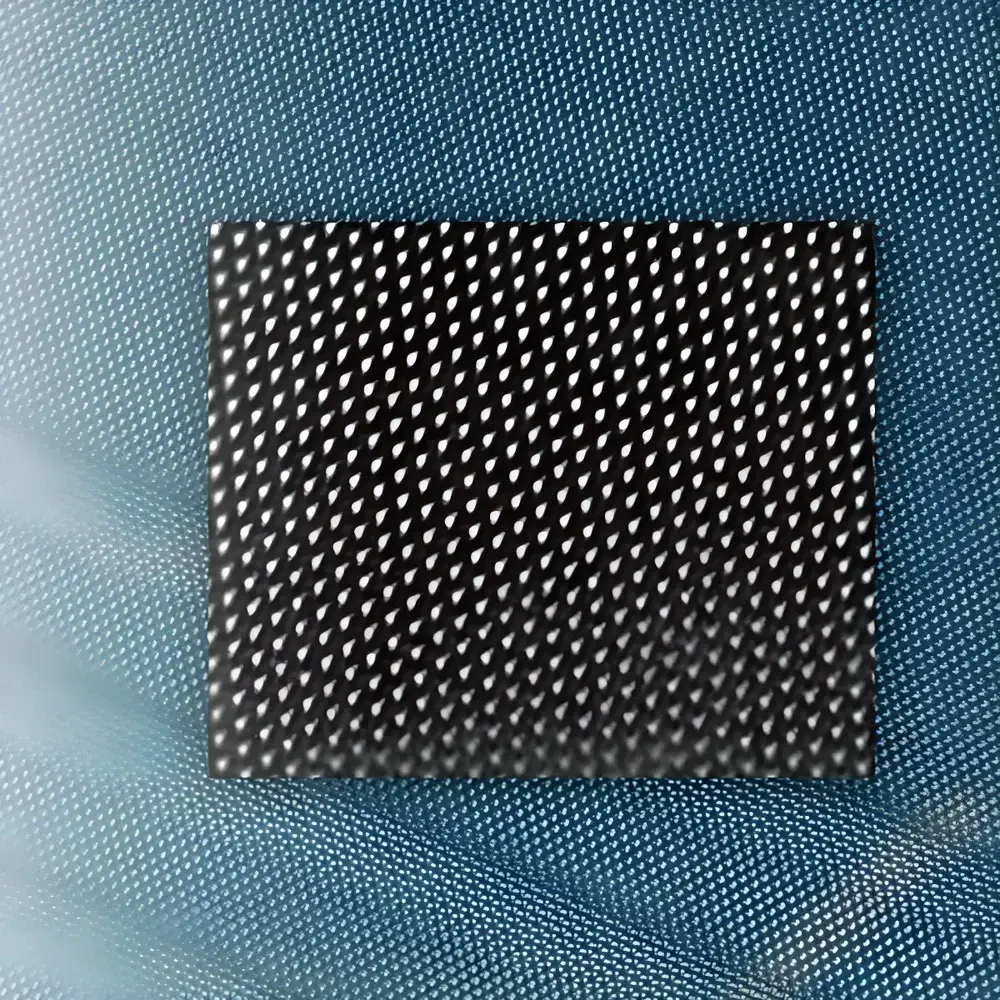
- Atomic-resolution structural analysis of advanced nodes (e.g., 65 nm and below) in logic and memory devices, where minimized amorphous layer thickness (< 1 nm) is mandatory for quantitative HRTEM phase contrast interpretation
- Preparation of strain-engineered heterostructures (e.g., GaSb/InAs superlattices), where interfacial coherence must be preserved across multiple epitaxial layers
- Site-specific thinning of Si [110] wafers for crystallographic orientation mapping and dislocation imaging in failure analysis labs
- Routine quality control of metallurgical cross-sections in aerospace turbine alloys, where carbide/matrix interface fidelity dictates fatigue life modeling accuracy
- Correlative FIB-SEM/TEM workflow integration: direct compatibility with Hitachi FIB-STEM platforms via standardized flange interfaces and synchronized stage coordinate mapping
FAQ
What distinguishes Gentle Mill from conventional ion mills?
It uses exclusively low-energy (≤2 keV) Ar⁺ beams with optimized angular incidence and real-time optical endpoint detection—reducing subsurface damage depth by >90% compared to 4–6 keV systems.
Can Gentle Mill process non-conductive samples?
Yes; charge compensation is inherently achieved through low-energy ion neutralization and optional electron flood gun integration (available as an upgrade kit).
Is remote operation supported?
The system supports VNC-based remote desktop access over local network; however, all safety-critical functions (vacuum interlocks, beam shutdown) remain hardware-locked and require local physical confirmation.
What maintenance intervals are recommended?
Ion source lifetime exceeds 2000 operational hours; Pfeiffer pump service is scheduled every 12 months or after 5000 hours of cumulative run time—documented in the included maintenance logbook.
Does Gentle Mill comply with CE or UL safety directives?
Yes; certified to EN 61000-6-2 (immunity) and EN 61000-6-4 (emissions), with full mechanical interlock compliance per EN ISO 13857.
More from Technoorg Linda
View all Technoorg Linda products → Technoorg Linda SEMPREP SMART Ion Milling System
- Technoorg Linda GIB Integrated Low-Energy Argon Ion Beam System for SEM/FIB Sample Preparation
- Technoorg Linda UniMill Ion Milling System for TEM/XTEM Sample Preparation
- Technoorg Linda SEMPREP-SMART Ion Milling and Polishing System with Vacuum Transfer for Battery Sample Preparation