
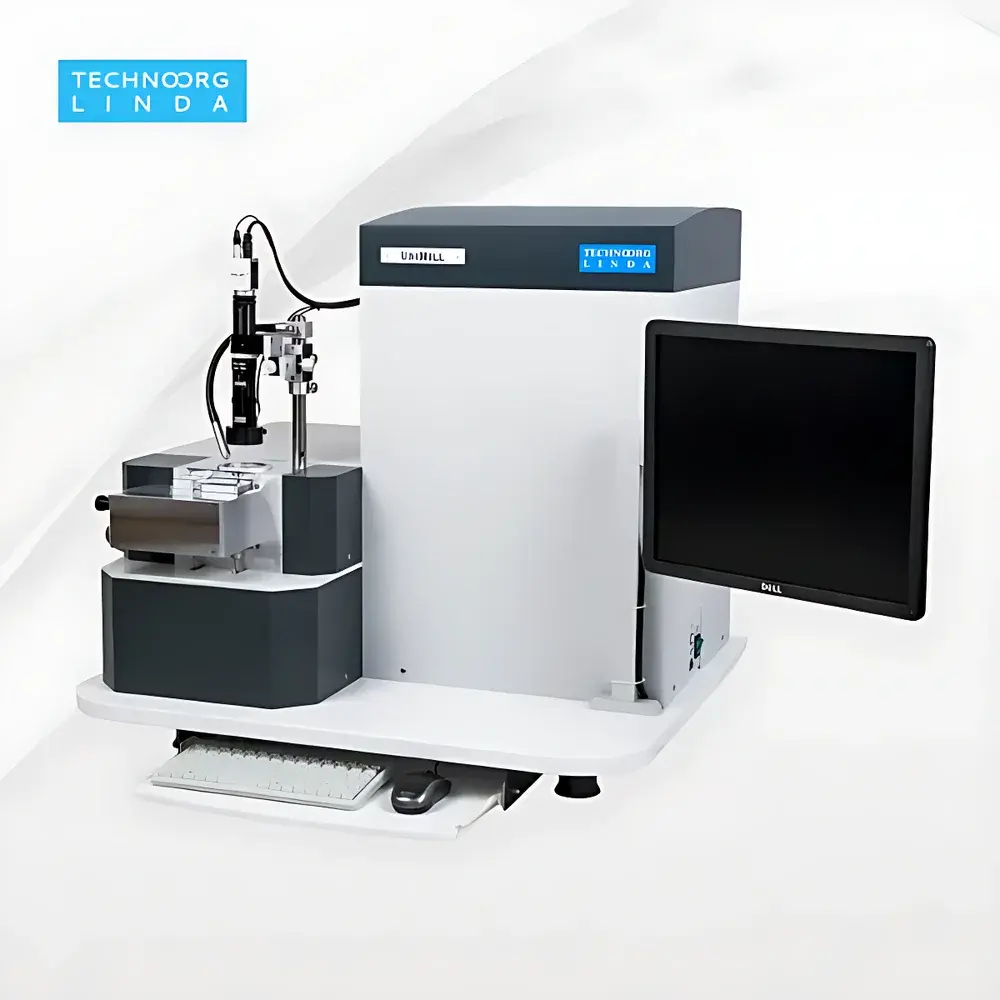
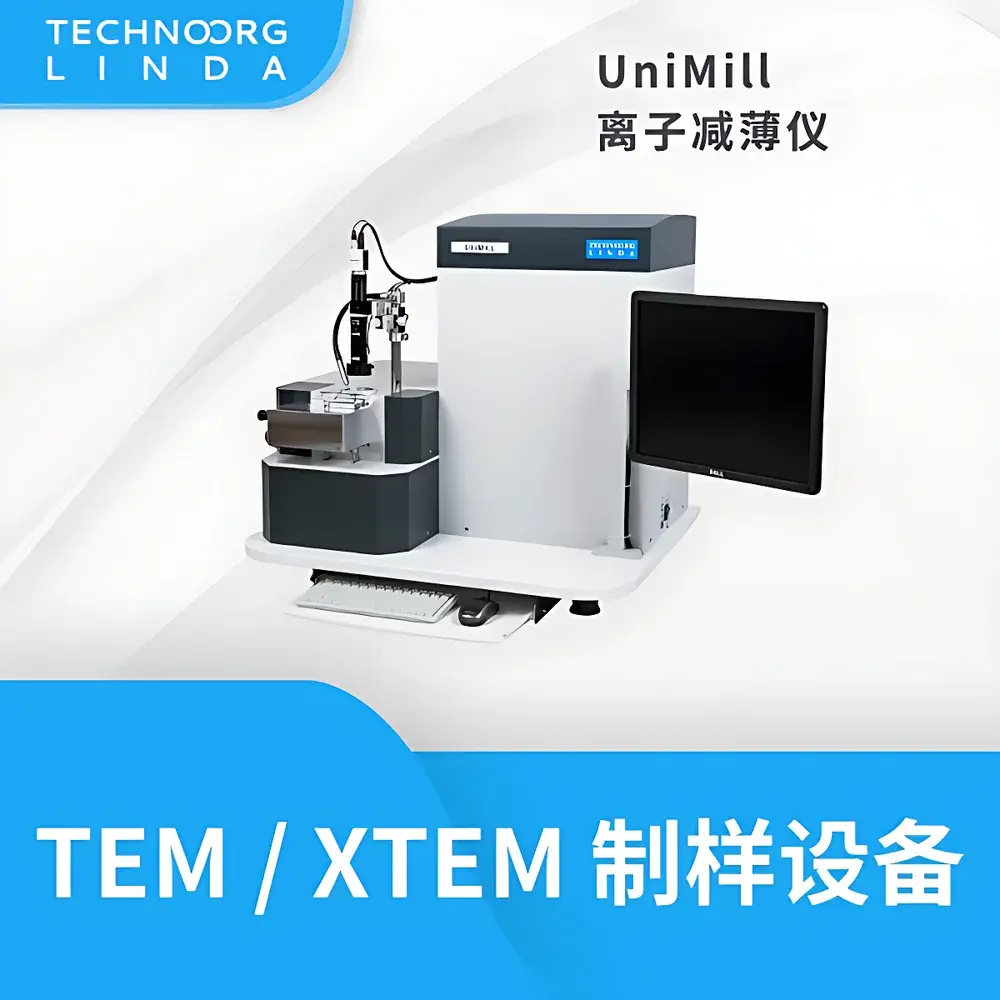
Technoorg Linda UniMill Ion Milling System for TEM/XTEM Sample Preparation
| Brand | Technoorg Linda |
|---|---|
| Origin | Hungary |
| Model | UniMill |
| Ion Beam Energy Range | 100 eV – 16 keV (dual-gun configuration) |
| Beam Current | up to 500 µA (ultra-high-energy gun) |
| Beam Diameter (FWHM) | 0.9–2.2 mm |
| Tilting Angle | 0°–40° (0.1° resolution) |
| In-Plane Rotation | 360° continuous |
| Lateral Translation | ±10° to ±120° (10° increments) |
| Sample Thickness Compatibility | 30–200 µm |
| Imaging | High-resolution color CMOS camera with 50–400× manual zoom |
| Vacuum System | Pfeiffer dry diaphragm + turbomolecular pump |
| Gas Supply | Ultra-high-purity Ar (99.999%), regulated at 1.3–1.7 bar absolute |
| Power | 100–120 V/10 A or 220–240 V/5 A, 50–60 Hz |
Overview
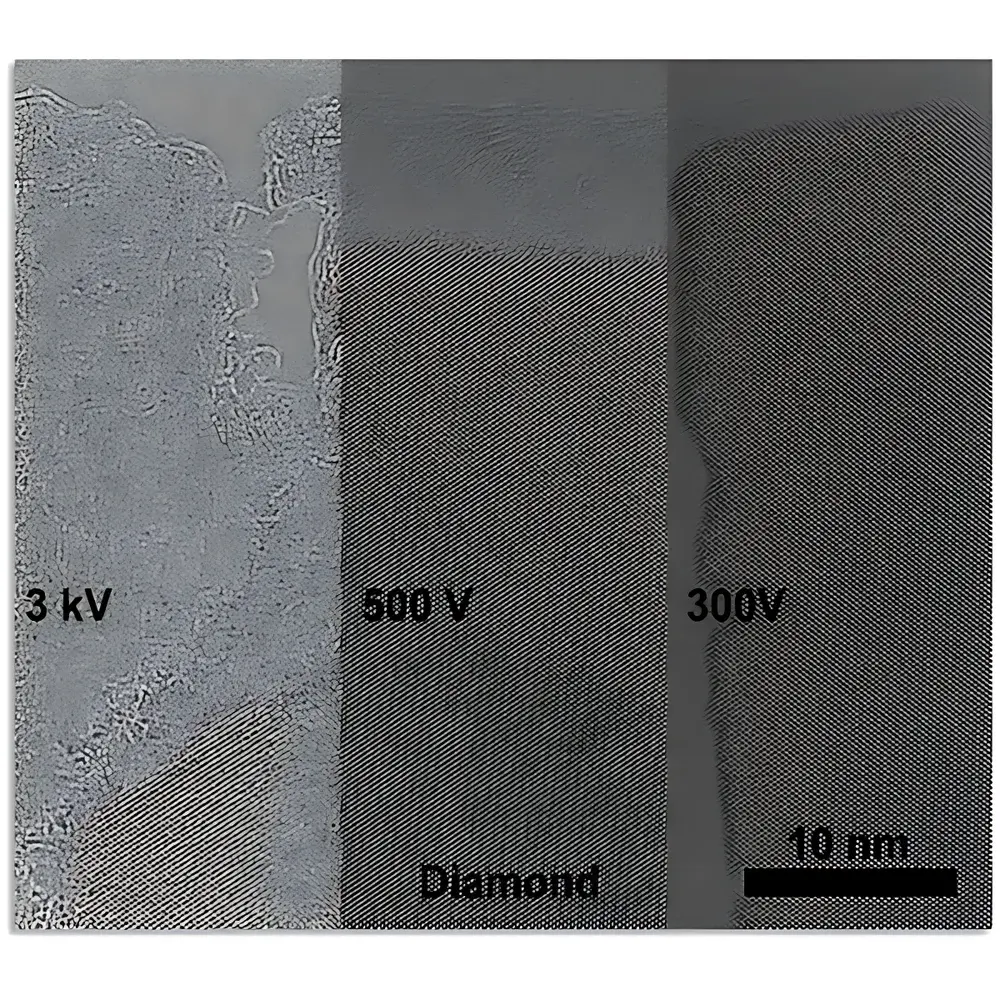
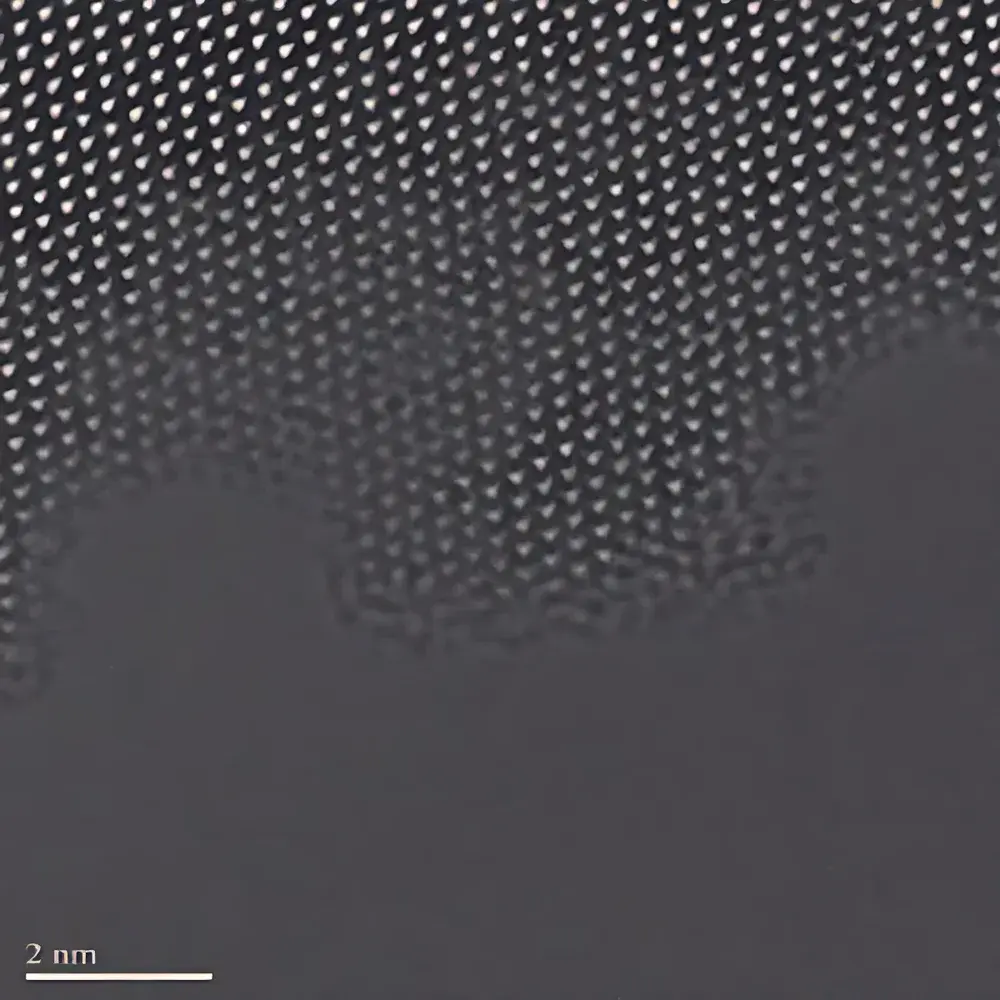
The Technoorg Linda UniMill is a fully automated, dual-ion-beam argon milling system engineered for high-fidelity transmission electron microscopy (TEM) and cross-sectional TEM (XTEM) specimen preparation. It operates on the principle of controlled physical sputtering—where energetic inert gas ions (typically Ar⁺) bombard a solid sample surface at precisely defined angles and energies, gradually removing material via momentum transfer. Unlike single-beam systems, the UniMill integrates two independently controlled ion sources: an ultra-high-energy ion gun (up to 16 keV) for rapid bulk thinning and a low-energy ion gun (100 eV–2 keV) optimized for final polishing and damage-sensitive finishing. This dual-energy architecture enables seamless transition from coarse removal to atomic-scale surface refinement—critical for minimizing amorphization, curtailing preferential sputtering, and preserving crystallographic integrity in beam-sensitive materials such as oxides, intermetallics, and semiconductor heterostructures.
Key Features
- Dual independent ion guns: One ultra-high-energy source (up to 16 keV, 500 µA) and one low-energy source (100 eV–2 keV, 7–80 µA), each with real-time feedback-controlled acceleration voltage and beam current.
- Ultra-broad energy range: Covers the full spectrum from gentle surface cleaning (100 eV) to aggressive material removal (16 keV), eliminating the need for instrument swapping or external post-processing.
- Precision mechanical stage: Computer-controlled tilting (0°–40°, 0.1° resolution), 360° in-plane rotation, and lateral translation (±10° to ±120° in 10° steps) ensures uniform milling across irregular geometries and multi-region analysis targets.
- Optical endpoint detection: Integrated high-resolution color CMOS camera with 50–400× manual zoom enables real-time visual monitoring; image analysis algorithms support automatic termination upon hole breakthrough or surface topography stabilization.
- LN₂-compatible ion gun option: Reduces thermal drift and suppresses radiation-enhanced diffusion during low-kV polishing—particularly beneficial for cryo-TEM prep and temperature-sensitive nanomaterials.
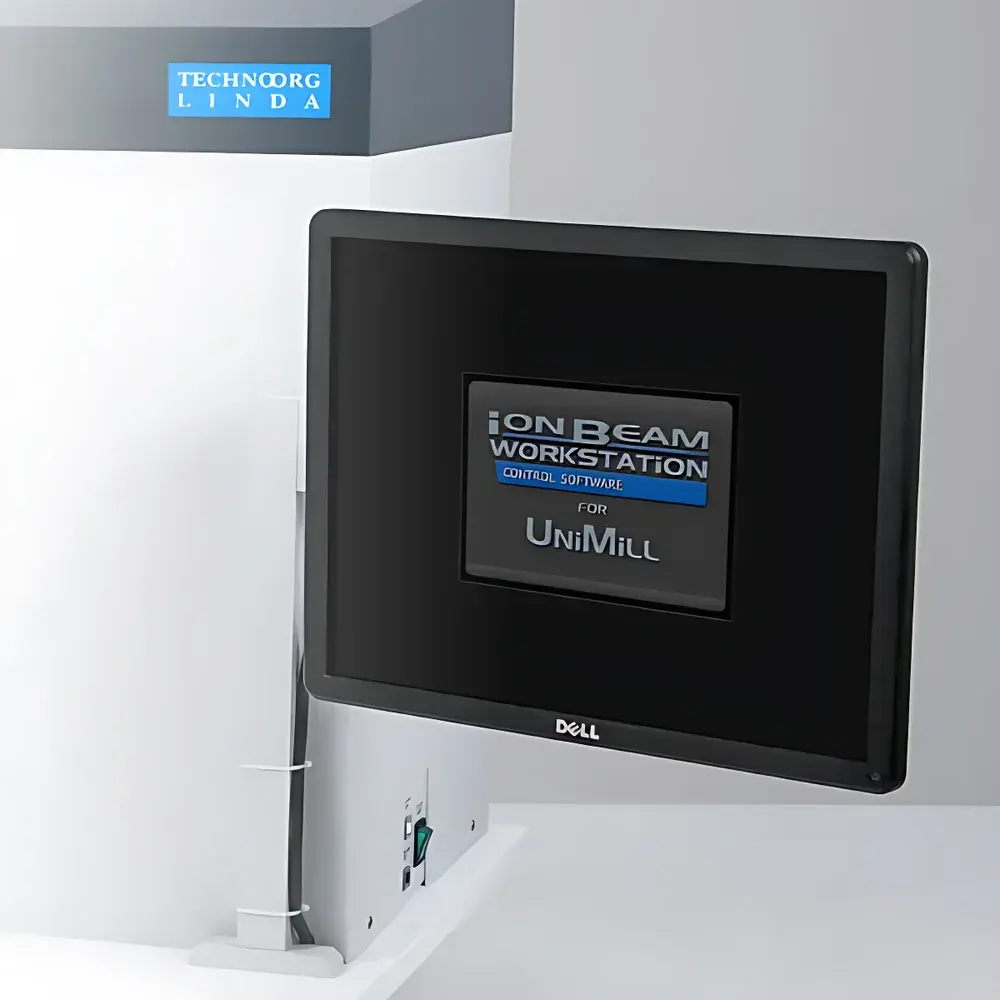
- Industrial-grade embedded PC with intuitive GUI: Pre-programmed milling protocols (adjustable per material class), live parameter logging, and synchronized vacuum/gas/beam diagnostics ensure GLP-compliant reproducibility.
Sample Compatibility & Compliance
The UniMill accommodates standard TEM discs (3 mm diameter) and custom substrates within 30–200 µm thickness range. Its adaptive beam geometry supports brittle ceramics, ductile metals, layered thin films, and FIB-lifted lamellae. The system meets ISO 14644-1 Class 5 cleanroom compatibility when operated in dedicated enclosures. All vacuum and gas control subsystems comply with EN 61000-6-2 (EMC immunity) and EN 61000-6-3 (EMC emission) standards. Software audit trails—including user logins, parameter changes, and endpoint triggers—support 21 CFR Part 11 compliance when configured with electronic signature modules. Routine operation aligns with ASTM E1558 (Standard Guide for Ion Beam Milling of Electron Microscope Specimens) and ISO/IEC 17025 documentation requirements for accredited labs.
Software & Data Management
The UniMill’s proprietary software suite runs on a ruggedized industrial computer with Windows OS and features role-based access control, encrypted parameter history logs, and timestamped imaging metadata (EXIF + custom tags). Each milling session generates a structured XML report containing beam parameters, stage coordinates, vacuum traces, and optical termination events. Raw video streams and still frames are saved in lossless TIFF format; integrated image analysis tools enable semi-automated pore detection, thickness gradient mapping, and edge sharpness quantification. Data export supports CSV, HDF5, and MRC formats for downstream integration with DigitalMicrograph®, HyperSpy, or MATLAB-based reconstruction pipelines. Remote diagnostics and firmware updates are performed over TLS-secured Ethernet connections—no cloud dependency or third-party telemetry.
Applications
- High-throughput TEM grid preparation for battery cathode/anode composites, where differential sputtering rates must be mitigated without compromising interfacial chemistry.
- XTEM lamella finishing for gate-all-around nanowire transistors, requiring sub-5 nm amorphous layer control beneath SiO₂/SiN interfaces.
- Artifact-free thinning of geological zircon crystals for U–Pb geochronology, where radiation damage must remain below 0.1 dpa at 200 kV TEM conditions.
- Polishing of oxide-dispersion-strengthened (ODS) steels for dislocation–precipitate interaction studies under in-situ heating holders.
- Preparation of cryo-lamellae from vitrified biological tissues—when paired with LN₂-cooled ion optics—to retain native hydration states and macromolecular conformation.
FAQ
What vacuum level does the UniMill achieve during operation?
The Pfeiffer dry pumping station maintains a base pressure of ≤5 × 10⁻⁷ mbar prior to ion beam initiation, and stable operating pressure of 1.5–2.5 × 10⁻⁵ mbar during argon sputtering.
Can the UniMill process non-conductive samples without carbon coating?
Yes—low-energy ion milling (≤1 keV) combined with charge compensation via flood gun (optional add-on) enables direct thinning of insulators including polymers, glasses, and ceramic oxides.
Is remote operation supported for multi-user facility environments?
The system supports secure RDP and VNC access through local network VLANs; however, all critical beam and vacuum controls require physical presence for safety interlock validation per IEC 61010-1.
How is beam alignment verified and maintained?
Each ion gun includes built-in Faraday cup calibration routines and beam profile scanners; factory-aligned collimators are traceable to NIST-certified dimensional standards, with annual verification kits available.
Does the UniMill comply with EU RoHS and REACH directives?
Yes—full material declarations (IMDS/SDS) and restricted substance testing reports are provided with each unit shipment; no lead, cadmium, mercury, or hexavalent chromium is used in structural or electronic components.



