
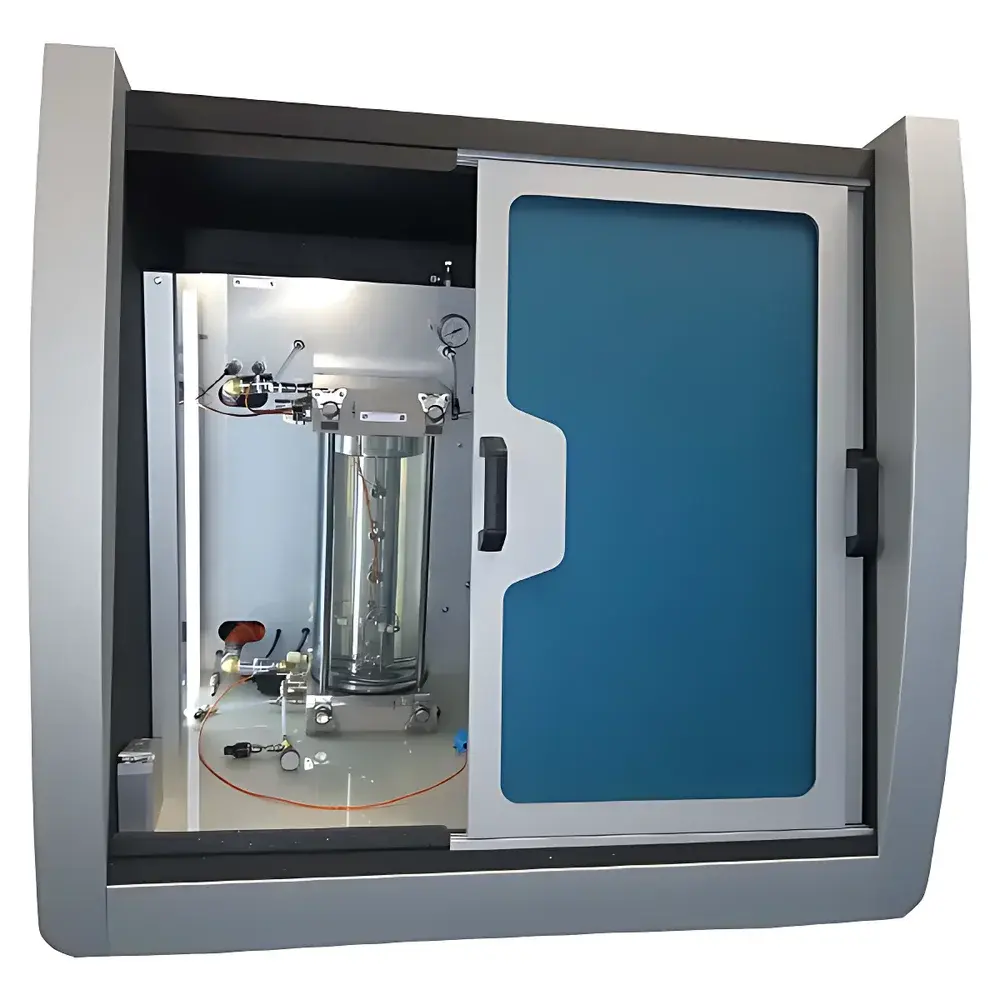
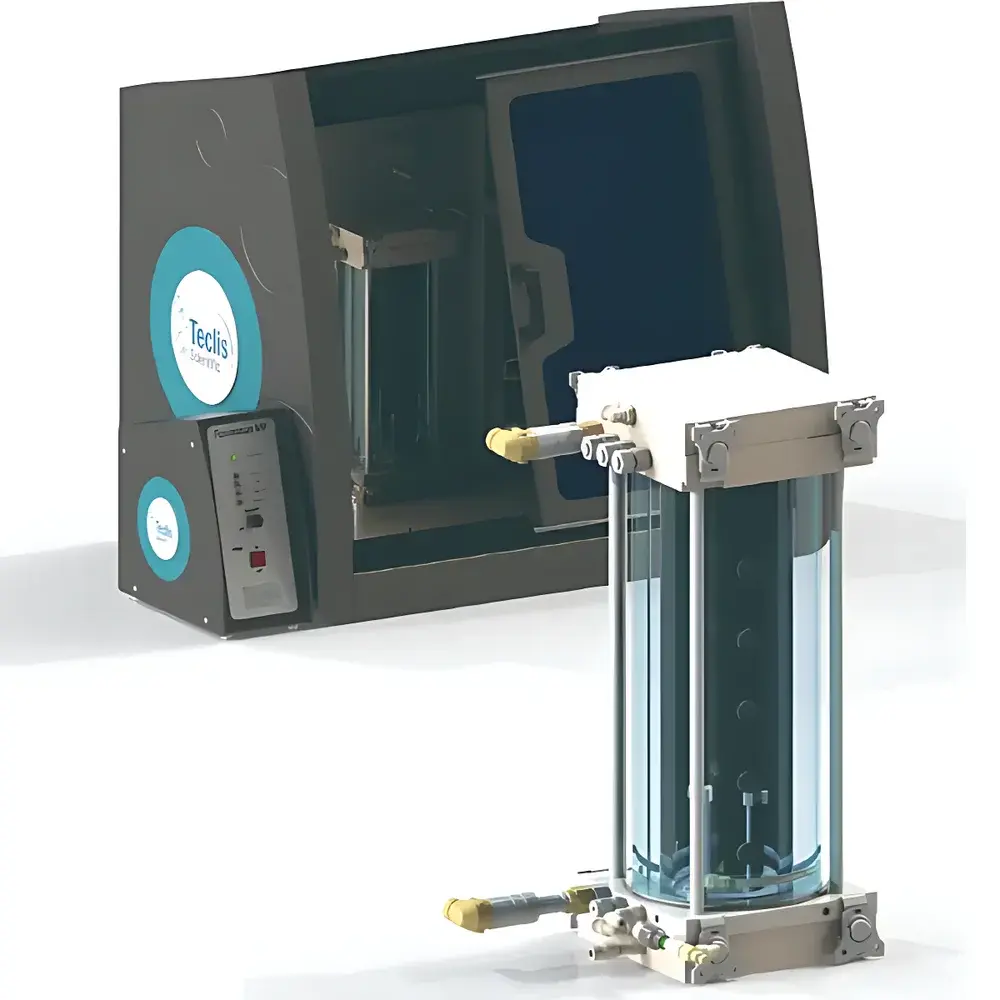
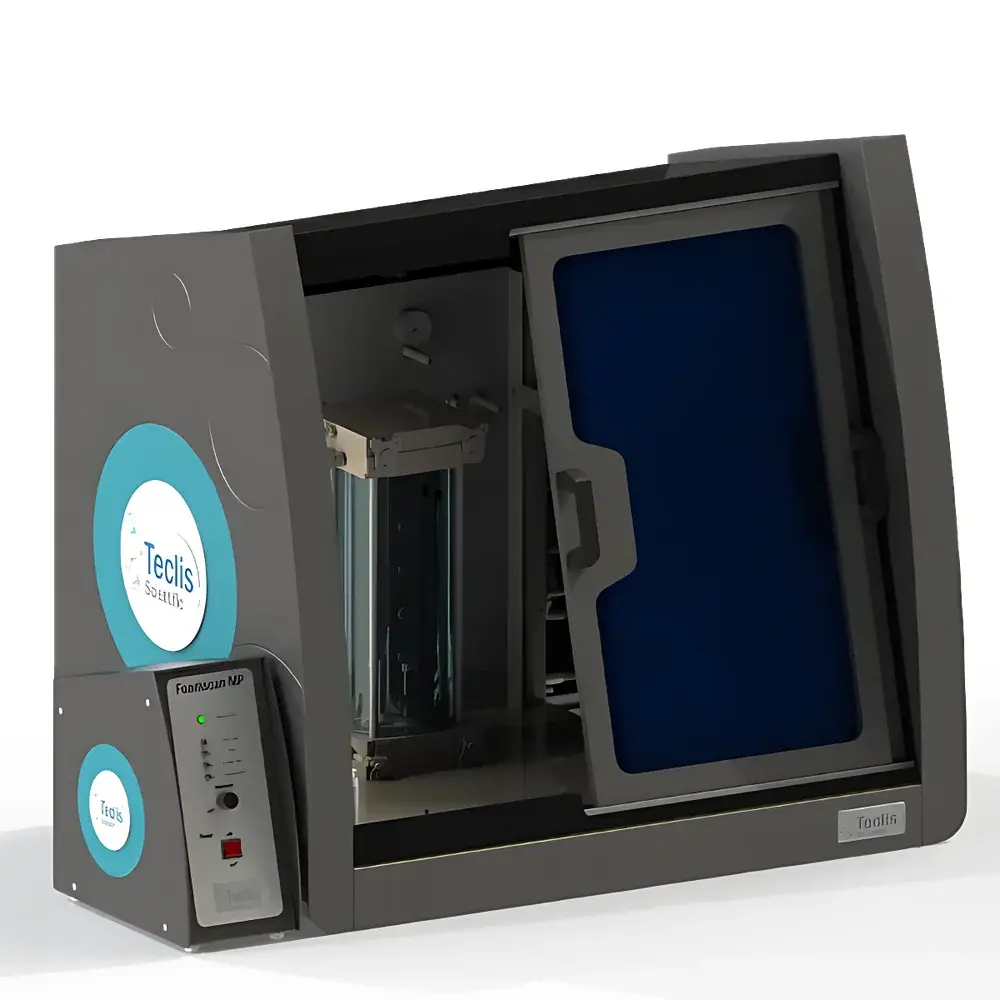
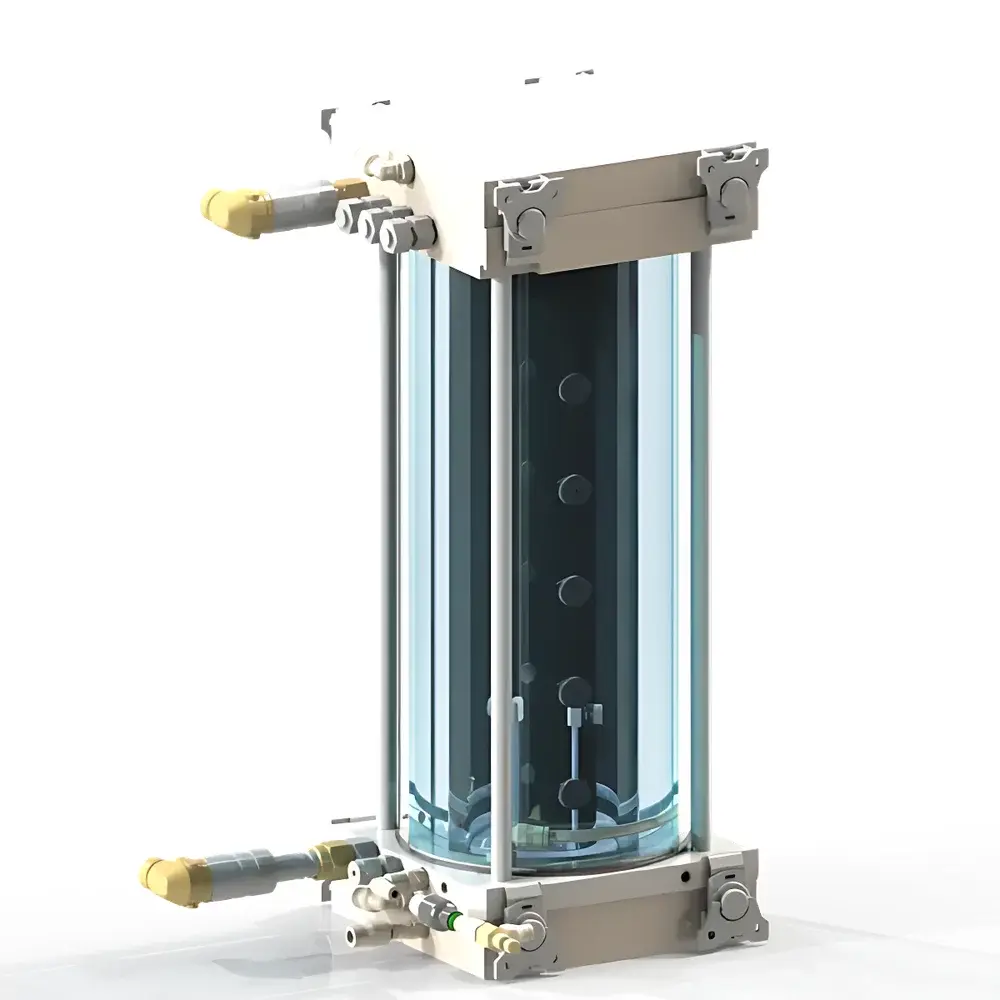
Teclis FOAMSCAN HTMP High-Temperature & High-Pressure Foam Analyzer
| Brand | Teclis Scientific |
|---|---|
| Origin | France |
| Model | FOAMSCAN HTMP |
| Max Operating Temperature | 120 °C |
| Max Operating Pressure | 8 bar |
| Gas Flow Range | 100–5000 mL/min |
| Imaging | USB 2.0 CCD camera (744 × 480 px, 76 fps), dual focal lengths (2.9 mm / 8.2 mm) |
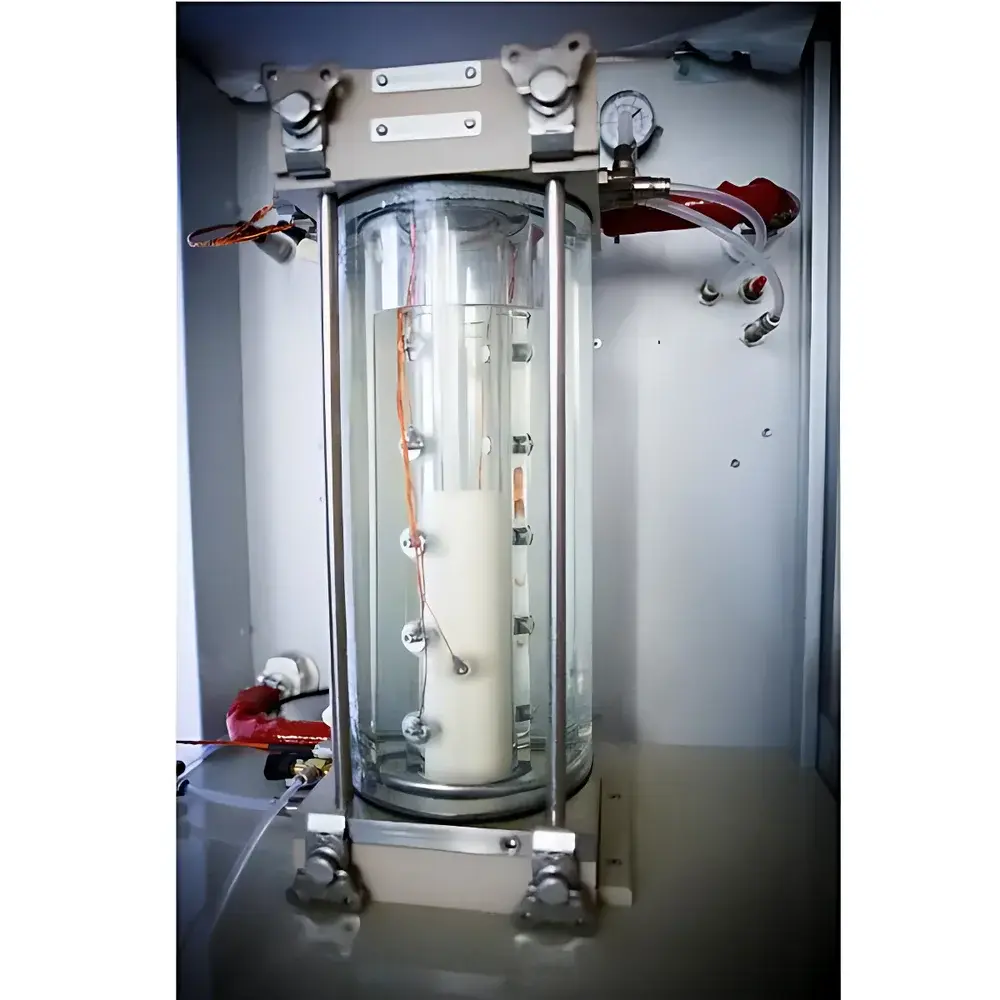
| Sample Cell | triple-walled cylindrical glass tube with integrated Pt100 temperature sensor and conductivity electrodes |
| Cleaning | automated rinse system |
| Compliance | compatible with GLP/GMP workflows |
Overview
The Teclis FOAMSCAN HTMP is a high-precision, fully automated foam characterization system engineered for quantitative analysis of foam generation, evolution, and decay under industrially relevant elevated temperature and pressure conditions. It operates on the gas-sparging principle: controlled gas flow—air, N₂, O₂, or CO₂—is introduced into a liquid phase within a thermostatically and pneumatically regulated triple-walled cylindrical cell. Real-time optical monitoring via high-speed CCD imaging, combined with in-situ electrical conductivity measurement using embedded electrodes, enables simultaneous, non-invasive quantification of foam volume, liquid volume, liquid fraction (drainage), and foam electrical conductivity. The system is explicitly designed for applications where thermodynamic and kinetic stability of foams must be assessed under conditions mimicking subsurface reservoirs (e.g., enhanced oil recovery), pressurized beverage systems, or aerosol-based personal care formulations. Its operational envelope—up to 120 °C and 8 bar—ensures physicochemical relevance beyond ambient laboratory constraints, while maintaining metrological traceability through calibrated flow meters, Pt100 temperature sensors, and pressure transducers.
Key Features
- Triple-walled borosilicate glass sample cell with integrated heating/cooling jacket, pressure-rated sealing, and internal Pt100 temperature sensor for spatially uniform thermal control
- Dual-mode optical detection: high-frame-rate (76 fps) CCD imaging with switchable focal optics (2.9 mm for macro-scale foam structure; 8.2 mm for localized bubble resolution)
- In-situ conductivity electrodes enabling real-time liquid fraction calculation independent of image contrast limitations
- Automated gas flow regulation across three calibrated ranges (100–5000 mL/min), with mass-flow controller compensation for temperature- and pressure-dependent gas density
- Integrated programmable cleaning cycle using solvent-compatible rinse protocols to minimize carryover between experiments
- Light-tight enclosure with EMI-shielded housing to eliminate ambient optical interference and particulate contamination
Sample Compatibility & Compliance
The FOAMSCAN HTMP accommodates aqueous and non-aqueous surfactant solutions, polymer dispersions, and complex fluid mixtures commonly used in petroleum, food, and cosmetic industries. It is not compatible with strongly oxidizing or highly volatile organic solvents—including isopropanol, methanol, xylene, benzene, decane, hexane, and naphthalene—due to material compatibility and safety constraints of the glass cell and sealing components. All hardware and firmware comply with CE marking requirements for laboratory equipment (2014/30/EU EMC Directive, 2014/35/EU LVD). Data acquisition and storage support ALCOA+ principles: attributable, legible, contemporaneous, original, accurate, complete, consistent, enduring, and available. Optional software modules provide electronic signature capability and full 21 CFR Part 11 compliance for regulated environments requiring audit trails, user access controls, and data integrity verification.
Software & Data Management
FOAMSCAN Control Software v5.x provides end-to-end experimental orchestration: parameter definition (gas type, flow rate, target T/P setpoints), real-time visualization (temperature, pressure, conductivity, foam/liquid volumes), and post-acquisition analysis. Image processing algorithms apply adaptive thresholding and edge detection to extract foam height, drainage profiles, and bubble size distributions (via Feret diameter and circularity metrics). Conductivity-derived liquid fraction is cross-validated against optical segmentation to improve robustness in low-contrast or turbid systems. Calculated outputs include foamability (volume of foam generated per unit gas volume), Bikerman index (foam stability ratio), expansion coefficient, foam density, half-life (t50), and drainage kinetics (dVliquid/dt). All raw images, videos (.avi), numerical time-series (.csv), and processed reports are exportable to Excel, MATLAB, or LIMS-compatible formats. Version-controlled experiment templates ensure method reproducibility across operators and sites.
Applications
- Enhanced Oil Recovery (EOR): evaluation of surfactant performance under reservoir-relevant T/P conditions, including gas solubility effects on foam generation and collapse kinetics
- Carbonated beverage formulation: quantification of CO₂ saturation impact on foam nucleation, coarsening, and lacing stability in beer, champagne, and soft drinks
- Personal care product development: characterization of pressurized shaving foams and sprayable topical emulsions under realistic dispensing pressures
- Chemical process safety: assessment of foam-induced overpressure risks in reactors handling volatile solvents or exothermic reactions
- Academic interfacial science: fundamental studies of lamella rupture, Ostwald ripening, and Marangoni-driven drainage in heated, pressurized foams
FAQ
What temperature and pressure ranges are validated for long-term operation?
The FOAMSCAN HTMP is certified for continuous operation at up to 120 °C and 8 bar, with thermal stability maintained via recirculating chiller/heater coupling to the outer jacket.
Can the system operate with corrosive gases such as H₂S or Cl₂?
No. Only inert and non-corrosive gases—air, N₂, O₂, and CO₂—are supported. Custom gas-handling modules for aggressive species require prior engineering review and material certification.
Is calibration traceable to national standards?
Yes. Flow meters are calibrated per ISO 6789; Pt100 sensors meet IEC 60751 Class A tolerance; pressure transducers are NIST-traceable.
How is foam bubble size distribution calculated?
From high-resolution side-view images, the software applies morphological segmentation and computes equivalent spherical diameter (ESD), Feret diameter, and circularity for ≥10⁴ individual bubbles per frame, with statistical confidence intervals reported.
Does the system support unattended overnight runs?
Yes. Full automation includes scheduled start/stop, automatic cell rinsing post-run, and fault detection with email alerts via Ethernet-connected PLC interface.



