
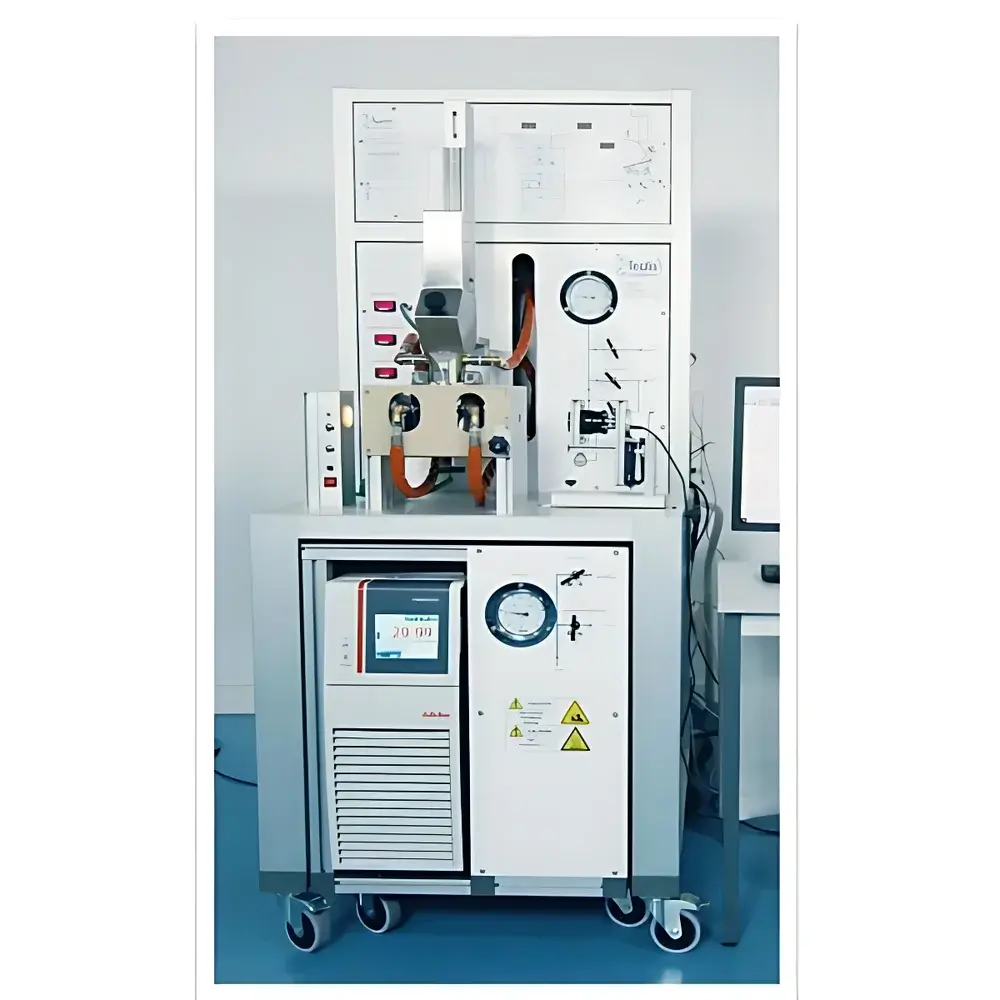
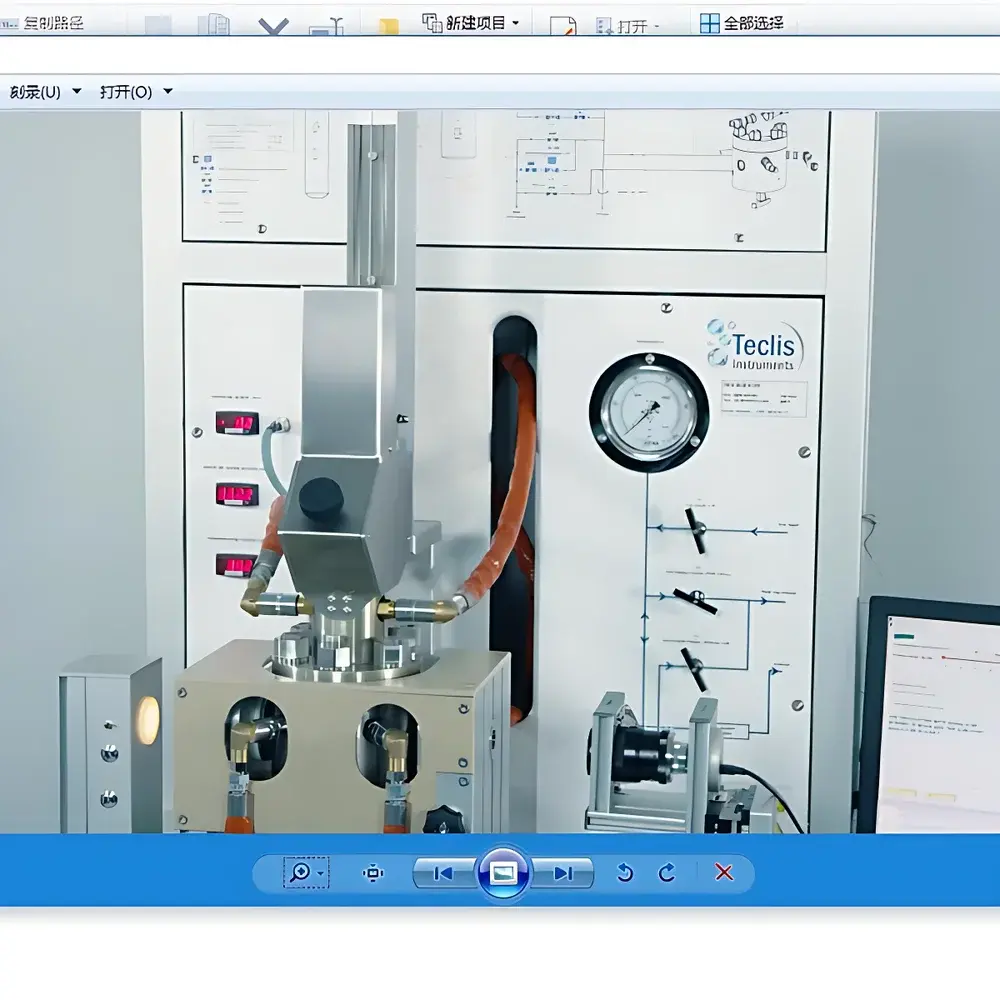
Teclis Scientific TRACKER HTHP 700 High-Temperature High-Pressure Interfacial Rheometer & Tensiometer
| Brand | Teclis Scientific |
|---|---|
| Origin | France |
| Model | TRACKER HTHP 700 |
| Measurement Range | 0.01–1000 mN/m |
| Resolution | ±0.01 mN/m |
| Accuracy | 0.01 mN/m |
| Temperature Range | 0–200 °C |
| Temperature Accuracy | ±0.1 °C |
| Measurement Method | Pendant Drop or Rising Drop Shape Analysis |
| Maximum Pressure | 700 bar |
| Optical Cell Material | Sapphire Windows with Inconel 625 Housing |
| Imaging System | USB2 CCD Camera (640×480, 60 fps), Telecentric Lens (f = 55 mm), Zoom Ratio 0.5–0.05, Working Distance 98–191 mm |
Overview
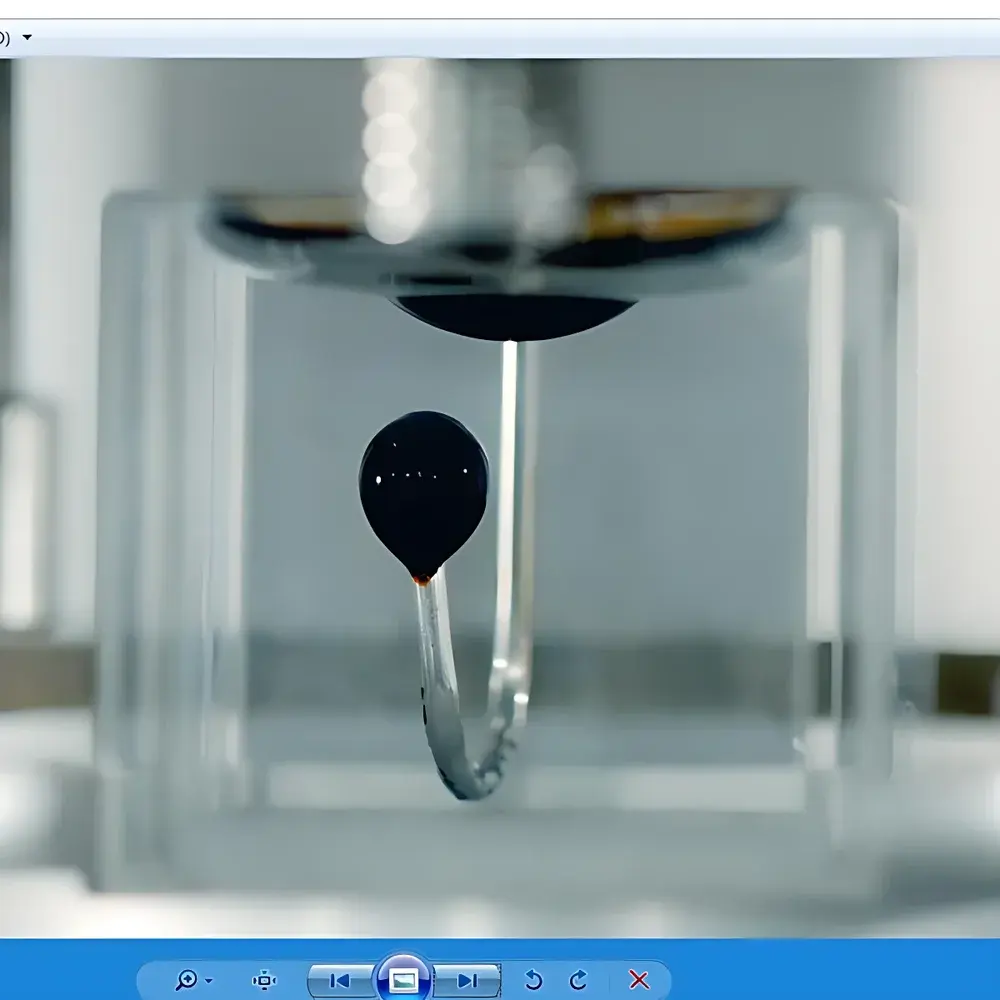
The Teclis Scientific TRACKER HTHP 700 is a fully integrated high-temperature, high-pressure interfacial rheometer and tensiometer engineered for quantitative characterization of dynamic interfacial behavior under extreme process-relevant conditions. It operates on the principle of drop shape analysis—leveraging axisymmetric pendant drop, rising drop, sessile drop, and captive bubble methodologies—to extract surface tension (liquid/gas), interfacial tension (liquid/liquid), contact angle (liquid/solid), and viscoelastic interfacial moduli (dilatational elasticity and viscosity) in real time. Designed for rigorous laboratory and industrial R&D environments, the system supports sustained operation up to 200 °C and 700 bar—enabling direct simulation of reservoir conditions in enhanced oil recovery (EOR), supercritical fluid processing, polymer melt interface studies, and high-pressure catalysis. Its robust architecture integrates precision pressure control, active thermal management, and optical-grade sapphire viewport compatibility, ensuring long-term measurement stability and repeatability across thermodynamic boundaries where conventional tensiometers fail.
Key Features
- High-fidelity optical imaging platform: USB2 CCD camera (640 × 480 pixels, 60 fps) coupled with a telecentric lens (f = 55 mm) and continuous zoom (0.5–0.05×), enabling sub-pixel contour detection over a working distance range of 98–191 mm
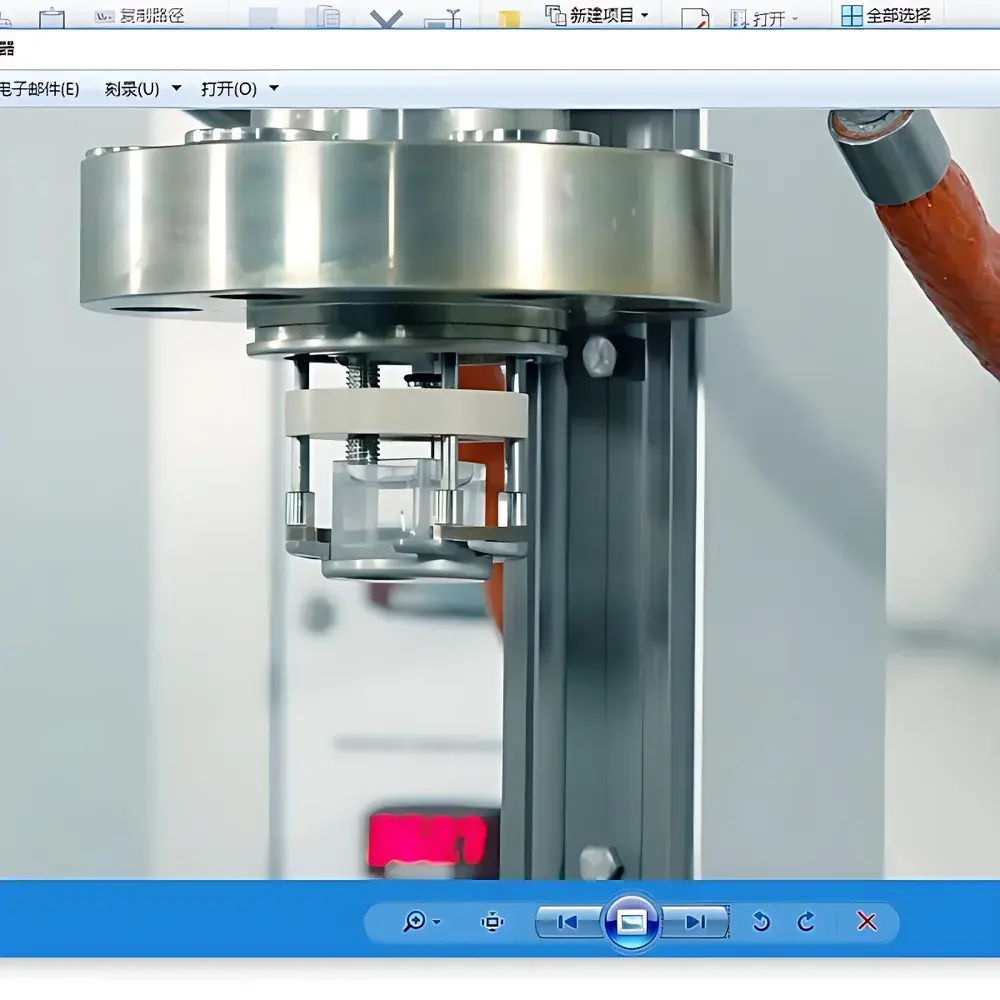
- Hermetically sealed high-pressure chamber: Constructed from Inconel 625 alloy with dual optical sapphire windows; internal volume 130 mL; rated for continuous operation at 700 bar and 200 °C
- Modular sample cell design: Includes borosilicate glass cells (12 mL and 20 mL configurations) and standardized solid substrate holders accommodating samples up to 33 mm diameter and 5 mm thickness
- Full-parameter actuation and monitoring: Integrated syringe pump with volumetric resolution down to ±0.1 µL; programmable expansion/compression profiles (0.01–20 µL/s); oscillatory frequency range 0.001–2 Hz for dilatational rheology
- Thermal regulation system: Circulating bath with PID-controlled heating capable of maintaining temperature stability within ±0.1 °C across the full 0–200 °C range
- Gas compatibility: Supports inert (N₂, Ar), reactive (CO₂), and supercritical CO₂ environments via electronically regulated solenoid valves and high-pressure booster system
Sample Compatibility & Compliance
The TRACKER HTHP 700 accommodates diverse phase systems including aqueous/organic, polymer melt/melt, liquid metal/oxide slag, and surfactant-laden supercritical fluid interfaces. Solid substrates include polished metals, ceramics, functionalized wafers, and porous rock analogues. All measurements comply with ASTM D1331 (surface and interfacial tension), ISO 1409 (plastics—determination of surface tension), and ISO 19403-3 (contact angle determination by optical methods). The system supports audit-ready data acquisition per FDA 21 CFR Part 11 requirements—including electronic signatures, user access levels, and immutable audit trails—making it suitable for GLP- and GMP-regulated laboratories engaged in formulation development or regulatory submission support.
Software & Data Management
The proprietary TRACKER software provides a unified interface for experiment definition, real-time parameter supervision (pressure, temperature, volume, time), and automated image-based analysis. Surface/interfacial tension is calculated using Young–Laplace fitting algorithms with adaptive baseline correction; contact angle employs ellipse or tangent-based edge detection with automatic triple-line identification. Dilatational modulus (E) and phase angle (δ) are computed directly from imposed area oscillations and resultant interfacial stress response. Data export is supported in TXT (tab-delimited), CSV, and native .trk formats compatible with MATLAB, Python (NumPy/Pandas), and Excel. Video reconstruction allows retrospective reanalysis of stored image sequences; overlay comparison tools enable side-by-side evaluation of multiple datasets. All raw images, metadata, and processed curves are timestamped and archived with checksum validation.
Applications
- Enhanced Oil Recovery (EOR): Quantification of interfacial tension reduction and interfacial viscoelasticity between crude oil fractions and CO₂ or surfactant solutions under reservoir-mimicking conditions
- Supercritical fluid science: Stability assessment of Pickering emulsions and microemulsions in scCO₂; interfacial rheology of polymer–scCO₂ interfaces during foaming or impregnation
- Metallurgical processing: Wettability and interfacial energy evolution at molten metal/slag or metal/ceramic boundaries under reducing atmospheres
- Advanced materials development: Time-resolved contact angle hysteresis (advancing/receding) on functionalized membranes or battery electrode coatings under pressurized gas exposure
- Pharmaceutical formulation: Interfacial dilatational rheology of protein-stabilized nanoemulsions under accelerated thermal aging protocols
FAQ
What pressure and temperature ranges does the TRACKER HTHP 700 support during simultaneous operation?
The instrument maintains full functionality at pressures up to 700 bar and temperatures up to 200 °C concurrently, with independent control loops ensuring stable setpoint maintenance over extended durations.
Can the system measure both static and dynamic contact angles on heterogeneous or rough surfaces?
Yes—via sessile drop and captive bubble modes, the software computes advancing and receding angles using automated baseline tracking and multi-frame statistical averaging to mitigate noise from topographical heterogeneity.
Is the system compliant with regulatory data integrity standards for pharmaceutical or chemical manufacturing?
Yes—the software implements role-based user authentication, electronic signatures, change history logging, and tamper-proof data archiving aligned with FDA 21 CFR Part 11 and EU Annex 11 requirements.
How is interfacial dilatational rheology quantified, and what physical parameters are reported?
By imposing controlled sinusoidal area changes on pendant or captive bubbles/drops, the system calculates dilatational elasticity (E′), dilatational viscosity (E″), and complex modulus (|E*|) as functions of frequency and interfacial age, based on the Lippmann–Gibbs formalism.
What gases are certified for use with the high-pressure module?
The system is validated for N₂, Ar, air, CO₂, and supercritical CO₂; custom calibration files and safety interlocks are provided for each gas type to ensure consistent compressibility compensation and valve timing accuracy.



