
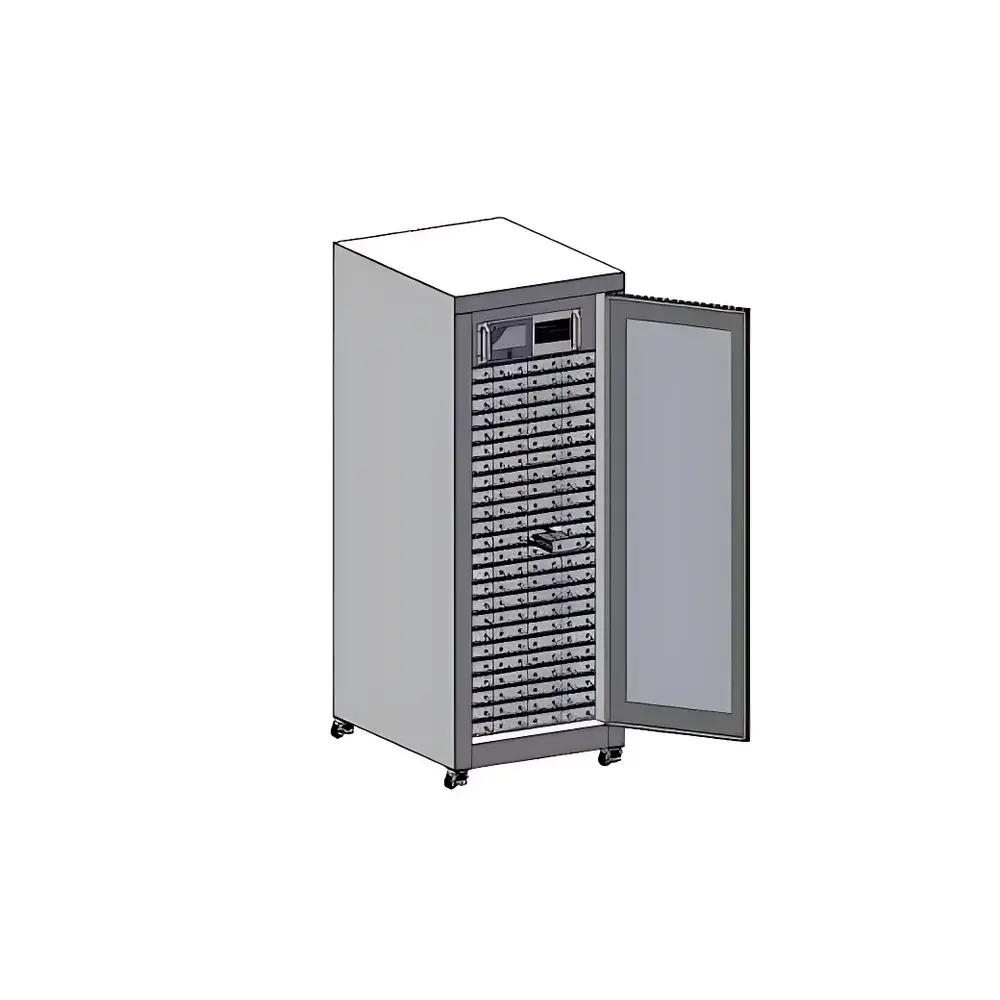
TEO OLED Module Lifetime Testing System
| Brand | TEO |
|---|---|
| Origin | Beijing, China |
| Manufacturer Type | Authorized Distributor |
| Product Origin | Domestic (China) |
| Model | OLED |
| Price Range | USD 42,000 – 70,000 |
Overview
The TEO OLED Module Lifetime Testing System is an engineered platform for quantitative, time-resolved photometric degradation analysis of organic light-emitting diode (OLED) display modules under controlled electrical stress and ambient conditions. It operates on the fundamental principle of luminance decay tracking—measuring the progressive reduction in photometric output (typically in cd/m²) as a function of operational time (LT50, LT70, or LT90 metrics) under constant-current or constant-voltage driving. The system supports two complementary architectures: a high-accuracy planar configuration utilizing calibrated imaging photometers or contactless luminance meters, and a high-throughput drawer-type configuration employing linear arrays of calibrated silicon photodiodes. Both configurations integrate synchronized signal generation, thermal monitoring, and environmental logging to ensure metrological traceability and repeatability across R&D, pilot-line validation, and quality assurance workflows.
Key Features
- Two modular configurations: Planar (X-Y-Z motorized stage with precision luminance meter positioning) and Drawer-type (multi-channel, independent photodiode-based sensing units with hot-swap capability)
- Integrated programmable power supply and pulse generator (PG) for precise current/voltage waveform control, including DC, PWM, and AC square-wave drive profiles per channel
- Real-time luminance decay acquisition at user-defined intervals (1 s to 24 h), with timestamped metadata including junction temperature, ambient humidity, and drive parameters
- Motorized stage resolution: ≤5 µm positional accuracy; repeatability ±2 µm (planar configuration)
- Photodiode channels: Up to 64 independent, individually shielded and temperature-compensated Si-PD sensors (drawer configuration), each with factory calibration against NIST-traceable luminance standards
- Thermal management: Integrated thermistor array (±0.2 °C accuracy) and optional forced-air or Peltier-based thermal stabilization for test chamber environments
Sample Compatibility & Compliance
The system accommodates rigid and flexible OLED modules ranging from 0.5″ to 15.6″, including RGB stripe, WRGB, and top-emission architectures. Substrate types supported include glass, thin-film encapsulated plastic, and metal foil. All optical sensors comply with CIE 1931 photopic luminosity function V(λ) within ±2% tolerance across 380–780 nm. Data acquisition and reporting conform to ISO 11664-1:2019 (Colorimetry) and IEC 62341-6-3:2022 (OLED display lifetime measurement procedures). The software architecture supports audit trails, electronic signatures, and 21 CFR Part 11-compliant data integrity controls for regulated environments.
Software & Data Management
The proprietary TEO LifeTrack™ software provides real-time visualization of luminance decay curves, automatic LTxx endpoint calculation (LT50/LT70/LT90), and statistical batch analysis (Weibull fitting, confidence intervals, failure mode clustering). Raw photometric data is stored in HDF5 format with embedded metadata (sensor ID, calibration date, environmental logs). Export options include CSV, MATLAB .mat, and PDF reports compliant with GLP/GMP documentation requirements. Remote monitoring via HTTPS-enabled dashboard and role-based access control (RBAC) are standard. Data backups follow AES-256 encryption and support scheduled cloud sync to private S3-compatible storage.
Applications
- R&D evaluation of emissive layer materials (e.g., host-dopant systems, TADF emitters) under accelerated aging protocols
- Process qualification of thin-film encapsulation (TFE) performance across humidity and thermal cycling stressors
- Comparative lifetime benchmarking of pixel circuit designs (e.g., 2T1C vs. 7T1C AMOLED backplanes)
- Quality control screening of production lots using statistical process control (SPC) charts derived from LT70 distributions
- Support for JEDEC JESD22-A108F (high-temperature operating life) and IEC 60068-2-66 (light exposure testing) test methodologies
FAQ
What luminance measurement standards does the system adhere to?
The system complies with ISO/CIE photometric standards and implements V(λ)-matched detection; all luminance sensors are calibrated annually against NIST-traceable reference sources.
Can the system perform simultaneous lifetime testing on multiple display technologies (e.g., OLED, MicroLED, QD-OLED)?
Yes—within defined spectral and dynamic range limits, the photodiode array can be reconfigured for different peak emission wavelengths (450–650 nm), and the planar configuration supports interchangeable sensor heads optimized for specific technologies.
Is the software validated for use in FDA-regulated medical display development?
TEO LifeTrack™ includes full 21 CFR Part 11 compliance packages (audit trail, e-signature, data integrity verification) and is qualified for use in Class II/III medical device display validation per IEC 62304 and IEC 62366-1.
Does the system support variable-temperature lifetime testing?
Yes—the optional thermal chamber integration enables operation from −20 °C to +85 °C with ±0.5 °C stability, and all photometric measurements are automatically temperature-compensated using real-time junction thermistor feedback.
How is calibration traceability maintained across long-term deployments?
Each sensor carries a unique calibration certificate referencing NIST SRM 2242 or equivalent; field recalibration kits and remote verification routines are available through TEO’s certified service network.




