
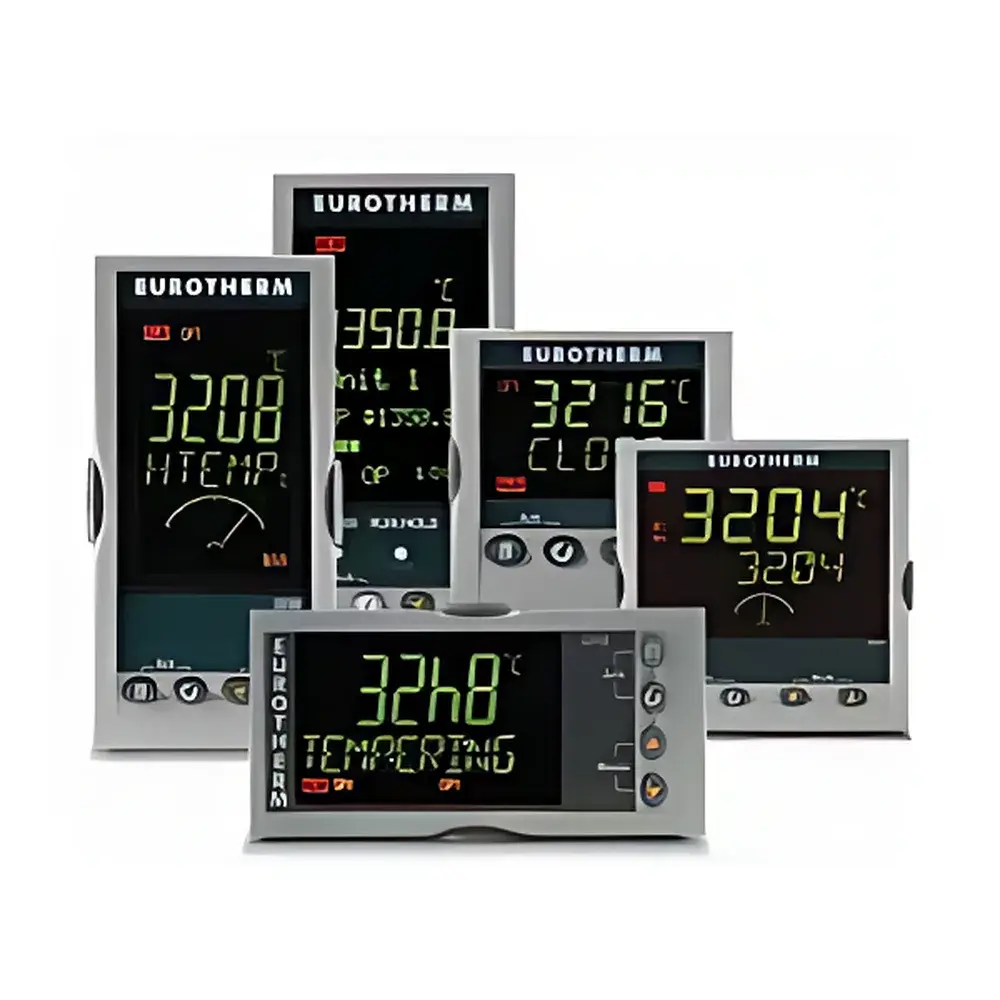
Thermconcept TCC-Series Programmable Temperature Controller for Muffle Furnaces
| Brand | Thermconcept |
|---|---|
| Origin | Germany |
| Model | TCC-Series |
| Control Architecture | Microprocessor-Based PID with Optional Siemens S7 PLC Integration |
| Display | Graphical LCD Interface |
| Expandability | Modular I/O, Software Integration (TCC-View), Remote Monitoring Capability |
| Compliance | DIN ISO 9001 Process Control Requirements, Supports GLP/GMP Data Integrity Protocols (with Audit Trail Enabled Software Option) |
| Power Control | Solid-State Relays / SCR Phase-Angle Control / Multi-Zone DC-Driven Heating Management |
| Connectivity | RS485/Modbus RTU, Ethernet (Optional), USB Data Export |
Overview
The Thermconcept TCC-Series Programmable Temperature Controller is an industrial-grade microprocessor-based control system engineered specifically for high-precision thermal management of laboratory and industrial muffle furnaces. Designed and manufactured in Bremen, Germany, the TCC-Series implements adaptive PID algorithms with auto-tuning capability to maintain stable setpoint accuracy across temperature ranges from 50 °C to 2000 °C. Its core architecture supports both single-zone and multi-zone thermal regulation—critical for uniform heat distribution in refractory-lined chambers used in ashing, calcination, sintering, and materials pre-treatment. Unlike generic off-the-shelf controllers, the TCC-Series is purpose-integrated with Thermconcept’s furnace platforms, ensuring full compatibility with heating element configurations (Kanthal A1, MoSi₂, SiC), insulation systems (fiberboard or castable ceramic), and safety interlocks (overtemperature cutoff, door-open detection, cooling rate monitoring). The controller operates as a deterministic real-time system, with cycle timing resolution down to 1 second and temperature sampling intervals configurable between 0.1 s and 60 s—enabling precise replication of thermal profiles required in ASTM E1113 (ash content determination), ISO 562 (coal coke reactivity), and USP heavy metal testing protocols.
Key Features
- Graphical LCD interface with intuitive icon-driven navigation and real-time visualization of temperature curves, ramp rates, dwell times, and alarm status
- Modular hardware design supporting up to 8 independent thermocouple inputs (Type K, S, R, B) and 4 programmable relay outputs for auxiliary functions (gas purge, vacuum pump, exhaust damper)
- Multi-segment program memory: up to 32 steps per profile, with customizable ramp/hold sequences, loop repetition, and conditional branching based on sensor feedback
- Integrated data logging: internal non-volatile memory stores ≥10,000 timestamped readings; export via USB to CSV or XML for traceability and audit compliance
- Optional Siemens S7-1200 PLC integration with TIA Portal configuration support, enabling centralized control in multi-furnace laboratories under IEC 61131-3 standards
- Remote operation via Ethernet (TCP/IP) or RS485 Modbus RTU, compatible with SCADA systems and LIMS interfaces for automated workflow integration
Sample Compatibility & Compliance
The TCC-Series is validated for use with Thermconcept’s full range of muffle furnaces—including benchtop, floor-standing, and custom-engineered models—ensuring mechanical, electrical, and thermal interoperability. It complies with EN 61000-6-2 (EMC immunity) and EN 61000-6-4 (EMC emissions), meeting CE marking requirements for laboratory equipment within the EU. When configured with optional software modules (TCC-View Professional), the system satisfies FDA 21 CFR Part 11 requirements for electronic records and signatures, including user-level access control, electronic audit trails, and data integrity validation reports. All firmware updates undergo ISO 9001-certified change control procedures, and calibration certificates (traceable to PTB standards) are available upon request.
Software & Data Management
TCC-View is Thermconcept’s native Windows-based supervisory software, enabling centralized monitoring and control of multiple TCC-Series units from a single workstation. It supports synchronized execution of identical thermal programs across heterogeneous furnace models, automatic generation of DIN ISO 9000-compliant temperature–time documentation, and relational database storage of historical runs with metadata tagging (operator ID, sample ID, batch number, environmental conditions). Raw data exports conform to ASTM E2500-18 Annex A2 guidelines for analytical instrument qualification, facilitating IQ/OQ/PQ documentation. For enterprise environments, OPC UA server functionality allows seamless integration with MES and ERP platforms without proprietary middleware.
Applications
- Residue quantification in pharmaceutical excipients (USP , EP 2.2.33)
- Gravimetric analysis of inorganic ash in foodstuffs (AOAC 942.05, ISO 2171)
- Thermal decomposition studies of polymers and composites (ASTM D5630, ISO 3452-1)
- Pre-conditioning of catalyst supports and ceramic substrates prior to BET surface area measurement
- Calibration of thermocouples and reference sensors using fixed-point cells (ITS-90)
- Process validation of sterilization cycles in medical device manufacturing (ISO 11137)
FAQ
Can the TCC-Series controller be retrofitted to non-Thermconcept furnaces?
Yes—provided the existing furnace meets voltage/current specifications, has accessible thermocouple wiring, and allows physical mounting of the controller enclosure. Custom I/O mapping and signal conditioning may be required.
Is validation documentation included with the controller?
Factory-installed firmware includes a Certificate of Conformance. IQ/OQ protocols and URS-aligned test scripts are available as optional deliverables.
What level of cybersecurity is implemented for network-connected units?
Ethernet-enabled models support TLS 1.2 encryption, role-based authentication, and configurable firewall rules aligned with IEC 62443-3-3 SL2 requirements.
Does the controller support real-time data streaming to cloud platforms?
Via optional MQTT gateway module, raw sensor streams and event logs can be published to AWS IoT Core, Azure IoT Hub, or private MQTT brokers with configurable QoS levels.
How frequently is firmware updated, and how are updates deployed?
Critical security patches are issued quarterly; feature updates biannually. Updates are delivered via signed firmware packages through USB or secure HTTPS download, requiring manual confirmation and checksum verification before installation.



