
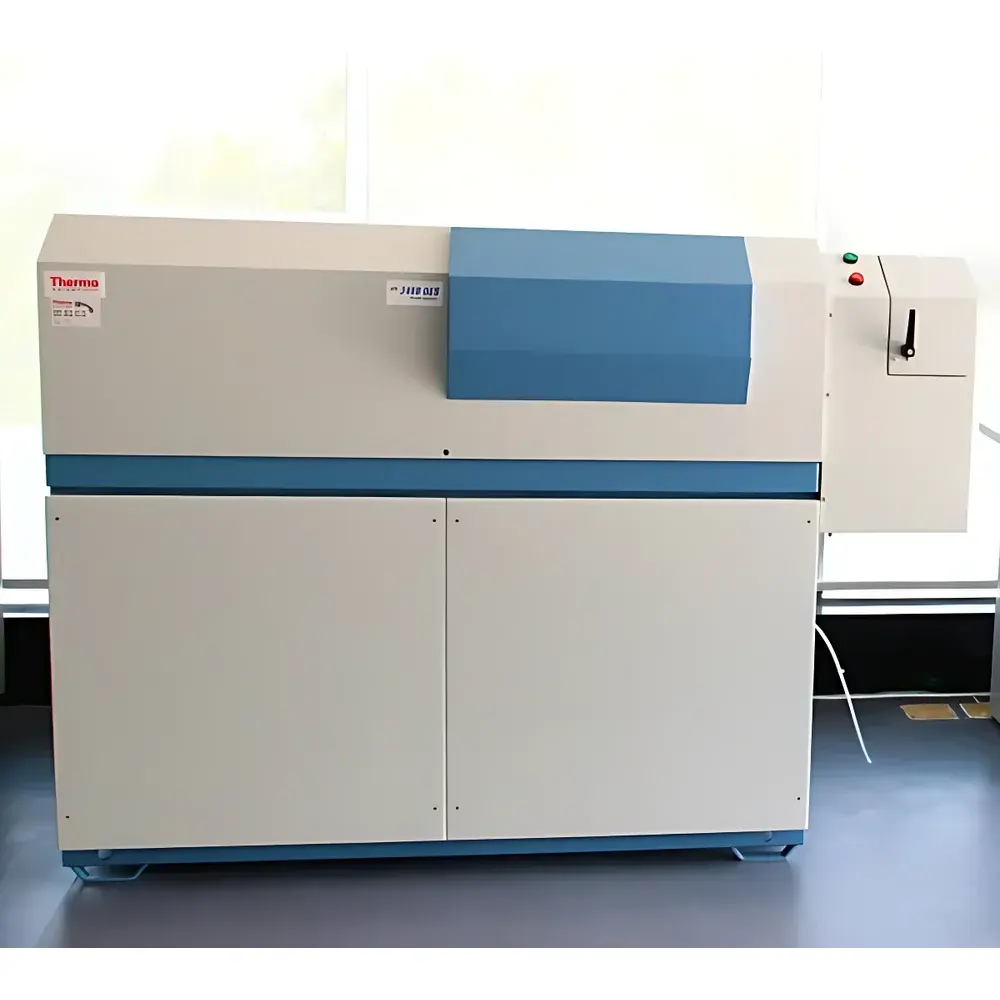
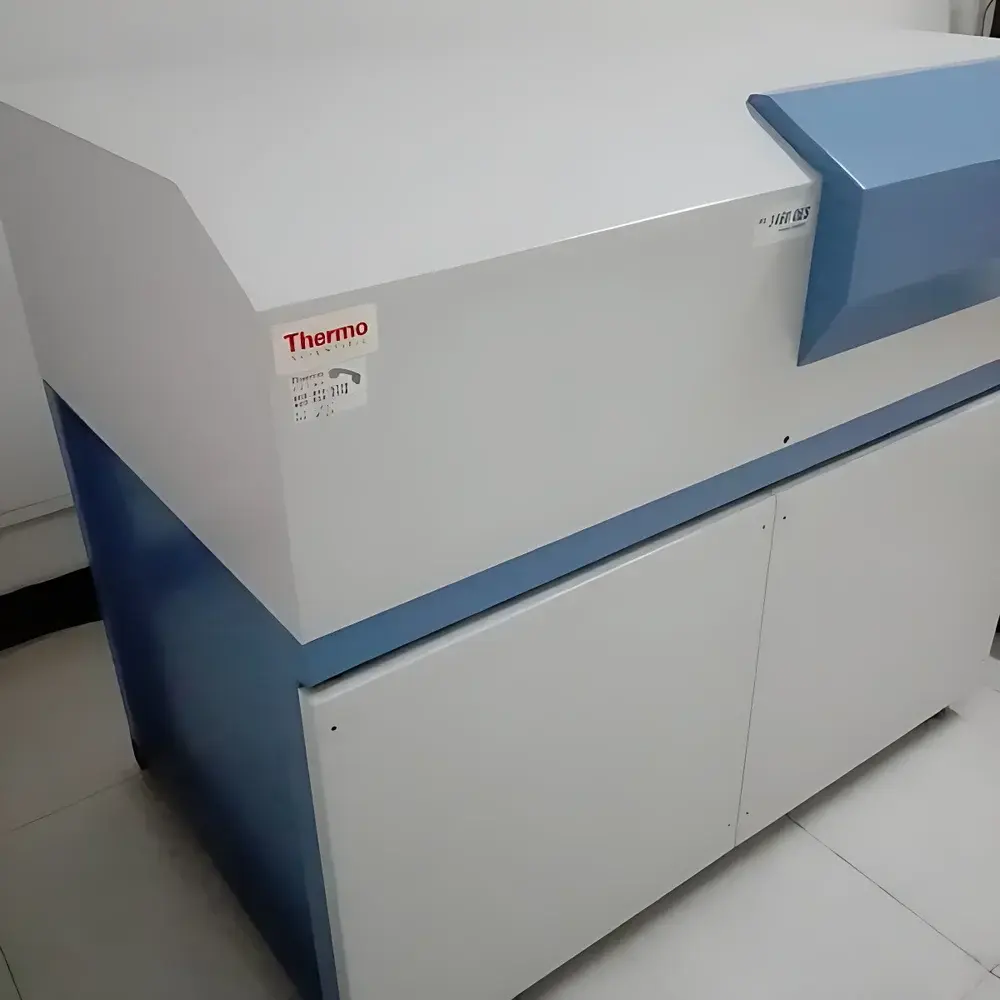
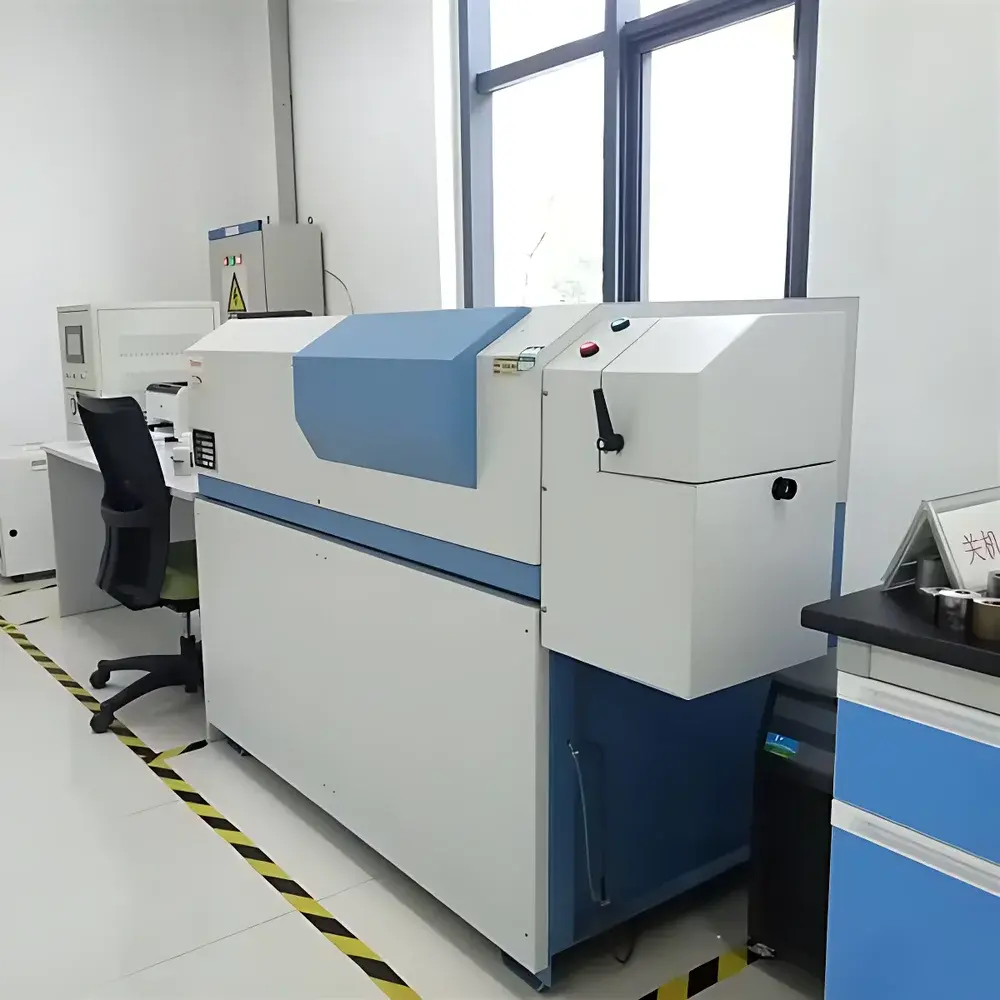
Thermo Fisher ARL 3460 Multi-Channel Direct-Reading Optical Emission Spectrometer
| Brand | Thermo Fisher |
|---|---|
| Origin | USA |
| Model | ARL 3460 |
| Instrument Type | Floor-Standing |
| Excitation Method | Spark |
| Detector Type | Photomultiplier Tube (PMT) |
| Focal Length | 1000 mm |
| Grating Line Density | 3600 lines/mm |
| Wavelength Range | 120–850 nm |
| Number of Channels | 60 |
Overview
The Thermo Fisher ARL 3460 is a high-performance, floor-standing direct-reading optical emission spectrometer (OES) engineered for precise elemental analysis of metallic alloys in industrial quality control and metallurgical laboratories. Based on the principle of spark-induced atomic emission spectroscopy, the instrument atomizes and excites solid metal samples under controlled argon atmosphere, generating characteristic line spectra that are dispersed by a high-resolution 1000 mm focal length Czerny-Turner optical system with 3600 lines/mm gratings. The resulting spectral lines across the 120–850 nm range are simultaneously detected by an array of up to 60 fixed photomultiplier tubes (PMTs), each dedicated to a specific analytical wavelength. This multi-channel architecture ensures rapid, reproducible quantification of major, minor, and trace elements—including C, P, S, N, and B—without scanning delays or signal averaging compromises. Designed for routine operation in foundries, steel mills, and aerospace material testing labs, the ARL 3460 delivers robust performance under demanding production environments while maintaining long-term calibration stability.
Key Features
- Fixed multi-channel PMT detection system enabling simultaneous measurement of up to 60 elements per spark event
- High-fidelity optical bench with 1000 mm focal length Paschen-Runge mount and thermally stabilized 3600 lines/mm holographic gratings
- Optimized spark source with adjustable current, frequency, and pre-spark conditioning for consistent ablation across diverse alloy matrices (Fe-, Al-, Cu-, Ni-, Mg-, Zn-based)
- Argon-purged optical path with sealed vacuum-tight spectrometer housing to ensure UV transmission down to 120 nm
- Dedicated electrode systems for different sample geometries—flat, cylindrical, and irregular—supporting ASTM E415, E1086, and ISO 11577 compliance
- Integrated internal standardization and drift correction routines using reference lines and background monitoring channels
Sample Compatibility & Compliance
The ARL 3460 accommodates solid conductive metallic samples with minimum dimensions of Ø10 mm × 10 mm (standard disc) or Ø4 mm × 10 mm (small-sample adapter). Surface preparation follows standardized grinding protocols per ASTM E1190 and ISO 11577 to minimize oxide interference and ensure representative sampling. The instrument supports full traceability workflows aligned with GLP and GMP requirements, including user-accessible audit trails for calibration history, method parameters, and result exports. Data integrity complies with FDA 21 CFR Part 11 when paired with validated Thermo Scientific ARL SpectraGraph software configurations. Certified reference materials (CRMs) from NIST, BAM, and JSS are routinely employed for type I and type II calibration verification.
Software & Data Management
Controlled via Thermo Scientific ARL SpectraGraph v5.x or later, the system provides intuitive method setup, real-time spectrum visualization, and multivariate calibration modeling (including inverse regression and neural network options). All raw intensity data, background-corrected net intensities, and final concentration outputs are stored in structured binary archives with embedded metadata (operator ID, timestamp, sample ID, instrument configuration). Export formats include CSV, XML, and LIMS-compatible ASTM E1382-compliant ASCII files. Software validation documentation, IQ/OQ protocols, and electronic signature support are available upon request for regulated environments.
Applications
- Grade identification and positive material identification (PMI) of stainless steels, tool steels, superalloys, and aluminum extrusions
- Low-carbon steel certification in automotive and pipeline manufacturing (C ≤ 0.005 wt%)
- Trace sulfur and phosphorus quantification in bearing steels per ASTM A29/A29M
- Multi-element verification of incoming raw materials and scrap metal feedstocks
- Process control in continuous casting and heat treatment operations through rapid turnaround (< 30 s/sample)
- Research-grade compositional mapping of intermetallic phases using sequential channel reconfiguration
FAQ
Is the ARL 3460 compatible with modern LIMS environments?
Yes—via configurable ODBC drivers and ASTM E1382-compliant data export modules, enabling seamless integration with laboratory information management systems.
What maintenance intervals are recommended for the PMT detectors?
PMT gain calibration is performed automatically during startup; full detector sensitivity verification is advised every 6 months or after 5000 sparks, using certified CRMs.
Can the instrument analyze non-ferrous alloys such as titanium or cobalt-based superalloys?
Yes—method libraries for Ti-6Al-4V, Inconel 718, Hastelloy C-276, and similar grades are pre-installed and field-expandable.
Does the system meet ISO/IEC 17025 requirements for accredited testing labs?
When operated with documented procedures, calibrated CRMs, and validated software configurations, the ARL 3460 satisfies technical competence criteria outlined in ISO/IEC 17025:2017 clause 7.2–7.7.
Related Products





