
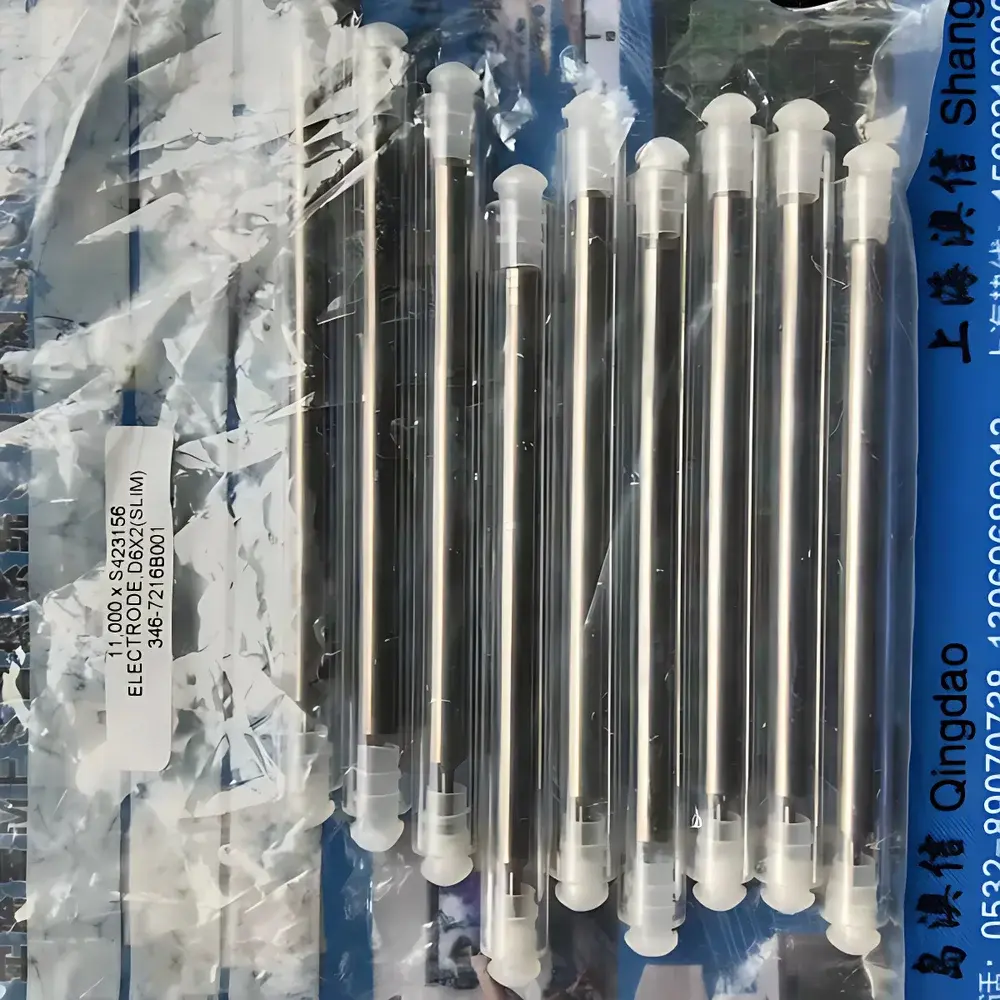
Thermo Fisher ARL 8860 Direct-Reading Optical Emission Spectrometer (OES)
| Brand | Thermo Fisher |
|---|---|
| Origin | USA |
| Model | S423156 |
| Instrument Type | Spark Optical Emission Spectrometer |
| Measurement Principle | Arc/Spark Excitation with Polychromator-Based UV-VIS Detection |
| Compliance | ASTM E1479, ISO 11577, ISO 6871, EN 10052 |
| Sample Form | Solid Metallic Alloys (as cast, machined, or ground discs/blocks) |
| Typical Applications | QC/QA in Foundries, Metal Production, Aerospace & Automotive Supply Chains |
Overview
The Thermo Fisher Scientific ARL 8860 (catalog number S423156) is a high-performance direct-reading optical emission spectrometer (OES) engineered for routine elemental analysis of solid metallic materials. Utilizing spark excitation in an argon-purged optical chamber, the instrument generates plasma from the sample surface and disperses emitted light via a fixed polychromator equipped with photomultiplier tube (PMT) detectors. This architecture enables simultaneous multi-element quantification across the ultraviolet to visible spectral range (130–800 nm), delivering rapid, reproducible results with sub-ppm detection limits for key alloying and trace elements (e.g., C, P, S, B, Sn, Pb, As). Designed for 24/7 operation in industrial laboratories, the ARL 8860 integrates robust thermal stabilization, automatic argon flow control, and electrode wear compensation—ensuring long-term analytical stability without manual recalibration between shifts.
Key Features
- Fixed multi-channel PMT optics with optimized grating configuration for high spectral resolution and signal-to-noise ratio
- High-energy digital spark source with programmable discharge parameters (current, frequency, integration time) for matrix-adapted excitation
- Integrated argon purging system with real-time pressure monitoring and automatic purge cycle optimization
- Self-aligning sample stand with motorized Z-axis positioning and standardized 32-mm diameter sample interface
- Onboard spectral library with pre-calibrated methods for >40 alloy families (e.g., Fe-, Al-, Cu-, Ni-, Ti-, Mg-based)
- Compliance-ready firmware supporting audit trails, electronic signatures, and user access levels per FDA 21 CFR Part 11 requirements
Sample Compatibility & Compliance
The ARL 8860 accepts flat, conductive metallic samples with diameters ≥32 mm and thickness ≥5 mm. Surface preparation follows ISO 11577 guidelines: grinding with SiC paper (grit ≤120) or milling under inert atmosphere to minimize oxidation artifacts. Non-ferrous alloys (e.g., aluminum, copper, zinc die-castings) require dedicated calibration curves due to differing excitation characteristics. The system meets essential metrological standards including ASTM E1479 (standard test method for determination of elements in aluminum alloys by OES), ISO 6871 (metallic dental casting alloys), and EN 10052 (definitions and descriptions of metallographic terms). Full traceability is maintained through NIST-traceable reference materials (CRM 125a, CRM 131d, IRMM-016) and documented instrument qualification (IQ/OQ/PQ protocols).
Software & Data Management
ARL Quantima software provides full instrument control, method development, and statistical process monitoring. It supports GLP/GMP workflows via configurable electronic lab notebook (ELN) integration, automated report generation (PDF/CSV), and secure data archiving with version-controlled method files. Raw intensity values, background-corrected net intensities, and certified reference material (CRM) validation logs are stored in a relational database with immutable timestamps. Data export complies with ASTM E1382 (standard guide for computerized data acquisition in metallurgical testing) and enables seamless transfer to LIMS platforms via OPC UA or SQL Server connectivity. Audit trail functionality records all user actions—including calibration edits, result overrides, and method modifications—with operator ID and timestamp.
Applications
The ARL 8860 serves as a primary analytical tool in quality control laboratories across metal-intensive industries. In foundries, it verifies melt composition prior to casting and monitors ladle-to-ladle consistency for carbon equivalents and residual elements. For aerospace suppliers, it certifies titanium alloy grades (e.g., Ti-6Al-4V per AMS 2249) and detects interstitial contaminants (O, N, H) affecting fatigue life. Automotive Tier-1 manufacturers deploy it for incoming inspection of engine blocks (gray iron per ASTM A159) and transmission housings (aluminum A380 per SAE J188). Additional use cases include scrap sorting (rapid grade identification), failure analysis (inclusion mapping via spectral imaging add-ons), and R&D alloy development (multi-point compositional profiling across heat-treated sections).
FAQ
What sample preparation is required for optimal ARL 8860 performance?
Flat, clean, and oxide-free surfaces prepared by fine grinding (≤120 grit) or milling under argon; minimum thickness: 5 mm.
Does the system support analysis of coated or plated metals?
No—coatings must be mechanically removed to expose bulk substrate; spark ablation cannot reliably penetrate non-conductive layers.
How frequently must the optical system be cleaned or aligned?
The sealed polychromator requires no user alignment; quartz window cleaning is recommended every 2000 sparks or per ISO 11577 maintenance schedule.
Can the ARL 8860 be integrated into an automated production line?
Yes—via Ethernet/IP or Modbus TCP interfaces, enabling trigger-based analysis and pass/fail output signals to PLCs.
Is method transfer possible between different ARL 8860 units?
Yes—Quantima’s method portability feature allows cross-instrument deployment using standardized calibration coefficients and spectral libraries.




