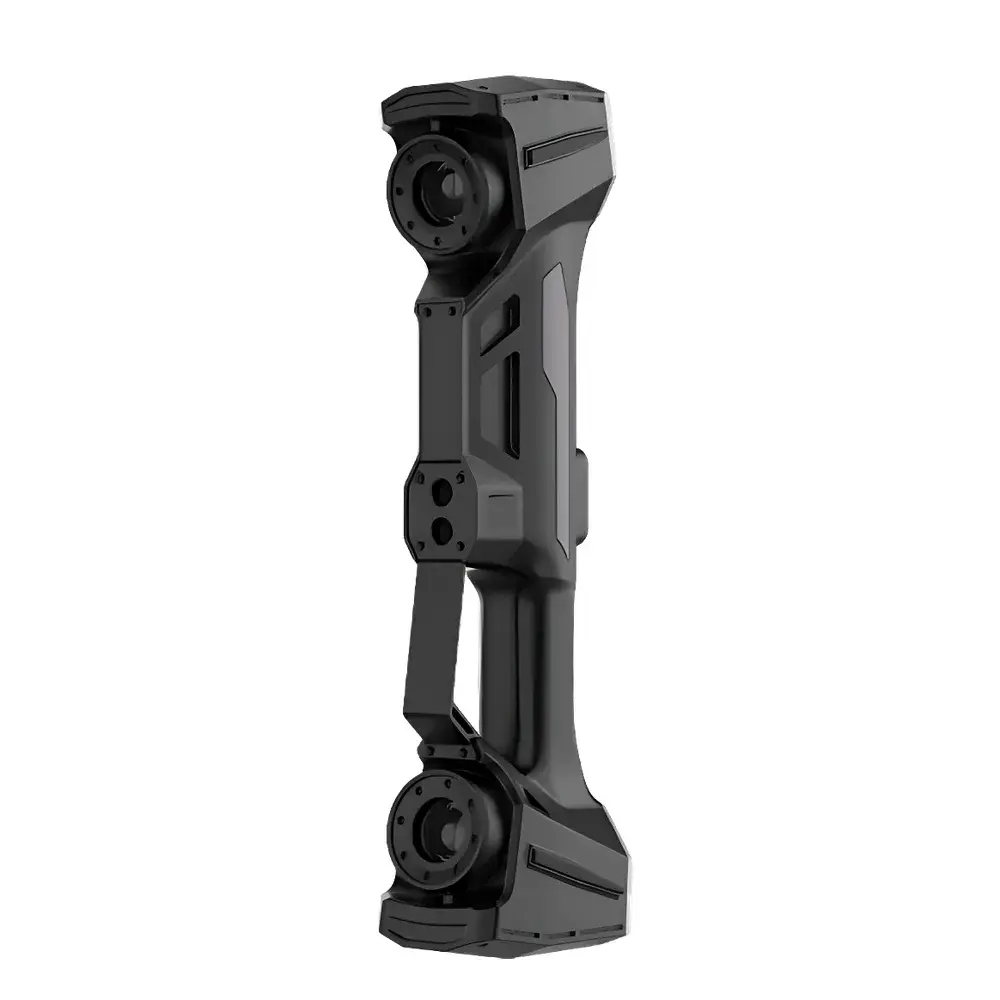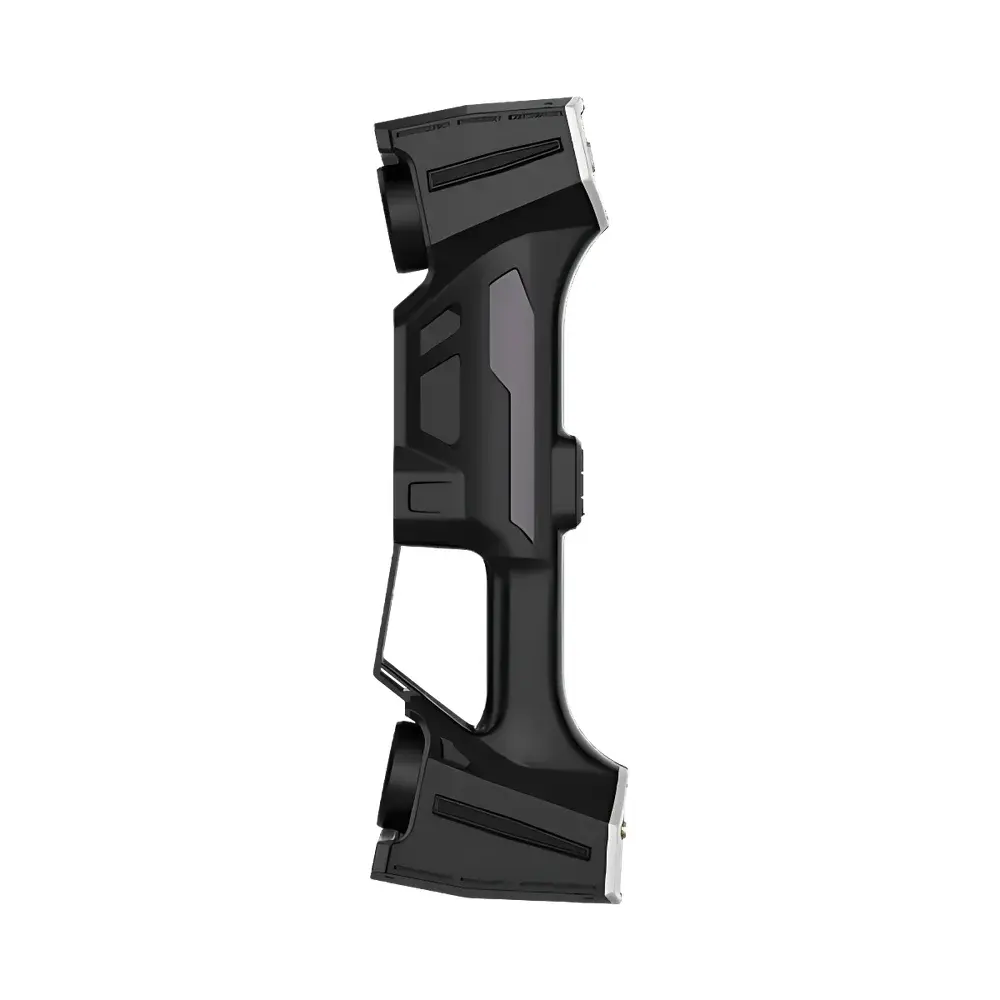
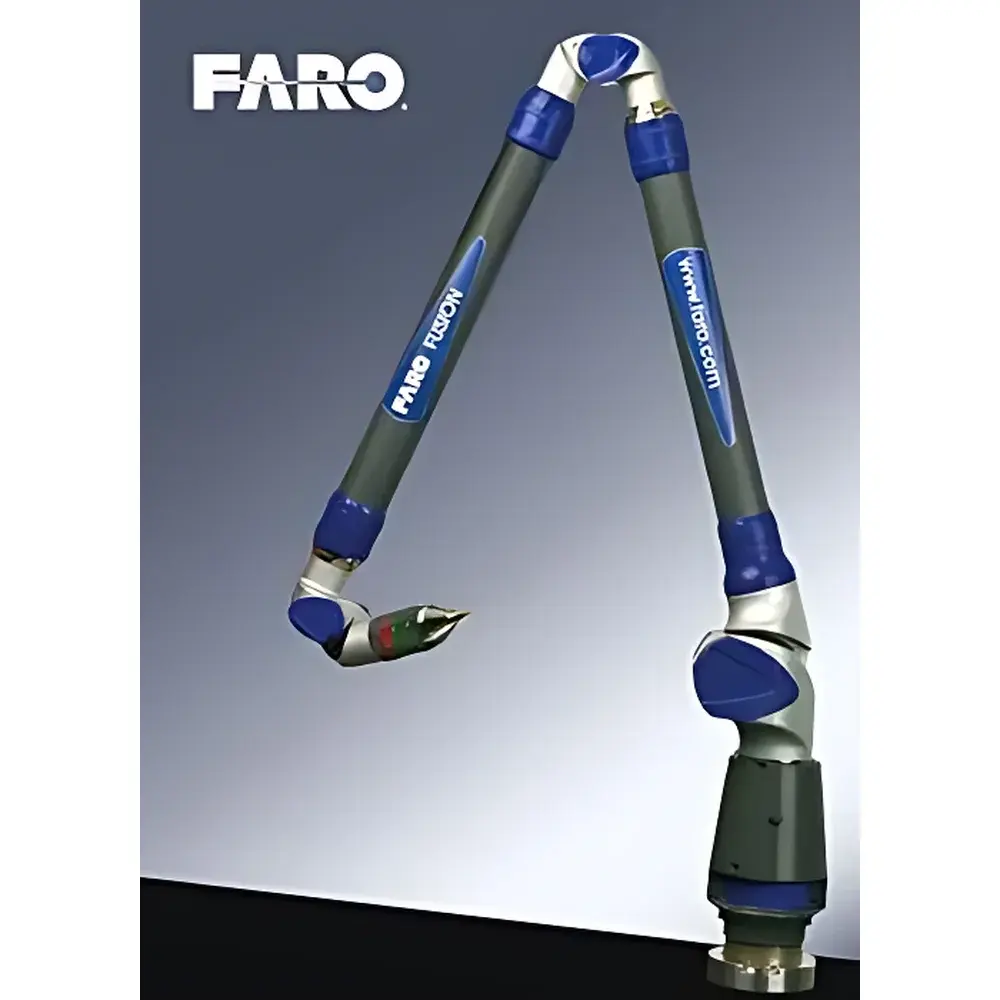
FARO Platinum Portable Coordinate Measuring Arm (CMM)
| Brand | FARO |
|---|---|
| Origin | USA |
| Type | Articulated Arm CMM |
| Operation Mode | Manual |
| Portability | Portable |
| Measurement Range | 0–5 m |
| Accuracy | ±0.02 mm (±0.0008 in) |
| Operating Temperature | −10 to +40 °C |
| IP Rating | IP64 |
| Calibration Interval | Long-term |
| Environmental Humidity | ≤95% RH, non-condensing |
Overview
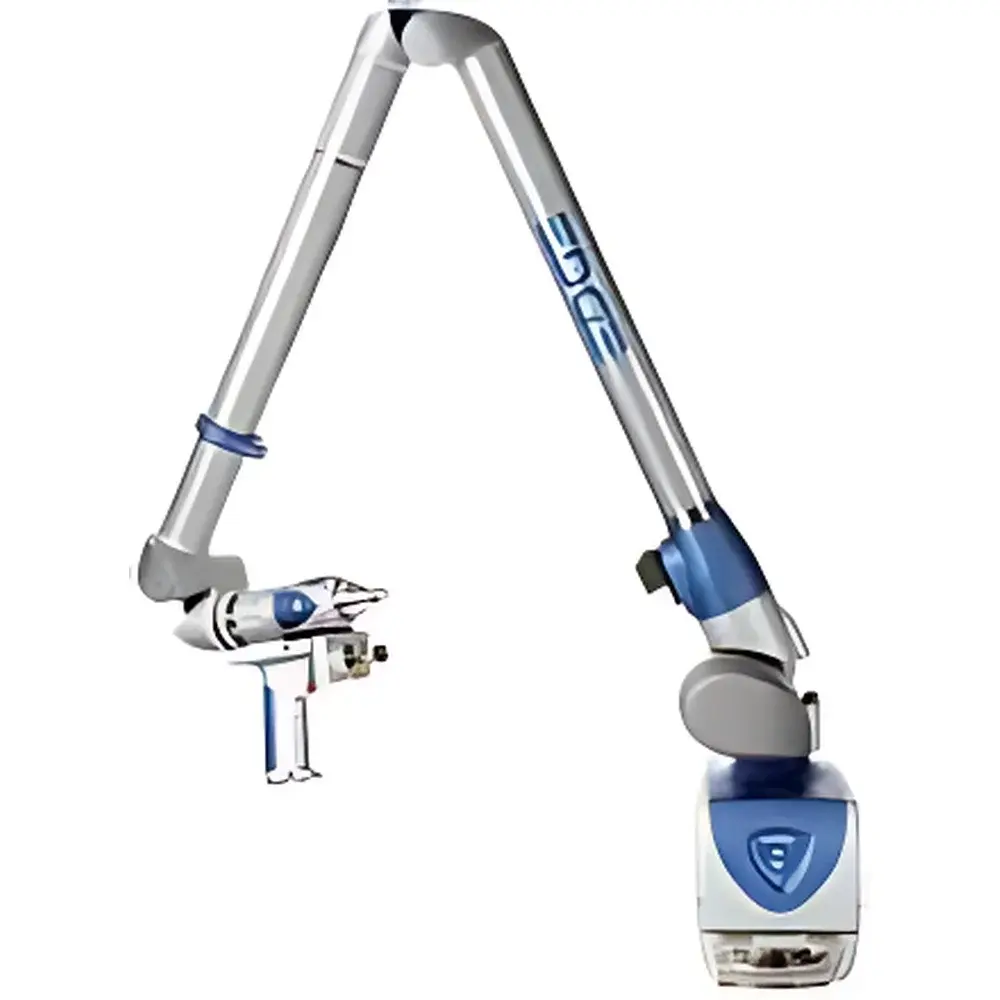
The FARO Platinum Portable Coordinate Measuring Arm is an articulated-arm coordinate measuring machine engineered for high-accuracy, on-site geometric metrology in dynamic industrial environments. Based on a six- or seven-axis serial kinematic architecture, it employs high-resolution absolute encoders at each joint and real-time temperature compensation algorithms to maintain traceable dimensional accuracy under variable workshop conditions. Unlike traditional bridge-type or gantry CMMs, the Platinum arm operates without fixed foundations or climate-controlled rooms—enabling direct measurement on shop floors, assembly lines, tooling fixtures, and large-scale aerospace or automotive components. Its measurement principle relies on deterministic forward kinematics: positional data from joint angles are transformed into Cartesian coordinates using calibrated Denavit–Hartenberg parameters, with volumetric error correction applied via NIST-traceable calibration spheres and artifact-based volumetric compensation routines. Designed for ISO/IEC 17025-compliant metrology workflows, the system supports uncertainty budgets aligned with ISO 15530-3 and VDI/VDE 2617 Part 9 standards.
Key Features
- High-fidelity articulated kinematic structure with redundant thermal monitoring across all joints and base
- Integrated overload protection sensors at each articulation point—preventing mechanical hysteresis and preserving long-term repeatability
- Lightweight carbon-fiber construction enabling single-operator portability and rapid repositioning
- Universal 3.5-inch magnetic or mechanical mounting interface compatible with granite tables, steel fixtures, and composite tooling surfaces
- Self-balancing counterweight mechanism minimizing operator fatigue during extended manual probing sessions
- Quick-swap probe interface supporting tactile styli, scanning heads, and optical line lasers—all calibrated in situ without external equipment
- IP64-rated enclosure ensuring operational reliability in dusty, humid, or vibration-prone manufacturing zones
Sample Compatibility & Compliance
The FARO Platinum Arm accommodates parts ranging from small machined housings (3 m in span), including castings, weldments, composites, and sheet-metal stampings. It is routinely deployed in GD&T verification per ASME Y14.5 and ISO 1101, supporting full tolerance stack-up analysis, profile deviation mapping, and true-position reporting. The system complies with ISO 10360-2 (CMM performance verification), ISO 10360-8 (articulated arm verification), and meets requirements for GLP/GMP-aligned quality documentation when used with audit-trail-enabled software. All measurement reports include traceable calibration certificates issued by FARO’s A2LA-accredited metrology lab (Certificate No. 2093.01).
Software & Data Management
The arm operates exclusively with FARO SCENE and CAM2 Metrology Suite—both validated for FDA 21 CFR Part 11 compliance when configured with electronic signatures, role-based access control, and immutable audit trails. SCENE provides real-time point cloud registration, automated feature extraction (planes, cylinders, cones), and deviation color-mapping against nominal CAD models (STEP, IGES, or native SolidWorks/Creo). CAM2 enables SPC charting, capability analysis (Cp/Cpk), and automated report generation in PDF, Excel, or XML formats. All raw encoder data, environmental logs (temperature/humidity), and probe calibration histories are stored in encrypted SQLite databases with SHA-256 hashing for integrity verification.
Applications
- Aerospace: Tooling verification of wing spars, fuselage jigs, and composite layup molds
- Automotive: First-article inspection of body-in-white assemblies and die-cast engine blocks
- Energy: Dimensional validation of turbine blade root profiles and wind-tower flange interfaces
- Mold & Die: Rapid cavity-to-CAD comparison for injection molds and progressive dies
- Reverse Engineering: High-density surface capture for legacy part digitization and parametric model reconstruction
- Factory Acceptance Testing (FAT): On-site verification of large machinery alignment and concentricity prior to commissioning
FAQ
What is the recommended recalibration interval for the FARO Platinum Arm?
FARO specifies a long-term calibration interval under stable environmental conditions; however, annual verification using certified sphere artifacts and ISO 10360-8 protocols is advised for ISO 9001-certified operations.
Can the arm be used outdoors or in unconditioned warehouses?
Yes—the IP64 rating and −10 °C to +40 °C operating range permit deployment in ambient industrial settings, though measurements should avoid rapid thermal transients exceeding 5 °C per 5 minutes.
Does the system support automated reporting for quality audits?
Yes—CAM2 generates compliant reports with embedded calibration metadata, operator IDs, timestamped environmental logs, and digital signatures meeting ISO 17025 and FDA 21 CFR Part 11 requirements.
Is CAD model alignment performed in real time during scanning?
SCENE performs iterative closest point (ICP) registration post-acquisition; real-time best-fit alignment is supported via live CAD overlay mode with sub-millimeter convergence thresholds.
How is measurement uncertainty quantified for each reported dimension?
Uncertainty budgets are computed per GUM (JCGM 100:2008) using type-A (repeatability) and type-B (calibration, thermal drift, geometry) components—integrated into every report via CAM2’s Uncertainty Engine module.