
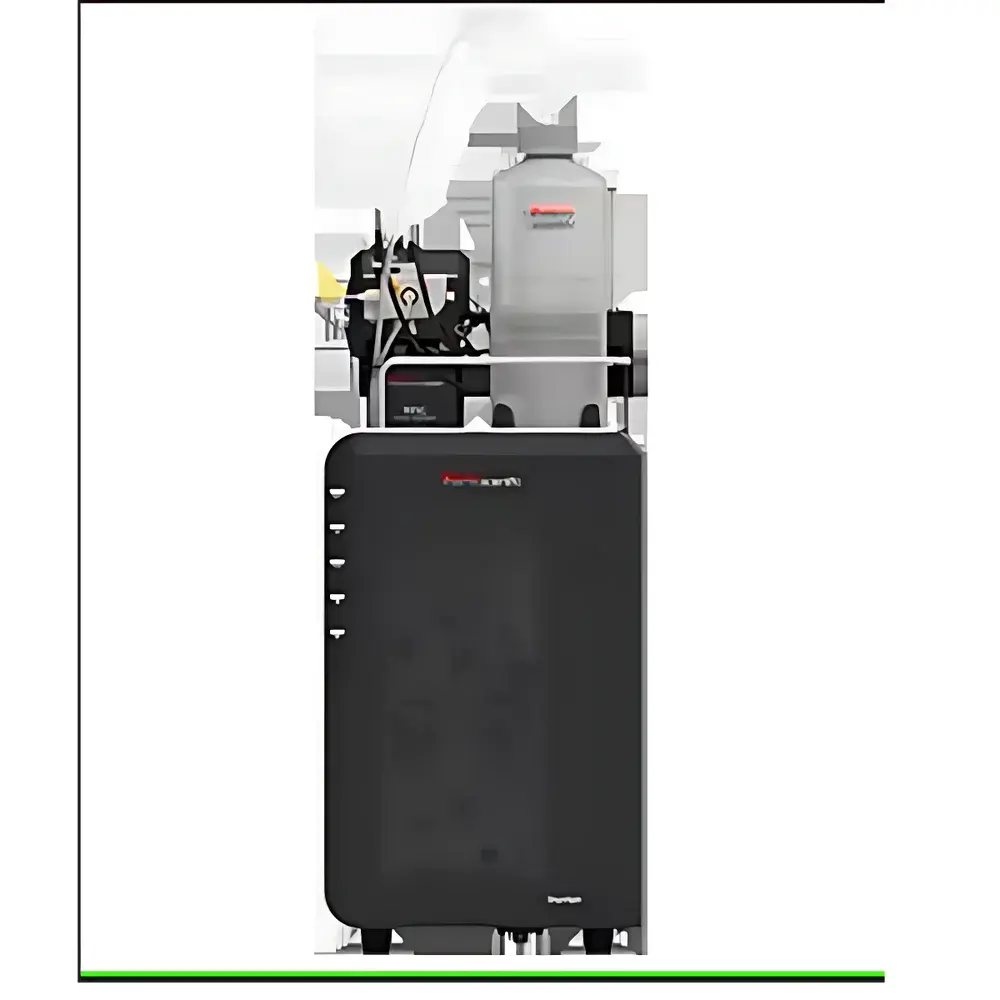
Thermo Fisher Dionex Inuvion Ion Chromatography System
| Brand | Thermo Fisher |
|---|---|
| Origin | Shanghai, China |
| Manufacturer Type | Authorized Distributor |
| Regional Classification | Domestic (China-manufactured) |
| Model | Thermo Fisher Dionex Inuvion Ion Chromatography System |
| Price | Upon Request |
| Pump Pressure Range | 0–5000 psi |
Overview
The Thermo Fisher Dionex Inuvion Ion Chromatography (IC) System is a modular, high-performance analytical platform engineered for precision, reproducibility, and operational simplicity in routine and advanced anion and cation analysis. Built upon suppressed conductivity detection and electrolytic eluent generation principles, the system leverages modern ion exchange chromatography with chemical or electrochemical suppression to deliver low-noise baselines, high sensitivity (sub-ppb detection limits for common ions), and robust quantitation across diverse matrices—including environmental water, pharmaceutical excipients, food extracts, and battery electrolytes. Its architecture integrates a high-pressure dual-piston reciprocating pump (capable of stable flow delivery up to 5000 psi), low-dispersion fluidic pathways, and thermally stabilized detector cells to minimize drift and ensure long-term retention time stability. Designed for compliance-critical environments, the Inuvion platform supports audit-ready data handling and meets foundational requirements for GLP, GMP, and ISO/IEC 17025 workflows.
Key Features
- Modular configuration options: Inuvion Core (entry-level), Inuvion Standard (full-featured), and Inuvion RFIC (Reagent-Free IC) with integrated Electrolytic Eluent Generator (EG) — enabling seamless field-upgradability without hardware replacement.
- High-pressure capability (up to 5000 psi) accommodates sub-2 µm particle-packed columns and rapid gradient separations, reducing cycle times by up to 40% compared to conventional IC systems.
- Intuitive front-access design with full visibility of pumps, suppressors, detectors, and consumables—reducing mean time to maintenance (MTTM) and supporting technician-level troubleshooting without tools.
- Automated startup/shutdown sequences, real-time system diagnostics, and predictive alerting for consumable exhaustion (e.g., suppressor capacity, EG cartridge life) enhance operational continuity and reduce manual oversight.
- Integrated vacuum degasser and PEEK Viper fingertight fittings minimize extra-column band broadening and ensure leak-free, low-dead-volume connections across all fluidic modules.
Sample Compatibility & Compliance
The Inuvion IC system demonstrates broad compatibility with aqueous, polar, and moderately complex samples—including drinking water (per EPA Method 300.0/300.1), lithium-ion battery electrolytes, biopharmaceutical buffers (e.g., phosphate, acetate), and semiconductor process chemicals. It supports both isocratic and multi-step gradient elution on a wide range of Thermo Scientific Dionex IonPac columns (e.g., AS26, CS20, ICE-AS6). All configurations comply with key regulatory frameworks: data integrity features align with FDA 21 CFR Part 11 requirements (including electronic signatures, audit trails, and role-based access control when used with Chromeleon CDS software); method validation protocols conform to ICH Q2(R2) and ASTM D4327/D6919 standards; and hardware design adheres to IEC 61000-6-3 (EMC) and UL/CSA 61010-1 safety directives.
Software & Data Management
Controlled exclusively via Thermo Scientific Chromeleon Chromatography Data System (CDS) 7.3 or later, the Inuvion platform delivers full method development, sequence management, peak integration, and report generation within a validated, 21 CFR Part 11-compliant environment. Chromeleon provides instrument monitoring dashboards, automated calibration curve generation, and customizable QC flagging (e.g., pressure deviation >5%, baseline noise >1 nS). Raw data files (.cdx) are stored in a tamper-evident format with embedded metadata (operator ID, timestamp, instrument serial number, method version). Audit trail logs record every user action—including method edits, result overrides, and calibration events—with immutable timestamps and operator attribution. Optional network deployment supports centralized instrument fleet management and remote diagnostics through Chromeleon Enterprise Server.
Applications
- Environmental monitoring: Quantification of F⁻, Cl⁻, NO₂⁻, Br⁻, NO₃⁻, PO₄³⁻, SO₄²⁻, and AsO₄³⁻ in surface water, wastewater, and soil leachates per ISO 10304-1 and EPA 317.0.
- Pharmaceutical quality control: Counterion profiling (Na⁺, K⁺, Ca²⁺, Mg²⁺) in APIs and excipients; residual chloride/sulfate testing in parenteral formulations per USP .
- Food & beverage safety: Nitrate/nitrite determination in cured meats and infant formula; organic acid profiling (acetate, citrate, malate) in juices and dairy products.
- Energy materials: Trace anion impurities (Cl⁻, SO₄²⁻, F⁻) in LiPF₆-based electrolytes; cationic contaminants (Fe²⁺, Cu²⁺, Ni²⁺) in cathode slurries.
- Electronics manufacturing: Ultra-trace halide analysis (Cl⁻, Br⁻) in photoresist solvents and etchants per SEMI F57 standards.
FAQ
What is the maximum operating pressure supported by the Inuvion IC pump?
The high-performance dual-piston pump is rated for continuous operation up to 5000 psi (345 bar), enabling use of high-efficiency, narrow-bore, and sub-2 µm particle columns.
Can the Inuvion Core system be upgraded to RFIC configuration in the field?
Yes — the Inuvion platform uses standardized mechanical and electrical interfaces; RFIC upgrade requires only installation of the Electrolytic Eluent Generator module and corresponding software license activation.
Is Chromeleon CDS required for full functionality and compliance?
Yes — Chromeleon 7.3+ is the sole validated control and data acquisition software. Standalone instrument operation without Chromeleon is not supported for regulated applications.
Does the system support ASTM D4327-compliant analysis out-of-the-box?
Yes — pre-configured methods, certified reference materials, and column kits aligned with ASTM D4327 are available through Thermo Fisher Technical Support and Application Centers.
What maintenance intervals are recommended for the electrolytic suppressor?
Suppressor lifespan is application-dependent but typically ranges from 2,000 to 5,000 injections under standard conditions; Chromeleon monitors suppressor efficiency in real time and triggers alerts when regeneration capacity falls below 85%.




