
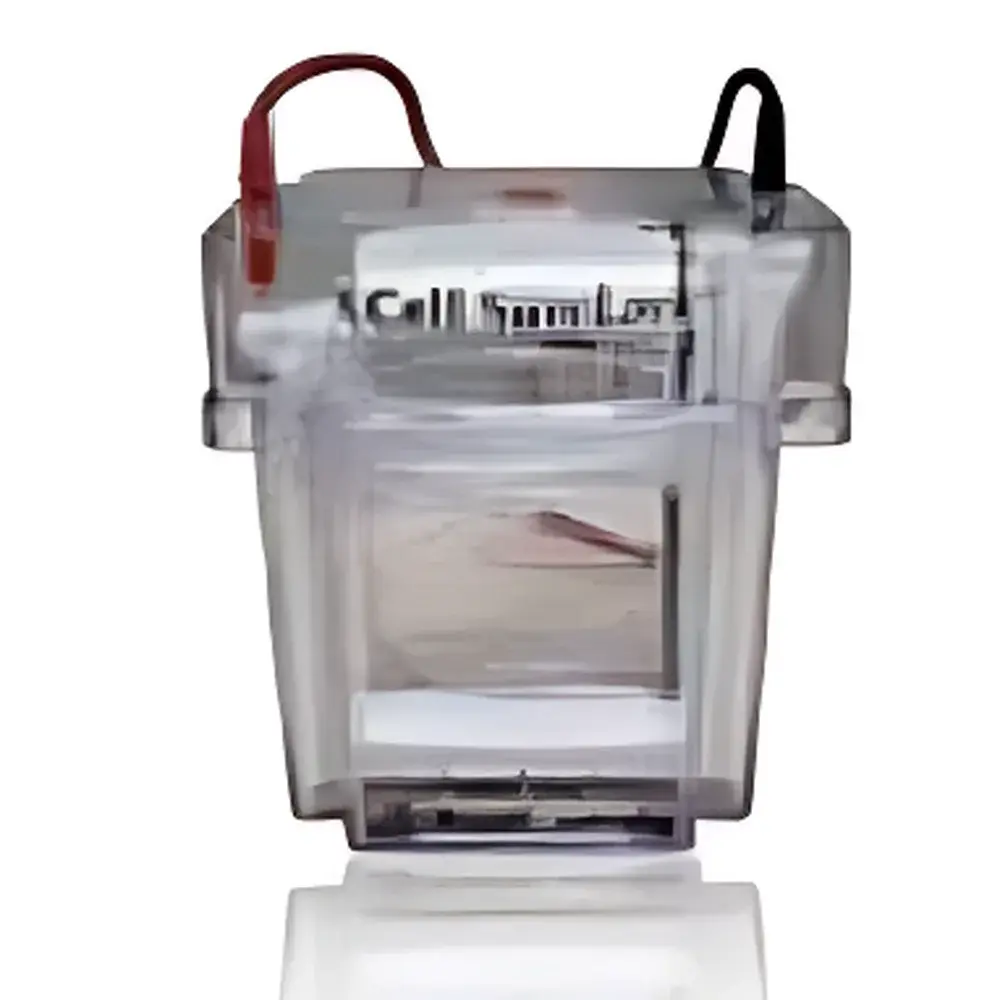
Thermo Fisher NuPAGE Pre-Cast Protein Electrophoresis Gels
| Brand | Thermo Fisher Scientific |
|---|---|
| Origin | USA |
| Product Type | Pre-cast Polyacrylamide Gel System |
| Gel Chemistries | Bis-Tris and Tris-Acetate |
| Format Sizes | Mini (8 × 8 cm) and Midi (8 × 13 cm) |
| Shelf Life | Up to 2 months at 4 °C |
| Electrophoresis Time | As low as 35 minutes |
| Compatible Staining | Coomassie, Silver, Fluorescent dyes |
| Transfer Efficiency | Enhanced for Western blotting |
| pH Range | Neutral (pH ~7.0) |
Overview
The Thermo Fisher NuPAGE Pre-Cast Protein Electrophoresis Gels represent a rigorously engineered polyacrylamide gel platform optimized for high-resolution SDS-PAGE under neutral pH conditions. Unlike conventional Laemmli systems operating at alkaline pH (~8.8), the NuPAGE system employs either Bis-Tris or Tris-Acetate buffer chemistries to maintain electrophoretic separation near physiological pH (6.4–7.2), thereby minimizing base-catalyzed deamidation, hydrolysis, and β-elimination of labile post-translational modifications—including phosphorylation, glycosylation, and acetylation. This pH-stabilized architecture ensures structural integrity of sensitive protein isoforms across diverse sample types, from recombinant therapeutics to native tissue lysates. The gels are manufactured under ISO 13485–compliant processes and validated for lot-to-lot reproducibility in migration distance (±1.2 mm Rf deviation), band sharpness (FWHM < 0.8 mm at 50 kDa), and inter-gel coefficient of variation (< 3.5% for relative mobility).
Key Features
- Neutral-pH electrophoresis chemistry prevents alkaline-induced protein degradation and preserves PTM integrity
- Pre-cast format eliminates polymerization variability and reduces hands-on time by >90% versus hand-poured gels
- Optimized pore gradient and crosslinker ratio deliver superior resolution of proteins between 2–400 kDa
- Reduced “smiling” artifact due to uniform thermal dissipation and low-resistance buffer interface design
- Enhanced electroblotting efficiency—up to 25% greater transfer yield to PVDF or nitrocellulose membranes compared to legacy Tris-Glycine gels
- Stable shelf life of up to 60 days when stored at 4 °C; no freezing required
- Compatible with standard mini and midi electrophoresis apparatuses (e.g., Invitrogen XCell SureLock, Bio-Rad Mini-PROTEAN)
Sample Compatibility & Compliance
NuPAGE gels support broad sample compatibility—including denatured and native lysates, purified recombinant proteins, immunoprecipitates, and extracellular vesicle fractions—without requiring protocol re-optimization. The system meets analytical requirements outlined in ICH Q5E (comparability of biopharmaceuticals), USP (chromatography and electrophoresis), and ASTM E2915-21 (standard guide for protein electrophoretic analysis). All gels are supplied with lot-specific QC documentation, including gel homogeneity test reports, endotoxin levels (<0.1 EU/mL), and residual monomer assays (acrylamide < 0.05 ppm). For regulated environments, NuPAGE workflows integrate seamlessly into GLP/GMP-compliant laboratories through electronic batch records and audit-trail-enabled instrument control software (e.g., Thermo Fisher Connect™).
Software & Data Management
While NuPAGE gels themselves are hardware-free consumables, they are fully supported within Thermo Fisher’s suite of electrophoresis data management tools. Image acquisition via iBright Imaging Systems or ChemiDoc MP platforms enables automated molecular weight calibration using preloaded NuPAGE ladder libraries (Mark12 Unstained Standard, SeeBlue Plus2). Digital gel analysis is compatible with ImageLab™ v6.1+ and FIJI/ImageJ via standardized TIFF export, supporting lane profiling, band quantification (with %CV < 4.2%), and compliance with FDA 21 CFR Part 11 requirements when deployed with validated LIMS integration. Raw image metadata—including gel lot number, run date/time, and voltage profile—is embedded directly into EXIF headers for full traceability.
Applications
- High-fidelity characterization of biosimilars and monoclonal antibodies (mAbs)
- Quality control of cell culture harvests in upstream bioprocessing
- Detection of proteolytic cleavage products in caspase or calpain activity assays
- Analysis of membrane protein complexes solubilized in mild detergents (e.g., DDM, CHAPS)
- Validation of CRISPR/Cas9-mediated knock-in or knockout efficiency at protein level
- Preparative electrophoresis for downstream mass spectrometry sample preparation
FAQ
Can NuPAGE gels be used for native PAGE?
Yes—Tris-Acetate gels support native electrophoresis of non-denatured protein complexes when paired with non-reducing, non-ionic running buffers.
What is the maximum recommended loading volume per well?
For mini gels: 20 µL; for midi gels: 40 µL—exceeding these volumes may cause streaking or uneven migration.
Are NuPAGE gels compatible with downstream Edman degradation?
Yes—the neutral pH system minimizes N-terminal modification, preserving sequence integrity for N-terminal sequencing.
Do I need special running buffers?
Yes—NuPAGE requires proprietary 1× NuPAGE MES SDS or NuPAGE MOPS SDS Running Buffer; substitution with Tris-Glycine buffer will compromise resolution and cause band distortion.
How should unused gels be stored after opening the package?
Re-seal the pouch with desiccant, store at 4 °C, and use within 7 days to maintain optimal polymer integrity and buffering capacity.
Related Products




