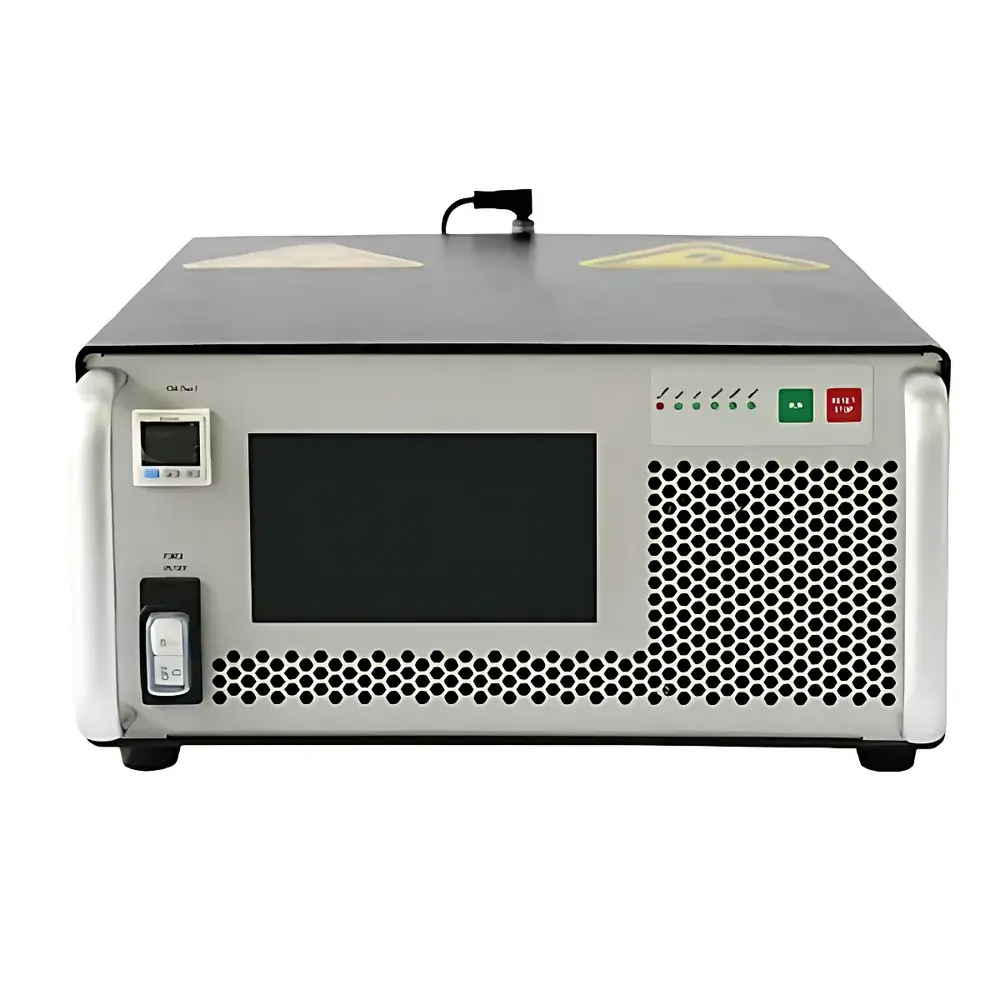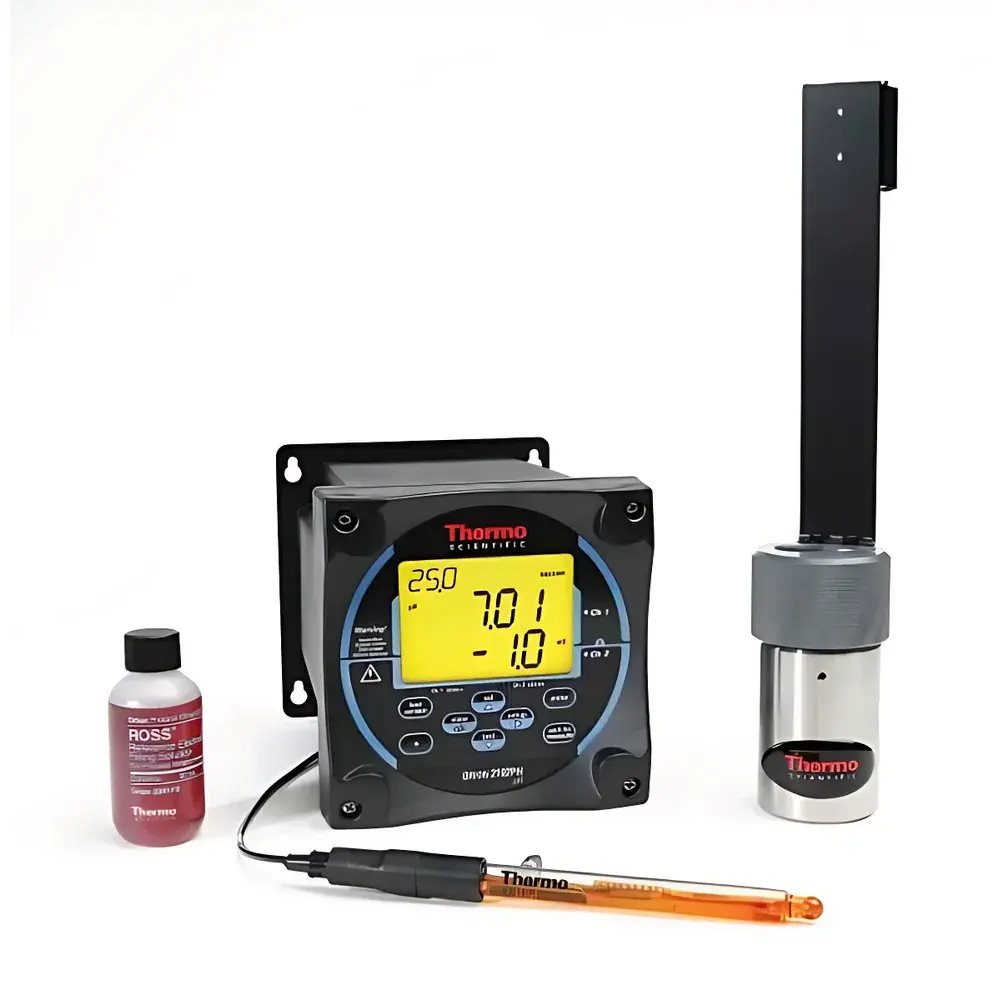
Thermo Fisher Scientific 2102PH Online pH/ORP Analyzer
| Brand | Thermo Fisher Scientific |
|---|---|
| Origin | USA |
| Manufacturer Type | Original Equipment Manufacturer (OEM) |
| Product Category | Imported Industrial Process Analyzer |
| Model | 2102PH |
| Pricing | Available Upon Request |
Overview
The Thermo Fisher Scientific 2102PH Online pH/ORP Analyzer is a high-reliability, microprocessor-based process instrument engineered for continuous, real-time monitoring of hydrogen ion activity (pH) and oxidation-reduction potential (ORP) in demanding industrial water and steam systems. Based on potentiometric measurement principles using glass electrode (pH) and noble-metal or platinum redox electrodes (ORP), the analyzer delivers stable, low-drift performance essential for critical applications such as boiler feedwater control, condensate monitoring, ultrapure water (UPW) management in semiconductor fabrication, and steam purity assurance in power generation. Its architecture integrates advanced signal conditioning, temperature compensation (via integrated Pt100 or thermistor input), and adaptive algorithmic correction—particularly for low-conductivity, low-ionic-strength samples where conventional pH measurement suffers from junction potential instability and slow response.
Key Features
- Intuitive guided calibration workflow with on-screen step-by-step prompts, minimizing operator error and ensuring traceable, repeatable calibration outcomes.
- Modular expansion capability: A single-channel 2102PH unit can be upgraded to dual-channel operation by adding optional pH/ORP or conductivity measurement modules—enabling simultaneous multi-parameter analysis without replacing the base unit.
- Digital communication flexibility: Optional Profibus DP (V1) and Modbus RTU/ASCII modules support seamless integration into distributed control systems (DCS), SCADA platforms, and plant-wide automation networks.
- High-contrast backlit graphical LCD display (128 × 64 pixels) with configurable parameter views—including real-time trends, calibration history, and diagnostic status—optimized for visibility in low-light or high-glare environments.
- Advanced UPW compensation algorithms specifically address asymmetry potential drift and liquid junction errors common in sub-1 µS/cm conductivity streams, improving accuracy and reducing recalibration frequency.
- Multi-tier password protection (three independent access levels) secures configuration changes, calibration records, and system diagnostics per GLP/GMP operational requirements.
- Dual-channel configuration supports four galvanically isolated 4–20 mA analog outputs (configurable as 0–20 mA), each assignable to pH, ORP, temperature, or calculated values—with linear or logarithmic scaling options.
- Three programmable SPDT relays support alarm functions including high/low limit alerts, sensor fault detection, calibration due notifications, and maintenance scheduling triggers.
Sample Compatibility & Compliance
The 2102PH is validated for continuous online use in pressurized and non-pressurized aqueous streams across temperature ranges of 0–105 °C and pressures up to 10 bar (g). It meets IEC 61000-6-2 (immunity) and IEC 61000-6-4 (emissions) standards for industrial environments. Its design complies with key regulatory expectations for critical water quality monitoring, including ASTM D1129 (Standard Terminology Relating to Water), USP (Water Conductivity), and ISO 5725 (accuracy and precision of measurement methods). While not inherently 21 CFR Part 11 compliant, its audit-trail-capable firmware (with timestamped calibration logs, user actions, and event history) supports validation under FDA-regulated pharmaceutical and biotech utilities.
Software & Data Management
The analyzer operates with embedded firmware supporting data logging of up to 1,000 calibration events and 5,000 measurement snapshots (with time stamps and temperature tags). Configuration and diagnostics are accessible via local keypad navigation or remote HART-enabled handheld communicators (e.g., THUM™ or FieldMate). When paired with Thermo Fisher’s optional Insight™ PC software, users gain secure export of CSV-formatted historical data, customizable report generation, and trend visualization aligned with QA/QC documentation workflows. All logged entries include immutable timestamps and user ID fields—facilitating compliance with internal SOPs and external audit requirements.
Applications
- Power generation: Continuous monitoring of boiler feedwater, drum water, condensate, and saturated/ superheated steam cycles to prevent corrosion and deposition.
- Microelectronics manufacturing: Ultrapure water (UPW) loop surveillance in semiconductor wafer fabs where pH deviations >0.05 units may trigger particle generation or etch-rate anomalies.
- Beverage & bottled water production: Real-time pH verification during carbonation, filtration, and final product hold tanks per NSF/ANSI Standard 61 and FDA 21 CFR Part 129.
- Pulp and paper processing: Control of alkaline peroxide bleaching stages and white water recycling loops.
- Pharmaceutical purified water (PW) and water-for-injection (WFI) distribution systems—supporting USP and EU GMP Annex 15 water system qualification protocols.
FAQ
Does the 2102PH support automatic temperature compensation (ATC)?
Yes—it accepts input from integrated or external Pt100, Pt1000, or NTC thermistors and applies NIST-traceable pH/temperature algorithms per DIN 19263 and ISO 7027.
Can the instrument be used for ORP measurements in chlorine-dosed systems?
Yes—equipped with platinum or gold ORP sensors, it provides stable redox potential readings in chlorinated, ozonated, or permanganate-treated streams typical of municipal and industrial disinfection processes.
Is field calibration possible without removing the sensor from the process?
Yes—two-point (buffer-based) and slope/offset calibration routines are fully supported in-situ using standard pH 4.01, 7.00, and 10.01 buffers, with automatic recognition of buffer type and temperature.
What is the maximum recommended cable length between the transmitter and sensor?
For optimal noise immunity and signal integrity, Thermo Fisher recommends ≤30 m for shielded, twisted-pair cables; longer runs require signal repeaters or fiber-optic isolation solutions.
How does the 2102PH handle air exposure or dry-running of the pH electrode?
Its firmware includes dry-electrode detection logic that disables measurement mode and alerts operators when electrolyte depletion or membrane dehydration is inferred from impedance rise or unstable mV output.