
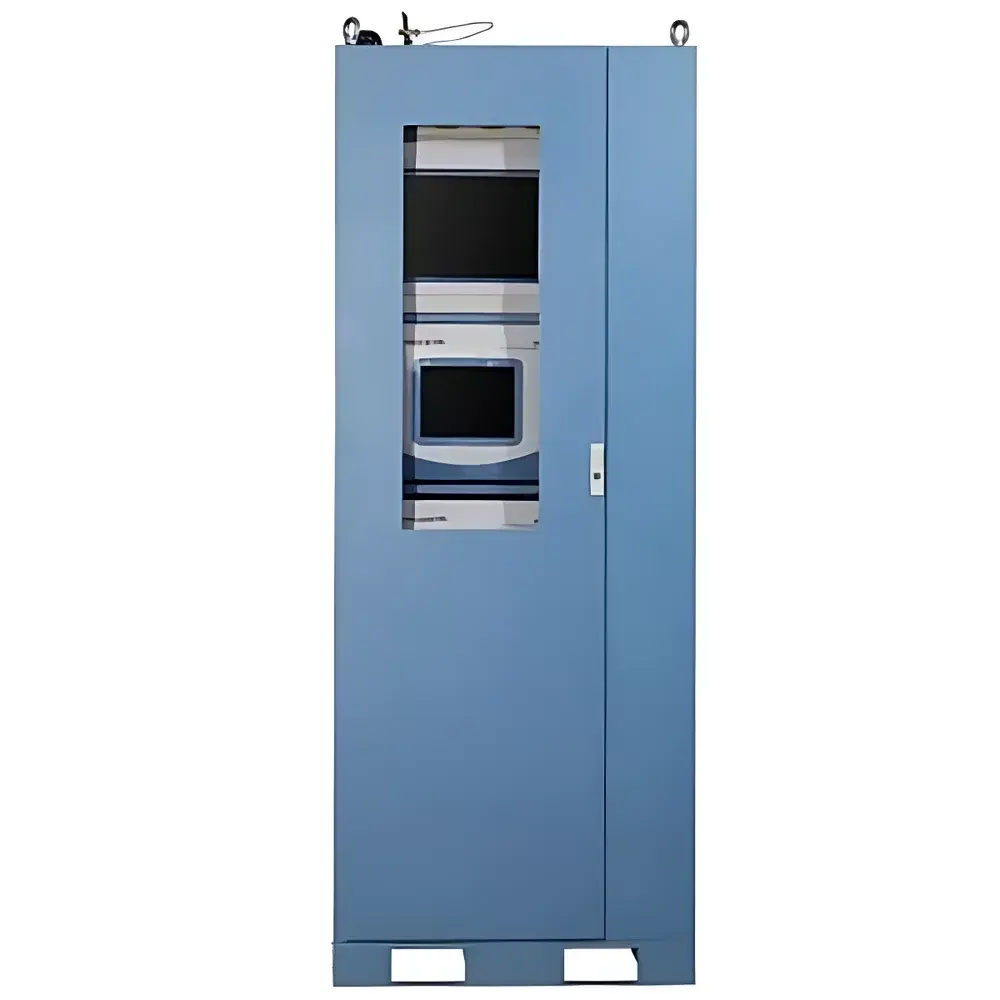
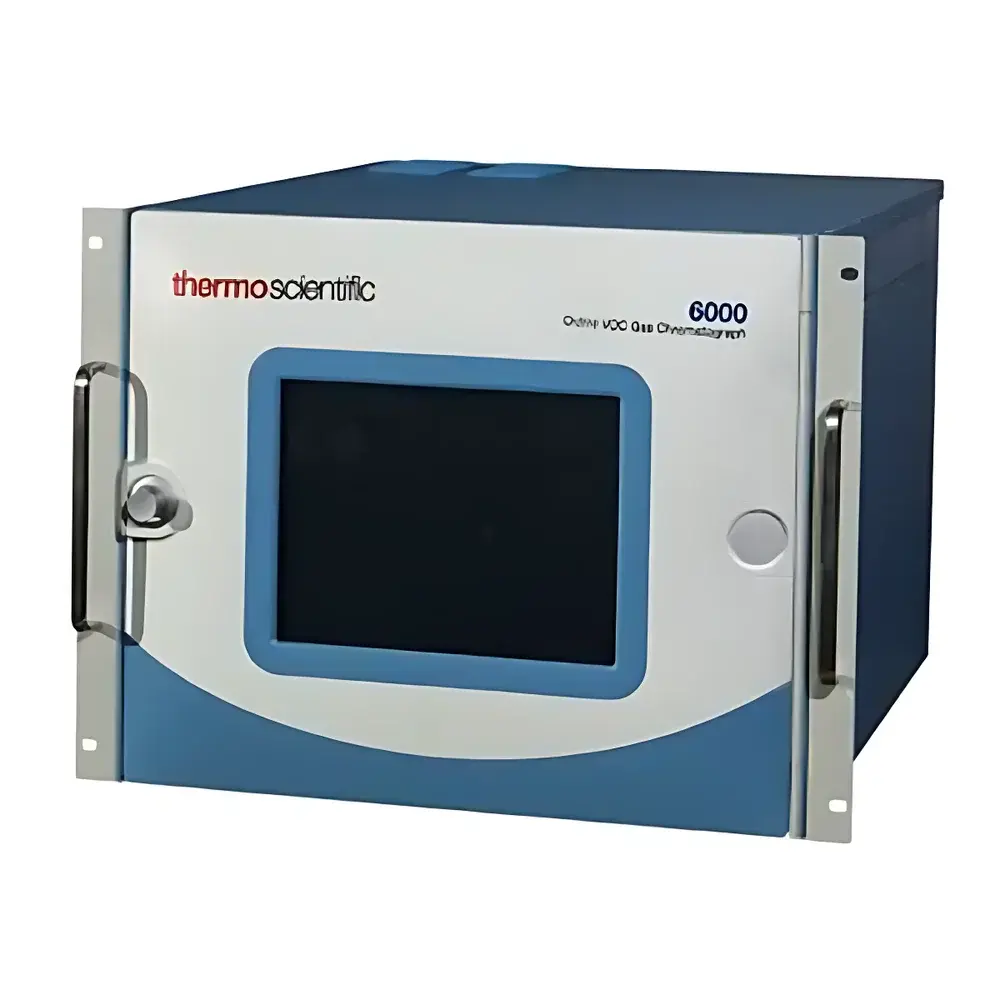
Thermo Scientific 6000 Fixed Source VOC Continuous Emission Monitoring System (CEMS)
| Brand | Thermo Fisher |
|---|---|
| Origin | Shanghai, China |
| Manufacturer Type | Authorized Distributor |
| Product Origin | Domestic (China) |
| Model | 6000 VOC |
| Detection Principle | Flame Ionization Detection (FID) |
| Instrument Type | Online Analyzer |
| Typical Configuration | Multi-Component VOC CEMS |
| Measurement Range | 0–5000 ppm (as methane or NMHC) |
| Accuracy | ±1% F.S. or ±0.1 ppm |
| Response Time | ≤60 s (for NMHC) |
Overview
The Thermo Scientific™ 6000 Fixed Source Volatile Organic Compounds (VOC) Continuous Emission Monitoring System (CEMS) is an engineered solution for regulatory-compliant, real-time quantification of total hydrocarbons (THC), non-methane hydrocarbons (NMHC), benzene, toluene, xylene (BTX), and other target VOCs in flue gas streams from stationary industrial sources. Based on flame ionization detection (FID)—a universally accepted, linear, and highly sensitive technique per ASTM D6348 and ISO 12039—the system delivers trace-level detection with robust reproducibility across fluctuating stack conditions. Designed specifically for compliance with China’s HJ 1013–2018 standard for fixed source VOC emission monitoring, the 6000 CEMS integrates full-path heated sampling, high-temperature sample conditioning, and precision gas chromatography–FID (GC-FID) analysis to eliminate condensation, adsorption, and catalytic loss of reactive or polar VOC species.
Key Features
- Upgraded high-stability FID detector with enhanced signal-to-noise ratio, vibration resistance, and thermal drift compensation—ensuring consistent performance across ambient temperatures from –20 °C to +50 °C.
- Electronic Pressure Control (EPC) with pressure accuracy better than ±1%, enabling precise carrier and makeup gas regulation for optimal chromatographic resolution and retention time stability.
- Pressure-balanced sampling and injection architecture minimizes flow-induced bias and improves quantitative repeatability under variable stack backpressure.
- Automated, fail-safe ignition sequence with flame status monitoring, gas leak detection, and emergency shutdown logic—fully compliant with IEC 61508 SIL 2 functional safety requirements.
- True hot-path design: heated probe (up to 200 °C), stainless-steel trace-heated sample line (120–180 °C), and heated sample loop/injector—eliminating cold spots and preserving thermally labile compounds.
- Oxygen peak suppression algorithm and dynamic background correction—achieving NMHC measurement uncertainty below HJ 1013 limits without external methane scrubbers.
- Remote operation capability via secure web interface or Modbus TCP—supporting unattended, closed-door monitoring in hazardous or restricted-access zones.
Sample Compatibility & Compliance
The 6000 CEMS accommodates complex, high-humidity, high-dust (≤10 g/m³) flue gases from diverse industrial processes. Its stainless-steel heated probe and PTFE-free sample path prevent VOC adsorption and outgassing artifacts common with fluoropolymer-lined systems. Integrated particulate filtration (0.5 µm absolute) and焦油 (tar) removal ensure long-term analyzer protection without refrigerated drying—preserving water-soluble VOCs such as aldehydes, ketones, and alcohols. The system meets HJ 1013–2018 for performance validation, and its architecture supports optional integration with EPA Method 25A, EN 12619, and ISO 13864 for international deployment. All data acquisition modules comply with GLP/GMP audit trail requirements per FDA 21 CFR Part 11 when configured with electronic signature and user access control.
Software & Data Management
Operated via Thermo Scientific™ CEMS Manager software, the system provides automated calibration verification (daily/weekly zero/span checks), multi-point linearity validation, and drift monitoring with configurable alarm thresholds. Raw chromatograms, integrated peak areas, and diagnostic logs are timestamped and stored locally (≥90 days) with optional cloud synchronization. Data export supports CSV, XML, and EPA CDX-compliant formats. Audit trails record all operator actions—including method changes, calibration events, and maintenance interventions—with immutable timestamps and user ID attribution. Optional OPC UA and MQTT interfaces enable seamless integration into plant-wide SCADA, DCS, or environmental information management systems (EIMS).
Applications
- Petrochemical refineries and ethylene cracking units
- Semiconductor fabrication cleanrooms and etch tool exhaust streams
- PCB manufacturing (solvent-based developing, stripping, and solder mask operations)
- Pharmaceutical API synthesis and solvent recovery vents
- Synthetic rubber and thermoplastic elastomer production lines
- Coating, ink, and adhesive formulation facilities
- Automotive OEM painting booths and curing ovens
- Furniture laminating and wood finishing stacks
- Metal surface treatment and coil coating lines
- Iron and steel sintering, coke oven, and blast furnace off-gas monitoring
FAQ
Does the 6000 CEMS support speciated VOC analysis beyond NMHC and methane?
Yes—when configured with optional GC columns (e.g., DB-1, DB-VRX) and customized method templates, it quantifies individual aromatic and aliphatic compounds including benzene, toluene, ethylbenzene, xylenes (BTEX), styrene, and C2–C12 alkanes.
Is hydrogen gas supply mandatory for FID operation?
Yes—H₂ is required as combustion fuel. The system includes integrated H₂ generator compatibility and safety interlocks for low-pressure cutoff and leak detection.
Can the system operate continuously during scheduled maintenance of upstream pollution control devices?
Yes—its hot-path architecture and redundant calibration gas management allow uninterrupted operation even during baghouse cleaning cycles or RTO purges, provided stack temperature remains within probe specification limits.
What cybersecurity protocols are implemented for remote access?
All remote connections use TLS 1.2+ encryption, role-based authentication, and session timeout enforcement. Firmware updates require signed packages verified via embedded PKI certificates.
How is compliance with HJ 1013 validation performed?
The system supports built-in relative accuracy test audit (RATA) workflows, including dynamic spiking, parallel reference method comparison, and continuous QA/QC reporting aligned with HJ 75–2017 and HJ 76–2017 requirements.
Related Products







