
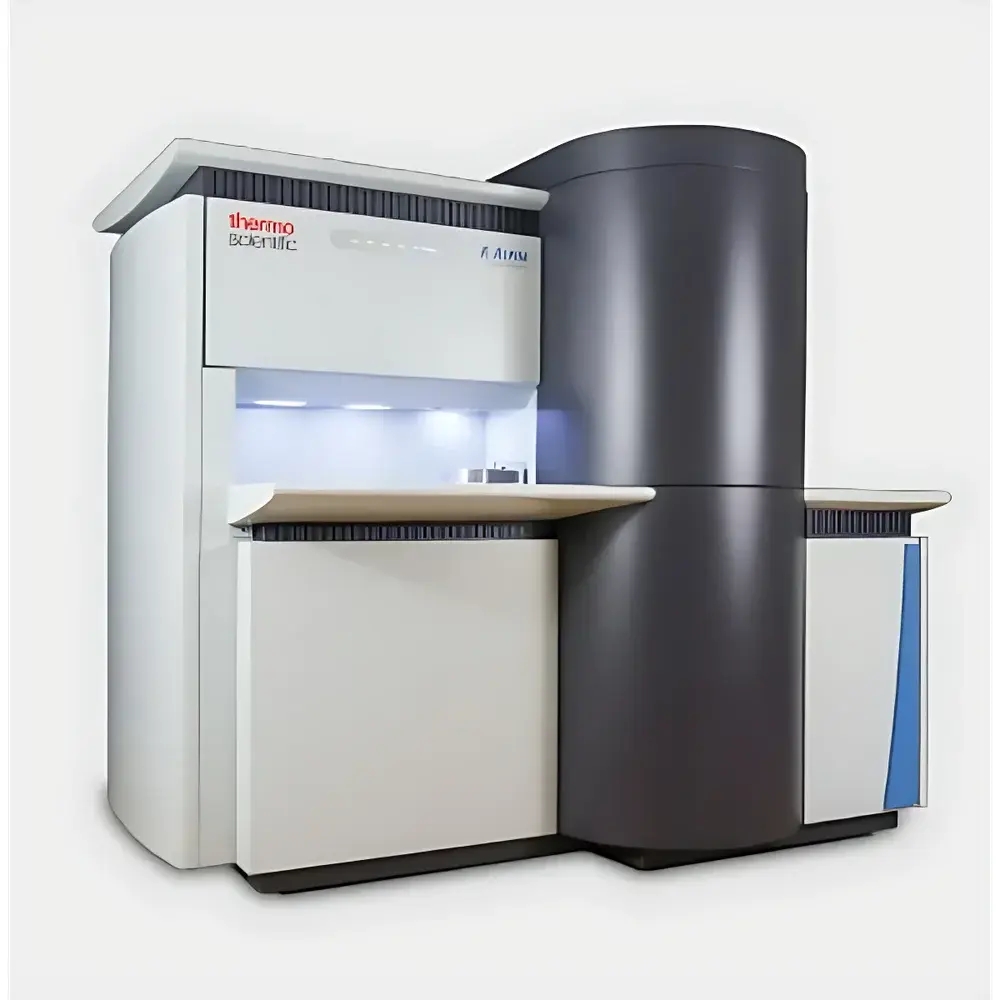
Thermo Scientific K-Alpha X-Ray Photoelectron Spectrometer (XPS)
| Brand | Thermo Fisher Scientific |
|---|---|
| Origin | Shanghai, China |
| Manufacturer Type | Authorized Distributor |
| Product Origin | Domestic (China) |
| Model | K-Alpha |
| Pricing | Available Upon Request |
Overview
The Thermo Scientific K-Alpha X-Ray Photoelectron Spectrometer (XPS) is a high-performance, benchtop surface analysis instrument engineered for quantitative elemental composition, chemical state identification, and empirical depth profiling of solid materials. Operating on the principle of photoemission—where monochromatic Al Kα X-rays (1486.6 eV) irradiate a sample surface and eject core-level electrons whose kinetic energies are measured by a 180° double-focusing hemispherical analyzer—the K-Alpha delivers high spectral resolution (<0.6 eV FWHM at Ag 3d5/2) and excellent signal-to-noise ratio. Its design prioritizes operational robustness in multi-user academic, industrial QC, and contract testing laboratories, combining rigorous vacuum integrity (base pressure <5 × 10⁻⁹ mbar), automated alignment, and reproducible charge neutralization for insulating samples.
Key Features
- Monochromated Microfocus X-ray Source: Al Kα source with energy resolution optimized for chemical shift sensitivity; spot size continuously adjustable from 50 µm to 400 µm in 5 µm increments, enabling spatially resolved analysis of heterogeneous surfaces.
- High-Transmission Electron Optics: Multi-element electrostatic lens system coupled with a 128-channel multichannel detector ensures rapid acquisition of high-fidelity spectra—even for low-cross-section elements or beam-sensitive materials.
- Patented Charge Compensation: Dual-beam charge neutralizer integrates low-energy electron flood (<1 eV) and low-energy Ar+ ion beam to dynamically suppress surface charging on dielectrics (e.g., oxides, polymers, ceramics), eliminating peak broadening and binding energy shifts without manual intervention.
- Integrated Optical Navigation: High-magnification digital optical microscope with live XPS SnapMap overlay enables precise targeting of analysis regions down to sub-50 µm accuracy—critical for correlating morphology with chemical information.
- Depth Profiling Capability: Equipped with EX06 argon ion sputter source (0.1–4 keV, normal incidence), supporting controlled layer removal with real-time monitoring and automated sputter time calibration for stoichiometric depth profiles.
- Robust Vacuum Architecture: Dual-stage turbo-molecular pumping (70 L/s + 300 L/s), backed by automatic titanium sublimation pump and scroll-backed dry mechanical pump, ensures stable ultra-high vacuum conditions across extended acquisition and profiling sessions.
Sample Compatibility & Compliance
The K-Alpha accommodates samples up to 60 mm × 60 mm in lateral dimension and 20 mm in thickness, including conductive substrates, thin films, powders (mounted on conductive tape), and insulating bulk materials. Optional stages support variable-angle XPS (±75° tilt), in-situ biasing (±100 V), and inert-atmosphere transfer via glovebox-compatible load-lock adapters (e.g., VAC-LOCK™ interface). The system meets ISO/IEC 17025 requirements for analytical laboratory competence when operated under documented SOPs and routine calibration protocols. Data acquisition and processing comply with GLP/GMP traceability standards through Avantage’s audit trail functionality, including user login logging, parameter versioning, and raw data immutability.
Software & Data Management
Controlled entirely via Thermo Scientific Avantage software—a Windows-based platform certified for FDA 21 CFR Part 11 compliance—the K-Alpha supports fully automated workflows, batch processing, library-based peak fitting (with NIST XPS Database integration), and quantitative matrix correction (Shirley/Tougaard background models). All spectra, survey maps, depth profiles, and metadata are stored in vendor-neutral .avd format with embedded instrument configuration logs. Export options include ASCII, CSV, and CIF-compliant formats for third-party chemometrics tools (e.g., PCA, cluster analysis). Remote diagnostics and firmware updates are supported over secure LAN connections without interrupting active measurement sequences.
Applications
- Surface oxidation state mapping of catalysts (e.g., Co2+/Co3+ in LiCoO2 cathodes)
- Interface chemistry characterization in OLED multilayer stacks
- Contamination identification on semiconductor wafers (e.g., fluorocarbon residues post-etch)
- Chemical aging studies of polymer coatings exposed to UV/ozone environments
- Corrosion product speciation on stainless steel or aluminum alloys
- Quantitative thin-film stoichiometry (e.g., HfO2/SiO2 gate dielectrics)
FAQ
What vacuum level does the K-Alpha achieve during analysis?
The system maintains a base pressure better than 5 × 10⁻⁹ mbar under typical operating conditions, verified via integrated Bayard-Alpert gauge and calibrated ion pump current monitoring.
Can the K-Alpha analyze air-sensitive samples?
Yes—when configured with the optional glovebox-integrated load-lock chamber, samples can be transferred under inert atmosphere (Ar/N2) and introduced into the analysis chamber without exposure to ambient air.
Is depth profiling limited to argon ions?
Standard configuration uses Ar+ sputtering; alternative ion sources (e.g., O2+, Cs+) are available as factory-installed options for specific matrix enhancement or reduced damage in organic layers.
How is energy calibration performed?
Calibration is executed using certified reference materials (e.g., Au 4f7/2 = 84.0 eV, Cu 2p3/2 = 932.7 eV, Ag 3d5/2 = 368.3 eV) with automated peak centering routines embedded in Avantage.
Does the system support automation for unattended operation?
Yes—Avantage supports script-driven batch analysis, including auto-focus, region-of-interest selection, sequential survey/high-resolution acquisition, and report generation, enabling overnight or weekend runs with full error logging.






