
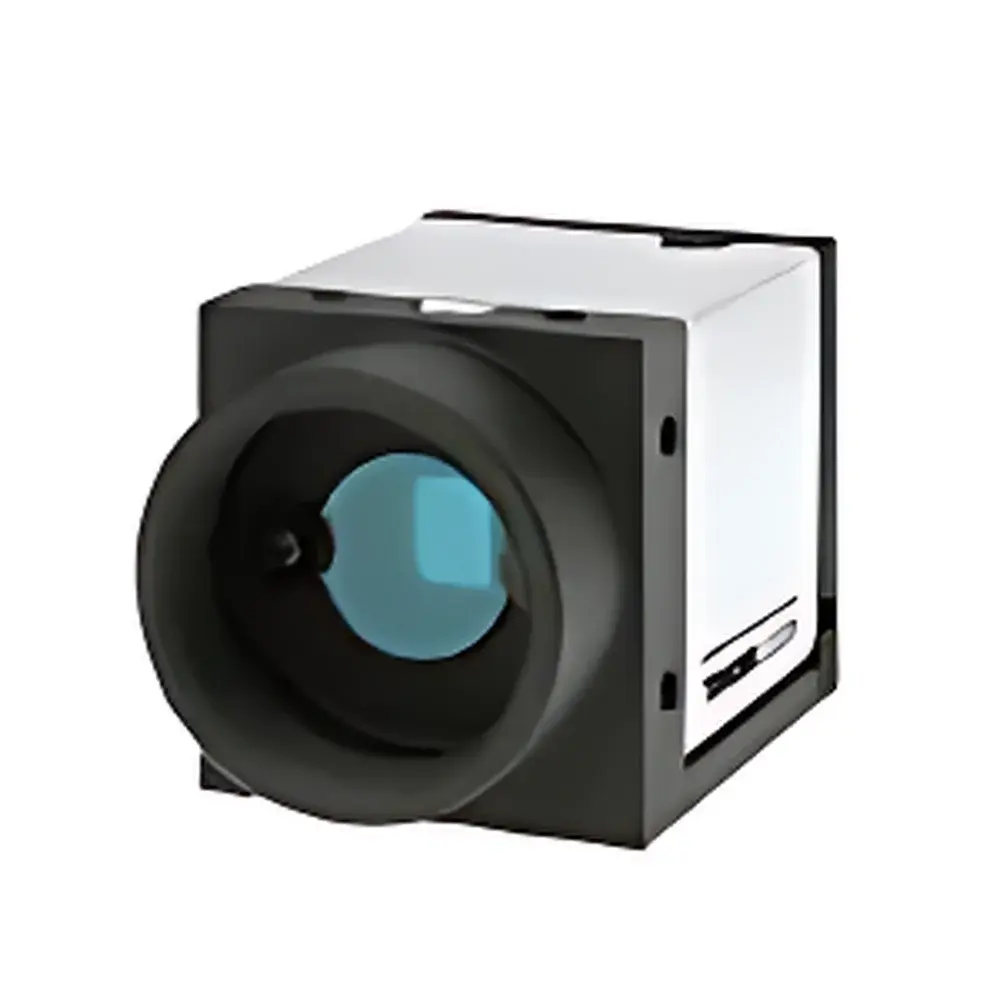
Thorlabs WFS150 Shack-Hartmann Wavefront Sensor
| Brand | Thorlabs |
|---|---|
| Origin | USA |
| Model | WFS150 |
| Micro-Lens Array Options | MLA150-7AR (f′ = 0.7 mm, AR-coated 400–900 nm) or MLA150-5C (f′ = 5.2 mm, Cr-masked 200–1100 nm) |
| Camera | DCU224M USB 2.0 CCD |
| Resolution | 1280 × 1024 pixels |
| Frame Rate | up to 15 fps |
| Exposure Time | 83–1460 ms |
| Dimensions | 34 × 32 × 48.3 mm |
| Interface | USB 2.0 |
| Software | Thorlabs Wavefront Analysis Suite (v2.x) with Zernike & Fourier decomposition, real-time RMS wavefront error calculation, and GLP-compliant data logging |
Overview
The Thorlabs WFS150 Shack-Hartmann Wavefront Sensor is a precision optical metrology instrument engineered for quantitative, non-invasive characterization of laser beam phase fronts and intensity distributions. Based on the well-established Shack-Hartmann principle, it employs a micro-lens array (MLA) to sample the incident wavefront across its aperture, generating an array of focal spots on a high-sensitivity CCD detector. Local wavefront slope is derived from centroid displacement of each spot relative to a calibrated reference grid; spatial integration of these gradients yields the full two-dimensional phase map. This method provides high reproducibility, sub-microradian angular sensitivity, and compatibility with both continuous-wave (CW) and pulsed laser sources—making the WFS150 suitable for applications ranging from laser cavity alignment and optical component certification to closed-loop adaptive optics (AO) control systems in astronomy and ophthalmology.
Key Features
- Modular design with interchangeable micro-lens arrays: MLA150-7AR (0.7 mm effective focal length, anti-reflection coated for 400–900 nm) optimized for low-reflection, high-transmission measurements; and MLA150-5C (5.2 mm effective focal length, chromium mask, broadband 200–1100 nm transmission) ideal for UV–NIR spectral coverage where reflectivity tolerance is acceptable.
- Integrated DCU224M monochrome USB 2.0 CCD camera with 1280 × 1024 pixel resolution, 12-bit dynamic range, and programmable exposure (83–1460 ms), enabling robust signal-to-noise performance across varying irradiance levels.
- SM1-threaded front housing allows direct mounting of neutral density (ND) filters to prevent pixel saturation and lens tubes to suppress stray light—critical for maintaining measurement fidelity in high-power or multi-path optical setups.
- Real-time wavefront reconstruction at up to 15 frames per second, supporting dynamic monitoring of thermal lensing, mechanical drift, or AO correction loop feedback.
- Comprehensive aberration quantification including Zernike polynomial coefficients (up to 36th order), root-mean-square (RMS) wavefront error, peak-to-valley (PV) deviation, and Fourier-based modal decomposition for identification of localized defects or fabrication-induced errors.
Sample Compatibility & Compliance
The WFS150 accommodates collimated or mildly divergent beams with diameters up to 15 mm (dictated by MLA active area). It supports free-space coupling without fiber interface requirements, making it compatible with ultrafast Ti:sapphire oscillators, DPSS lasers, supercontinuum sources, and excimer systems. Calibration routines include automated spot-grid registration, tilt/defocus compensation, and pixel-response normalization—traceable to NIST-traceable flat-field references. The system complies with ISO 10110-5 (surface form tolerances), ISO 11146-1/-2 (laser beam widths and divergence), and supports audit-ready data export conforming to FDA 21 CFR Part 11 requirements when used with validated software configurations under GLP/GMP laboratory environments.
Software & Data Management
The Thorlabs Wavefront Analysis Suite (v2.x) provides a fully integrated GUI for acquisition, calibration, analysis, and reporting. Core modules include live camera control (gain, exposure, binning), interactive MLA alignment wizard, multi-point calibration using reference flat mirrors or spherical standards, and batch-processing pipelines for time-series wavefront evolution studies. All computed parameters—including irradiance maps, reconstructed 3D phase surfaces, Zernike coefficient tables, and residual error histograms—are exportable in CSV, HDF5, and MATLAB .mat formats. Audit trails record operator ID, timestamp, instrument configuration, and raw frame metadata—enabling full traceability required for ISO/IEC 17025-accredited testing laboratories.
Applications
- Laser resonator optimization and M² factor validation
- Characterization of aspheric lenses, deformable mirrors, and diffractive optical elements (DOEs)
- In-process verification of optical coating uniformity and substrate flatness
- Real-time feedback for adaptive optics systems in ground-based telescopes and retinal imaging instruments
- Quantitative assessment of atmospheric turbulence effects in free-space optical communication links
- Validation of computational imaging algorithms and phase-retrieval models
FAQ
What is the minimum measurable wavefront gradient?
Typical slope resolution is ~0.5 µrad per subaperture, dependent on spot centroiding accuracy, SNR, and MLA pitch.
Can the WFS150 measure pulsed lasers with nanosecond pulse widths?
Yes—provided pulse energy is sufficient to generate >100 photoelectrons per subaperture spot and repetition rate does not exceed the camera’s maximum frame rate (15 Hz for full resolution).
Is external triggering supported for synchronization with laser pulses?
No native hardware trigger input is provided; however, software-triggered acquisition can be synchronized via TTL-compatible timing signals using optional Thorlabs TSP01 timing controller.
How is calibration stability maintained over temperature fluctuations?
The MLA and sensor are mounted on a low-CTE aluminum baseplate; recalibration is recommended after ambient shifts >±3 °C or mechanical disturbance.
Does the software support custom Zernike basis sets or user-defined orthogonal polynomials?
Only standard ANSI Z80.19-compliant Zernike terms and discrete Fourier modes are implemented; custom bases require post-processing in external numerical environments (e.g., Python SciPy or MATLAB).




